5 December، 2025
Workshop on Conservation Agriculture Held in the Village of Awainat.
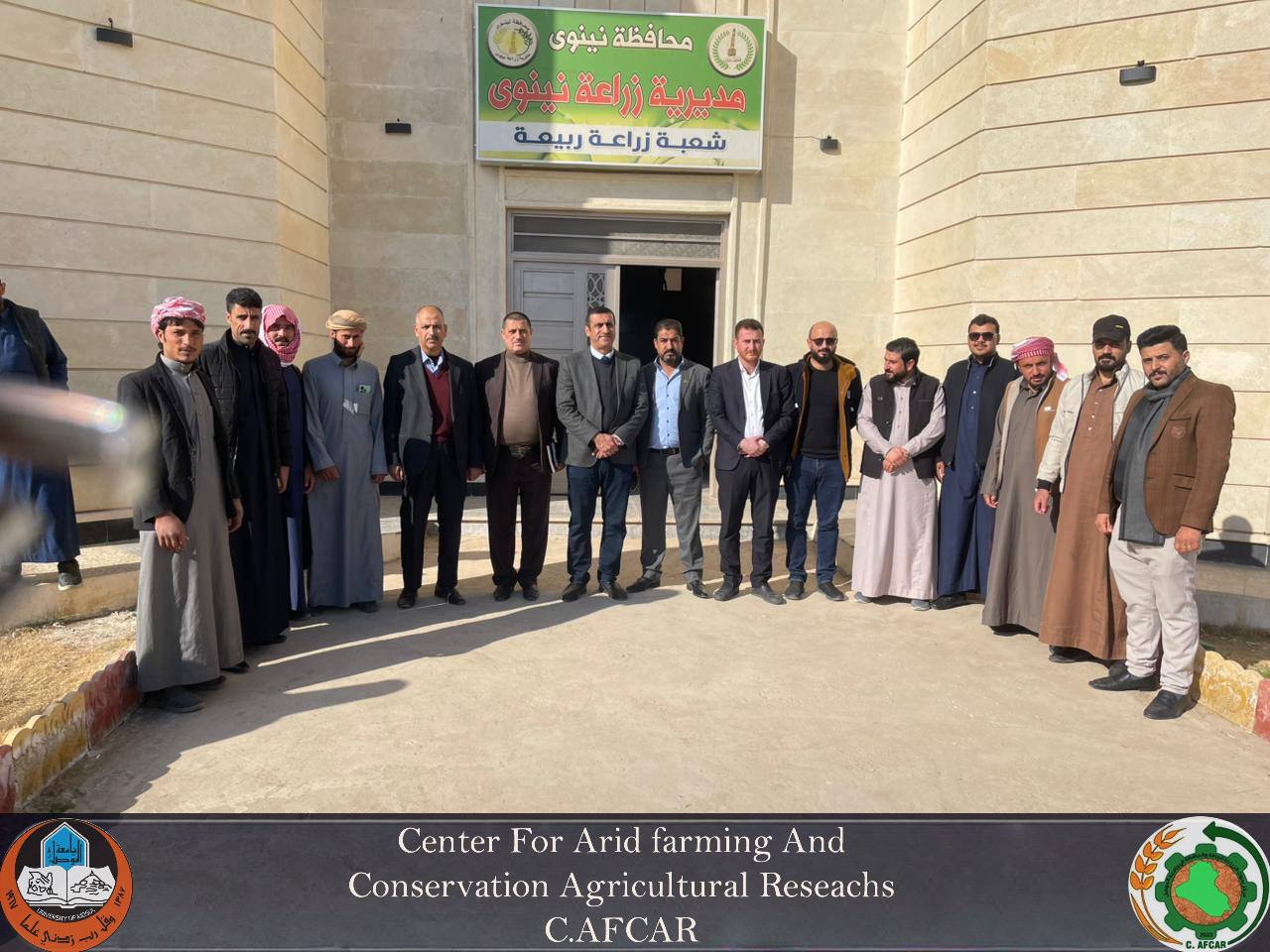
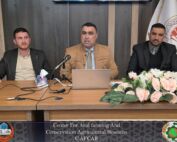
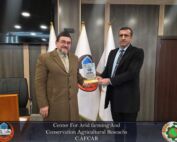
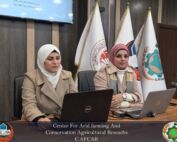
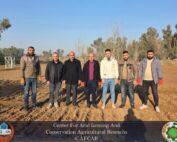
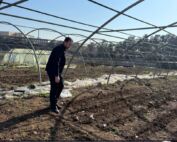
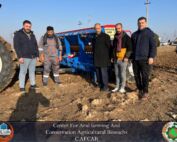
A specialized team from the Center for Center for Arid Farming and Conservation Agriculture Researches at the University of Mosul organized a scientific workshop on Thursday, 4 December 2025, in the village of Awainat, located in the Rabia subdistrict. The workshop falls within the Center’s ongoing efforts to support rural communities and promote sustainable agricultural practices.
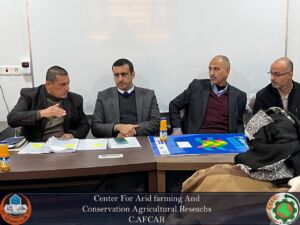
The event included a series of awareness scientific lectures on the Conservation Agriculture Program, targeting a group of farmers benefiting from the initiative. The Director of the Center, Prof. Mohammed Subhi Al-Taweel, delivered the opening lecture, in which he highlighted the importance of applying conservation agriculture techniques in the Awainat area. He emphasized their significant role in reducing agricultural inputs, maximizing outputs, and improving production efficiency—ultimately benefiting both farmers and the environment. His lecture also addressed methods for maintaining and improving seed quality through annual seed-screening practices that preserve high genetic purity and ensure optimal productivity in subsequent seasons.
Prof. Salem Hammadi Antar, Head of the Agronomy Department, presented a lecture on integrated weed management and the scientific use of herbicides to protect crops and reduce losses. Dr. Islam Abdul Sattar Asmir delivered a detailed explanation of the concept of conservation agriculture, its techniques, and its benefits in addressing agricultural and environmental challenges.
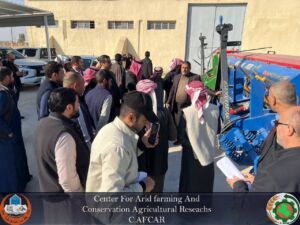
This was followed by a lecture by Assistant Lecturer Thaker Jasim Mohammed from the Agricultural Mechanization Department, who reviewed modern machinery used in conservation agriculture, their operating mechanisms, and procedures for calibrating seed and fertilizer equipment to ensure optimal productivity. He also compared these technologies with traditional equipment such as disc seeders, noting their higher cost to farmers and their negative impact on climate variability.
The workshop witnessed strong engagement from participating farmers, whose feedback and comments were collected through scientific questionnaires prepared under the supervision of Assistant Lecturer Abbas Ali Ahmed, Head of the Human Resource Development Department, to assess the workshop’s impact and analyze levels of benefit.
The organization of this workshop aligns with the Sustainable Development Goals, particularly Goal 2: Zero Hunger, which aims to achieve food security, improve nutrition, and promote sustainable agriculture. It reflects the Center’s commitment to supporting national and international efforts to develop the agricultural sector and improve livelihoods in rural areas.




#University_of_Mosul.
#Center_for_Arid_Farming_and_Conservation_Agriculture_Research’s.
#sustainable_development.