11 January، 2026
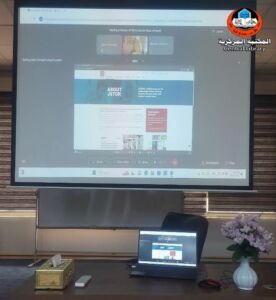
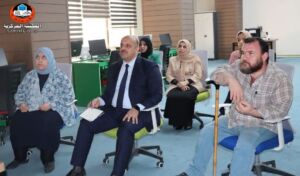
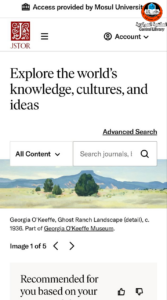
The University of Mosul grants its students and researchers the possibility of access to the JSTOR platform as part of the Central Library Restoration Project

In conformity with the directives of the presidency of the University of Mosul ,highlighting the importance of enhancing the scientific research and expanding the horizons of access to global academic resources, the University of Mosul has been able to provide free access to the JSTOR platform to all its students and researchers within the Central Library’s Restoration Project implemented by UNESCO under the supervision of the President of the University of Mosul, the Honorable Professor Dr. Waheed Mahmoud Al-Ibrahimi, and with the follow-up of the Director of the Central Library, Assistant Professor Dr. Mohammed Jassim Mohammed.
The JSTOR platform is one of the most significant and largest academic digital libraries in the world, providing a huge knowledge base of peer-reviewed scientific sources, including:
More than 2,800 scientific periodicals covering different humanitarian and scientific specializations.
More than 158,000 academic books are available for research and study.
More than 12 million research materials, including scientific articles, books, and various sources.
More than 2 million primary sources include historical documents and rare manuscripts.
JSTOR’s services are used by more than 14,000 educational and research institutions around the world.
This access enables the students and researchers of the university to benefit from all JSTOR collections, including the periodicals, primary sources, and the JSTOR Global Plants database, which contributes to supporting advanced studies and scientific research at the local and international levels.
This step is part of the ongoing efforts made by the University of Mosul to enhance its academic resources and develop the services of the Central Library
in a way that facilitates the university community’s access to the latest international research and studies and contributes to advancing the level of higher education and supporting creativity and academic excellence.
So the fourth goal: good education and the seventeenth goal: partnerships are attained to achieve the goals of sustainable development.
It achieves the fourth goal: quality education, the seventeenth goal: holding partnerships to achieve the goals of sustainable development.