Labs.
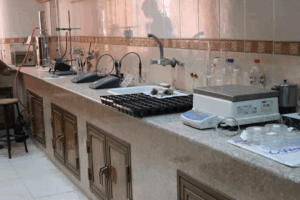
Environmental Engineering Laboratory
As a result of water scarcity in recent years, coupled with population expansion and the inability of water networks to cover all areas, many residents of rural and urban areas are resorting to exploiting groundwater by drilling wells and using the extracted water for various purposes. Given the sensitivity of the issue from a consumer health perspective, it is essential to conduct the necessary tests and analyses of the water to ensure its suitability for drinking, agriculture, poultry farming, or even industrial and other purposes. These analyses include physical, chemical, and biological (bacterial and other) tests of the water. The Environmental Research Center Laboratory performs this role and provides advice to citizens who wish to exploit groundwater (or other water sources).
The laboratory, which contains numerous advanced devices, tests the water and provides final advice on the appropriate use of the water. Advanced devices include measuring the content of heavy and trace metals in the water, as well as devices for measuring organic content and other pollution indicators, in addition to accurately measuring salt levels.
The laboratory staff consists of the following members:
Ms. Maysoun Ibrahim Suleiman / Chief Engineer
Ms. Aisha Moaz Hamed / Assistant Chief Biologist
Mohammed Qasim Ali / Assistant Environmental Health Researcher
Rahma Dhunoon Abdulrahman / Assistant Engineer
Suha Samir / Assistant Environmental Health Researcher
Microbiology Laboratory
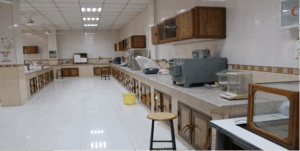
The Microbiology Laboratory, staffed by a number of Center members, examines various water samples (groundwater, rivers, wells, etc.) from a bacteriological perspective to determine the number and types of bacteria and fecal bacteria contaminating the water, which may cause illness and diarrhea in humans. Necessary measures are then taken to address contaminated samples and address various pollution problems.
The laboratory contains several laboratory equipment for testing water and determining its suitability for drinking and other uses. It includes an autoclave for sterilizing prepared culture media, various incubators and cultivation hoods, microscopes for examining and studying bacterial species, a refrigerated centrifuge, and a refrigerator for storing bacterial isolates. After examining the samples and diagnosing their condition, a comprehensive scientific report is issued to determine their suitability for drinking and other uses.
The laboratory staff includes:
Dr. Mai Abdel Hafez Abdel Qader / PhD in Microbiology / Laboratory Manager. Ms. Amna Faris / Master’s degree, College of Environment.
Ms. Reem Nouzat / Master’s degree, College of Environment.
Ms. Safwa Walid / Master’s degree, College of Environment.
Water pollution is any change in water quality that may corrupt its properties and alter its nature, directly or indirectly, negatively impacting living organisms or rendering water unfit for intended uses. Water pollution significantly impacts the lives of individuals, families, and society, as water is a vital requirement for humans and all living organisms, and its pollution may be a major cause of the end of life on Earth.
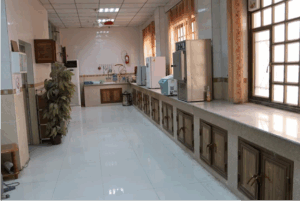
Research Laboratory
The laboratory includes several devices for conducting tests to determine the concentrations of elements required by plants to study growth conditions. These devices include devices for measuring acidity, turbidity, salt concentration, and water conductivity, in addition to a device for measuring certain elements using selective electrodes. Tests and measurements required for research in various environmental fields can also be conducted.
This laboratory complements the center’s practical work regarding various environmental aspects. The laboratory also includes a chemical storage facility.
The laboratory staff includes:
Assistant Professor Taha Ahmed Al-Tayyar / Laboratory Manager
Assistant Professor Nahla Salem Hamouk
Dr. Raghad Hashem Yahya Al-Mallah