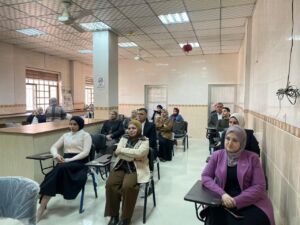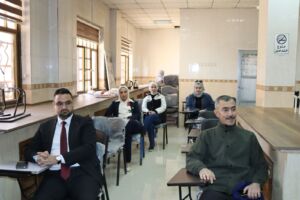
The Environmental Research Center at the University of Mosul is holding a training course on the role of regulatory and financial systems in combating administrative and financial corruption.
Under the patronage of Professor Dr. Waheed Mahmoud Al-Ibrahimi, President of the University of Mosul, and under the supervision of Assistant Professor Dr. Saba Khair Al-Din Ibrahim, the Environmental Research Center at the University of Mosul organized a training course entitled:
“Control and financial systems in combating administrative and financial corruption to achieve the Sustainable Development Goals,” on Tuesday, December 2, 2025, in cooperation with the Sustainable Development Unit at the University Presidency. The course will last for two days.
The course began its program on the first day with two lectures: The first lecture was entitled:
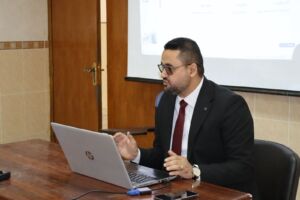
“Financial Oversight, Public Funds Management, and Mechanisms for Reducing Waste and Corruption to Support Sustainable Development,” presented by Dr. Raghad Hashem Al-Mallah, addressed the most prominent provisions of financial oversight and its role in reducing waste and unnecessary spending, and strengthening the fight against corruption, thereby contributing to increased transparency and public trust in institutions. She also explained that the rational use of public funds provides a stable financial environment that contributes to the implementation of sustainable development projects and the achievement of their long-term goals.
The second lecture was titled:
“The Importance of Transparency and Accountability in Achieving the Sustainable Development Goals (Goals 16 and 17)” was presented by Assistant Lecturer Aws Saad Waadallah from the College of Administration and Economics. The lecture addressed the pivotal role of both transparency and accountability in building effective and accountable institutions, directly linking this to achieving the Sustainable Development Goals. It emphasized the necessity of enshrining these principles in legislation and financial and regulatory systems, adopting international accounting standards, and implementing e-government systems. The lecture affirmed that transparency is the first step in combating corruption and enhancing public trust in institutions, while accountability in its various forms ensures the efficient use of public resources and their allocation towards development priorities.
These efforts are in line with the Sustainable Development Goals, particularly Goal 8 (Decent Work and Economic Growth), Goal 16 (Peace, Justice and Strong Institutions), and Goal 17 (Partnerships for the Goals).