5 August، 2026
Master’s Thesis Defense at the College of Dentistry on the Flexural Strength, Microhardness, and Surface Roughness of 3D-Printed Denture Base Resin under Varying Exposure Times and Post-Polymerization Methods
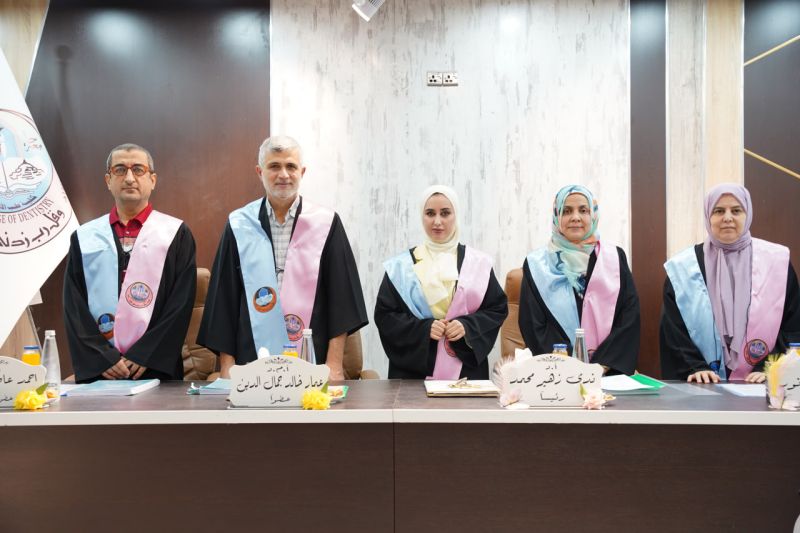
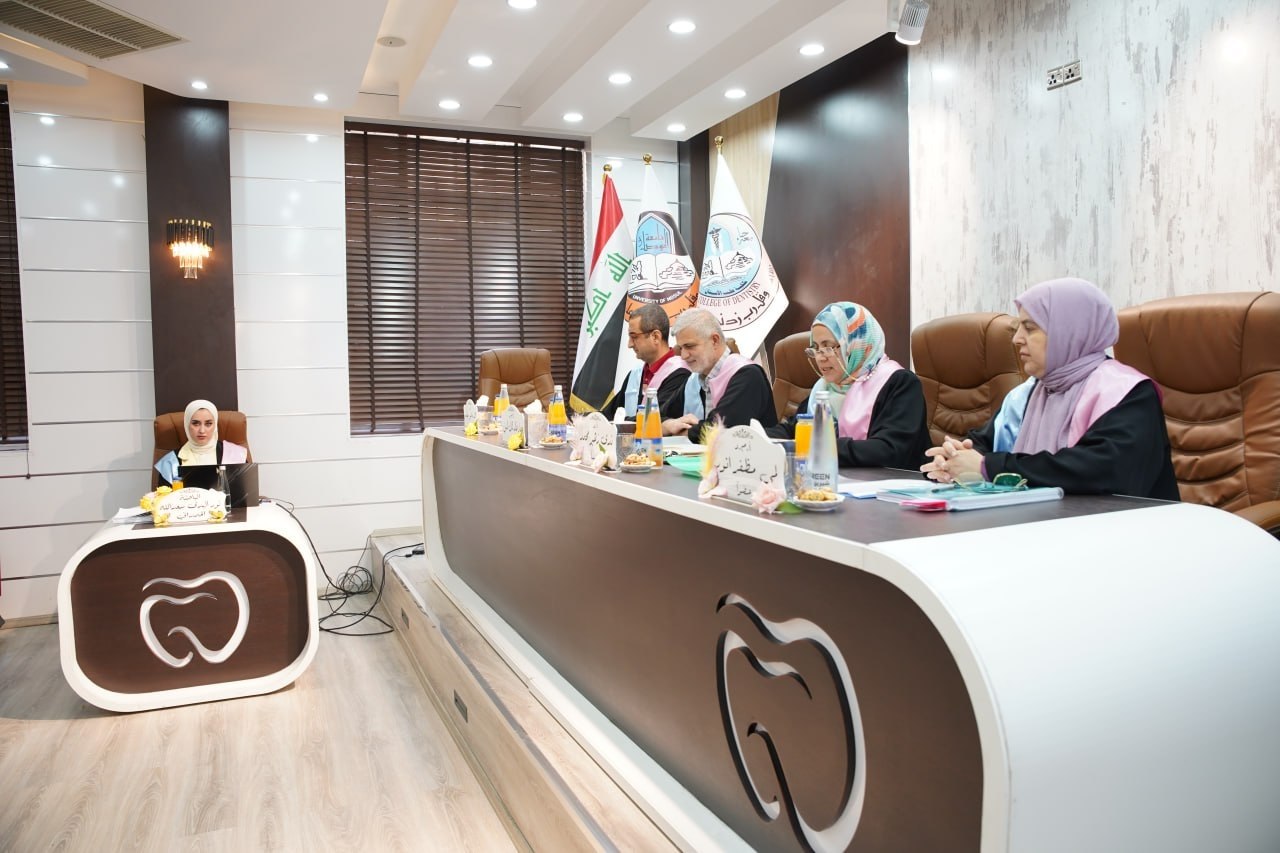
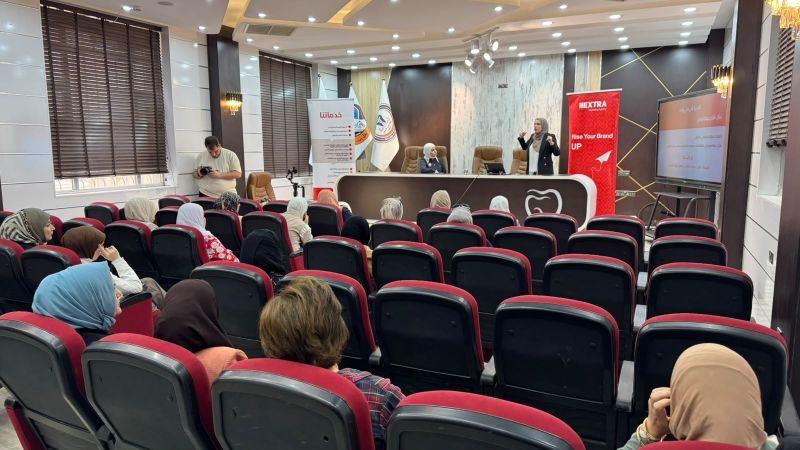
On Wednesday, August 5, 2026, the Department of Prosthodontics at the College of Dentistry, University of Mosul, witnessed the defense of the master’s thesis entitled: “Flexural Strength, Microhardness, and Surface Roughness of 3D-Printed Denture Base Resin under Varying Exposure Times and Post-Polymerization Methods.”
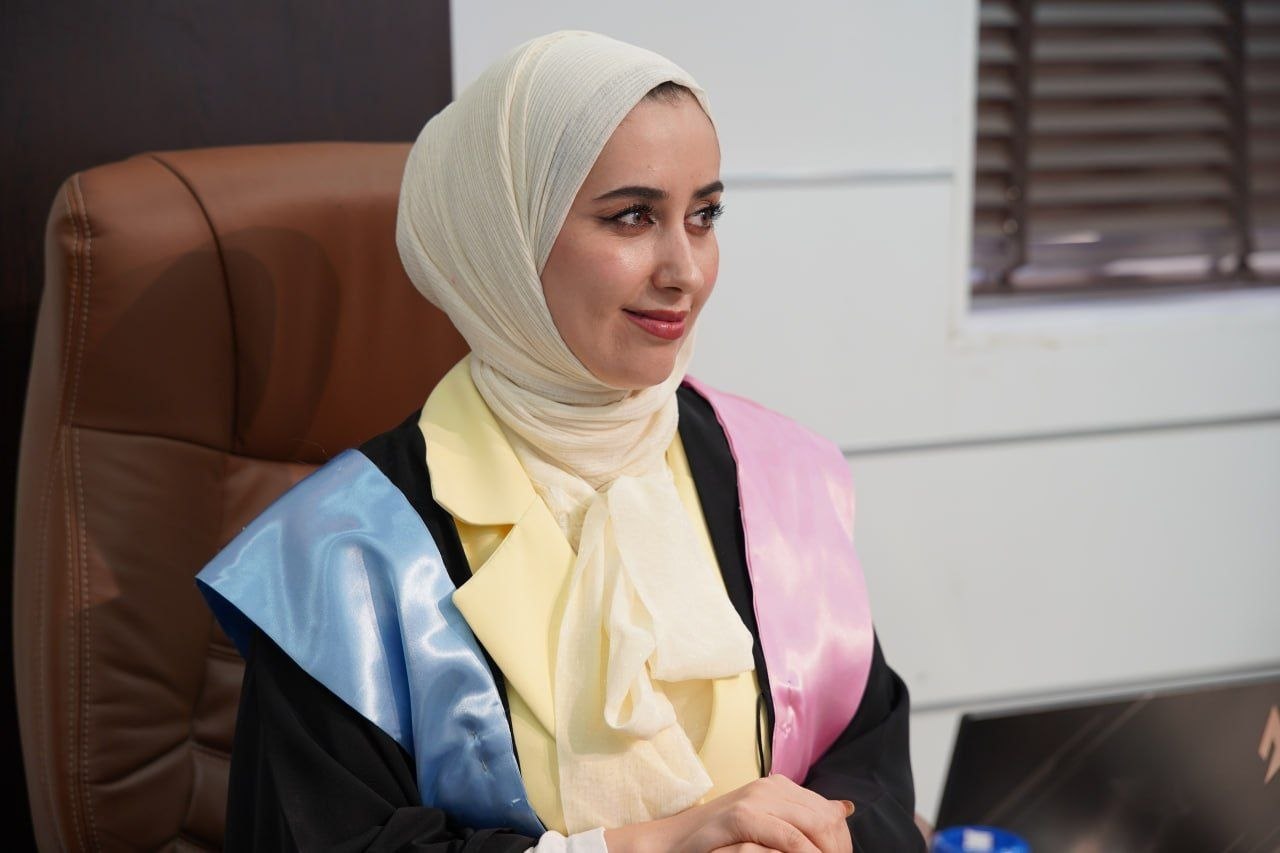
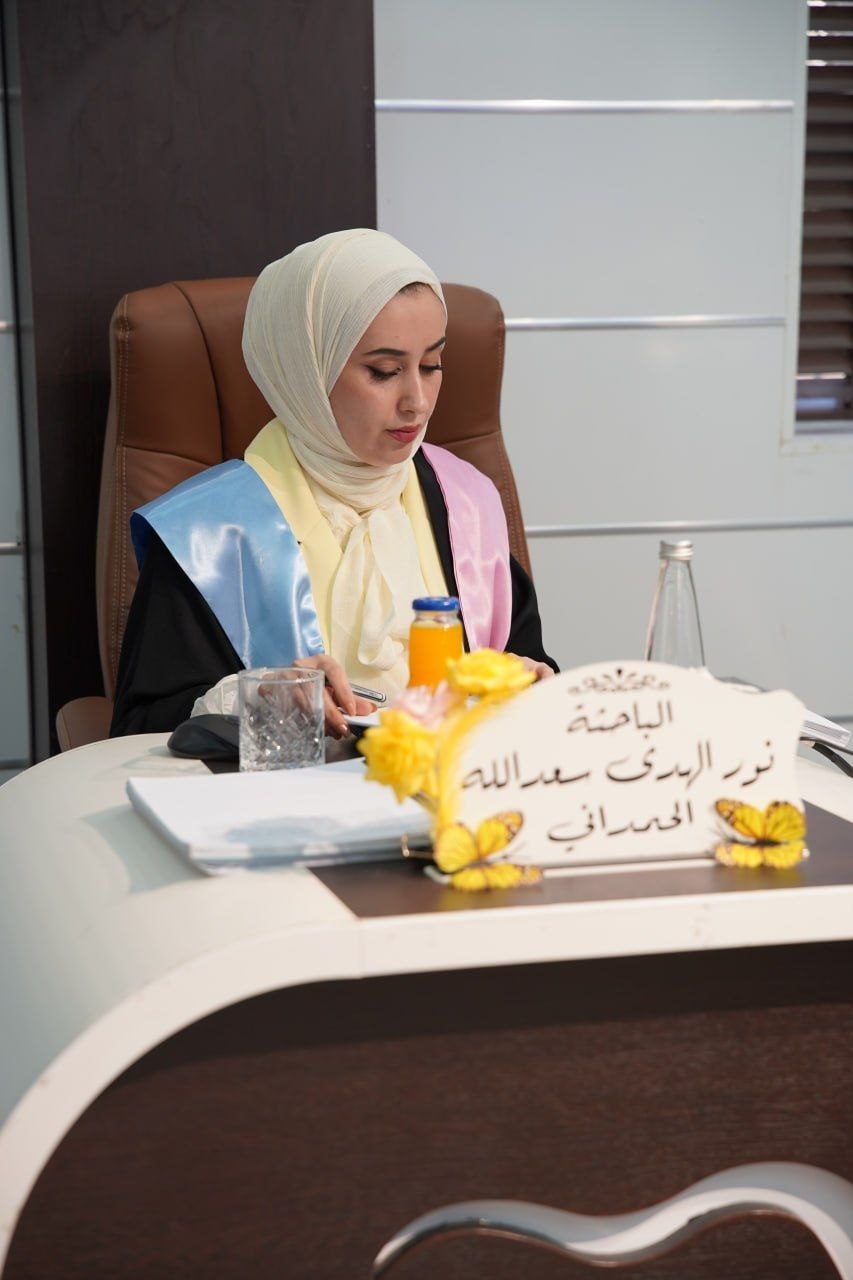
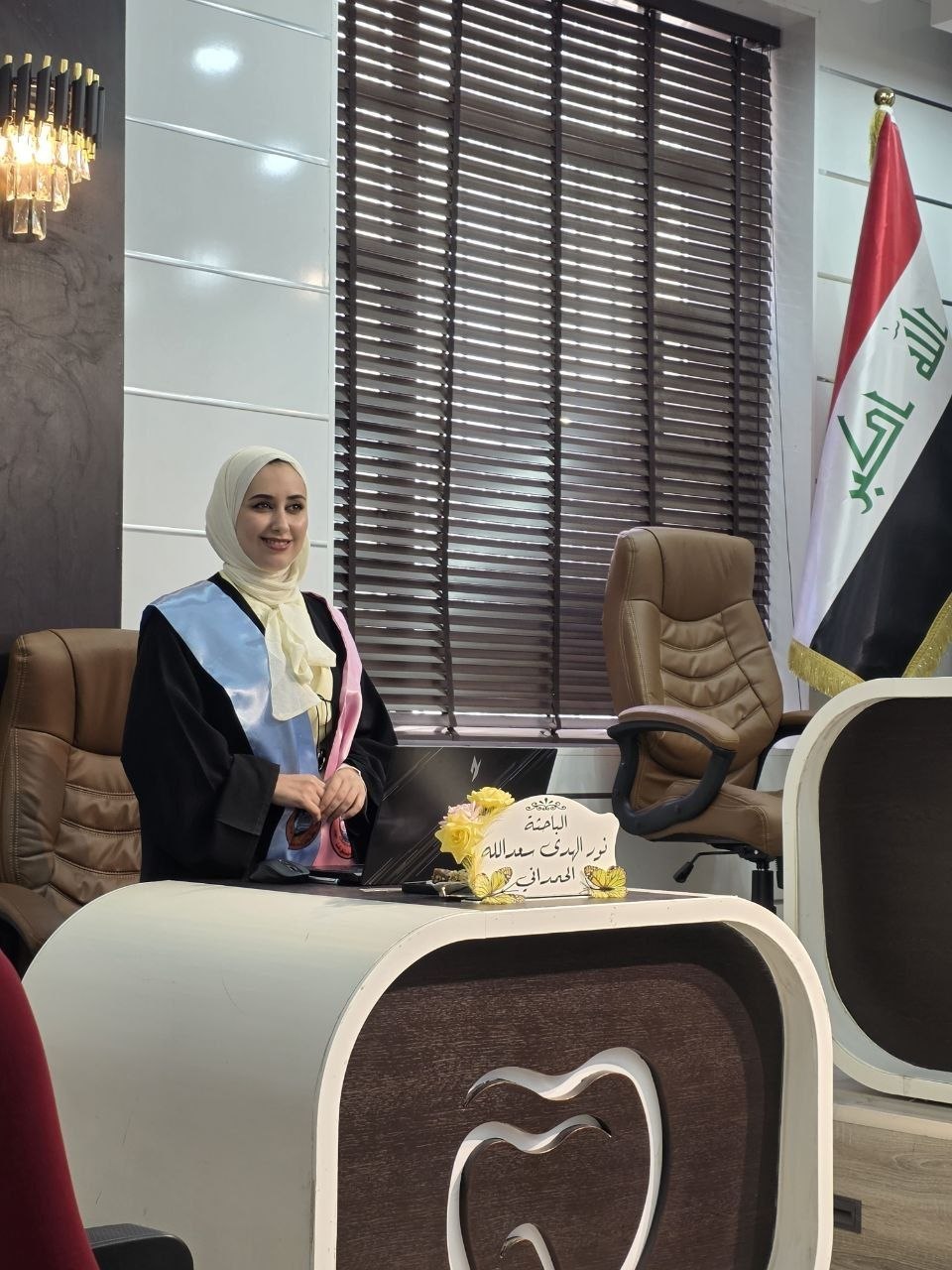
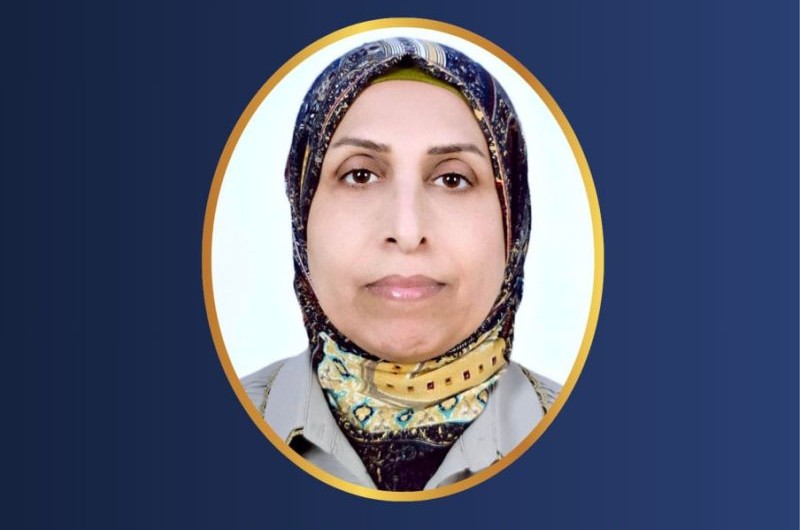
The thesis was submitted by the student Noor Al-Huda Saadallah Mohammad Saleh Hussein Al-Hamdani.
The study aimed to evaluate the impact of layer exposure duration during 3D printing, along with post-curing duration and temperature, on the mechanical and surface properties of denture base resin fabricated using Liquid Crystal Display (LCD) 3D-printing technology.
The study involved the fabrication of 140 standardized specimens using an LCD 3D printer and Centric denture base resin at a wavelength of 405 nm, under two distinct layer exposure times (2.5 seconds and 5 seconds). The specimens were categorized into four post-curing conditions: an uncured control group, a UV-cured group without heating, and UV-cured groups with thermal post-curing at 40^\circ\text{C} and 60^\circ\text{C} for 20 and 10 minutes, respectively.
Flexural strength was assessed via the three-point bending test in accordance with ISO 1567 standards, microhardness was measured using the Vickers hardness test, and surface roughness was evaluated using a digital profilometer. Statistical analysis was performed using One-Way Analysis of Variance (ANOVA) followed by Duncan’s post-hoc test at a significance level of p < 0.05.
The results demonstrated an increase in flexural strength and Vickers microhardness values with higher post-curing temperatures, reaching their peak values at 60^\circ\text{C} (89.9\text {MPa} for flexural strength and 17.4\text {VHN} for microhardness). A similar improvement was observed with increased post-curing duration.
Surface roughness measurements showed no statistically significant changes, remaining within clinically acceptable limits (\text {Ra} < 0.2\ \mu\text{m}) across all post-curing conditions. The findings indicate that extending post-curing duration and raising its temperature significantly enhance the mechanical durability of 3D-printed denture base resins. Furthermore, the study highlighted an integrated interaction among layer exposure time, post-curing duration, and post-curing temperature in determining the overall mechanical performance of the material.
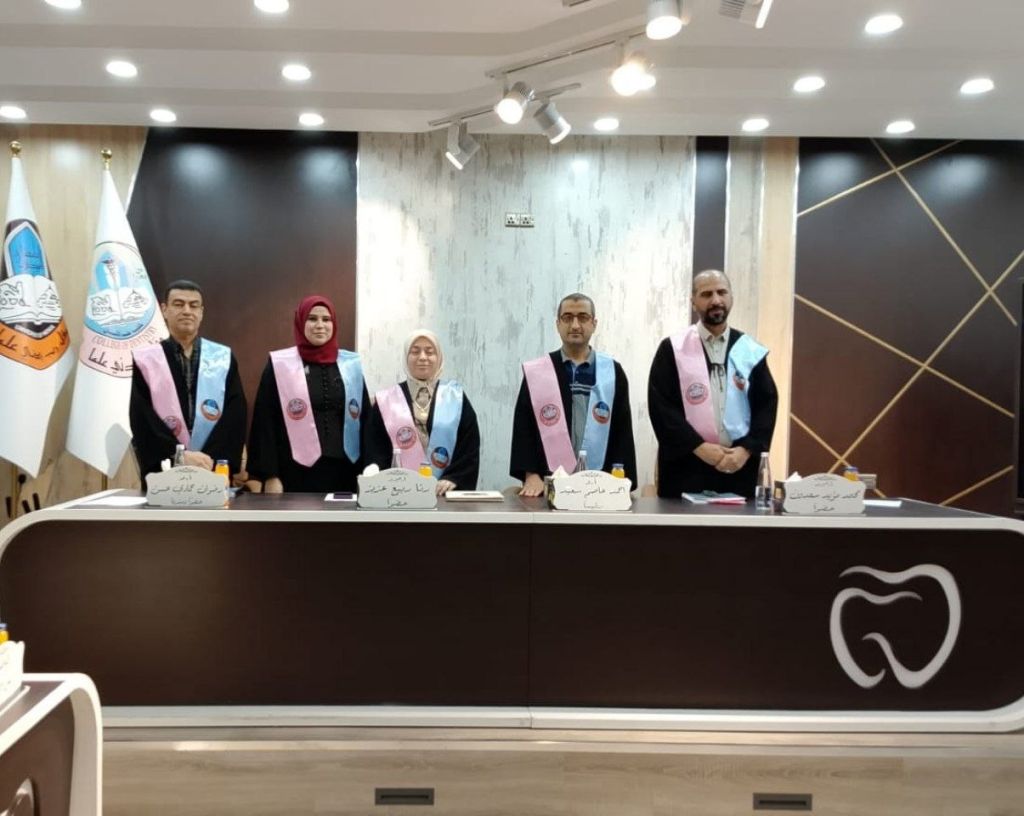
The Examination Committee was chaired by Prof. Dr. Nada Zuhair Mohammad, with Assoc. Prof. Dr. Ammar Khalid Jamal Al-Din and Assoc. Prof. Dr. Lama Mudafar Anwar as members. Prof. Dr. Ahmed Asim Saeed served as the thesis supervisor and was also a member of the defense committee.
At the conclusion of the defense, the thesis was successfully accepted following the completion of the required modifications.