29 October، 2026
Remote Sensing Center at the University of Mosul Holds a Workshop on Using Remote Sensing Indices and Cloud Computing Platforms to Assess 45 Years of Climate Change Impacts in Nineveh Governorate
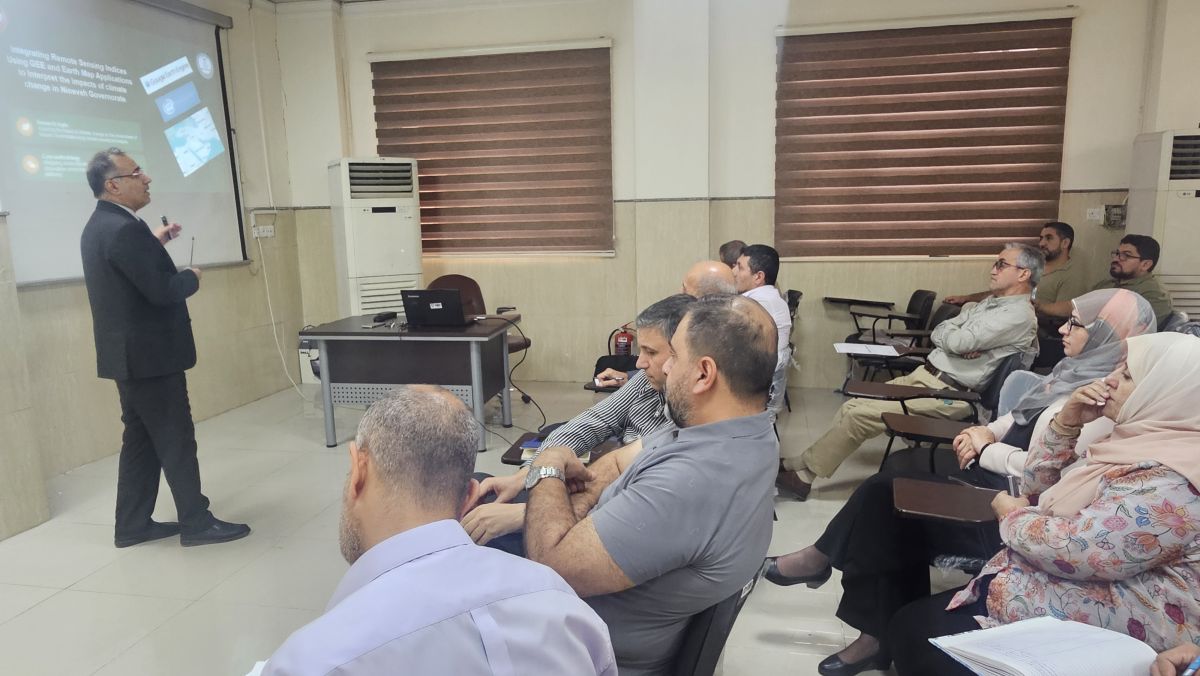
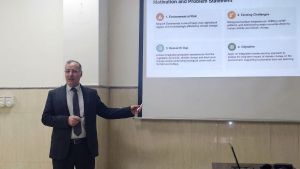
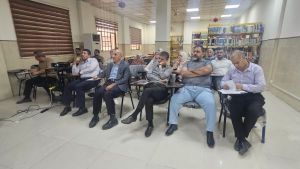
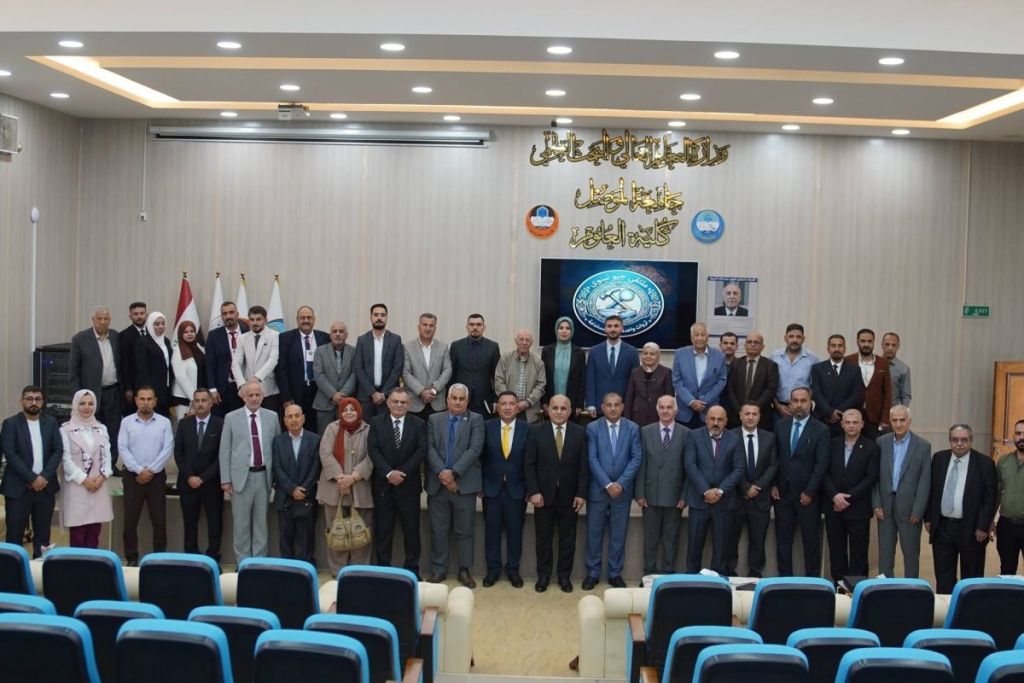
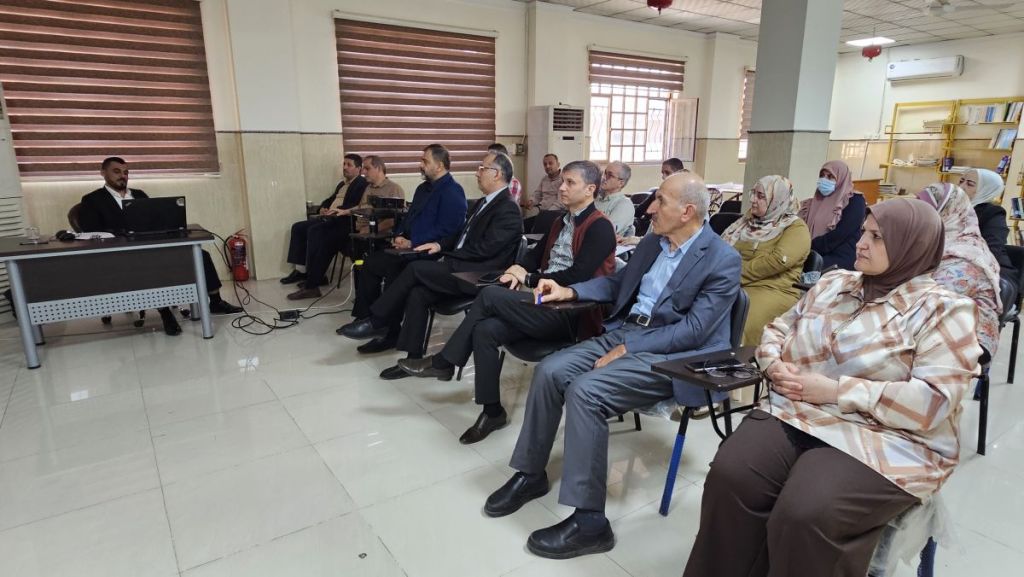
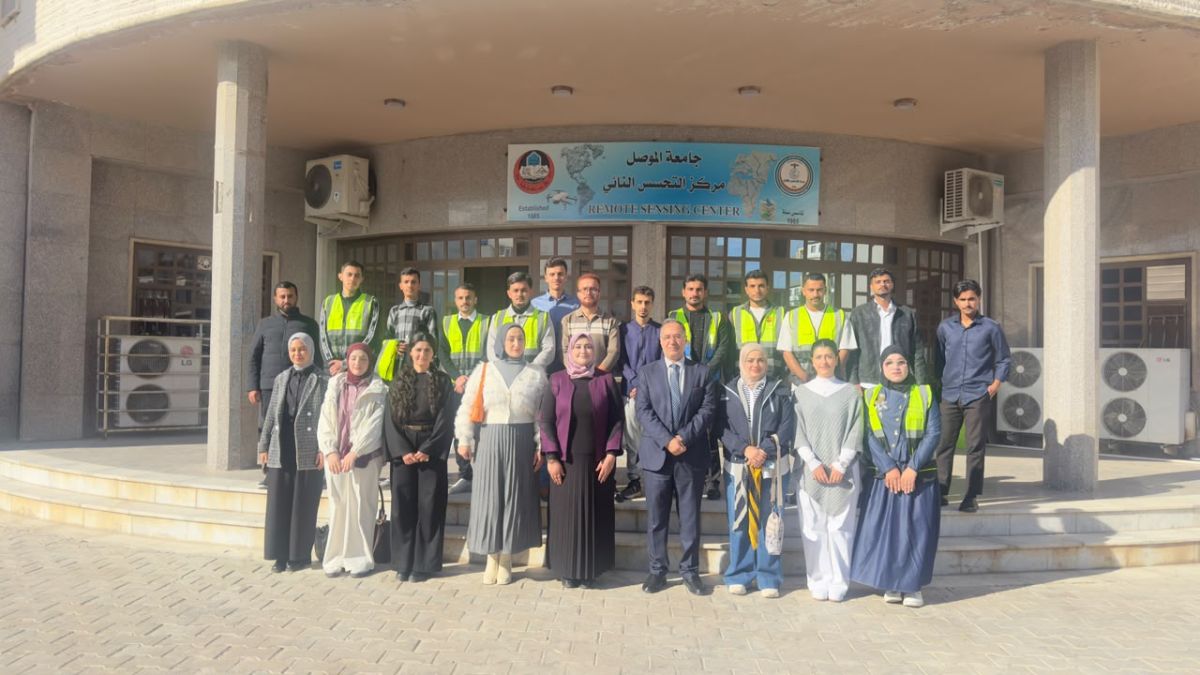
Under the patronage of Professor Dr. Waheed Mahmoud Al-Ibrahimi, President of the University of Mosul, and under the supervision of Assistant Professor Dr. Abdulrahman Ramzi Qabaa, Director of the Remote Sensing Center, the Center held a specialized scientific workshop on Wednesday, 28 October 2026, in the Center’s lecture hall, entitled:
“Integrating Remote Sensing Indices Using GEE and Earth Map Applications to Interpret the Impacts of Climate Change in Nineveh Governorate.”
The workshop explored the use of satellite imagery and remote sensing spectral indices to interpret environmental and climatic changes across two districts of Nineveh Governorate. The analysis focused on long-term time series of vegetation indices, land surface temperatures, precipitation rates, and land use and land cover (LULC) changes.
The study employed cloud-based geospatial analysis platforms, namely Google Earth Engine (GEE) and Earth Map, to process and analyze climate and environmental datasets spanning more than 45 years. This approach enables the accurate monitoring of climate trends and the extraction of reliable scientific indicators to support decision-makers in climate change adaptation and the sustainable management of natural resources.
Preliminary analytical results indicated an overall trend of gradually rising temperatures and declining precipitation, accompanied by accelerated urban expansion and vegetation cover loss. These findings highlight the combined influence of climate change and anthropogenic pressures on the environmental system in the study area.
This workshop reflects the commitment of the Remote Sensing Center and the University of Mosul to advancing applied scientific research and adopting modern technologies for climate change monitoring, with a particular focus on serving Nineveh Governorate and Iraq as a whole.
The initiative also supports the United Nations Sustainable Development Goals (SDGs), particularly SDG 15: Life on Land and SDG 13: Climate Action.