24 July، 2026
Master’s Thesis Defense at the College of Dentistry on the In Vitro Comparison of Implant Placement Accuracy Using Surgical Guides Fabricated via Two Different Types of 3D Printers
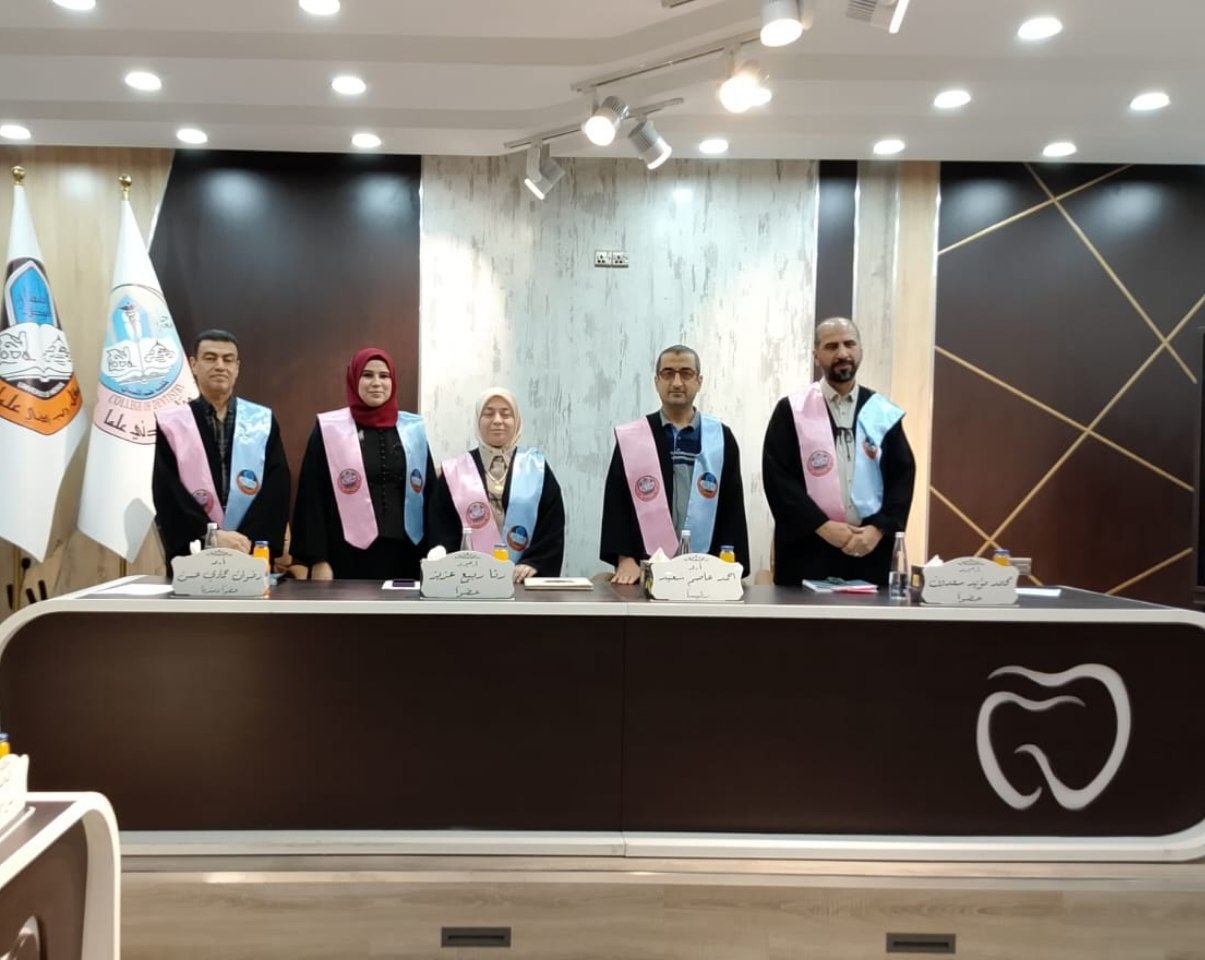
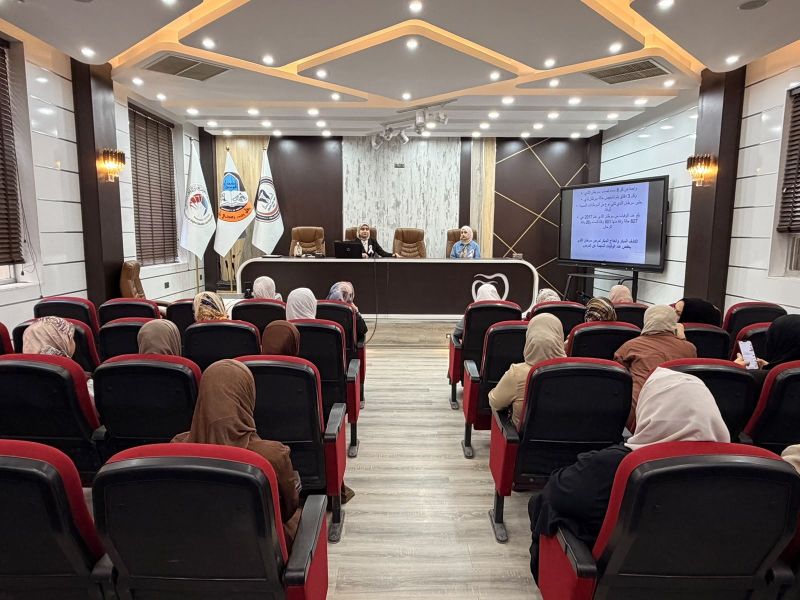
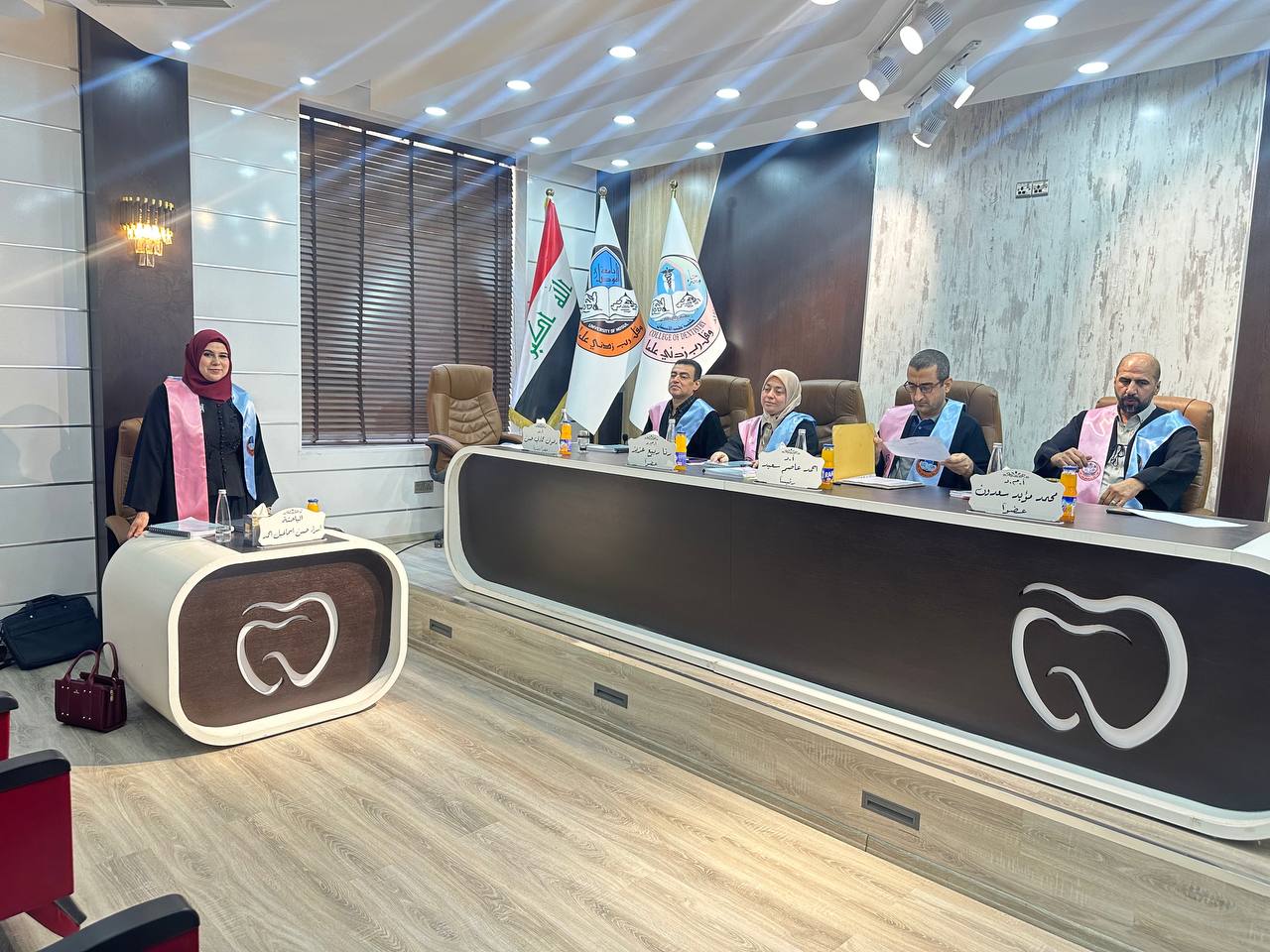
The Department of Prosthodontics at the College of Dentistry, University of Mosul, witnessed on Thursday, July 23, 2026, the defense of the master’s thesis entitled: “In Vitro Comparison of Implant Placement Accuracy Using Surgical Guides Fabricated by Two Different Types of 3D Printers”
Submitted by the student Esraa Hasan Ismail Al-Naimi.
The study aimed to evaluate the accuracy—both truthfulness and precision—of surgical guides fabricated using two different types of 3D printers, two types of resin, and two distinct occlusal surface designs: the original morphology and groove-blockout.
The study methodology involved importing Digital Imaging and Communications in Medicine (DICOM) files and Intraoral Scanning (STL) files into implant planning software. Subsequently, forty surgical guides were designed and printed using two 3D printers. For each printer, two types of resin and two distinct occlusal surface designs were utilized. The models were then scanned using an intraoral scanner, and the planned implant position was compared with its actual position across six measurements representing implant placement accuracy: depth deviation, angular deviation, total apical deviation, horizontal apical deviation, total coronal deviation, and horizontal coronal deviation. Descriptive statistics and Multivariate Analysis of Variance (MANOVA) were employed to analyze the results.
The findings revealed that the first printer paired with the groove-blockout occlusal surface design achieved the lowest mean deviation and standard deviation across all measured parameters, whereas differences between the two resin types were marginal. Furthermore, the printer type exhibited a statistically significant multivariate effect, and the occlusal surface morphology demonstrated a similar significant effect, whereas the resin type showed no statistically significant multivariate effect. Additionally, the interaction between printer type and occlusal design was statistically significant. Univariate tests indicated that both printer type and occlusal surface morphology significantly influenced all six deviation parameters, while the effect of resin type was confined solely to horizontal coronal deviation.
The study concluded that the Digital Light Processing (DLP) printer was more accurate than the Liquid Crystal Display (LCD) printer, and that surgical guide accuracy can be enhanced by blocking out occlusal surface grooves immediately prior to fabrication. Furthermore, the results demonstrated that both SG and V-Guide resins provided equivalent levels of accuracy and precision.
The Examination Committee was chaired by Prof. Dr. Ahmed Asim Saeed, with Assoc. Prof. Dr. Mohammed Muayad Saadoun and Assoc. Prof. Dr. Rana Rabee Aziz as members. Prof. Dr. Radhwan Hummadi Hasan supervised the thesis and served as a member of the committee.
At the conclusion of the defense, the thesis was accepted following the implementation of the necessary revisions.
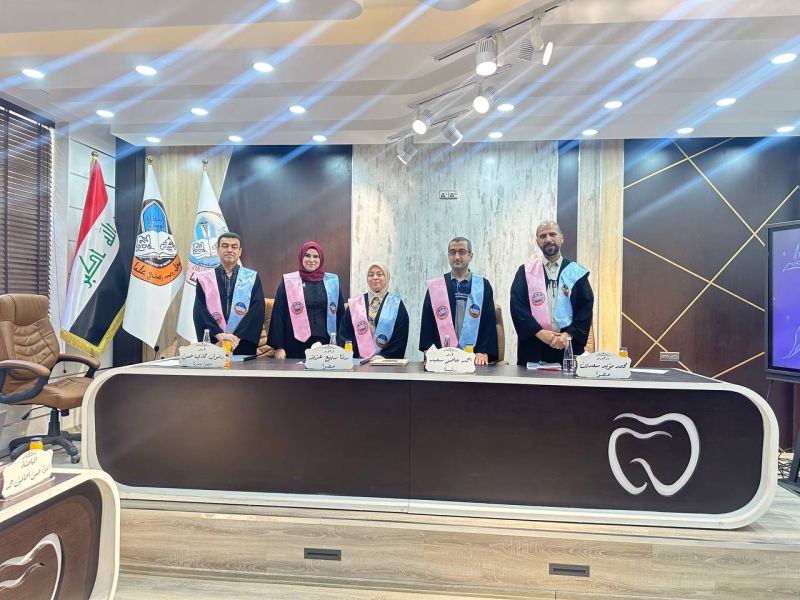
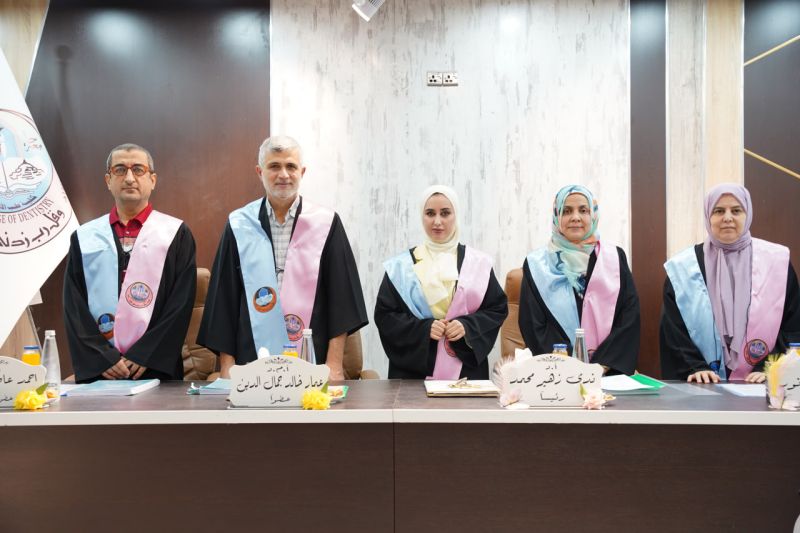 Master's Thesis Defense at the College of Dentistry on the Flexural Strength, Microhardness, and Surface Roughness of 3D-Printed Denture Base Resin under Varying Exposure Times and Post-Polymerization Methods
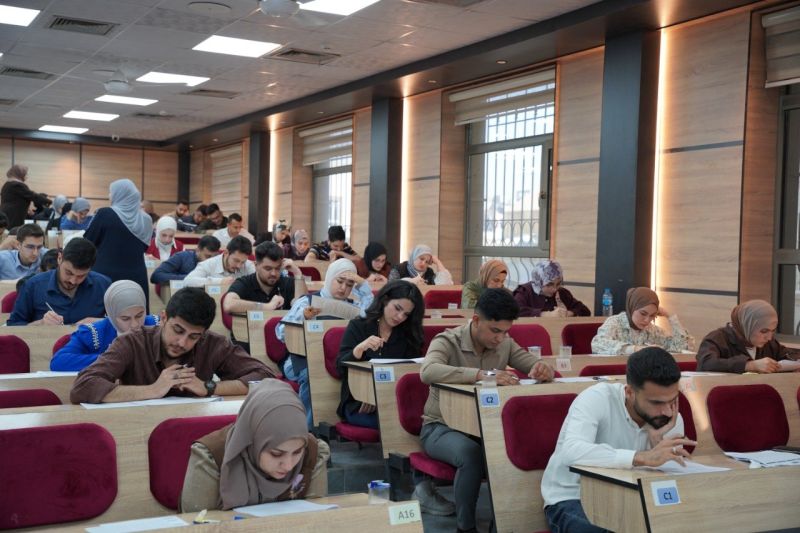 Competitive Examination for Postgraduate Studies (Master's Degree) at the College of Dentistry – University of Mosul