31 October، 2026
Publishing a joint book
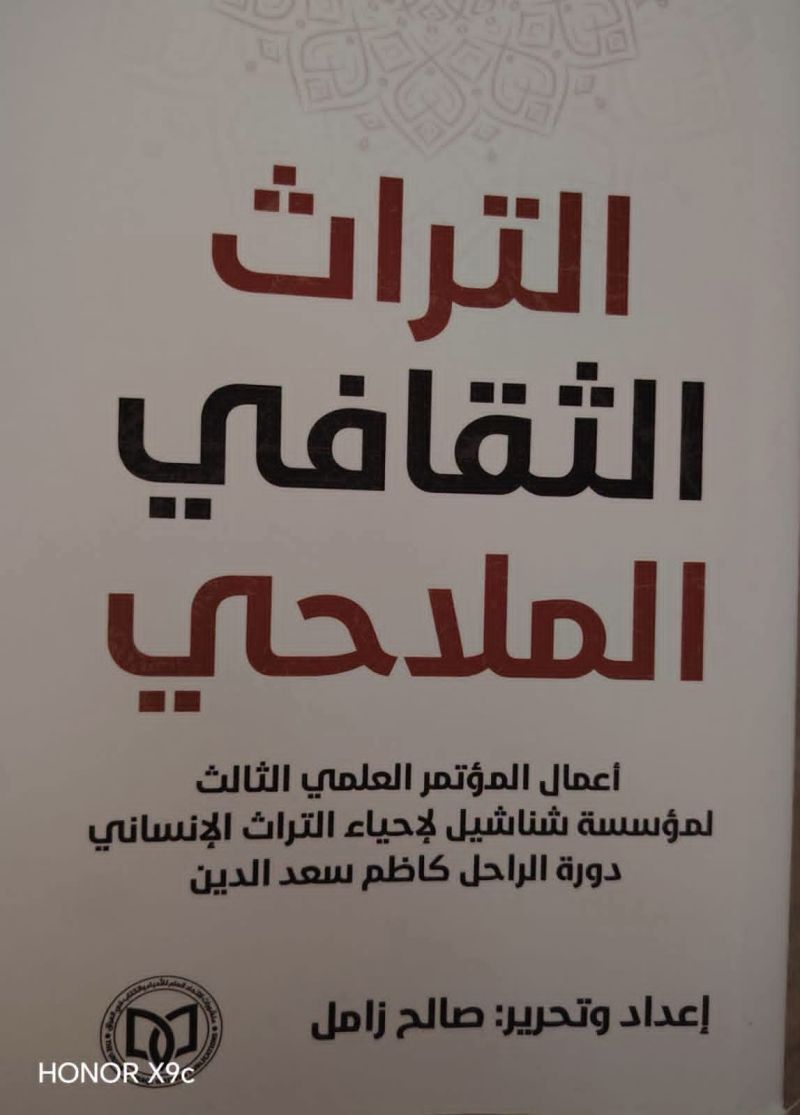
Publication of a Joint Book
…………………….
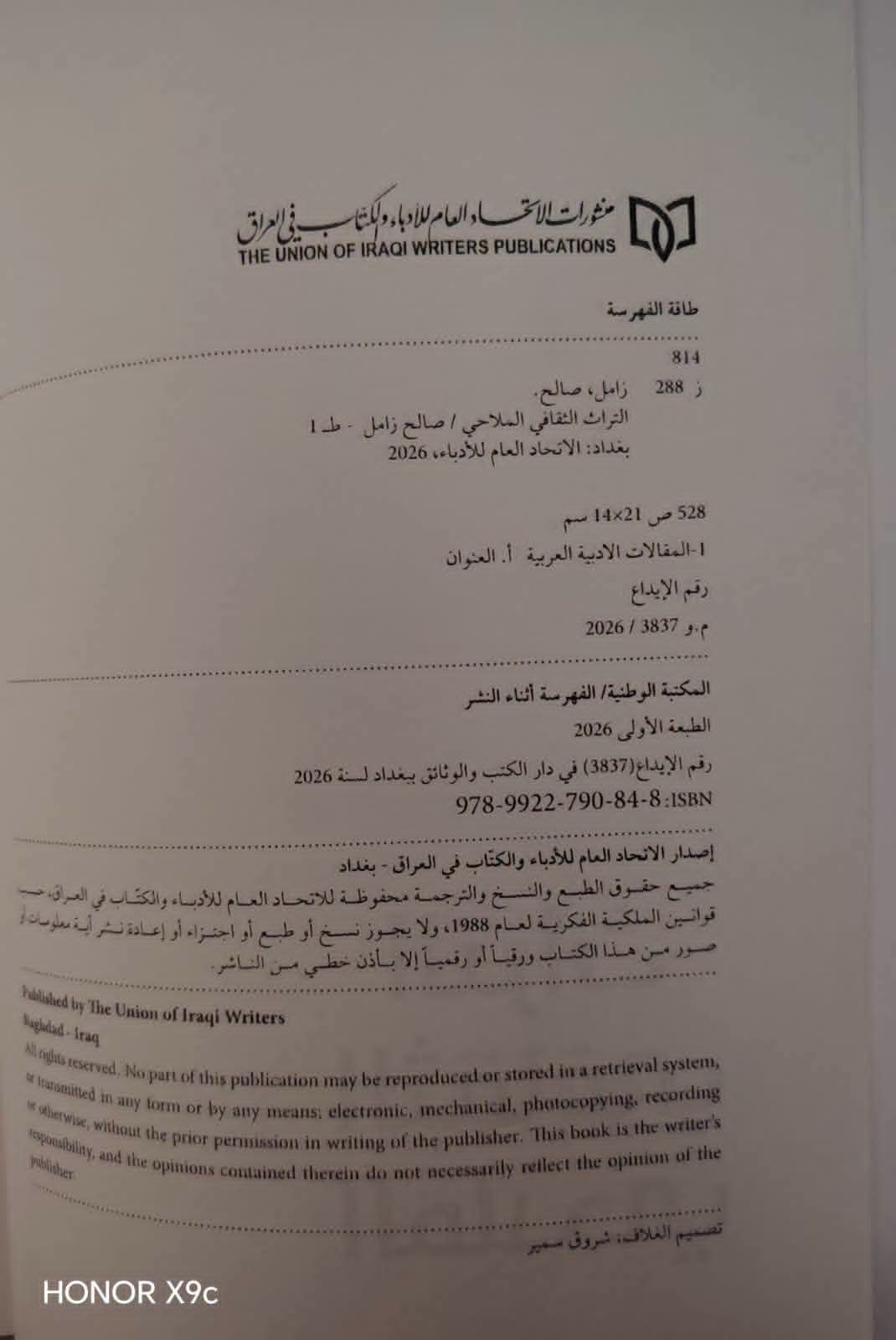
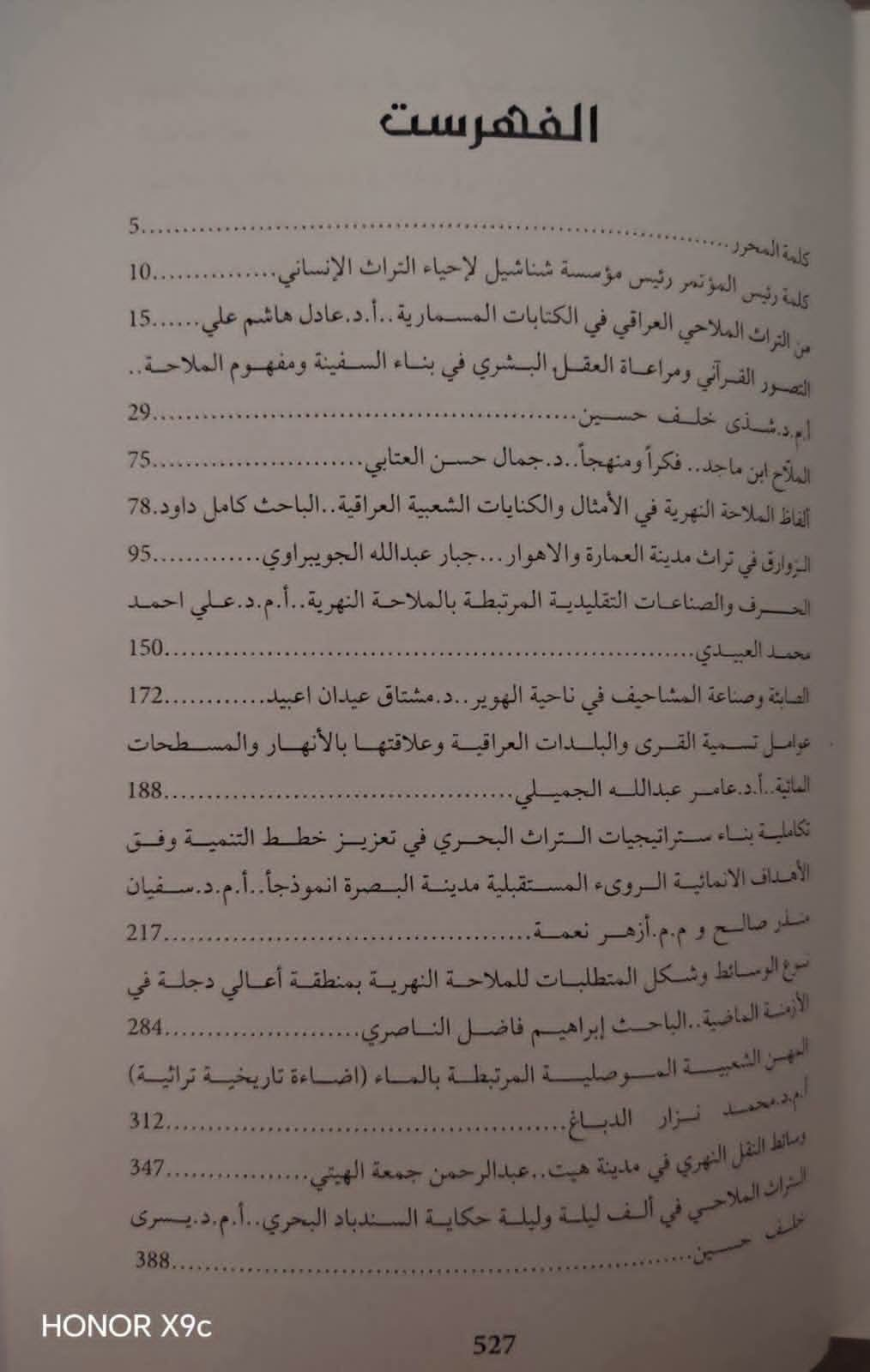
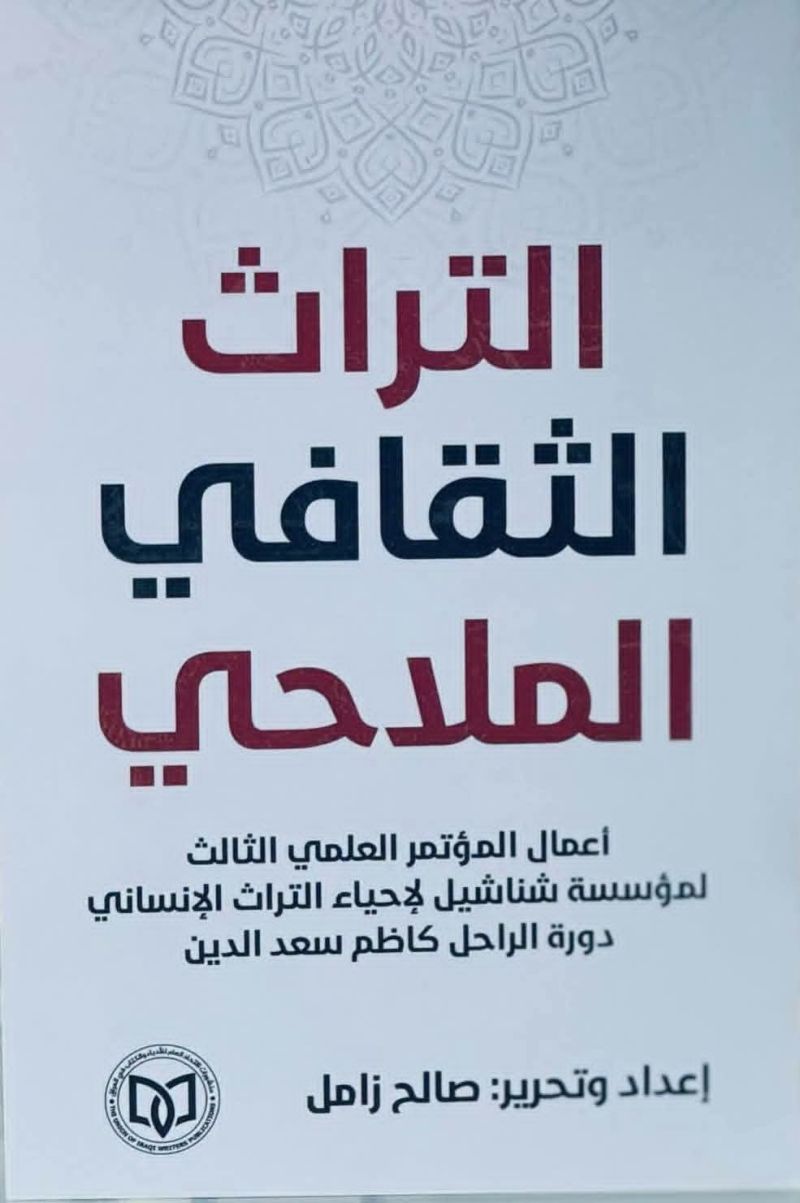
Under the patronage of Prof. Dr. Waheed Mahmoud Al-Ibrahimi, President of the University of Mosul, and under the supervision of Asst. Prof. Dr. Mohammed Nizar Al-Dabbagh, Director of the Mosul Studies Center—and in collaboration with the Department of Studies and Planning (Sustainable Development Unit) at the University of Mosul—a joint book titled *Maritime Cultural Heritage* has been published by the General Union of Writers and Authors in Iraq. The book comprises a collection of research papers presented at the Third Scientific Conference organized by the Shanashil Foundation for the Revival of Human Heritage (dedicated to the late Kadhim Saad Al-Din). It was edited and compiled by Dr. Saleh Zamel (2026). The Mosul Studies Center at the University of Mosul played an active role in this conference, contributing several scholarly papers, including:
1- Prof. Dr. Amer Abdullah Al-Jumaili, with a paper titled: “Factors Influencing the Naming of Iraqi Villages and Towns in Relation to Rivers and Water Bodies: A Toponymic, Geomorphological, and Hydrological Study.”
2- Asst. Prof. Dr. Ali Ahmed Al-Obaidi, with a paper titled: “Traditional Crafts and Industries Associated with River Navigation in the City of Mosul.”
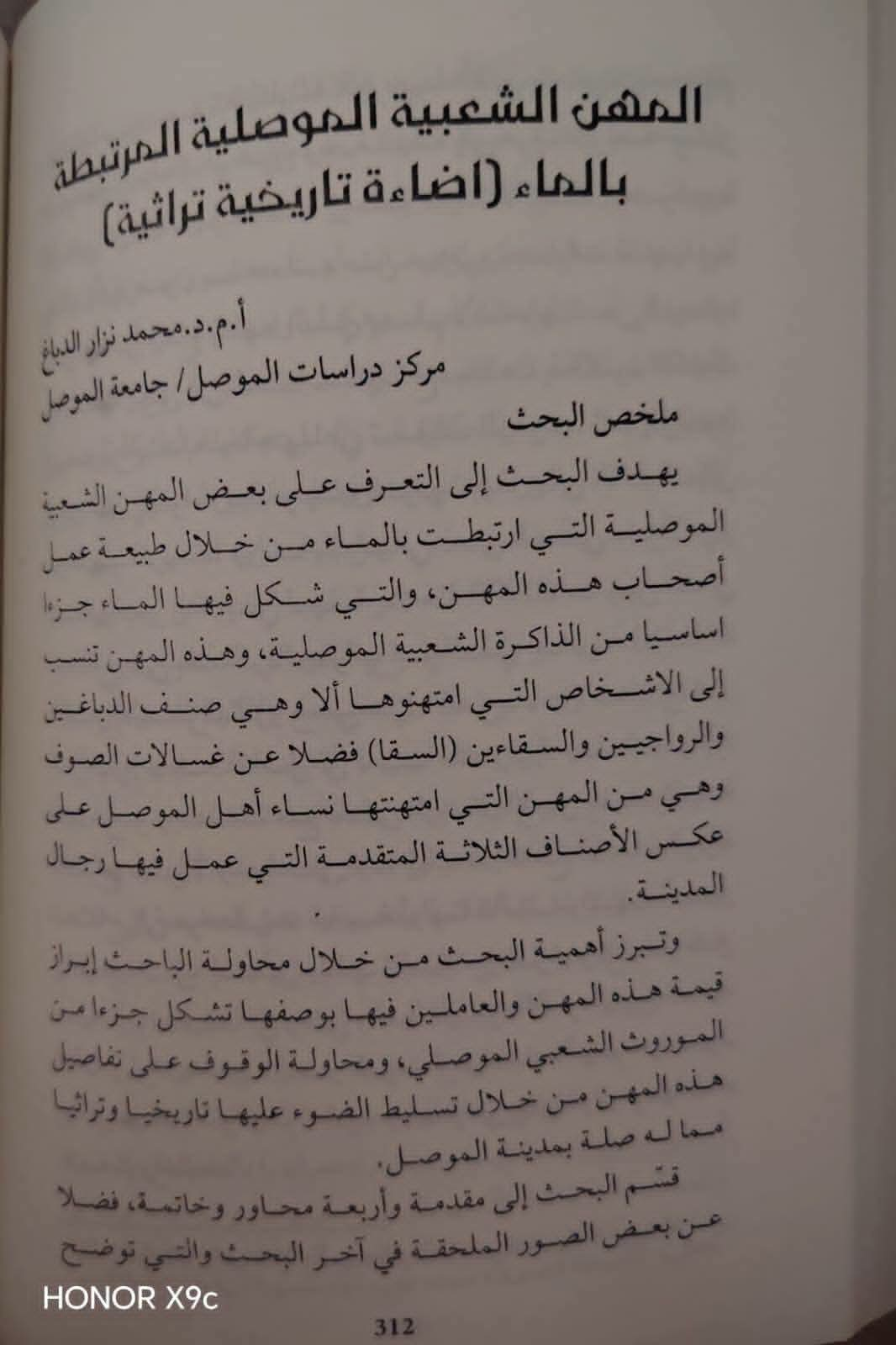
3- Asst. Prof. Dr. Mohammed Nizar Hamid Al-Dabbagh, with a paper titled: “Folk Professions Associated with Water: A Historical and Heritage-Focused Perspective.” The significance of this book lies in its role as a resource for documenting Iraq’s cultural heritage. It compiles a collection of scholarly studies and research papers presented at the third scientific conference organized by the Shanashil Foundation for the Revival of Human Heritage—a total of nineteen papers.
Maritime cultural heritage—much like other forms of Iraq’s tangible and intangible cultural heritage—is as diverse as the Iraqi environment itself. It has been practiced since the Sumerian and Assyrian civilizations, through the Abbasid era, and up to the early twentieth century. This tradition encompassed various modes of water transport—such as *mashahif* (traditional canoes), *kuffas* (circular coracles), boats, and *aklak* (rafts)—which were common throughout these historical periods. Notably, these vessels were environmentally friendly, aligning with the goals of sustainable development—specifically Goals 4, 6, 8, 11, 14, 16, and 17.
For more information:
https://uomosul.edu.iq/en/mosulstudiescenter/2026/10/31/publishing-a-joint-book/
#University_of_Mosul
#Mosul_Studies_Center