6 January، 2026
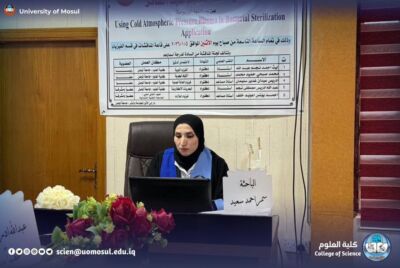
Master thesis at the College of Science examines the use of cold plasma under atmospheric pressure conditions in bacterial sterilization applications
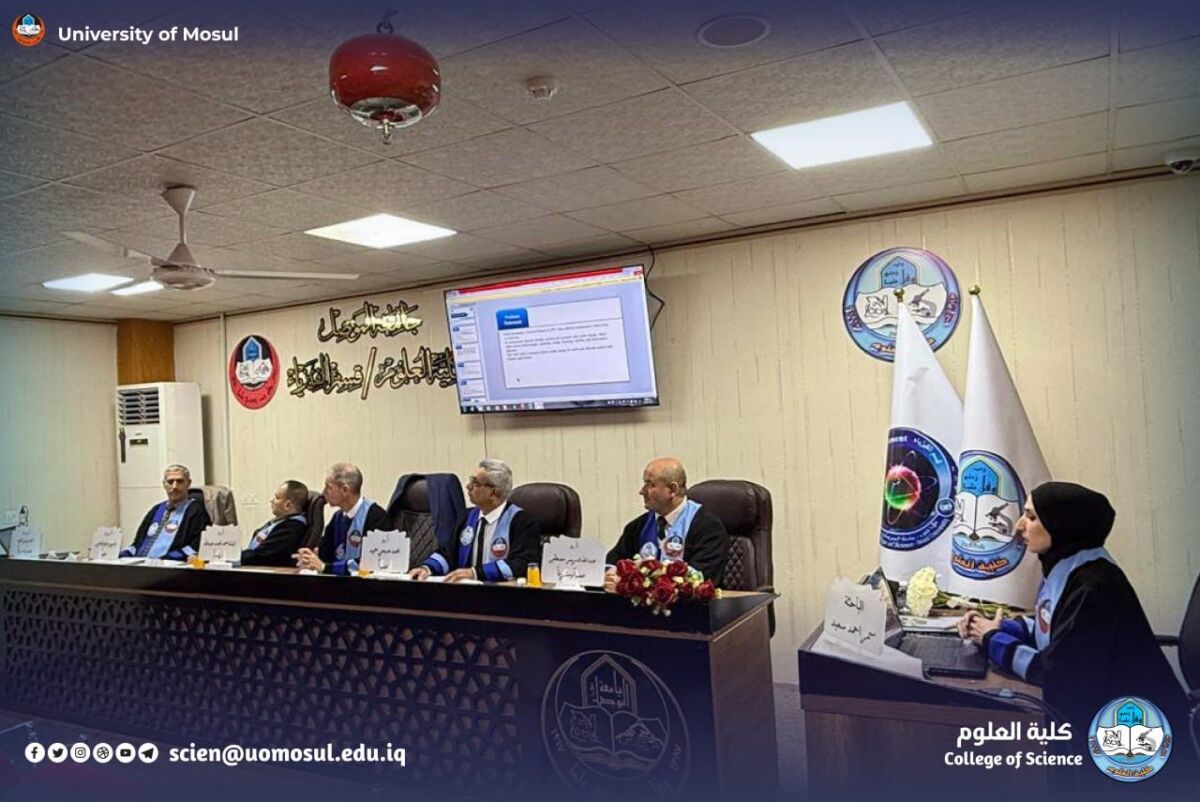
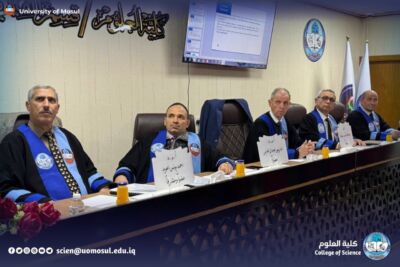
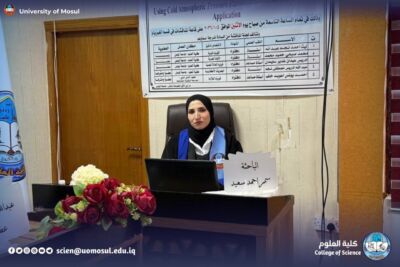
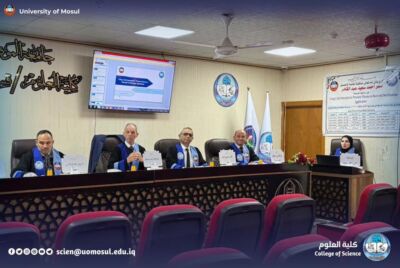
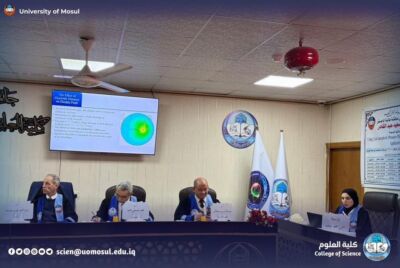
The master’s thesis submitted by the student ( Samar Ahmed said ) and tagged: (the use of cold plasma under atmospheric pressure conditions in bacterial sterilization applications)was discussed at the Physics Department of the College of Sciences / University of Mosul, on Monday, January 5, 2026,
This research presents the presentation, development and evaluation of several cold atmospheric pressure plasma (CAPP)systems to determine the optimal configuration for effective sterilization of bacteria. Several electrode arrangements have been studied, including: an external two-ring electrode system, a single external ring electrode system, a central electrode system with an external ring electrode, a central electrode system only (unipolar), a coaxial system, and a pin-to-pin system. The pin-to-pin system was chosen due to its high ability to generate stable and operationally efficient plasma, as well as the simplicity of its design and scalability for practical applications.
This study also presents a plasma jet system operating at atmospheric pressure using AIR, consisting of two needle electrodes made of tungsten, placed exactly opposite on the perimeter of a cylindrical glass tube through which air passes. The electrodes are fed with a negative DC voltage source with a value of 30 KV. The effects of the separation distance between the electrodes (9.6, 11, 12.6 and 13.6 mm), load resistance (5-20 Kohm), electrode diameter (0.1, 0.3, 0.46 and 1.16 mm) on the characteristics of the discharge current and voltage (V) were studied. It was found that the best engineering and operational parameters are equal to: (10.66 kV, 50 MA, 17 KV, 10 L/min, 0.3 mm, 11 mm) for each of the electrode voltage, plasma current, load resistance, air flow rate, diameter of the needle electrodes, and the distance between the electrodes respectively. Experimental results have shown that increasing the gap between the electrodes leads to a decrease in the discharge current, while reducing the diameter of the electrode increases it. Also, the load resistance serves to adjust the voltage threshold between Corona Discharge, glow and Electric Arc Systems. An optimal set of operational variables has been identified to achieve maximum discharge stability and the best plasma performance, as the study revealed a power-law relationship between current and voltage, which is sensitive to the engineering and electrical parameters of the system. In addition, numerical simulations were used by the FEMM program to study the effect of control parameters within the specified ranges. The simulation results have shown that these factors directly affect the intensity of the electric field and the type of discharge, which is reflected in the efficiency of plasma generation. The simulation results were also compared with practical measurements, and the comparison showed a significant agreement regarding the influence of both the diameter of the electrodes and the distance between them on the electrical characteristics and operating parameters of the system such as discharge current and voltage.
With regard to bacterial sterilization, sterilization operations were performed on flat glass slides contaminated with several types of bacteria, including: Proteus bacteria, Pseudomonas aeruginosa, Klebsiella pneumoniae, Escherichia coli, Staphylococcus aureus and methicillin-resistant Staphylococcus aureus. The study showed the dependence of the efficiency of bacterial sterilization on the exposure time; relatively short exposure times of 5, 10, 15 and 25 minutes were selected, and the process was statistically repeated to confirm the results. The sterilization efficiency was measured by counting the number of bacterial colonies remaining after treatment and comparing it with the standard reference McFarland tube 0.5. The results showed that all types of bacteria were eliminated, but with different exposure times; E. coli was eliminated. E. coli within 10 minutes, while I need S. aureus to 25 minutes. This study shows that cold plasma with optimal design and operational setup can be used as a successful method of sterilization, due to the many practical advantages this method has compared to harmful chemical or radiation sterilization methods.
Based on the results, the Cold Plasma direct sterilization system at atmospheric pressure, with its optimal design and operational parameters, represents an effective and safe technology for sterilizing bacteria, contributing to the development of improved plasma systems that can be used in the field of sterilization.
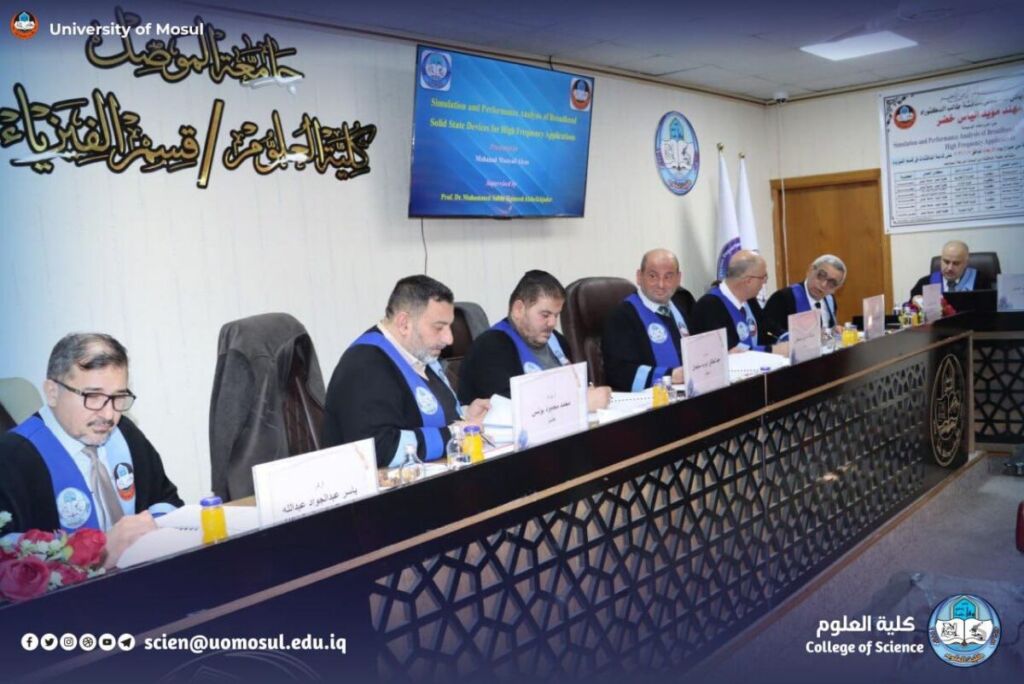
The discussion committee consisted of:
– Prof. Dr. Laith Ahmed Najm (Chairman)
– Prof. Dr. Mohamed Sobhi Hamid (member)
– Assistant professor Dr. Idris Idan Ghadir (member)
– Dr. Abdullah Idris (member and supervisor)
– Assistant professor Dr. Ahmed Younis awaid (member and supervisor)
Our wishes to our students and professors for their hard work and service to the scientific career.
Government information and Communication Division
Tuesday 6 January 2026