18 February، 2026
The Role of Archaeologists in Documenting and Defending Peoples’ Rights: A Workshop
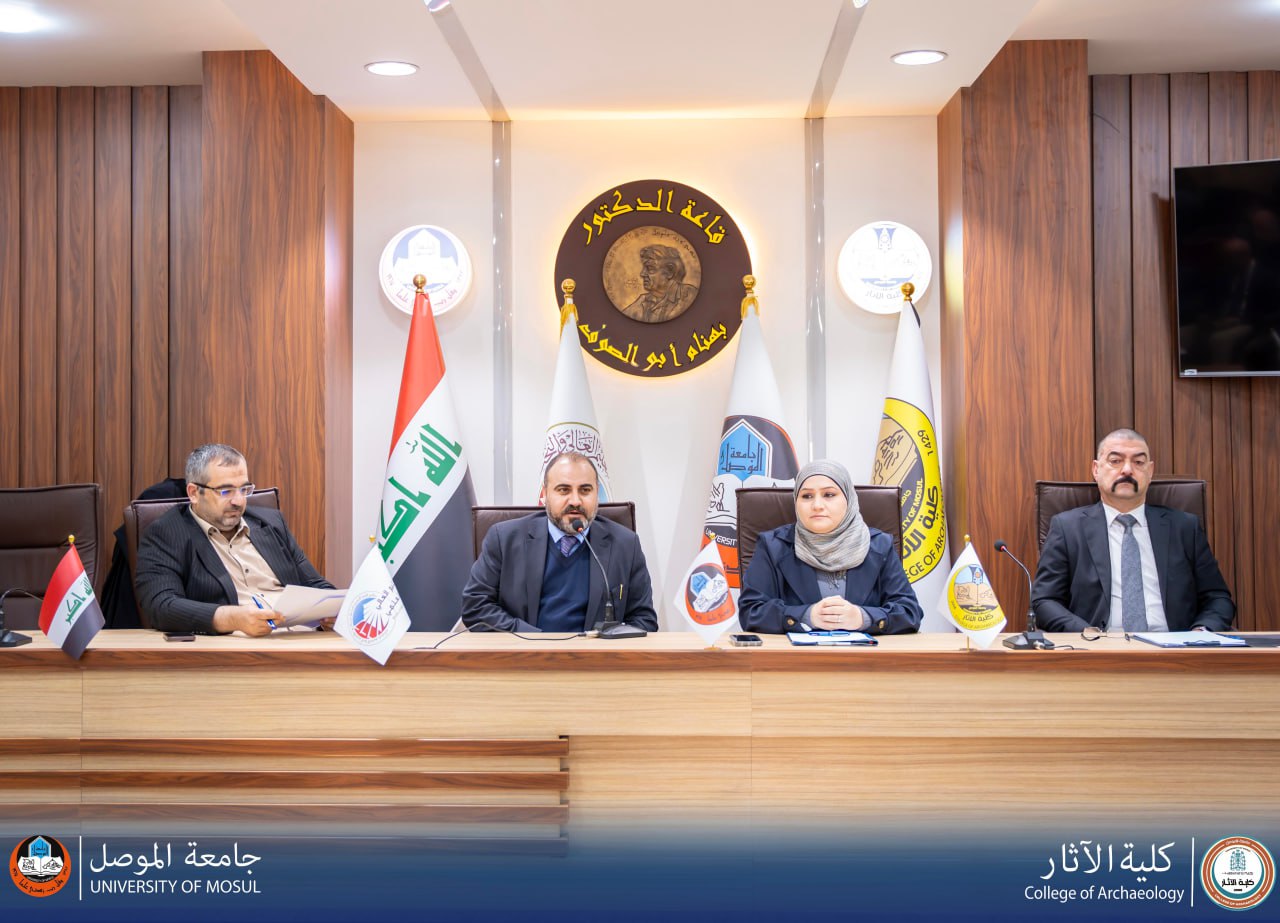
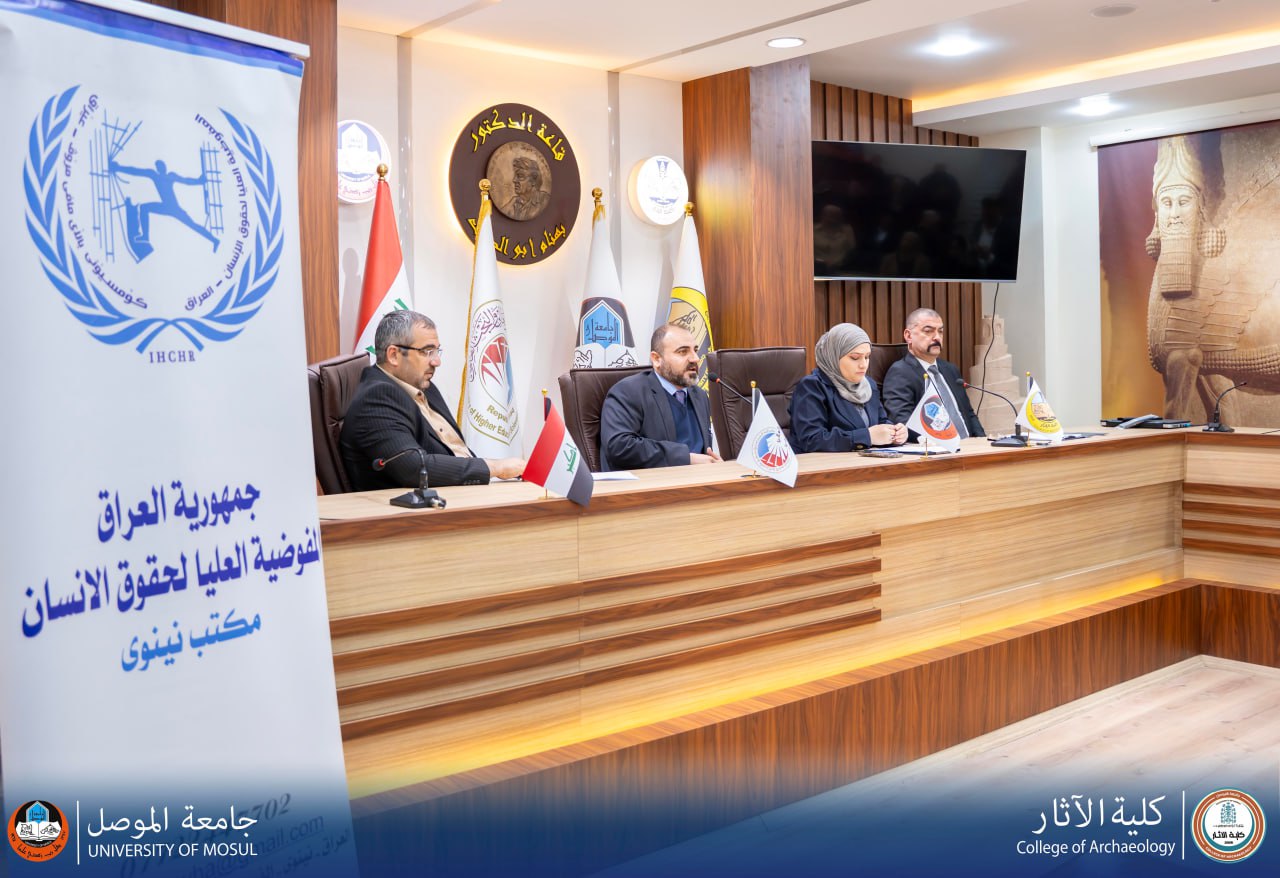
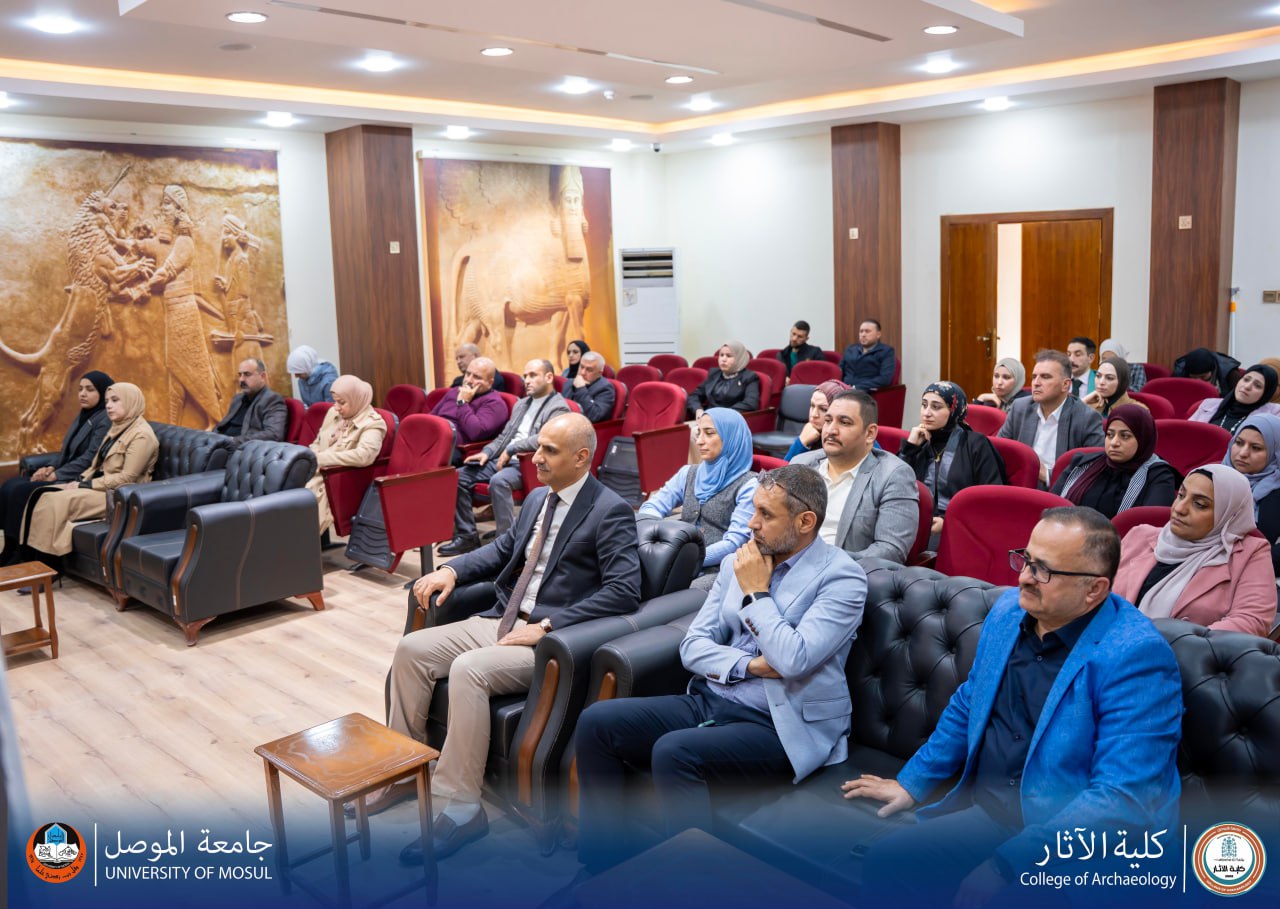
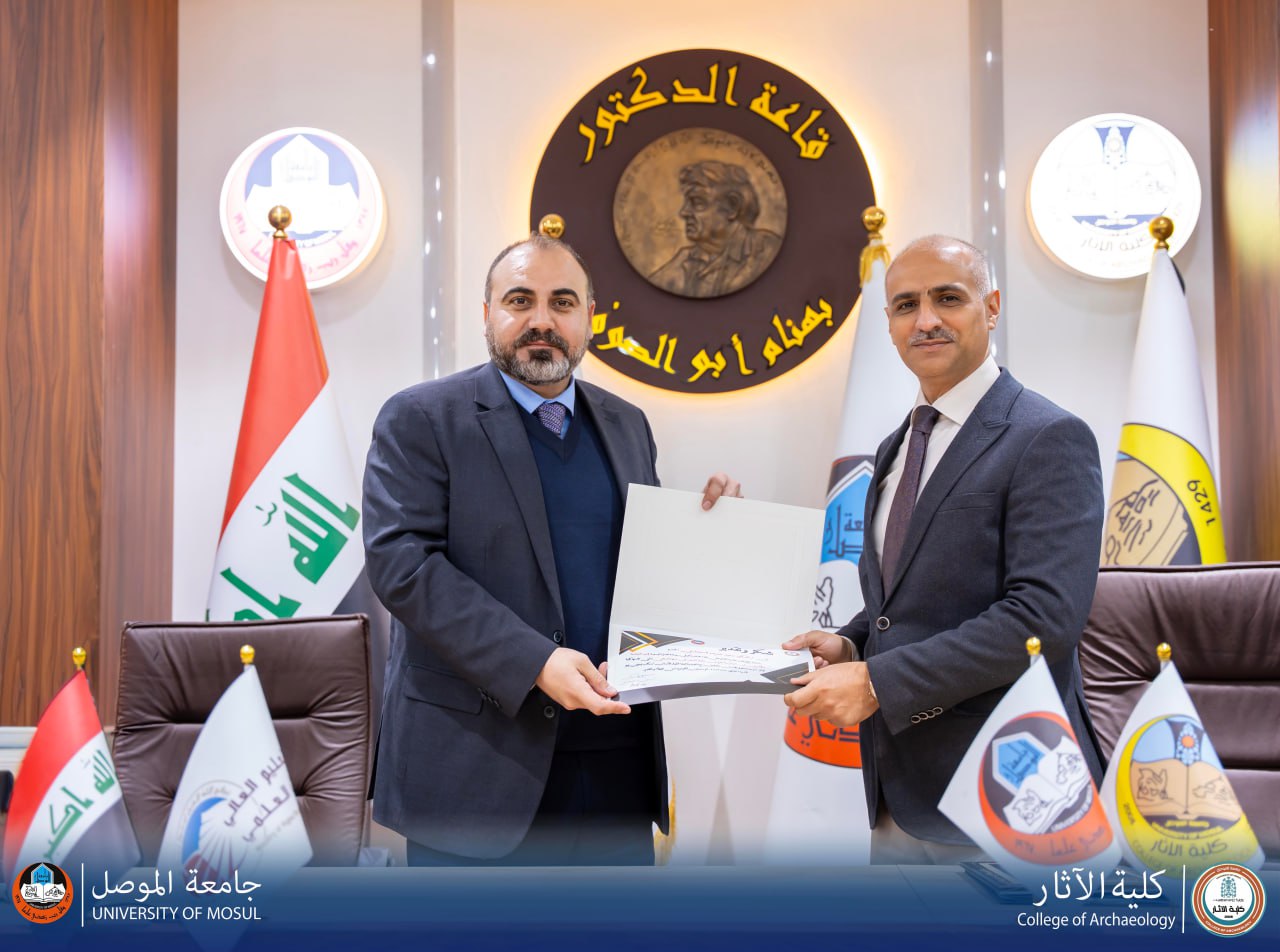
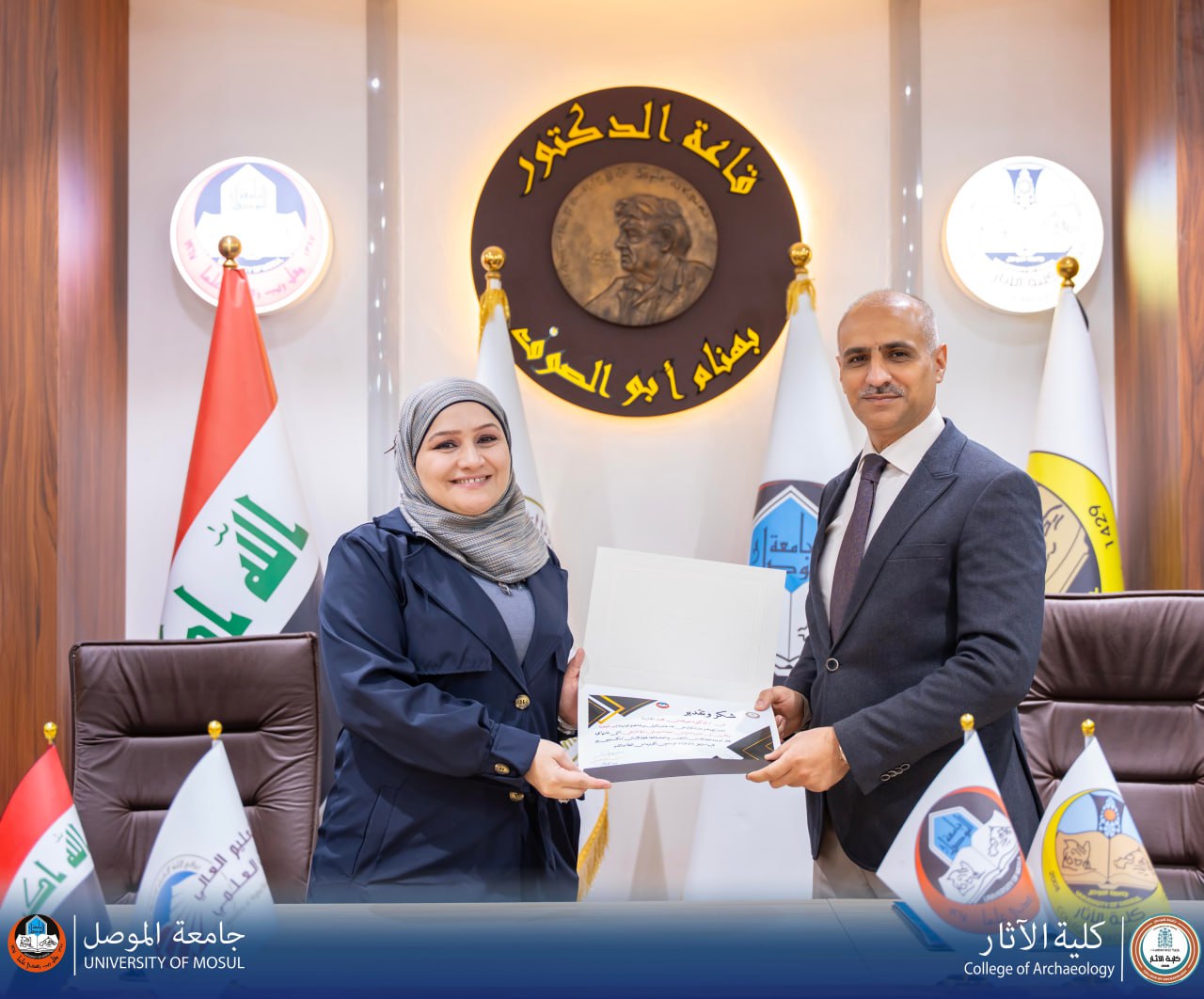
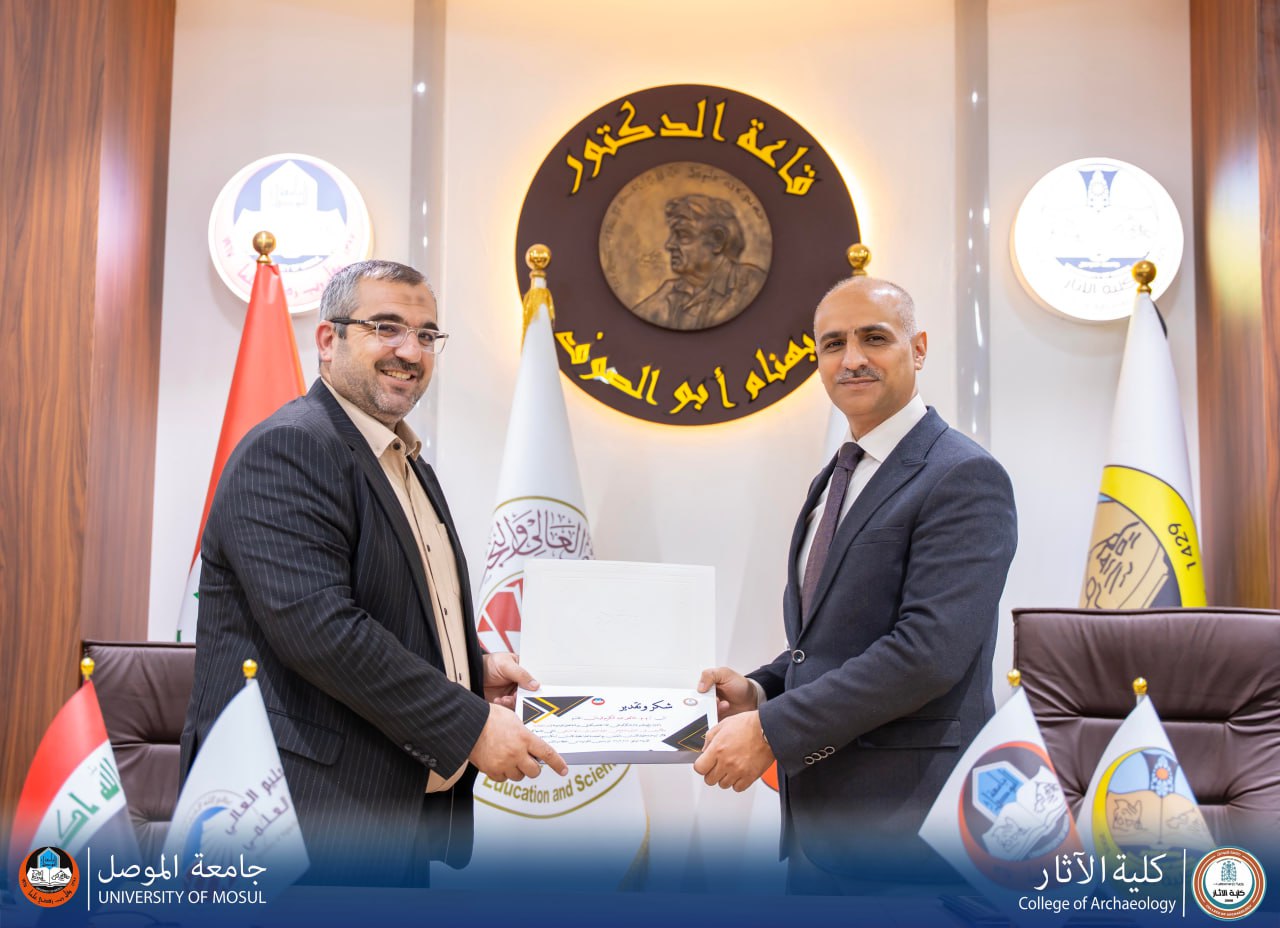
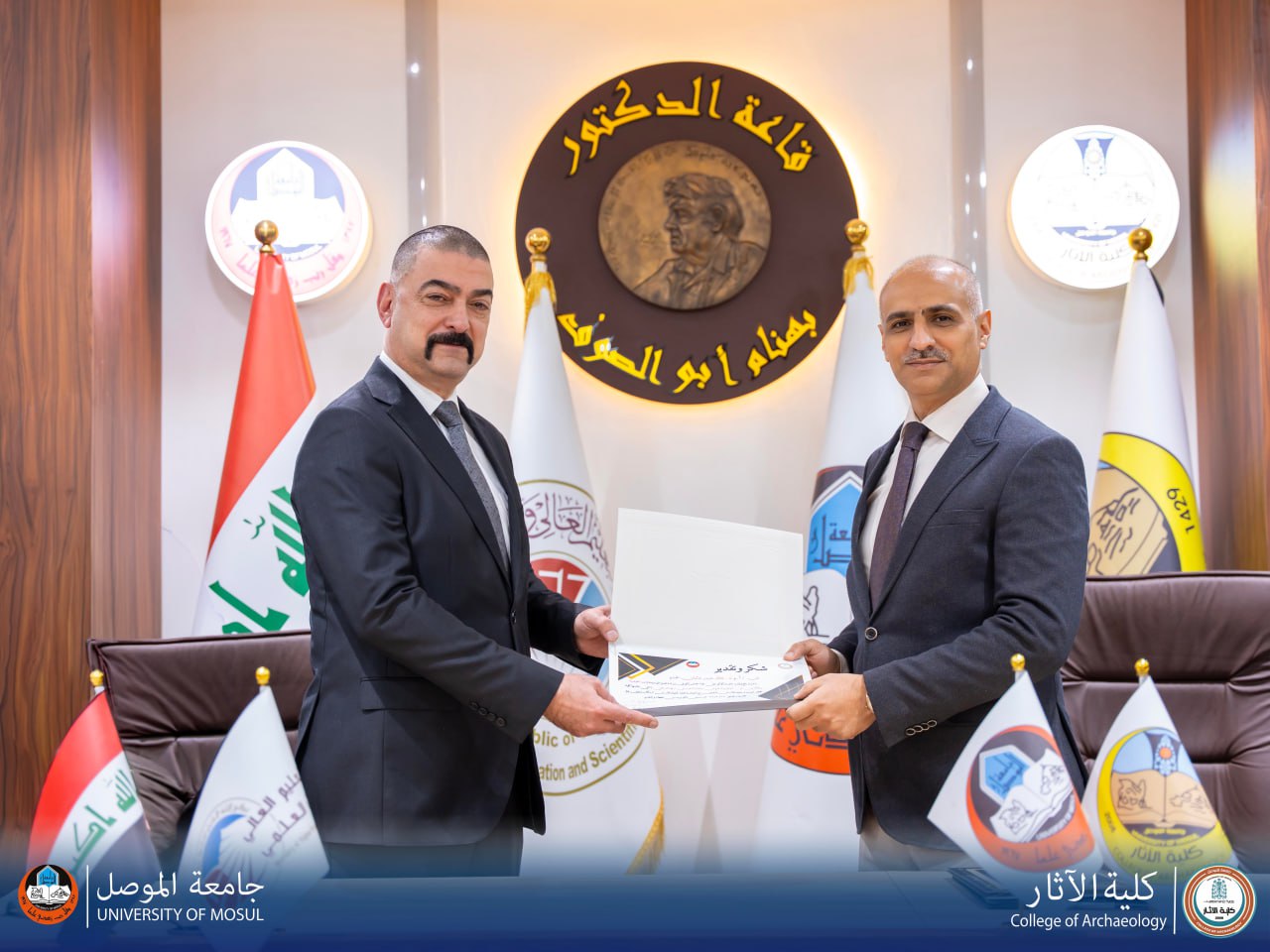
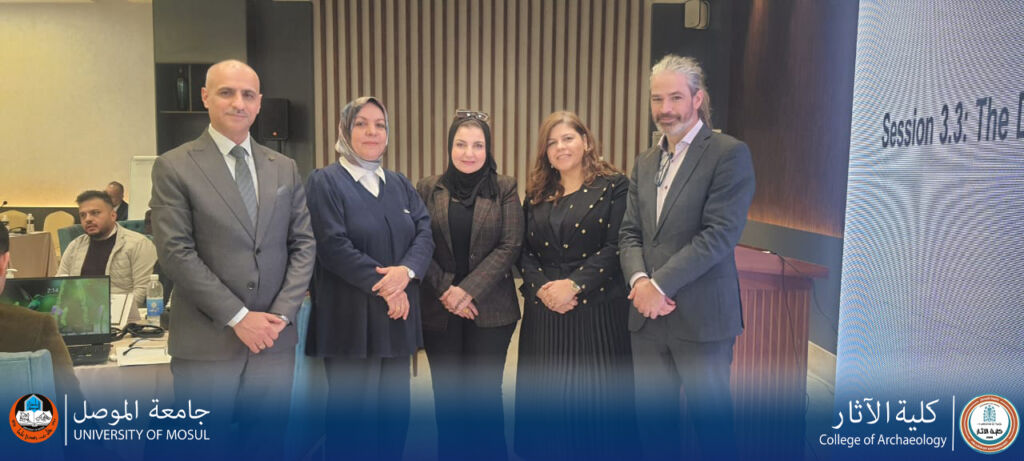
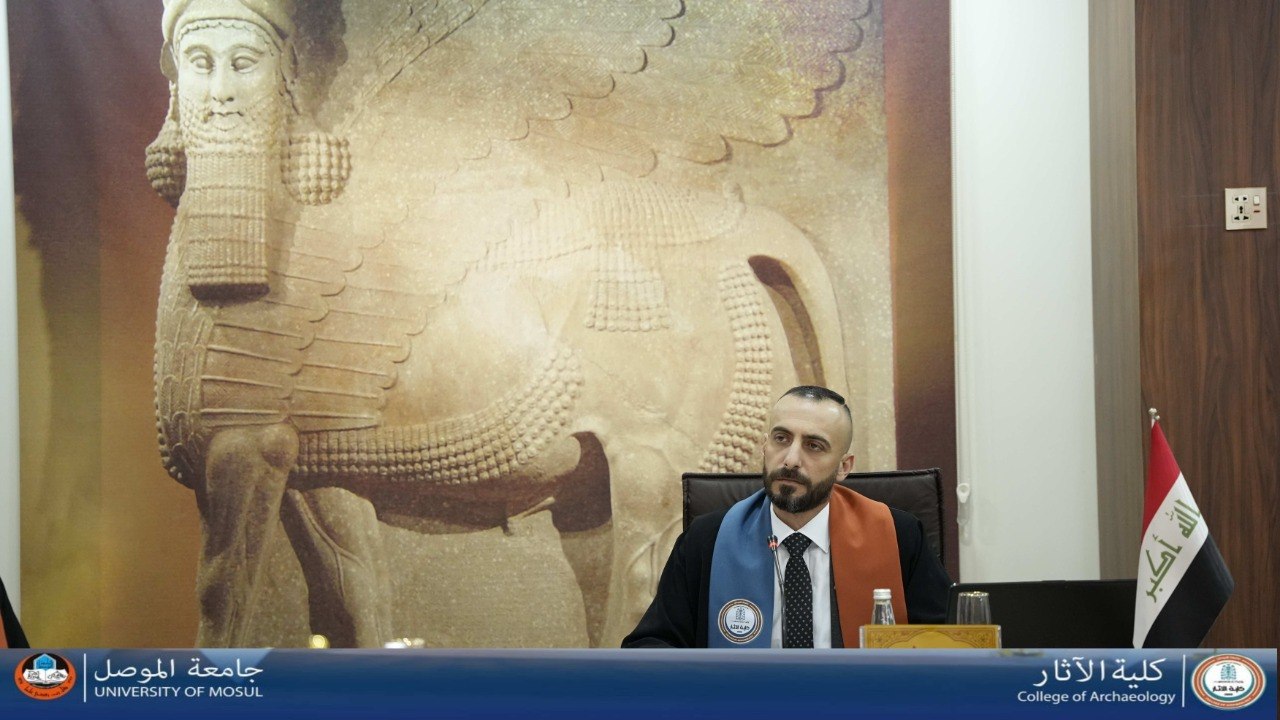
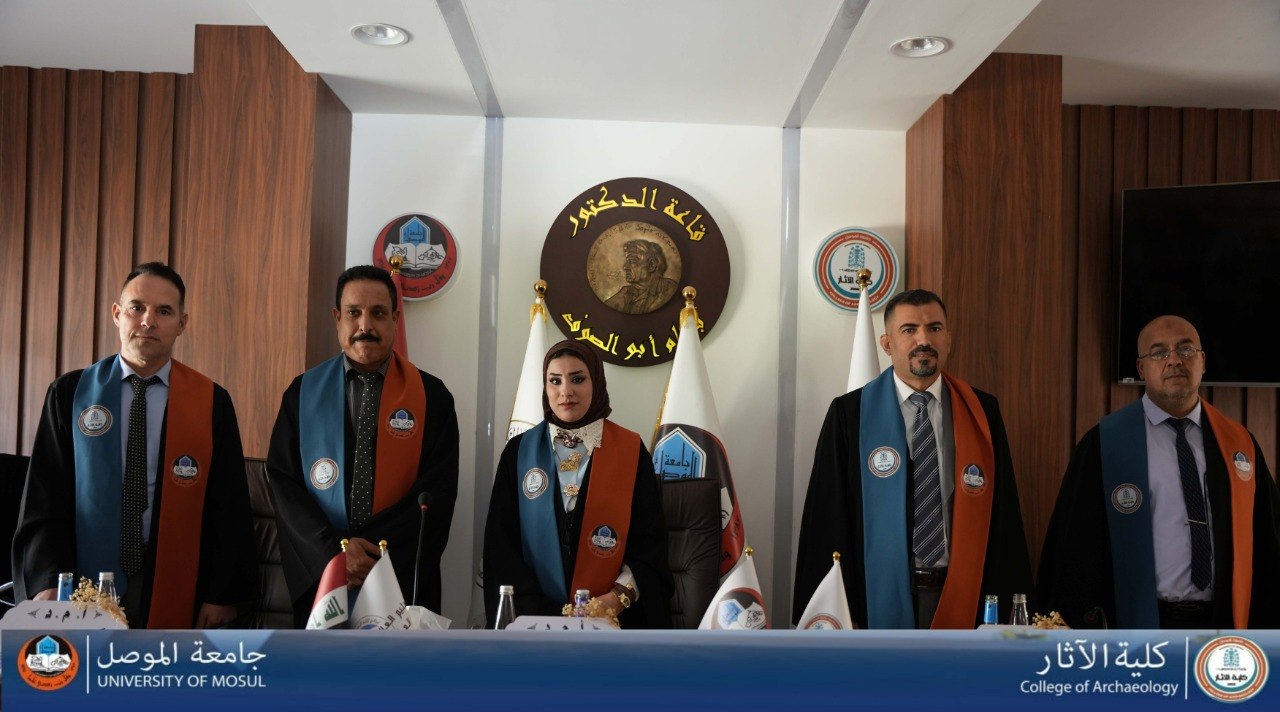
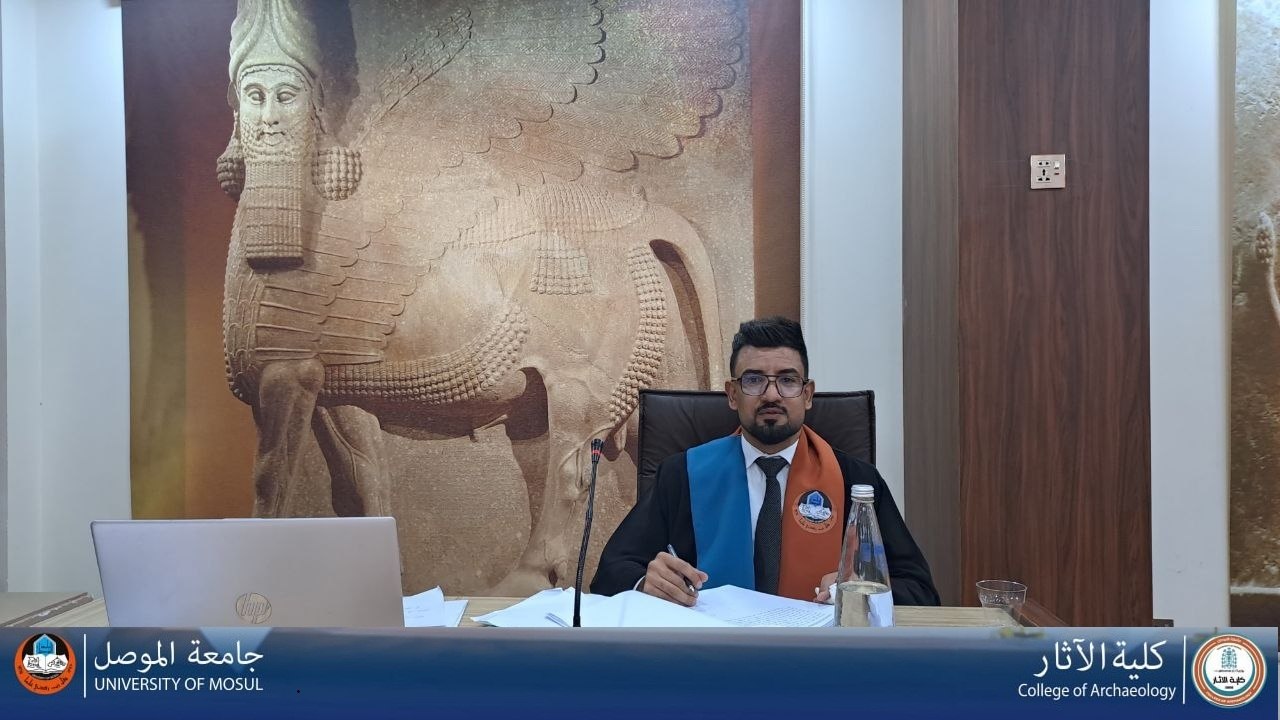
The Human Rights Unit at the College of Archaeology, in cooperation with the Human Rights Division at the University of Mosul and the High Commission for Human Rights/Nineveh Office, held a workshop entitled “The Role of Archaeologists in Documenting and Defending Peoples’ Rights to Their Historical Heritage.” Dr. Nagham Luqman Muhammad, Training Officer at the High Commission for Human Rights/Nineveh, presented a paper entitled “The Role of the High Commission for Human Rights in Protecting Iraqi Antiquities and Heritage,” and Assistant Professor Dr. Khalid Haider Othman from the Department of Archaeology at the College of Archaeology presented a paper entitled “The Role of Archaeologists in Antiquities Laws.” The workshop, held on Wednesday, February 18, 2026, addressed the importance of human rights in preserving antiquities. Archaeology is no longer merely the study of the past or the research of historical finds; it has become a moral and legal responsibility that touches upon human dignity and the right to identity and memory. The archaeologist is the guardian of collective memory. It preserves the tangible evidence that embodies the history of peoples and safeguards the cultural narrative from falsification or erasure. The scientific documentation of archaeological sites and artifacts is not merely an academic endeavor, but a sovereign guarantee for the state, as it preserves its right to its cultural property, enables it to recover what is looted or smuggled, and constitutes legal evidence when holding those who violate heritage accountable. UNESCO, through its conventions, particularly the 1954 Hague Convention and the 1972 World Heritage Convention, has affirmed that the protection of cultural property is an enforceable international obligation. Furthermore, attacks on heritage are no longer viewed simply as damage to buildings or inanimate monuments, but as an assault on the identity, memory, and right of peoples to cultural continuity. Therefore, protecting heritage is not a cultural luxury or an elitist activity, but a legal and moral duty that falls within the framework of human rights. Defending historical heritage is, in essence, defending the dignity of peoples and their right to tell their story to future generations without distortion or erasure. In this context, the archaeologist’s mission transcends the limits of excavation and exploration, becoming a mission of awareness and national and humanitarian responsibility that contributes to strengthening justice, preserving identity, and enshrining the right to memory