27 July، 2025
Discussion of a master’s thesis at the College of Environmental Sciences
The College of Environmental Sciences discusses a master’s thesis, achieving the sixth goal (clean water and sanitation) and the fourth goal (quality education) of the Sustainable Development Goals.
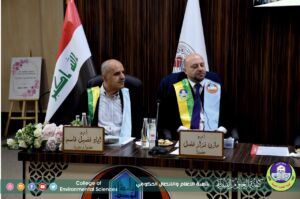
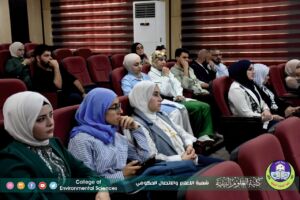
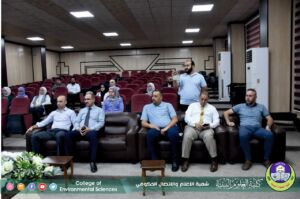
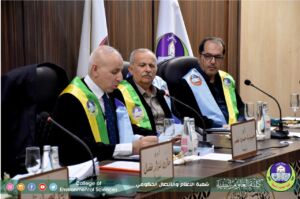
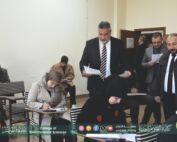
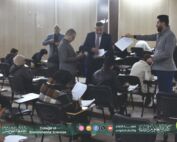
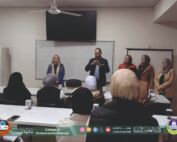
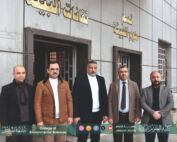
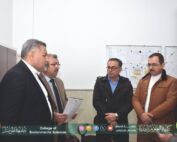
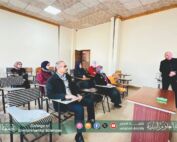
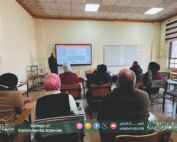
Under the patronage of the President of the University of Mosul, Professor Dr. Wahid Mahmoud Al-Ibrahimi, and in the presence of the Assistant Dean for Academic Affairs, Dr. Muhammad Walid Al-Abbasi, and Dr. Muhammad Ibrahim Khalil, Head of the Department of Environmental Sciences, the master’s thesis, entitled “Spatial Analysis of Groundwater Quality in the Ba’shiqa District and Its Suitability for Some Uses,” was discussed by student Omar Mahmoud Ibrahim in the discussion hall at our college this morning, Sunday, July 27, 2025.
The discussion committee consisted of:
Professor Dr. Suhaib Hassan Khader – Chair, College of Education for Humanities, University of Mosul
Assistant Professor Dr. Mazen Nizar Fadl – Member, College of Environmental Sciences, University of Mosul
Assistant Professor Muhammad Fakhruddin Ahmed – Member, College of Environmental Sciences, University of Mosul
Assistant Professor Dr. Ayad Fadhil Qasim – Member and Supervisor, College of Environmental Sciences, University of Mosul
Assistant Professor Raed Mahmoud Faisal – Member and Supervisor, College of Environmental Sciences, University of Mosul
This study assessed the quality of groundwater in the Bashiqa district of Nineveh Governorate and its suitability for various uses. It included collecting and analyzing samples from 20 geographically distributed groundwater wells during the summer and winter seasons of 2024-2025, conducting comprehensive physical and chemical analyses, and calculating irrigation standards and water quality indicators for drinking, irrigation, and animal watering. The results showed clear spatial variation in water quality due to geological factors and human activities, with the water type Ca–HCO₃ predominating in most samples, and a large percentage of them classified as non-compliant. The water quality in Ba’shiqa district is below drinking water standards, but it is relatively acceptable for irrigation and animal watering, with some exceptions.
The study aimed to:
Study the quality of groundwater in the Ba’shiqa district and determine its physical and chemical properties.
Determine the spatial distribution of groundwater quality using a geographic information system.
Evaluate the suitability of water for drinking and animal watering based on the Water Quality Index (WQI).
Evaluate the suitability of water for irrigation using the Water Quality Index (WQI) and Wilcox and Richards diagrams.
Draw spatial maps to classify water quality and identify areas suitable and unsuitable for different uses.
The study recommended:
1- Raising health and environmental awareness through various media outlets to highlight the dangers of using groundwater without verifying its suitability for drinking, domestic, and agricultural uses.
2- Searching for alternative sources of groundwater, especially in areas suffering from pollution, to ensure the provision of safe and suitable water for human and agricultural use.
3- Educating farmers about the dangers of excessive use of pesticides and nitrogen fertilizers, given their negative impacts on soil, groundwater, and plants, and the potential transmission of harmful pollutants to the final consumer within the food chain.
4- Using rainwater harvesting techniques as a practical and sustainable alternative to contaminated groundwater, to reduce pressure on degraded resources and enhance water security in affected areas.
5- Adopting modern irrigation methods such as drip or sprinkler irrigation, and selecting salt-resistant crops, aims to rationalize water consumption and reduce soil and water salinization problems.
6- Conduct future studies focusing on analyzing the concentrations of toxic heavy metals such as lead, cadmium, and mercury in well water, given their potential risk to human, animal, and plant health.
7- Strengthening environmental control over groundwater resources by implementing advanced monitoring and inspection systems to reduce water pollution from chemicals and pesticides.
8- Encouraging the use of water treatment technologies in the region, with the aim of improving the quality of groundwater and making it suitable for various uses.
9- Directing scientific research to study the effects of climate change on the quality and quantity of groundwater, in order to develop effective strategies for adapting to these changes and ensuring the sustainability of the water resource.
July 27, 2025
University of Mosul / Sustainable University
Department of Media and Government Communication
#College_of_Environmental_Sciences