24 August، 2025
Discussion of a master’s thesis at the College of Environmental Sciences on the catalytic degradation of plastic particles using nanocatalysts.
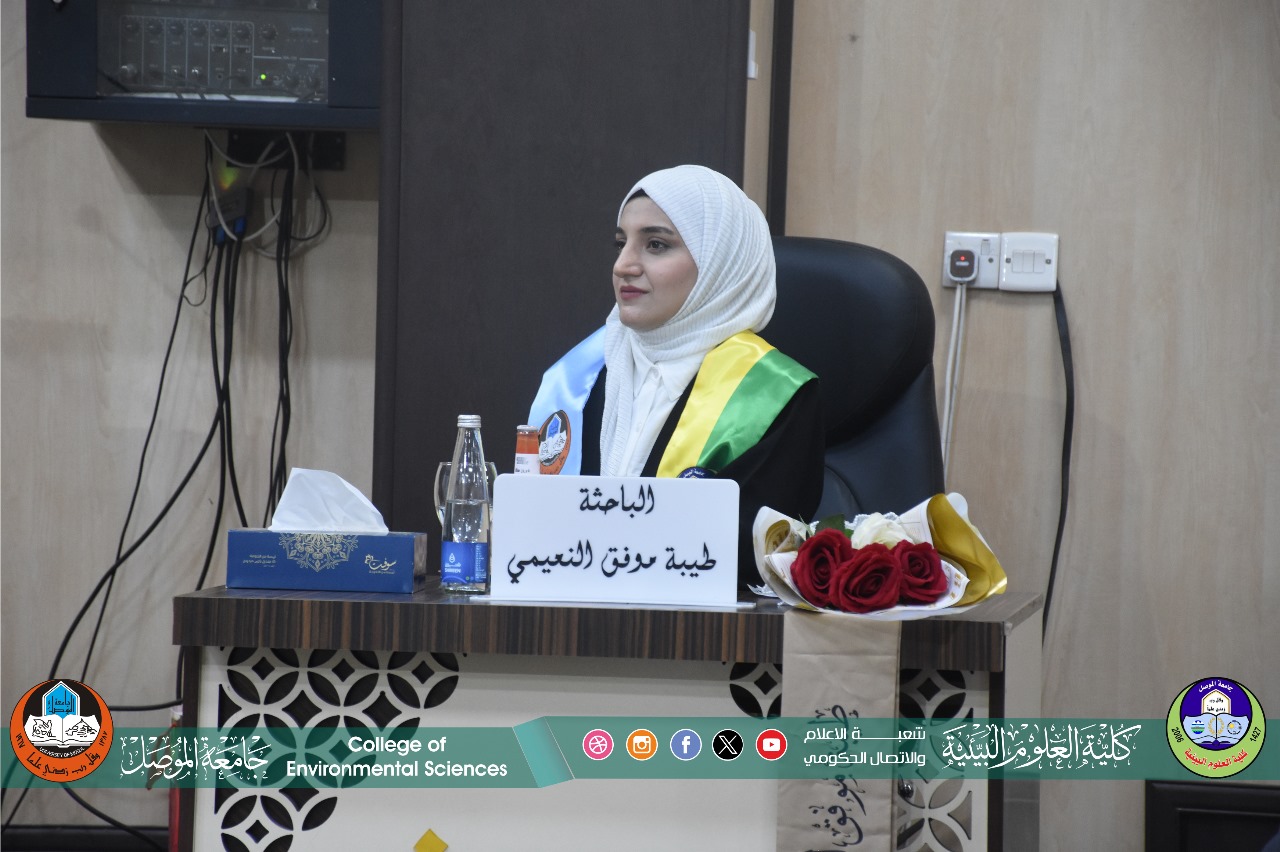
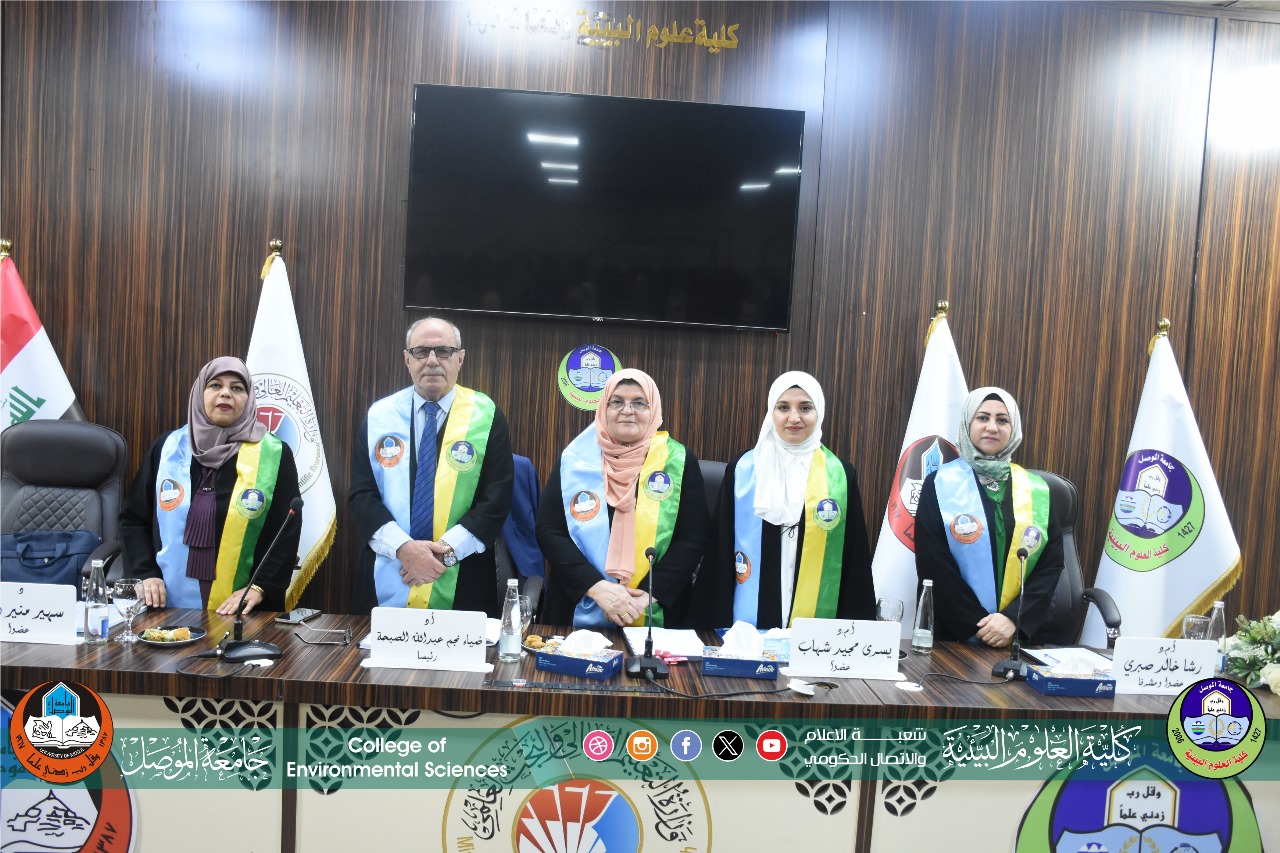
Under the patronage of the President of the University of Mosul, Professor Dr. Wahid Mahmoud Al-Ibrahimi, and in the presence of the Dean of the College, Professor Dr. Muthanna Jassim Al-Taie, the Dean’s Assistants for Scientific and Administrative Affairs, and the Head of the Department of Environmental Sciences, the Master’s thesis defense, titled “Photocatalytic Degradation of Microplastics in Aqueous Solution Using Nano-Catalysts,” was held this morning, Sunday, August 24, 2025, in the discussion hall of our college.
The defense committee was chaired by Professor Dr. Diaa Najm Al-Subha, and included Assistant Professor Yusra Majeed Al-Shaker and Assistant Professor Dr. Suhair Munir Daoud, under the supervision and membership of Assistant Professor Rasha Khaled Sabri and Professor Dr. Qusay Kamal Al-Din Al-Ahmadi.
The study aimed to prepare iron oxide nanoparticles using a green, low-cost, environmentally friendly, and sustainable method using pomegranate peel extract, and to study the photodegradation of polyvinyl chloride microplastics using sunlight in a batch system. In addition to optimizing the operational conditions of the photodegradation process using the response surface methodology (RSM), a set of mathematical and statistical methods designed to analyze data and determine optimal operating conditions for the reaction.
The study recommended:
It is recommended that photodegradation technology using iron nanoparticles be integrated into the existing infrastructure of drinking water and wastewater treatment plants, with the aim of enhancing the efficiency of removing microplastics in real-world application settings.
It is recommended that green-prepared iron nanoparticles be used as a sustainable alternative based on green chemistry principles, given their promising effectiveness in large-scale water treatment applications.
It is recommended that additional studies be conducted to evaluate the potential health effects of microplastics on human health and laboratory animals, to gain a deeper understanding of the associated environmental and health risks.
It is necessary to raise public awareness of the sources and risks of microplastic pollution in drinking water, through community awareness campaigns and encouraging plastic waste recycling practices to reduce the spread of this type of pollutant. The results of this study confirm the promising potential of green-manufactured iron nanoparticles as an effective solution to address microplastic pollution, calling for further research and development to expand their use in sustainable environmental solutions.
Encourage low-cost applied research into the manufacture of nanomaterials using locally available resources, which contributes to reducing treatment costs in developing countries.
The study highlights the need to develop clear national policies and legislation to monitor microplastics in water and impose standard limits for their concentration, thus enhancing the efficiency of treatment and control strategies.
The study achieved five Sustainable Development Goals: Goal 3 (Good Health and Well-being), Goal 4 (Quality Education), Goal 6 (Clean Water and Sanitation), Goal 9 (Industry, Innovation, and Infrastructure), and Goal 12 (Responsible Consumption and Production).
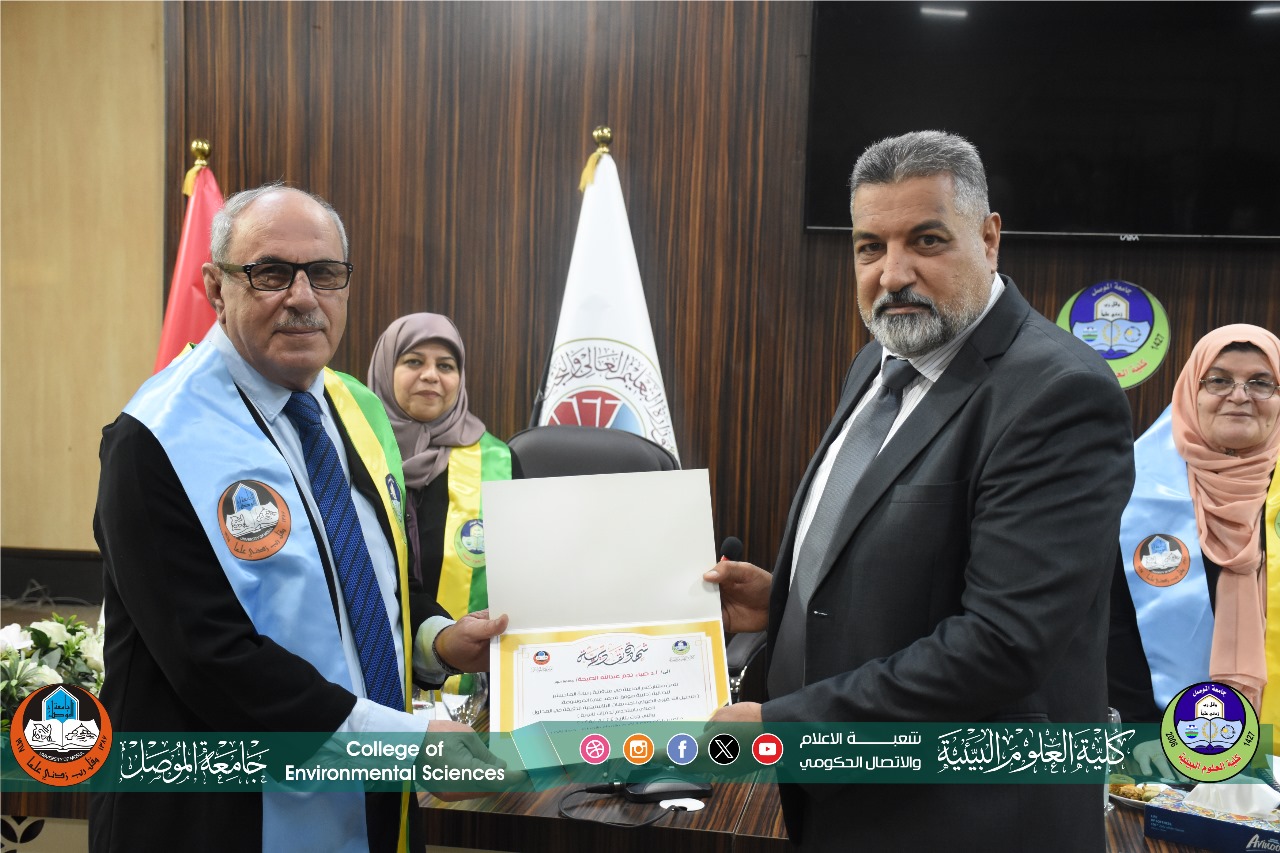
At the end of the discussion, the Dean of the College, Professor Dr. Muthanna Jassim Al-Taie, presented a letter of thanks and appreciation to the Chairman of the Committee, Professor Dr. Diaa Najm Abdullah Al-Subha, Al-Noor University / College of Health and Medical Technologies, in appreciation of his scientific efforts.
August 24 , 2025 University of Mosul / Sustainable University
Department of Media and Government Communication
#College_of_Environmental_Sciences