31 August، 2025
The College of Environmental Sciences discusses a master’s thesis on the effect of salt stress on the allelopathic activity of sunflowers.
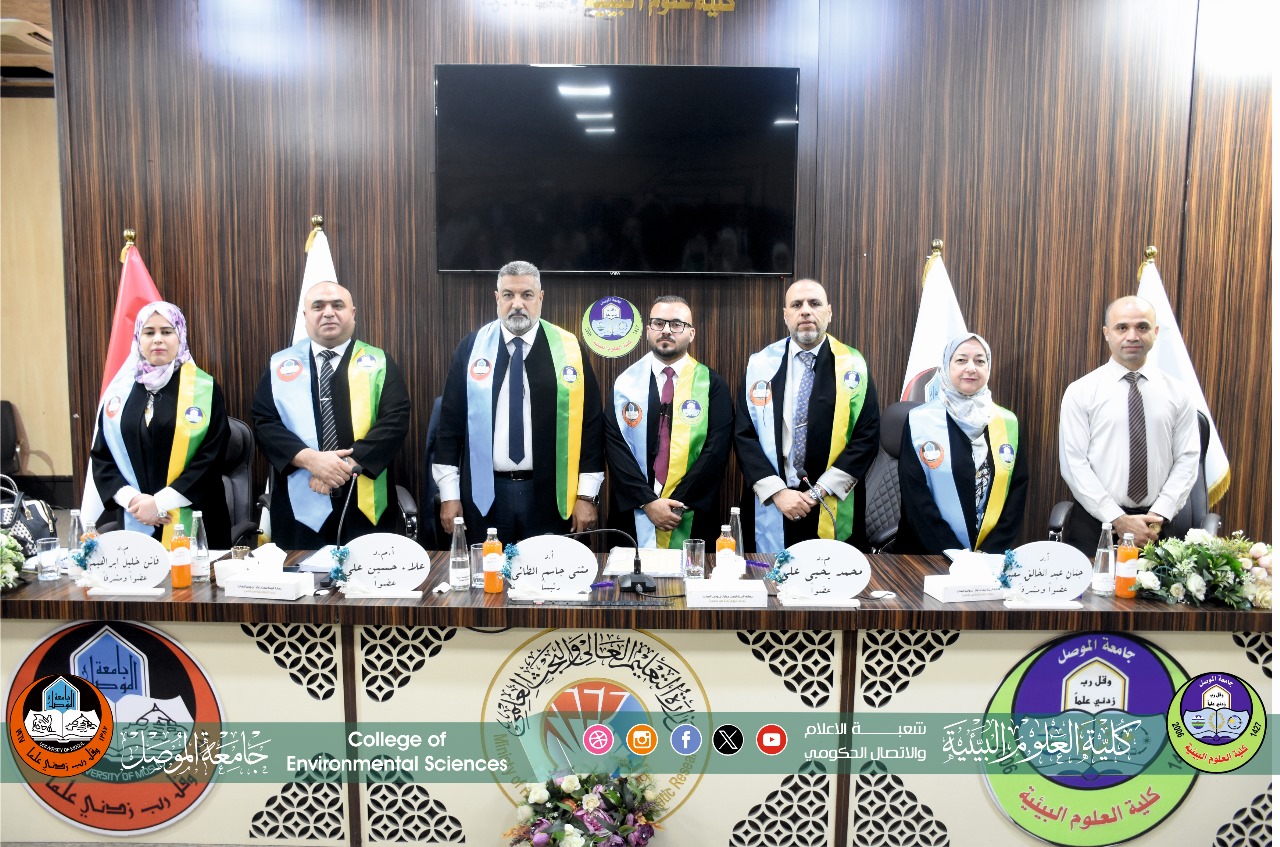
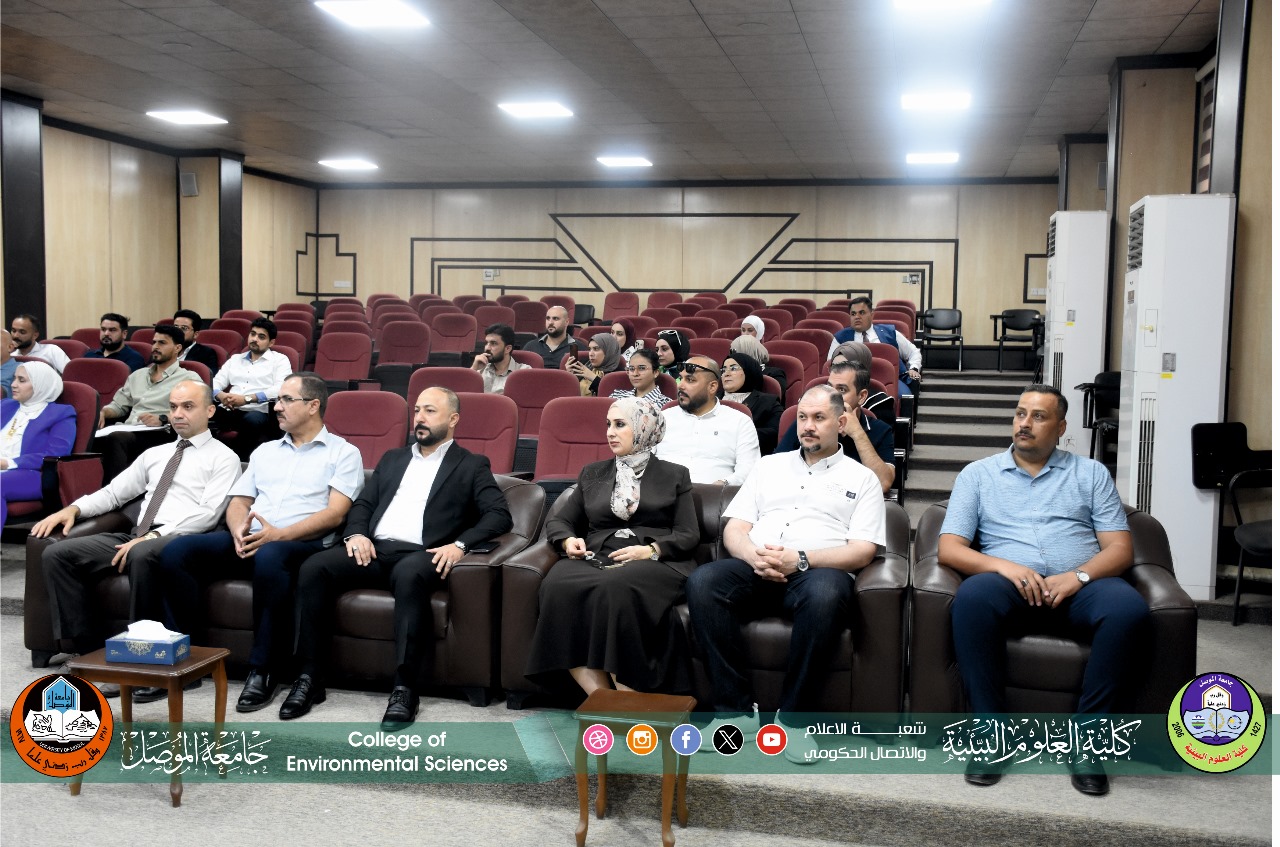
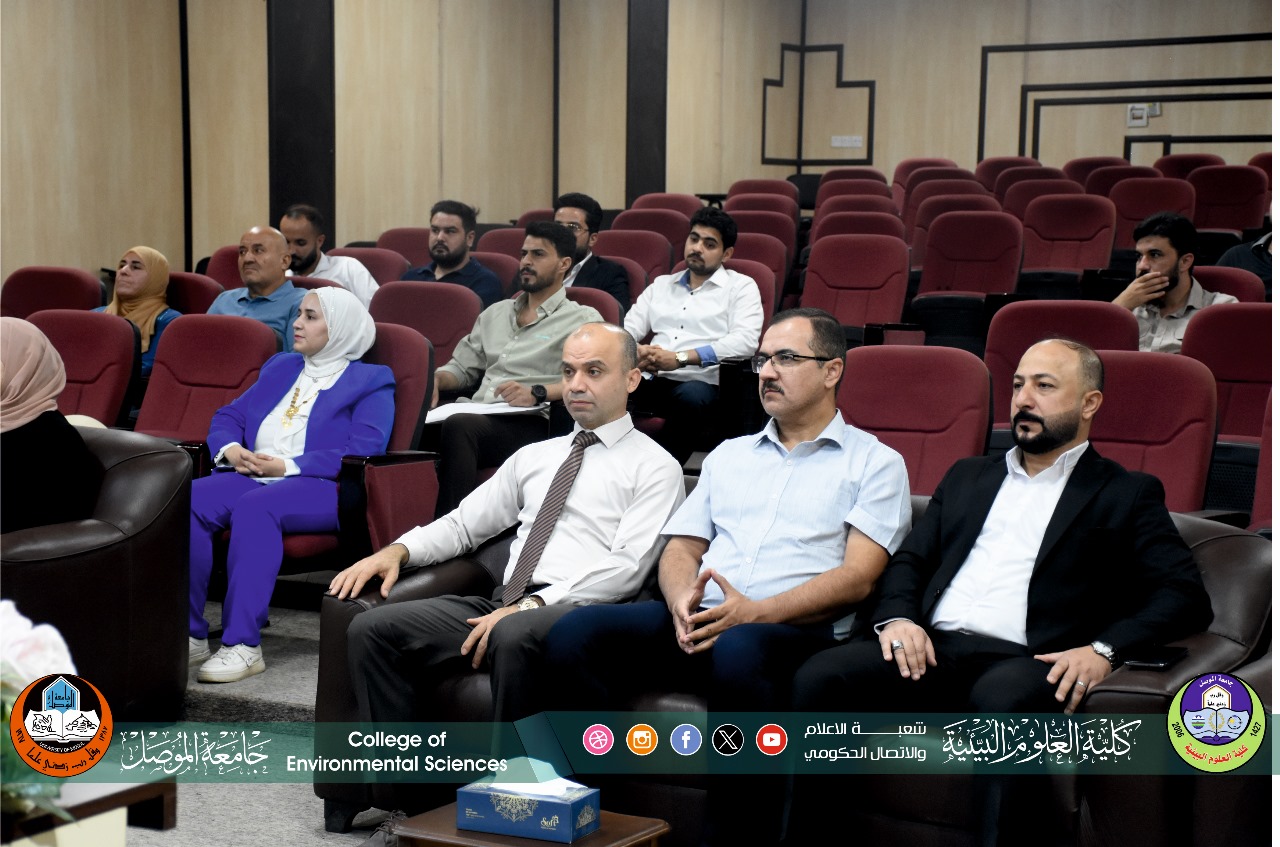
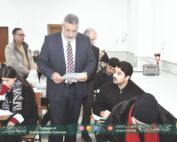
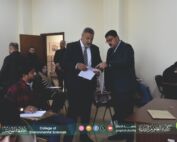
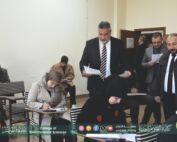
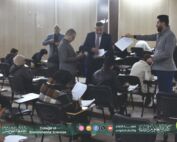
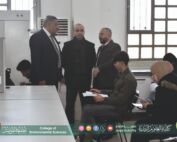
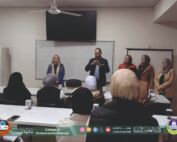
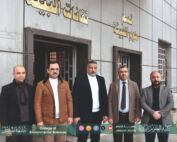
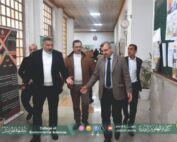
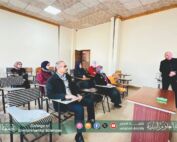
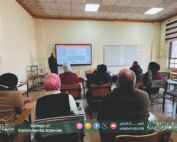
Under the patronage of the President of the University of Mosul, Professor Dr. Wahid Mahmoud Al-Ibrahimi, and in the presence of the Dean of the College, Professor Dr. Muthanna Jassim Al-Taie, the Dean’s Assistants for Scientific and Administrative Affairs, and the Head of the Department of Environmental Sciences, the Master’s thesis entitled “The Effect of Salt Stress on the Allelopathic Activity of Sunflowers and Its Effect on the Growth of Two Barley Varieties” was discussed this morning, Sunday, August 31, 2025, by student Muhammad Ahmad Mahmoud Mustafa Al-Hamdani in the discussion hall of our college.
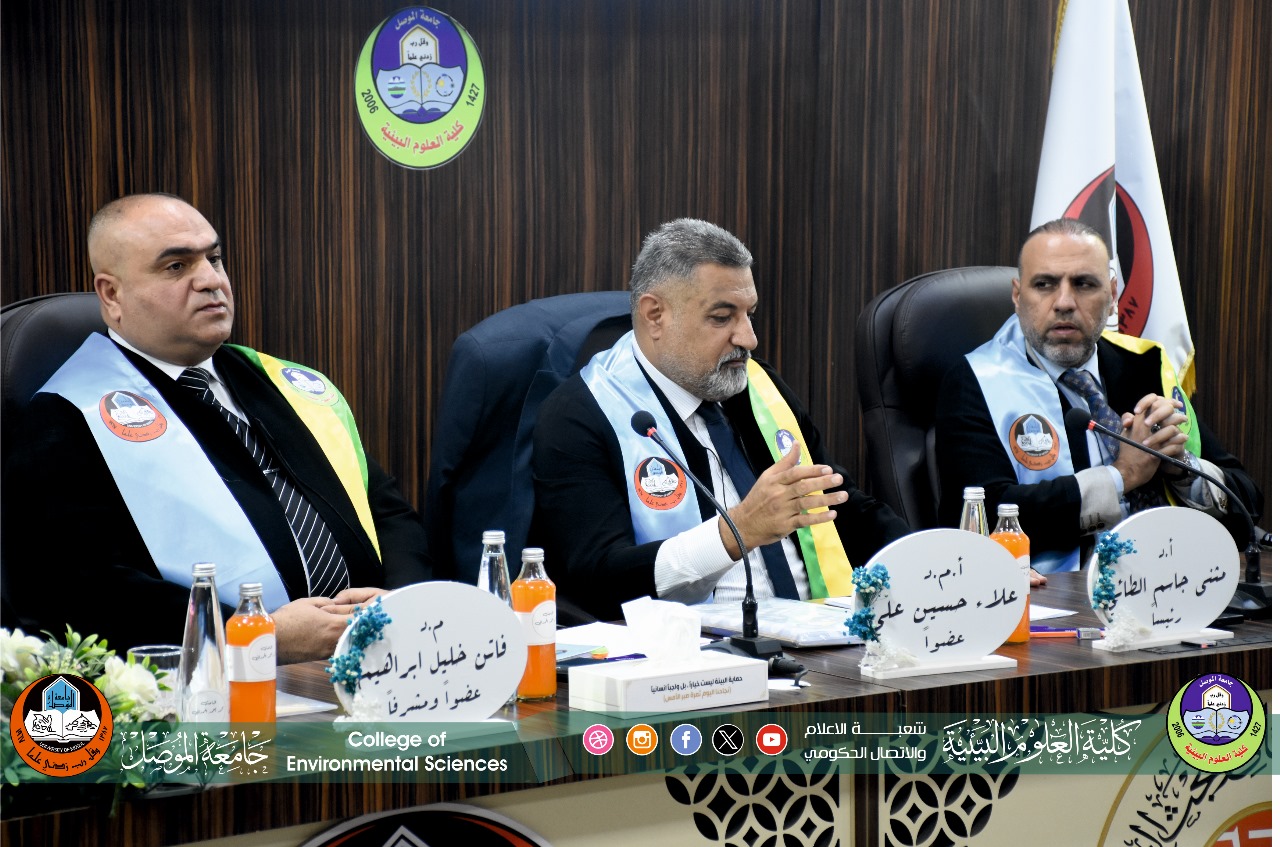
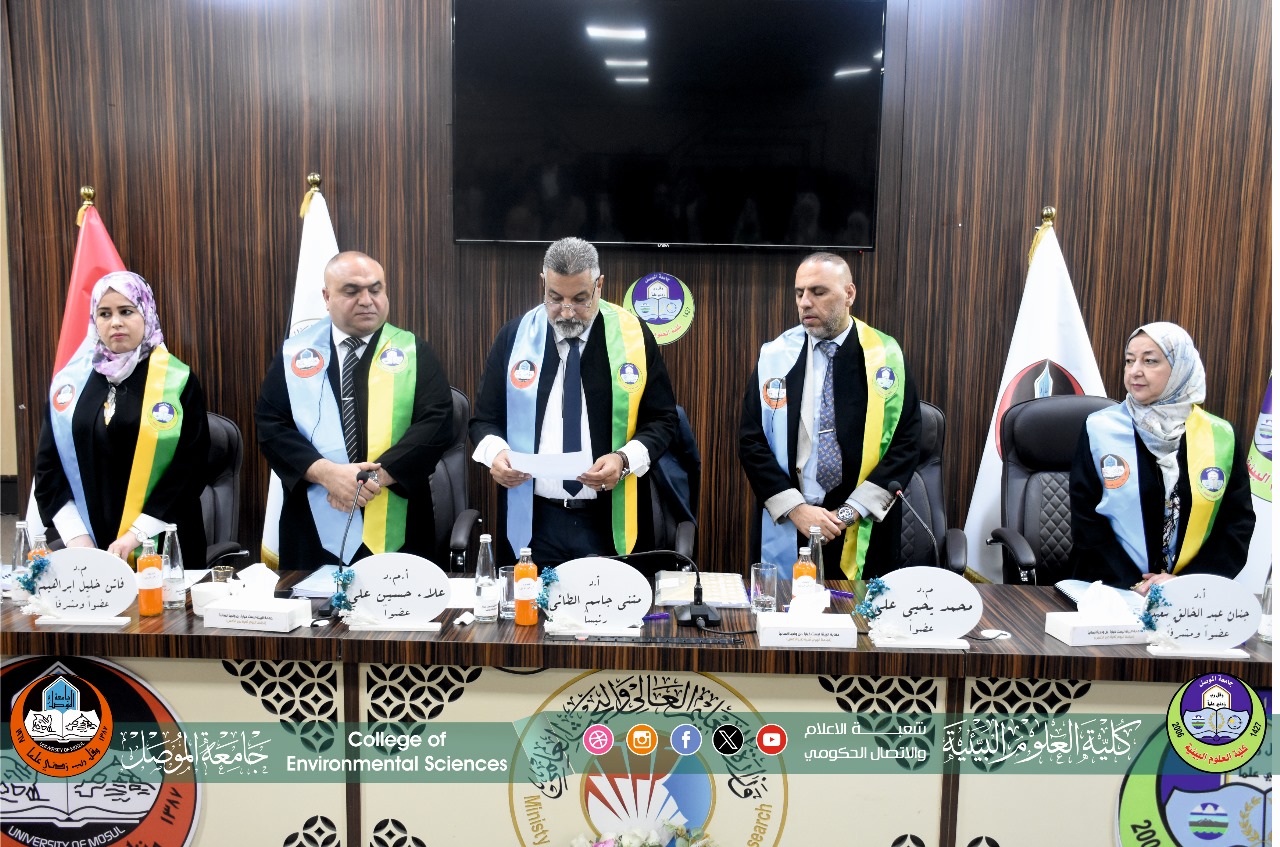
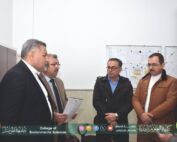
The discussion committee was chaired by the Dean of the College of Environmental Sciences, Professor Dr. Muthanna Jassim Al-Taie, and included Assistant Professor Alaa Hussein Ali and Assistant Professor Dr. Muhammad Yahya Ali, under the supervision and membership of Assistant Professor Dr. Faten Khalil Ibrahim and Professor Dr. Jinan Abdul Khaliq Saeed.
The study aimed to test the allelopathic effect of sunflower plants grown under salt stress conditions using aqueous extracts exposed to three salinity levels (50, 25, and 0%), as well as sunflower extracts collected from a field in Nineveh Governorate, on the growth of two barley cultivars. The study also aimed to investigate some allelopathic (active) compounds in sunflower plants exposed to salt stress, identify them, and estimate their concentrations using HPLC technology. It also aimed to study the effect of salt stress at three salinity levels (50, 25, and 0%), and the addition of sunflower waste to the soil at three ratios (1, 0.5, and 0%), and the interaction between them on seed germination, growth, some physiological and biochemical characteristics, and the concentration of elements (PK) in two barley cultivars. The study also included two experiments:
The first experiment, a laboratory experiment, included the effect of aqueous extracts of sunflower plants (shoot and root systems) grown in soil treated with concentrations of 0.25, 50%, and 1% weight-to-volume (NaCl) salt, and aqueous extracts of sunflower plant wastes, respectively, on seed germination and seedling growth of two barley varieties (white and black).
The second experiment, conducted in a wire house, included studying the effect of three salinity levels (0.25, 50%) and sunflower wastes added to the soil at ratios of 0.5, 1%, and 0.5% weight-to-weight, on seed germination and growth indicators, including shoot and root length, dry weights, flag leaf area, chlorophyll content, proline amino acid content, and peroxidase activity of two barley varieties. Some active compounds in sunflower waste were investigated, isolated, characterized, and their concentrations were estimated using high-performance liquid chromatography (HPLC).
The study achieved three Sustainable Development Goals: Goal 2 (Zero Hunger), Goal 12 (Responsible Consumption and Production), and Goal 15 (Life on Land).
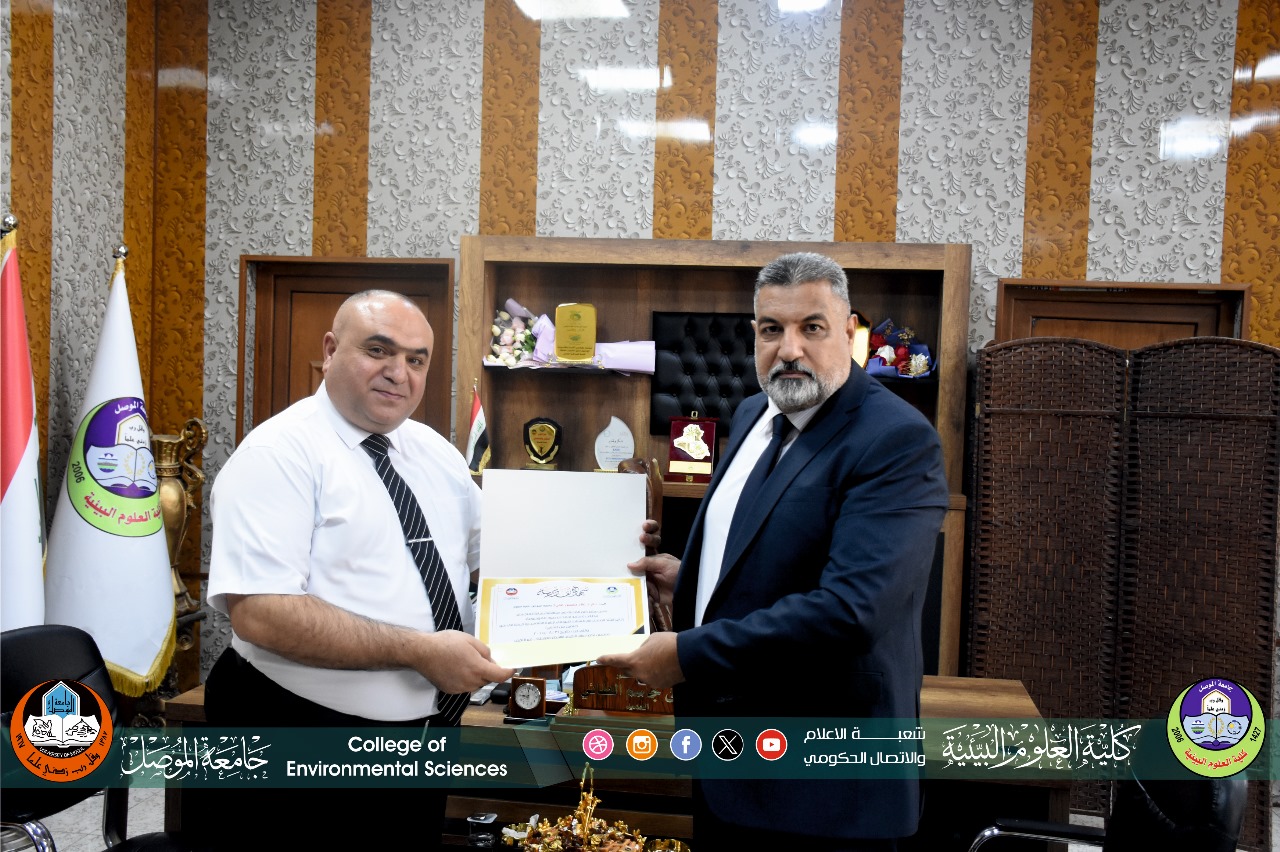
At the conclusion of the discussion, the Dean of the College, Professor Dr. Muthanna Jassim Al-Taie, presented a letter of thanks and appreciation to Assistant Professor Alaa Hussein Ali, University of Mosul/College of Science, in recognition of his outstanding scientific efforts.
August 31, 2025 University of Mosul / Sustainable University
Department of Media and Government Communication
#College_of_Environmental_Sciences