5 December، 2025
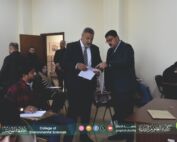
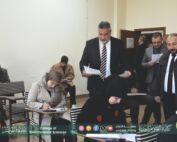
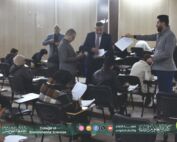
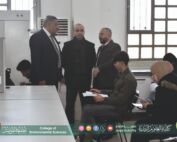
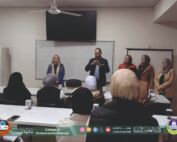
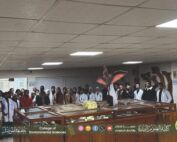
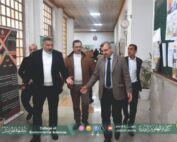
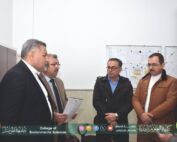
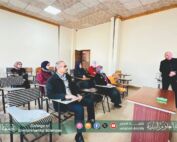
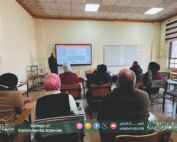
A scientific seminar was held at the College of Environmental Sciences, Department of Environmental Sciences, on the challenges facing the Tigris River and sustainability.

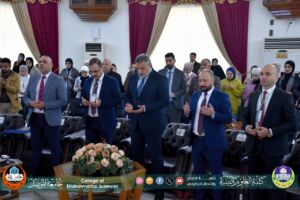
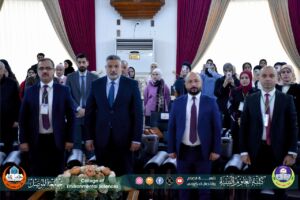
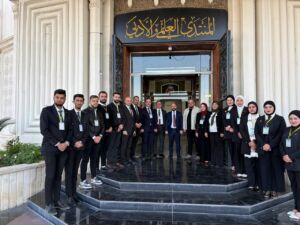
Under the patronage of Professor Dr. Waheed Mahmoud Al-Ibrahimi, President of the University of Mosul, and under the supervision of Professor Dr. Muthanna Jassim Al-Tai, Dean of the College of Environmental Sciences, and with the follow-up of Professor Dr. Mohammed Ibrahim Khalil, Head of the Department of Environmental Sciences, the College of Environmental Sciences/Department of Environmental Sciences, in cooperation with the University of Mosul/Department of Studies and Planning/Sustainable Development Unit, held its second symposium entitled “The Tigris River and the Challenges of Sustainability” on Thursday, December 4, 2025, in the Scientific and Literary Forum Hall at the University of Mosul. The symposium was attended by the Dean of the College of Environmental Sciences, his deputies for scientific and administrative affairs, local officials, civil figures, researchers, and academics specializing in the field.
The first session, titled “The Tigris River: From the Cradle of Civilizations to the Challenge of Survival,” was presented by Dr. Alaa Nabil Hamdoun of the Remote Sensing Center. The presentation addressed the historical role of the Tigris River in the rise of Mesopotamian civilizations and its contribution to agriculture and human settlement. It then moved on to discuss the current challenges facing the river, such as declining water levels, climate change, dams, and pollution, emphasizing the need to protect the river and manage its resources to ensure its survival and continued role as a source of life for future generations.
The second session included the first lecture: “The Sustainability of the Tigris River Between Environmental Conditions and Illegal Extraction in Nineveh Governorate,” delivered by Dr. Ezz El-Din Saleh Al-Jawadi and Dr. Mohammed Walid Saeed Al-Abbasi. The topic of the Tigris River’s sustainability in Nineveh addressed the impact of environmental conditions such as declining water levels, pollution, and biodiversity loss, in addition to the problem of illegal sand and gravel extraction, which causes bank erosion and disrupts the river’s ecological balance. The lecture emphasized the need to regulate extraction operations, strengthen environmental monitoring, and protect the river to ensure its continued vital role as a resource for the governorate.
The second lecture focused on the possibility of treating wastewater flowing into the Tigris River using solar energy, presented by Dr. Mahmoud Ismail Mohammed Al-Jubouri.
The third lecture, presented by Mr. Ahmed Hamed Jassim of the Nineveh Environment Directorate, focused on a study conducted on the Tigris River, assessing water quality within Mosul for the year 2025.
The fourth lecture, delivered by Sheikh Ali Osama, a member of the administrative board of the Association of Scholars, addressed water conservation. A religious and national responsibility.
The fifth lecture, presented by Mr. Muthanna Waad Mohammed, focused on the threatened water security: a map of the environmental and economic challenges facing the Tigris River.
Finally, the symposium concluded with a closing session, during which the recommendations were presented by Professor Dr. Mohammed Ibrahim Khalil. The symposium achieved eight Sustainable Development Goals (SDGs): Goal 4, Goal 6, Goal 12, Goal 11, Goal 13, Goal 14, Goal 15, and Goal 17.
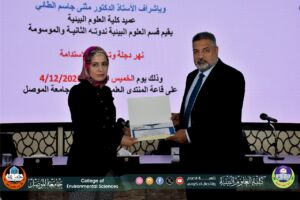
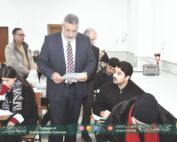
The Dean of the College of Environmental Sciences, Professor Dr. Muthanna Jassim Al-Tai, presented certificates of appreciation to the lecturers and participants.
December 4, 2025 University of Mosul / Sustainable University
Department of Media and Government Communication
#College_of_Environmental_Sciences