14 September، 2025
Legal article
On the International Day to Protect Education from Attack
Education is a safe field…
Dr. Ziad Abdulwahab Al-Naimi
College of Law / University of Mosul
Education is one of the fundamental human rights under both normal and exceptional circumstances. This right is linked to many other human rights and is fundamentally linked to achieving development through its role in eradicating poverty and hunger, achieving equality, ensuring equal opportunities, achieving security, peace, justice, and other humanitarian goals. Based on principles based on achieving the common good of national communities, educational settings must be a safe haven for children, students, and education workers. But all too often, children and their educational settings become direct targets or vulnerable to harm caused by conflict.
The International Covenant on Economic, Social and Cultural Rights (ICESCR) is one of the most important international instruments on economic, social and cultural rights, including the right to education. Articles 13-14 refer to this right. Article 13-1 states: “The States Parties to the present Covenant recognize the right of everyone to education. They agree that education shall be directed to the full development of the human personality and to the strengthening of respect for human rights and fundamental freedoms. Education shall enable everyone to participate effectively in a free society.” Article 13/2 of the Covenant stipulates that education must be made compulsory, available and free to all; secondary education in its various forms, including technical and vocational secondary education, must be made generally available and accessible to all on the basis of capacity; higher education must be made equally accessible to all on the basis of ability; and fundamental education must be encouraged or intensified to the greatest extent possible for those who have not received or completed their primary education. The States Parties to the Covenant recognize that ensuring the full exercise of this right requires making primary education compulsory and available free to all; actively developing a school network at all levels, establishing an adequate system, and continuously improving the material conditions of teaching personnel.
Commenting on Article 13, the Committee on the International Covenant on Human Rights noted in its General Comment No. (13) that these objectives reflect the purposes and principles enshrined in Articles 1-2 of the Charter of the United Nations, most of which are found in Article 26/2 of the Universal Declaration of Human Rights. Among the international agreements that specifically address the right to education is the Convention on the Rights of the Child, which was concluded in 1989 and entered into force in 1990. Article 29/1 includes an agreement among the States Parties that a child’s education should be directed toward the following five objectives:
The development of the child’s personality, talents, and mental and physical abilities.
The development of respect for human rights and fundamental freedoms.
Respect for the child’s parents, cultural identity, language, values, and national values of the country in which he or she lives.
The development of the child’s preparation for responsible life in a free society in the spirit of understanding, tolerance, peace, and equality.
The development of respect for the natural environment. The Impact of Attacks on the Right to Education
This September 9th of each year was declared the International Day to Protect Education from Attack. The United Nations General Assembly unanimously adopted Resolution 74/275 in 2020, calling on UNESCO and UNICEF to raise awareness about the plight of millions of children living in conflict-affected countries. Qatar submitted a draft resolution to establish this international day, co-sponsored by 62 other countries. The resolution emphasized the following:
Governments bear the primary responsibility for ensuring this right:
Ensuring equitable and inclusive quality education for all learners at all levels, especially those in critical circumstances.
Intensifying efforts in this regard and increasing funding allocated to promote safe and secure school environments in humanitarian emergencies.
Taking all feasible measures to protect schools, learners, and educational personnel from attacks.
Refraining from actions that hinder children’s access to education and facilitating access to education in situations of armed conflict.
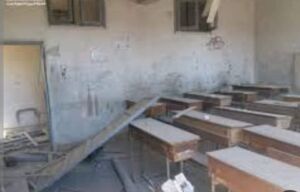
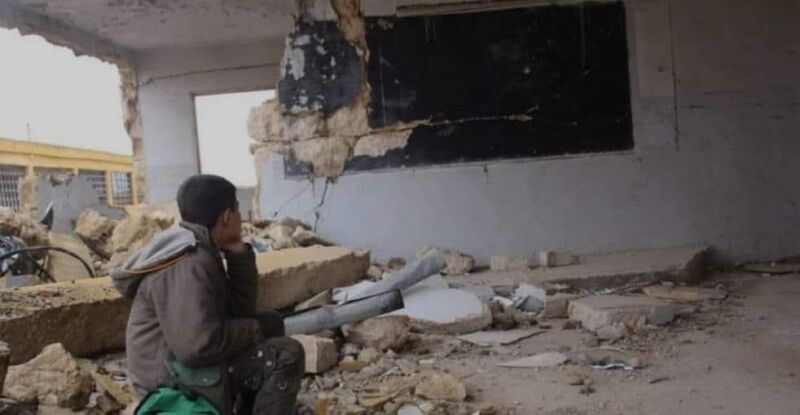
It goes without saying that attacks on educational facilities during conflicts, whether intentionally or unintentionally targeting educational facilities (schools) and individuals (teachers and students), disrupt this right in these exceptional circumstances and endanger the lives of teachers and students, even leading to death. Furthermore, schools are destroyed, leading to a deterioration in the quality of education. Some armed groups may even deliberately use schools as sites of conflict, causing their staff to leave these buildings, temporarily or permanently. These serious violations by parties to the conflict lead to the collapse of education, whether in conflict zones or even close to or affected by conflict. Human Rights Watch defines attacks on education as “a full range of violations that endanger children and deprive them of education, including attacks on school infrastructure, teachers, and students; the occupation and use of schools; harassment and threats against teachers, parents, and students; and the recruitment of children in schools.” The educational environment requires real security, and the removal of any armed, military or exceptional manifestations from the educational environment and their removal from the calculations of the warring parties, to help nourish and implement this right. The absence of any element of peace in it, such as threats, use of force, conflict, occupation of educational places, threats to teachers, storming of schools, recruitment of children, or the use of places designated for education as headquarters for attacks between the parties to launch their military actions against the opponent, will lead to the violation of a basic human right to receive education. This is a responsibility borne by the states that are parties to conflicts or the warring parties to guarantee the right to education and remove any manifestations of threats, force or direct or indirect influence to provide a safe environment for education and protect schools from attacks as much as possible.