14 September، 2025
Legal Article: The Legal Responsibility of the Father in Caring for His Children
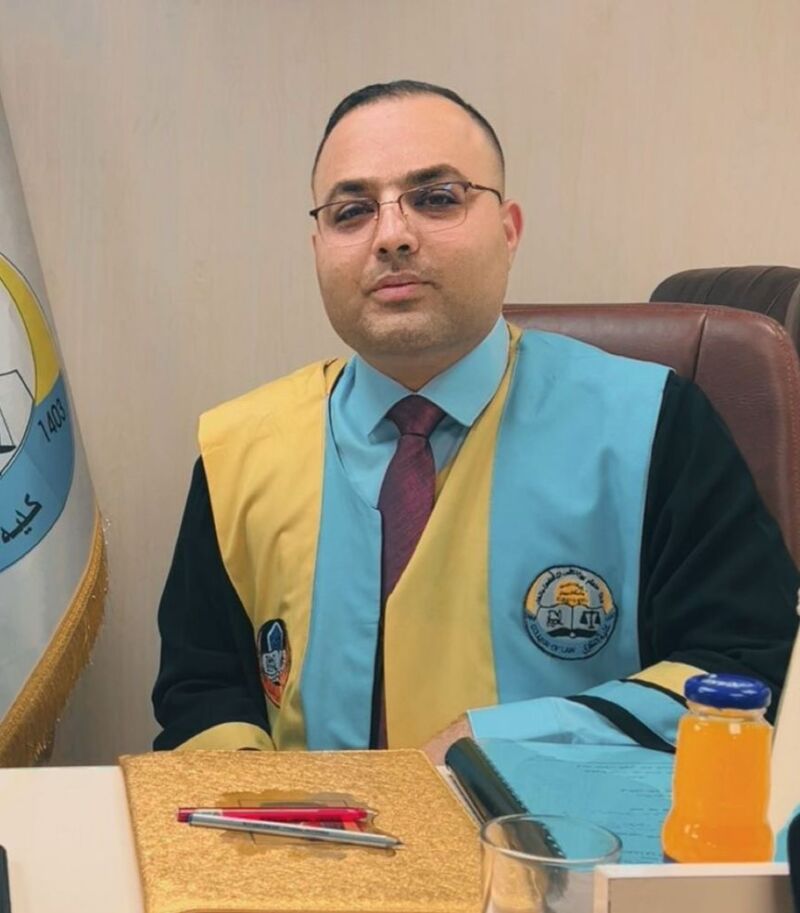
Dr. Ahmed Faris Idris
University of Mosul – College of Law
Introduction:
The care and custody of children is one of the most sacred duties incumbent upon parents, especially fathers, as they are primarily responsible for child support and guardianship, and as the legal guarantor of their children’s livelihood. Iraqi legislators have paid great attention to children’s rights and their protection from any form of neglect or family abandonment through the provisions of the Personal Status Law and the Penal Code, in addition to what is stipulated in the Iraqi Constitution and international agreements. A father’s abandonment of his children’s care or failure to provide them with custody and support is not merely a moral violation; it rises to the level of a punishable crime.
First: Personal Status Law
1. Custody: Article (57/1) of Personal Status Law No. (188) of 1959, as amended, states that “the mother has the best right to custody and upbringing of the child during the marriage and after separation, unless the child is harmed thereby.” Custody continues until the child reaches the age of ten, and the judge may extend it to fifteen if the child’s interest so requires.¹
2. Alimony: Article (57/7) of the same law requires that the father support the children as long as they are minors and unable to earn a living. Alimony includes (food, clothing, housing, education, and medical care) in accordance with the father’s financial and social circumstances.²
• Refusal to provide alimony entitles the custodian (usually the mother) to file a lawsuit for alimony, and the judgment is enforced by force through enforcement departments.
Second: The Iraqi Penal Code
1. Neglect and Exposing a Minor to Danger: Article (383) of Penal Code No. (111) of 1969 stipulates that:
*“Anyone who is legally or contractually obligated to care for, provide for, or manage a person’s essential affairs and intentionally abandons or neglects that person without care, support, or management in a manner that exposes them to danger shall be punished by imprisonment for a period not exceeding three years or a fine.”*³
2. Failure to Pay Alimony: Article (384) of the same law stipulates that:
*“Anyone who refuses to pay alimony awarded by a court despite being able to do so shall be punished by imprisonment for a period not exceeding one year and a fine, or by one of these two penalties.”*⁴ This article represents a penal measure to ensure the effective implementation of alimony provisions.
Third: The Dual Nature of Liability
1. Civil: Obligating the father to provide alimony and custody to ensure a dignified life for the child.
2. Criminal: Criminalizing neglect and failure to provide child support to ensure general and specific deterrence. Thus, the Iraqi legislator has granted children comprehensive protection through a combination of civil and criminal penalties.
Conclusion:
It is clear that a father’s abandonment of the care and custody of his children constitutes a violation of his familial and constitutional obligations, and entails dual liability: civil liability to ensure the rights of the child, and criminal liability to punish the abstainer or negligent parent. This harmony between the Personal Status Law and the Penal Code is in implementation of the principles of the Iraqi Constitution of 2005, which stipulates in Article 29/Fourth that: “Children have the right to be raised, cared for, and educated by their parents.” This is in addition to Iraq’s commitment to the 1989 International Convention on the Rights of the Child, which stipulates that the best interests of the child are the paramount criterion in all decisions.
Accordingly, activating and strictly implementing these provisions is essential to preserving the family and protecting society from the disintegration that may result from the neglect of one of the parents, especially the father, in fulfilling his basic duties. Sources:
1. Iraqi Personal Status Law No. (188) of 1959, as amended, Article (57/1).
2. The same source, Article (57/7).
3. Iraqi Penal Code No. (111) of 1969, Article (383).
4. The same source, Article (384).
5. Constitution of the Republic of Iraq of 2005, Article (29/Fourth).
6. Convention on the Rights of the Child, United Nations, 1989, Articles (3) and (27).