Department of Veterinary Public Health
Overview of the Department of Veterinary Public Health
The Department of Veterinary Public Health was established in 1976 and is considered one of the foundational scientific pillars of the College of Veterinary Medicine. The department provides appropriate opportunities for preparing distinguished veterinary doctors with high scientific and practical skills, capable of competing in the job market. It also develops research plans to support and improve animal resources, ensure the safety of food of animal origin, protect human health, and maintain environmental safety. Additionally, the department prepares personnel for quarantine inspections at border crossings and for monitoring emerging, re-emerging, and zoonotic diseases. It contributes to health and food security through active participation in postgraduate committees, seminars, conferences, and relevant scientific research.
Vision:
The Department of Veterinary Public Health has been a cornerstone of the College of Veterinary Medicine since its establishment, serving as a source of scientific expertise for higher education, the Ministries of Health and Agriculture, and the private sector through a solid educational foundation. We strive for the College of Veterinary Medicine at the University of Mosul to achieve leading positions in education, scientific research, and community service at the local, regional, and international levels.
Mission:
The department provides opportunities to prepare highly skilled and knowledgeable veterinary doctors, able to compete in the labor market. It sets research plans to develop animal resources, solve related problems, and ensure food safety of animal origin. It also focuses on public health and environmental protection through training personnel to supervise quarantine centers at border crossings and monitor emerging and zoonotic diseases. Faculty members are involved in postgraduate committees, conferences, and scientific research relevant to public health and food safety.
Objectives:
-
To prepare competent and practically skilled veterinary graduates by creating a supportive educational environment, using up-to-date teaching methods and technology, and emphasizing practical training. The department also focuses on developing soft skills to help graduates succeed in the job market and provides continued support to alumni.
-
To enhance the research capabilities of faculty members and postgraduate students by linking scientific research to real-world problems in society, offering proper research facilities and adequate funding.
-
To implement quality assurance systems aimed at the continuous development of the college’s educational capacity through human resource development.
-
To enhance and support the college’s internal resources by securing diverse funding sources for scientific research.
-
To work towards achieving high rankings among peer institutions in national and international evaluations.
Department Head:
Prof. Dr. Muntaha Ghassan Hassan
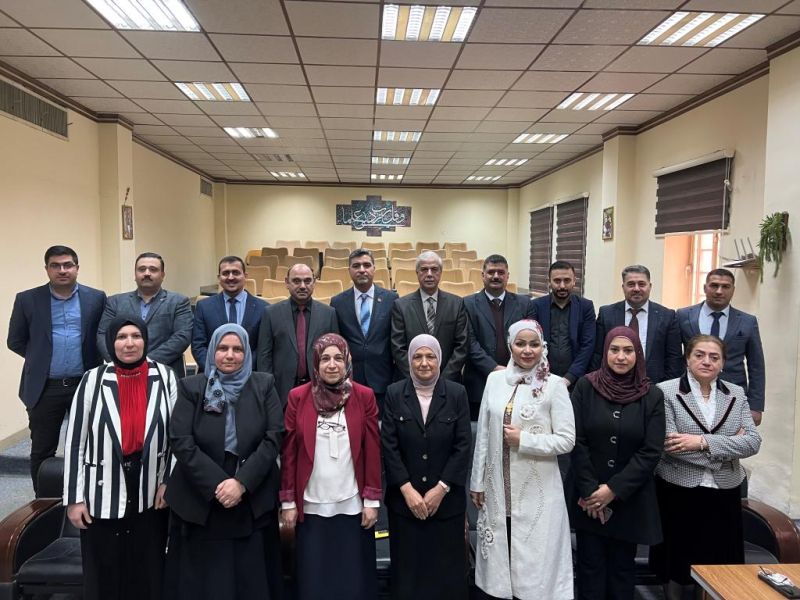
Department Staff:
-
Total staff members: 28
-
Academic staff: Most hold postgraduate degrees from Iraq and abroad
-
4 Professors
-
5 Assistant Professors
-
4 Lecturers
-
5 Assistant Lecturers
-
-
Administrative and technical staff: 10
Courses Taught by the Department:
-
First Year: Animal Management, Poultry Management, Animal Breeding and Improvement, Computer
-
Second Year: Animal Nutrition, Statistics, Genetics
-
Fifth Year: Meat Hygiene, Milk Hygiene
-
Postgraduate Studies: Meat Hygiene, Animal Health, Dairy Hygiene, Animal Production and Improvement, Epidemiology and Zoonotic Diseases, Food Microbiology
Contact Emails:
-
Prof. Dr. Muntaha Ghassan Hassan (Department Head): [email protected]
-