14 May، 2026
Heritage Buildings and the Influence of Arts on Shaping Architectural Identity: A Training Course
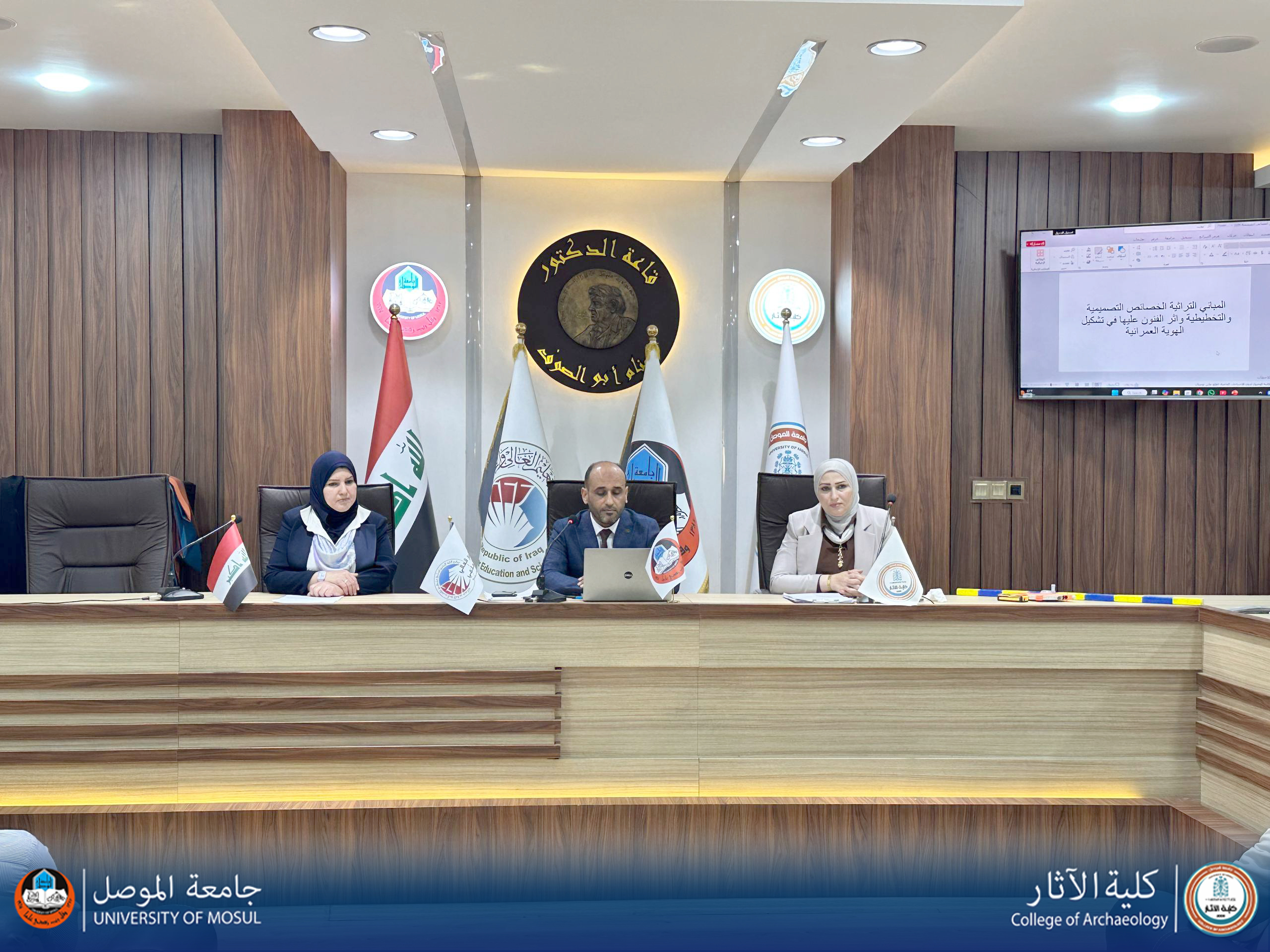
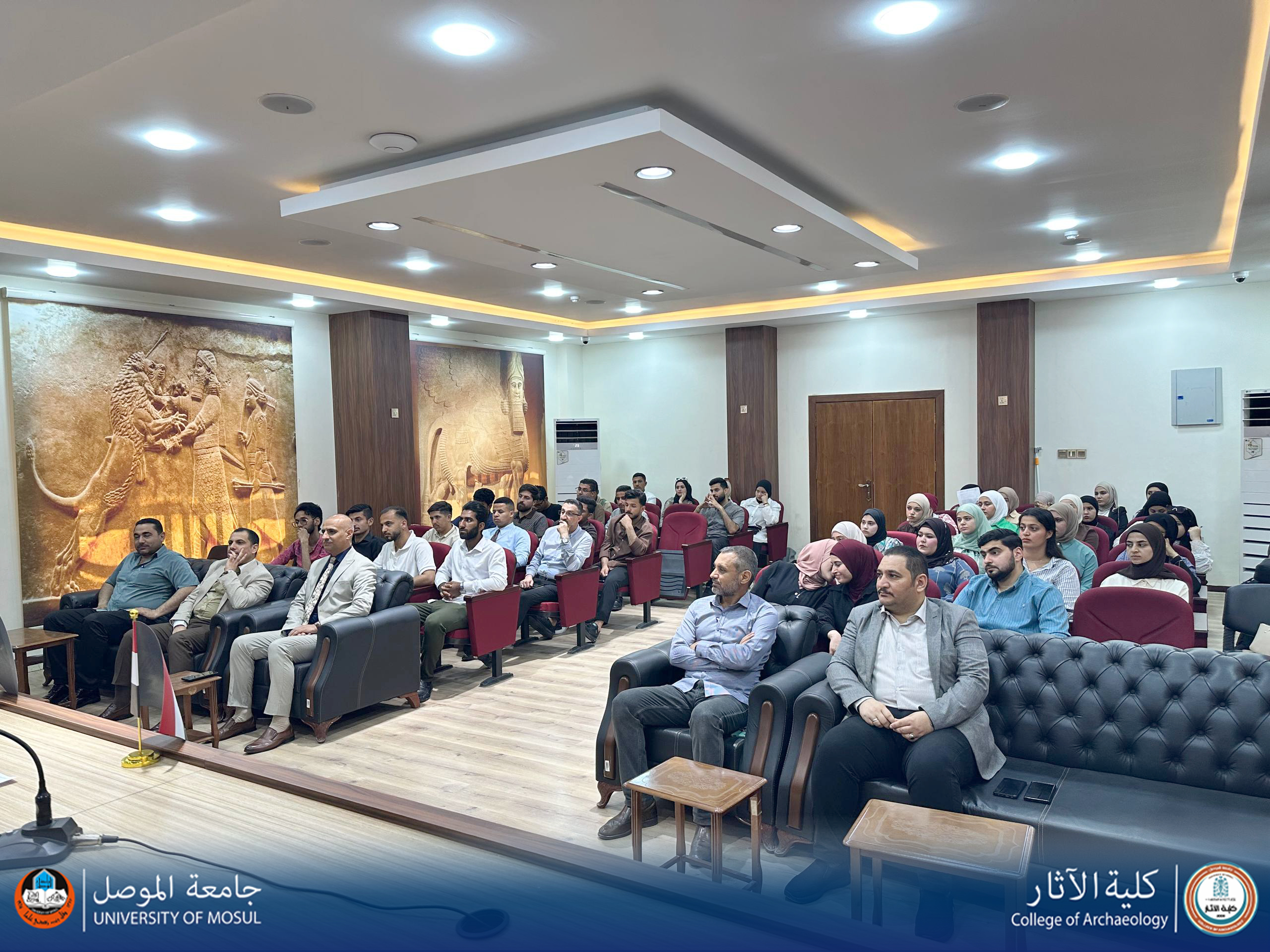
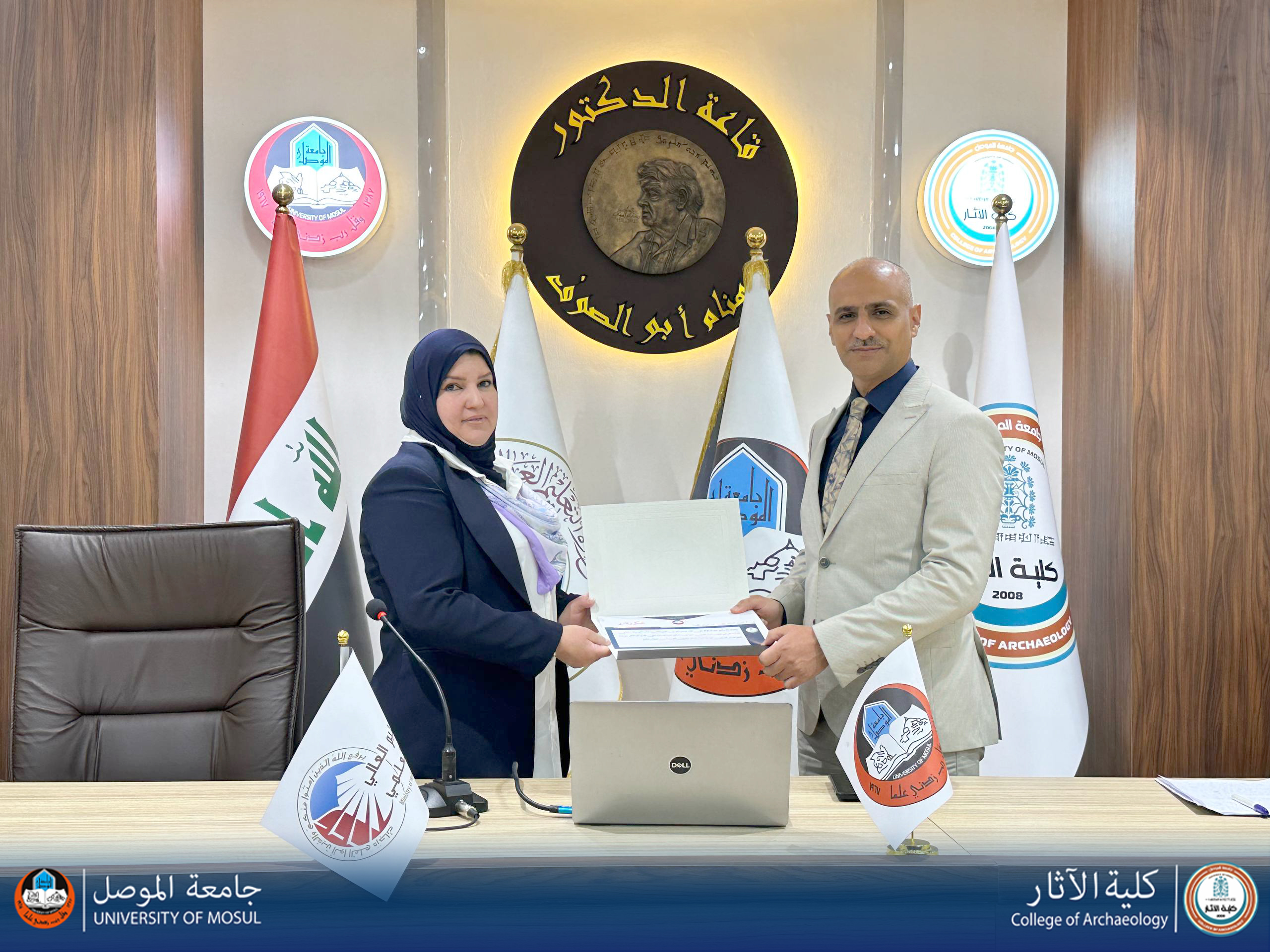
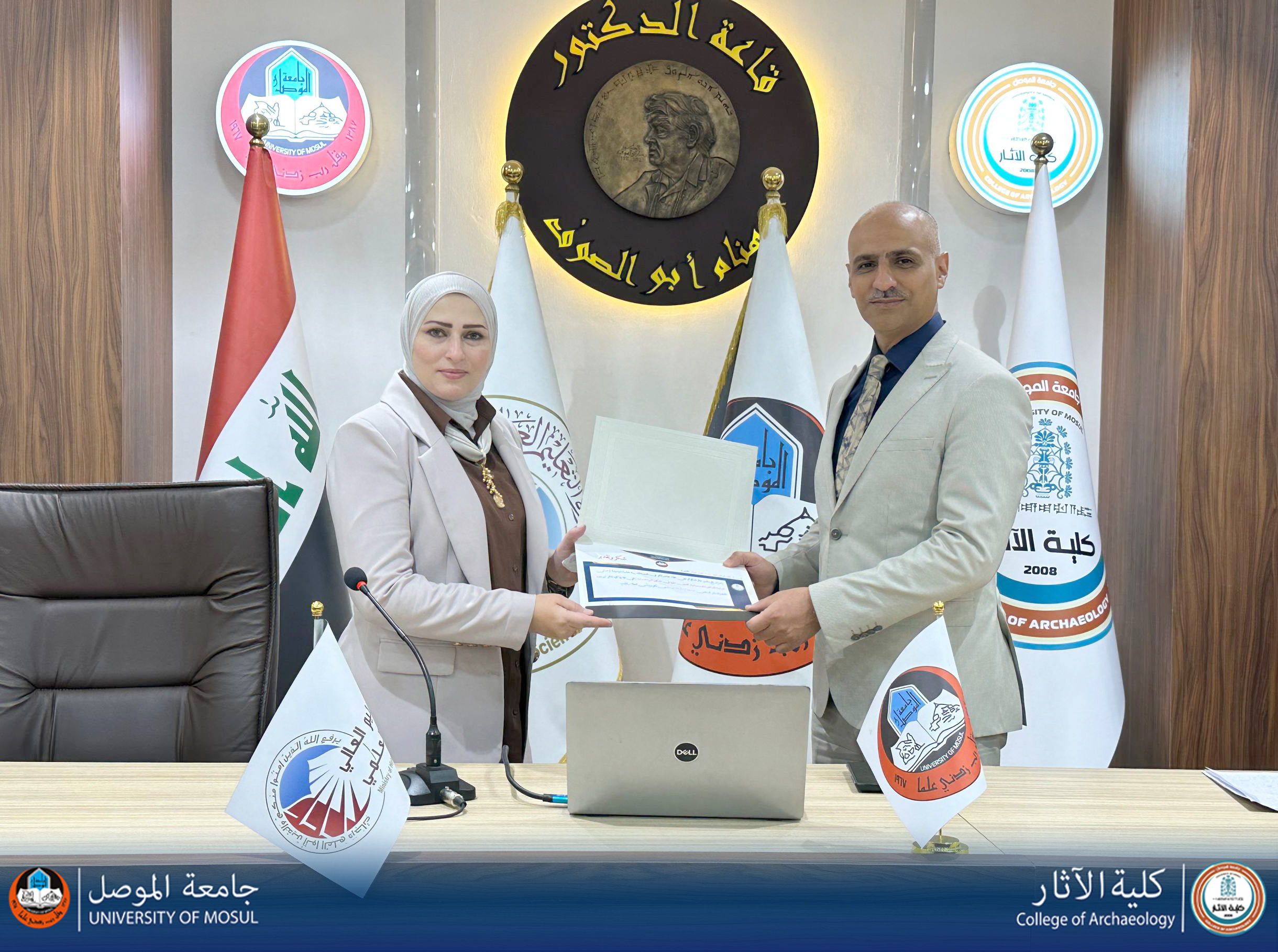
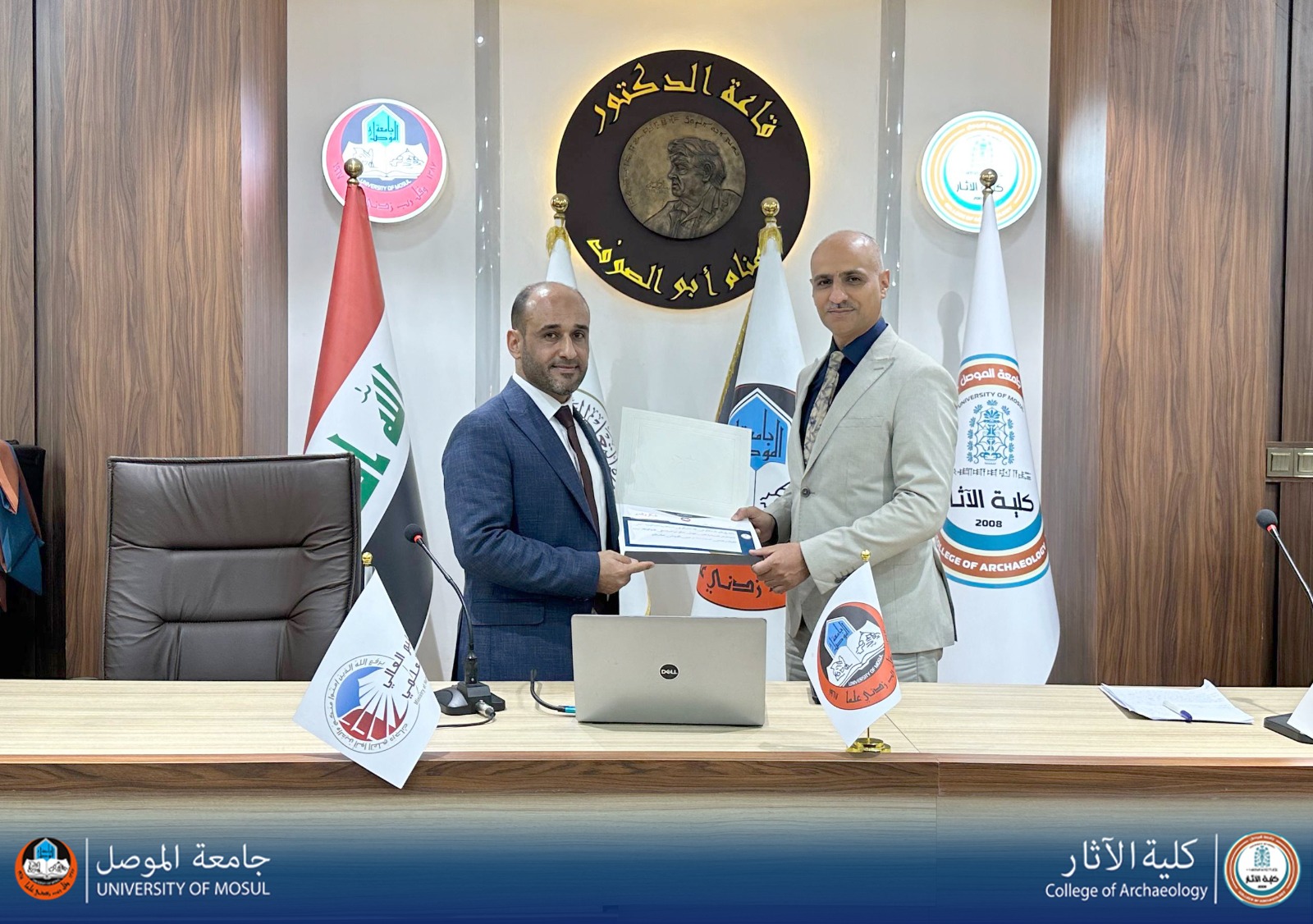
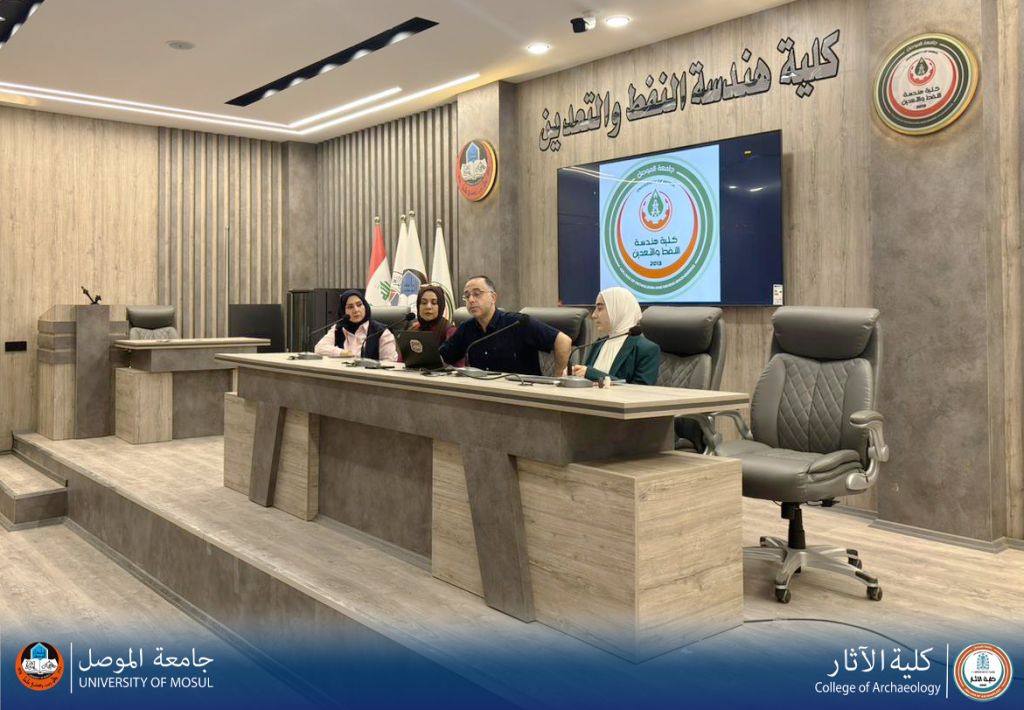
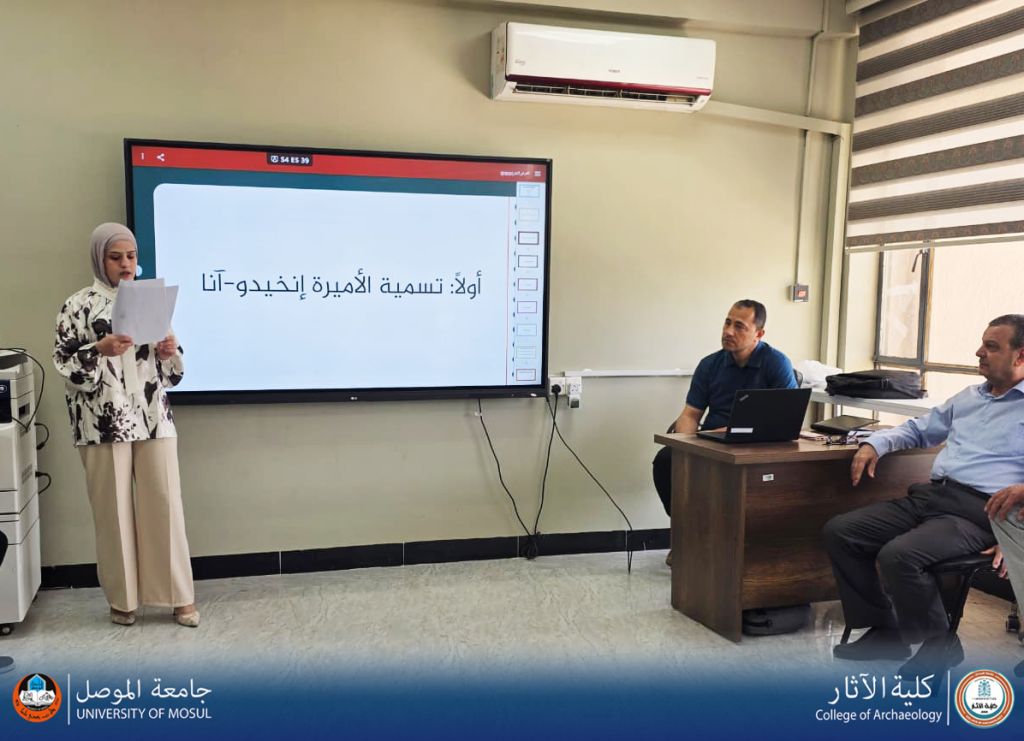
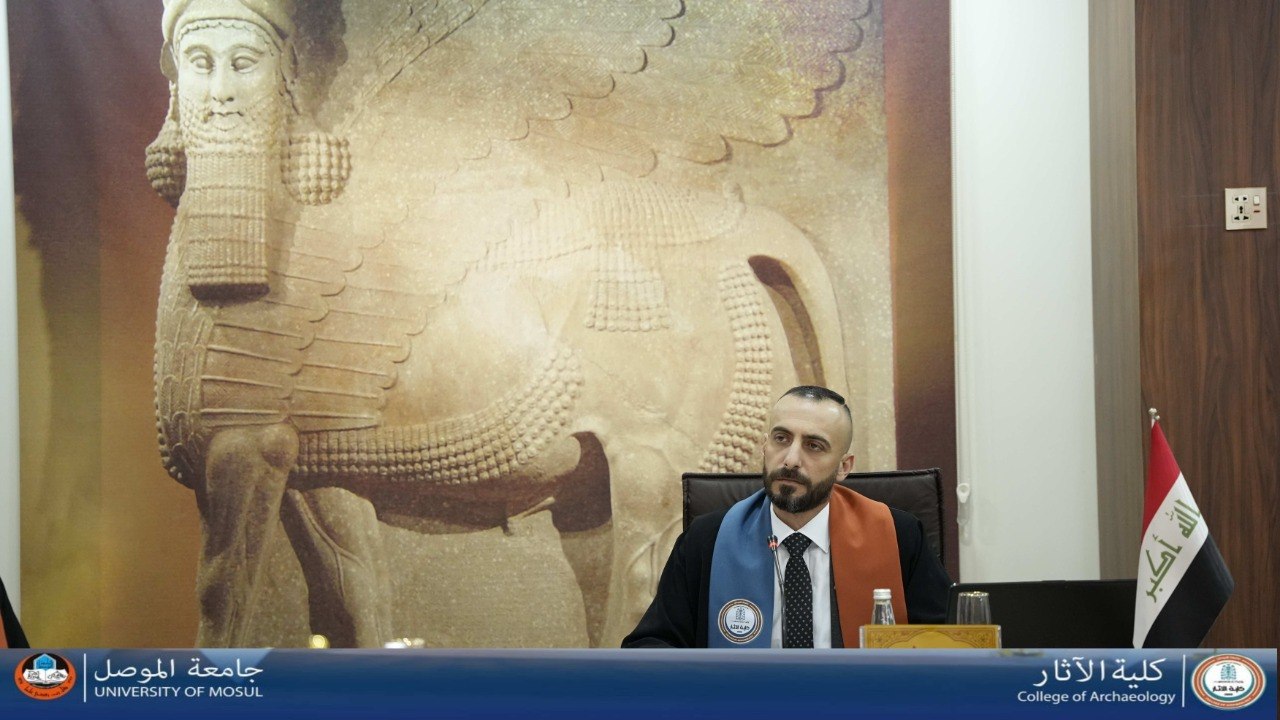
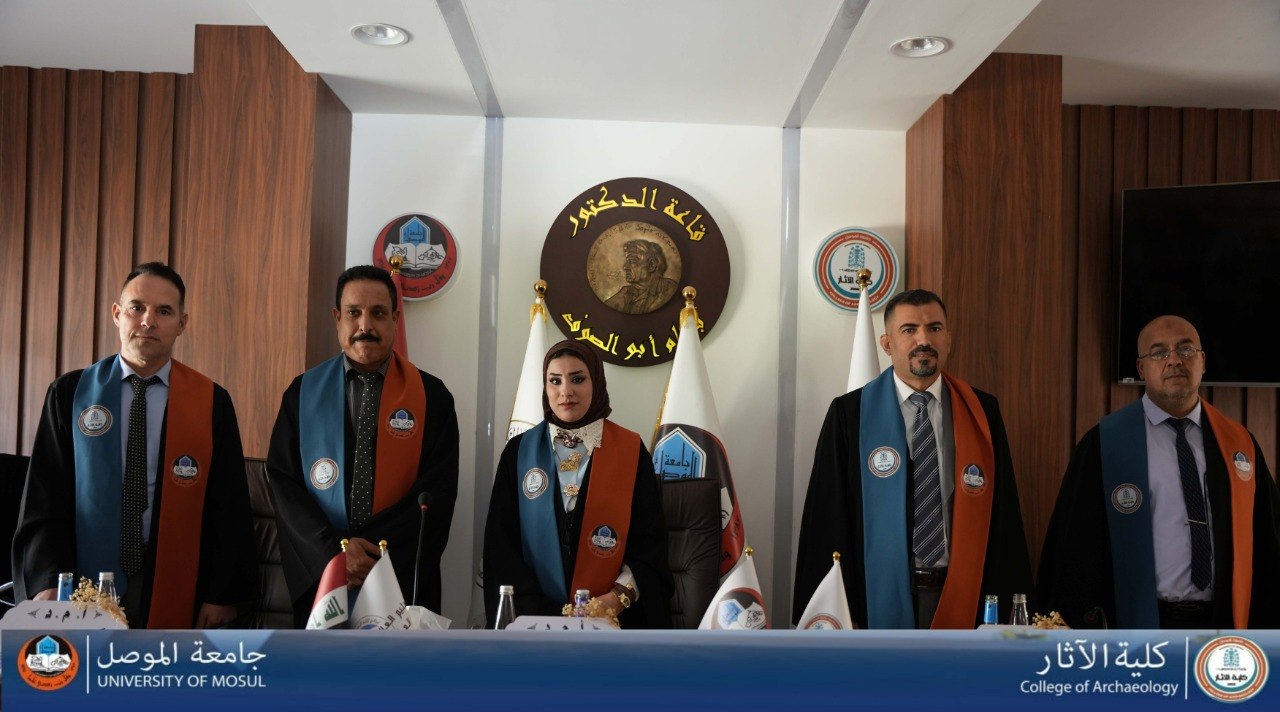
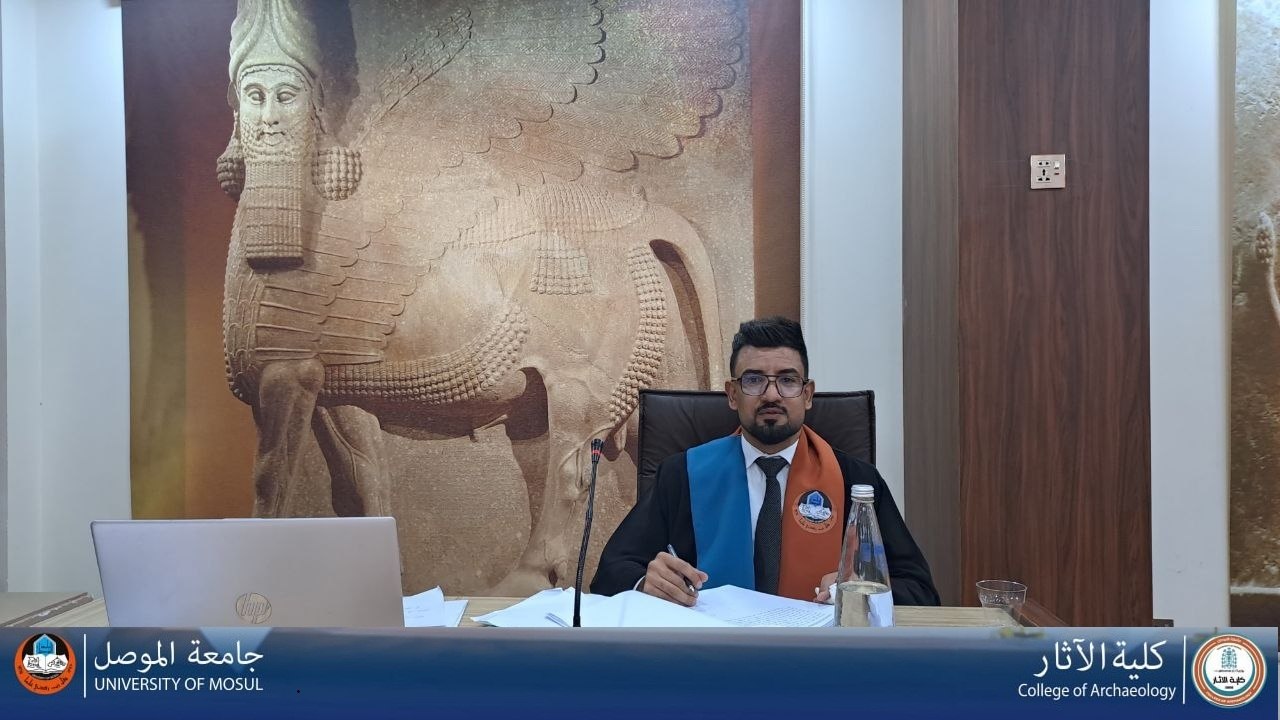
The College of Archaeology’s Continuing Education Unit held a training course entitled “Heritage Buildings: Design and Planning Characteristics and the Influence of Arts on Shaping Architectural Identity” on Wednesday and Thursday, May 13-14, 2026, in the Dr. Behnam Abu Al-Souf Hall. The course was presented by Dr. Ahmed Ibrahim, Assistant Lecturer Faten Mohammed Shwaish, and Assistant Lecturer Simaa Mohammed. The first day of the course focused on heritage buildings. The researchers pointed out that describing any heritage building requires considering several fundamental aspects to preserve its historical and architectural value. These include determining the building’s geographical location and identifying the historical period to which it belongs (Abbasid or Ottoman). If the building’s date is unknown, historical events or figures from that era, if any, should be considered. The functional type of the building (religious, administrative, or residential) should also be considered. Religious buildings include mosques, churches, shrines, and temples, while residential buildings are houses, and administrative buildings include administrative, educational, and service buildings. The second day focused on the exterior facades of heritage houses and the materials used in their construction. The construction methods included whether the house was built of stone or marble, the style of construction (such as projecting, sloping, or chamfered carving), and ownership (whether the house belonged to a person, merchant, or other individual). Researchers also examined the location of the house and its construction date.
This course serves Sustainable Development Goals 4, 8, and 11.