10 August، 2026
Dean of College of Archaeology Attends Meeting to Discuss the National Program for Developing Archaeological Tourism in Iraq
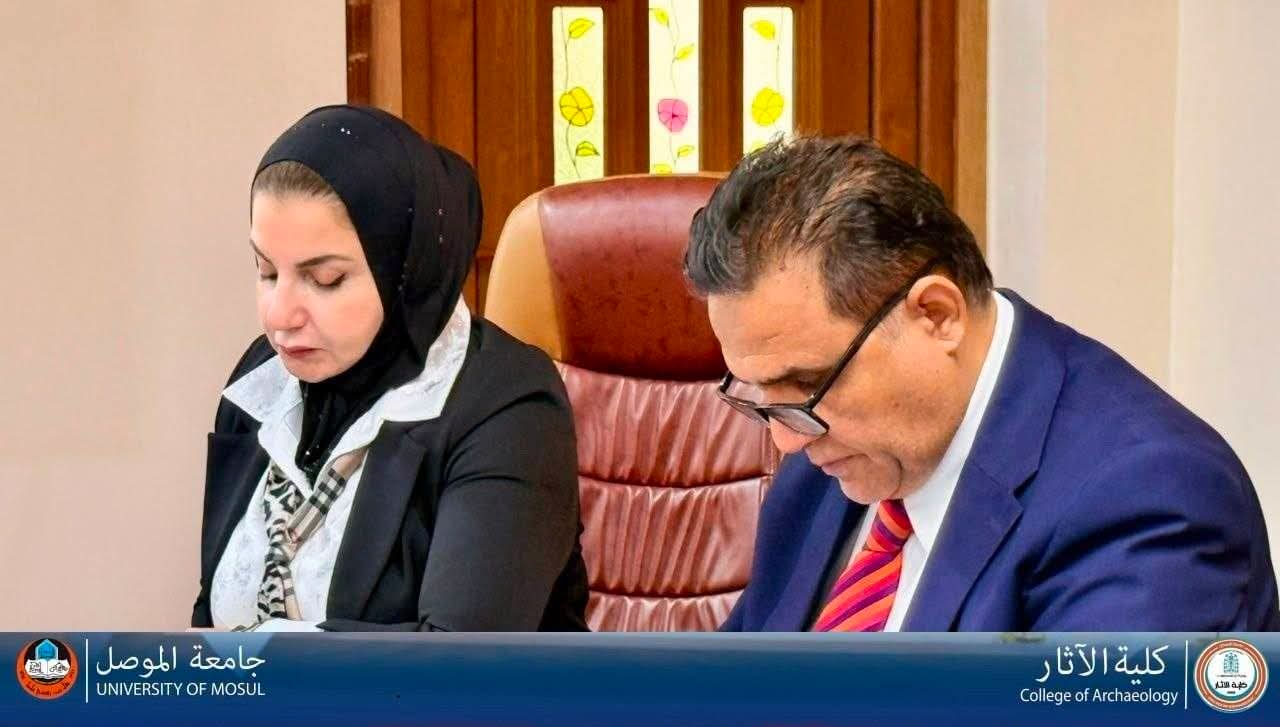
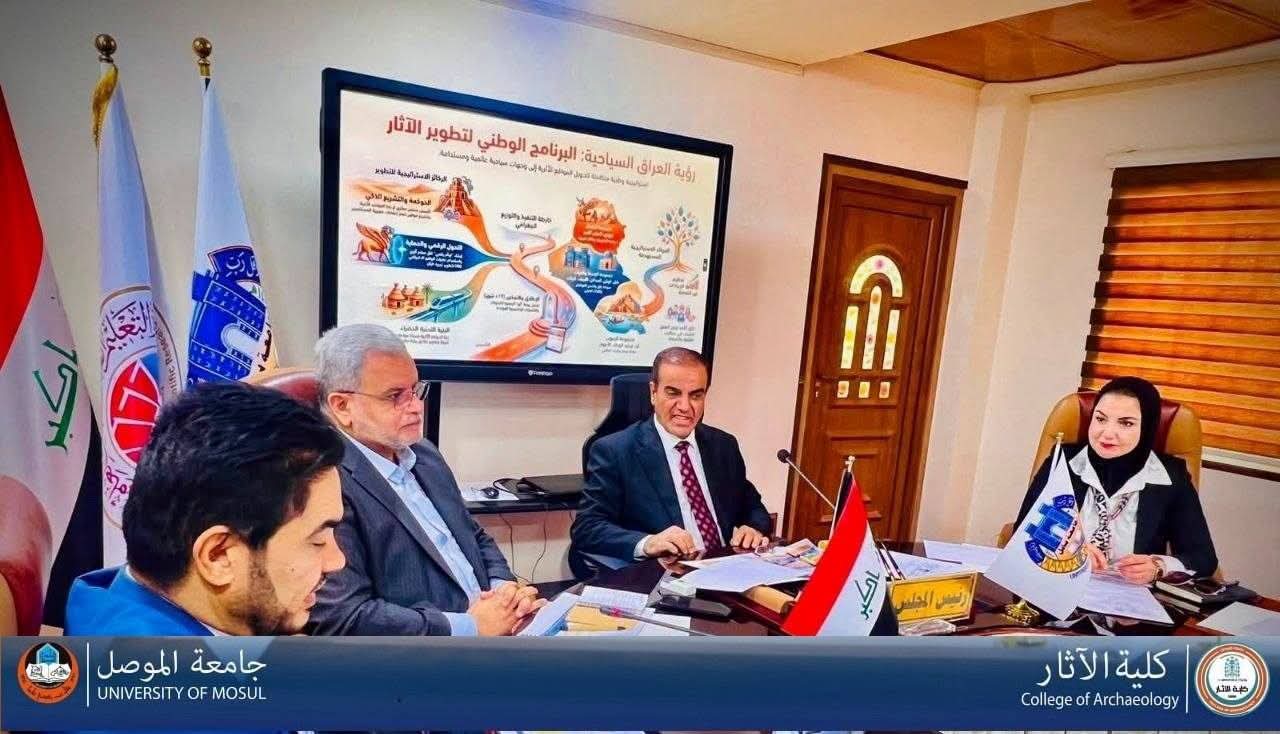
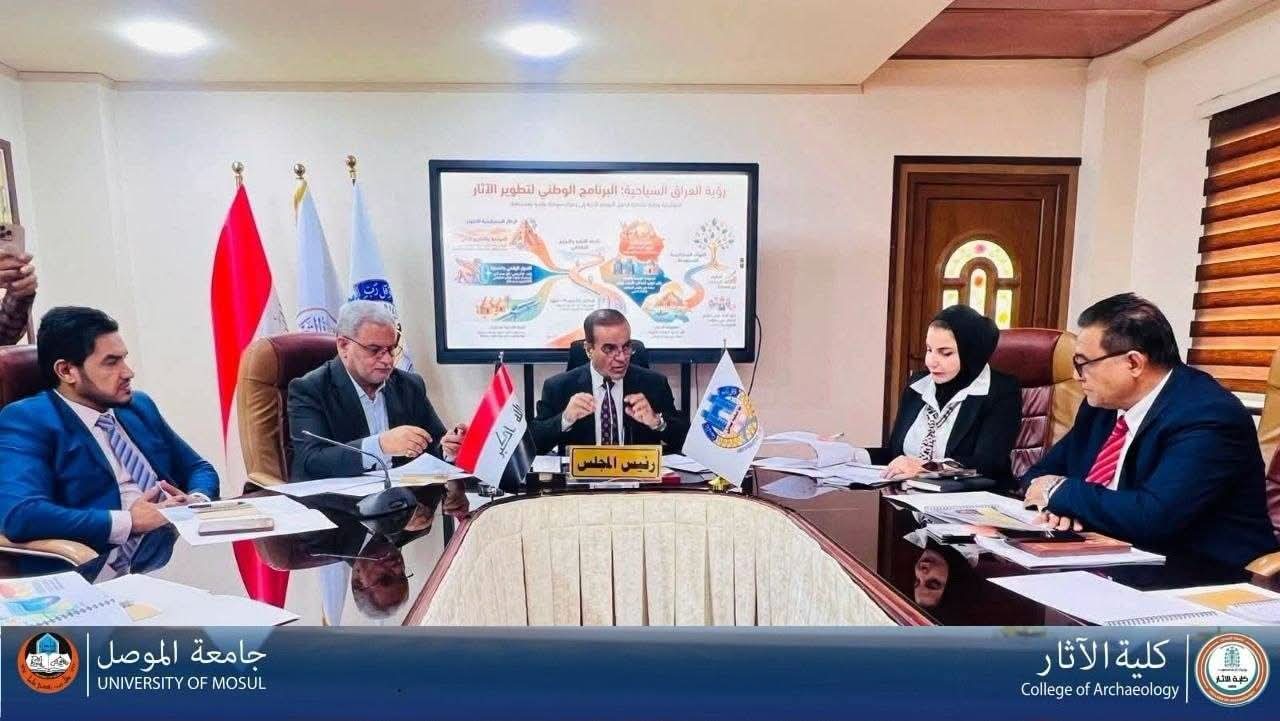
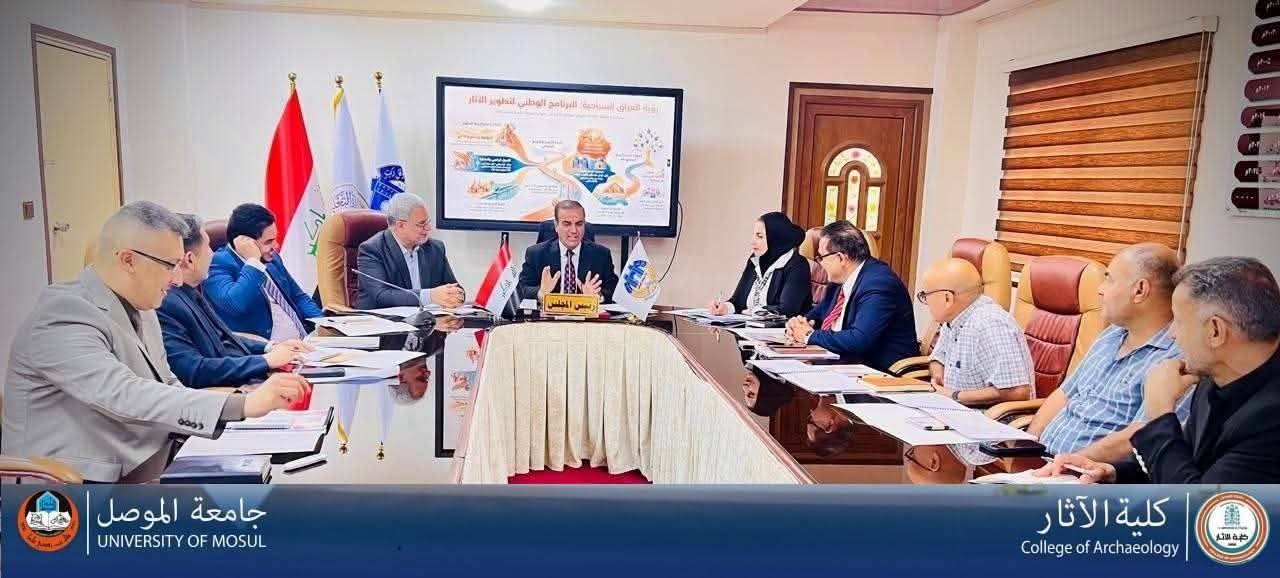
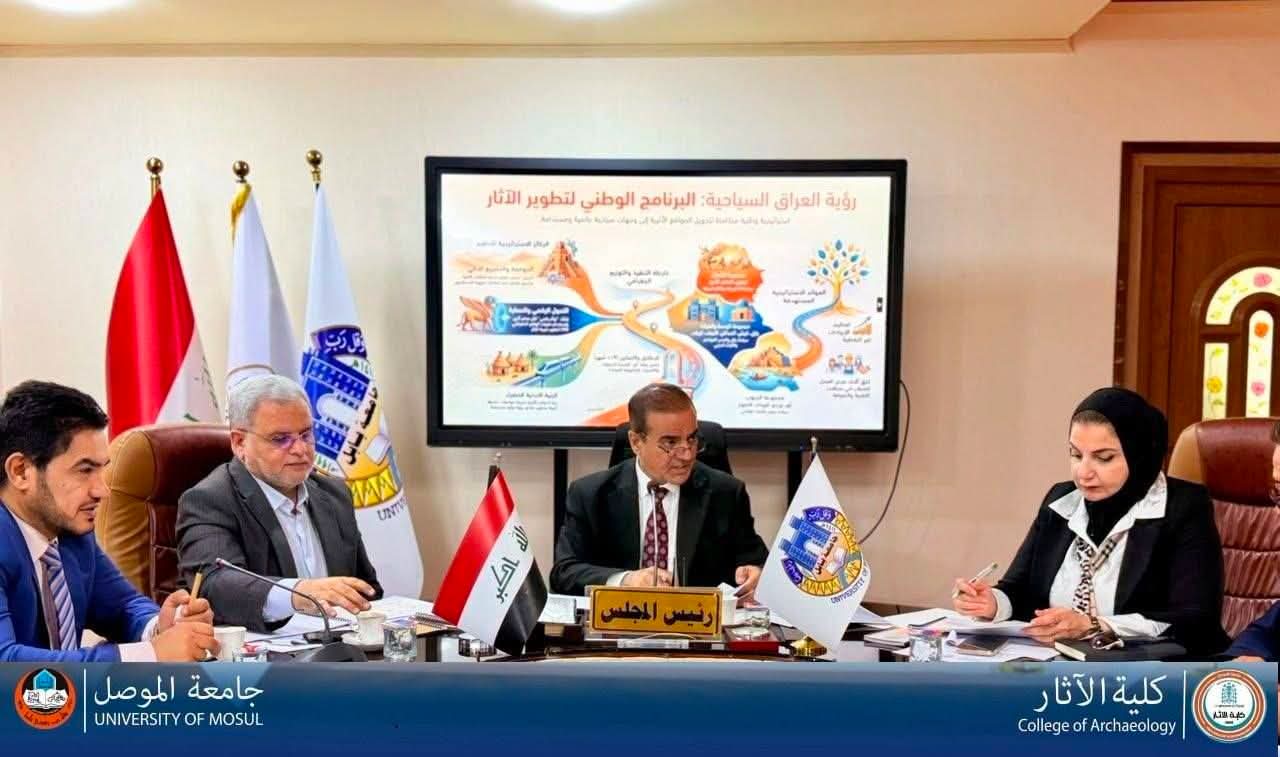
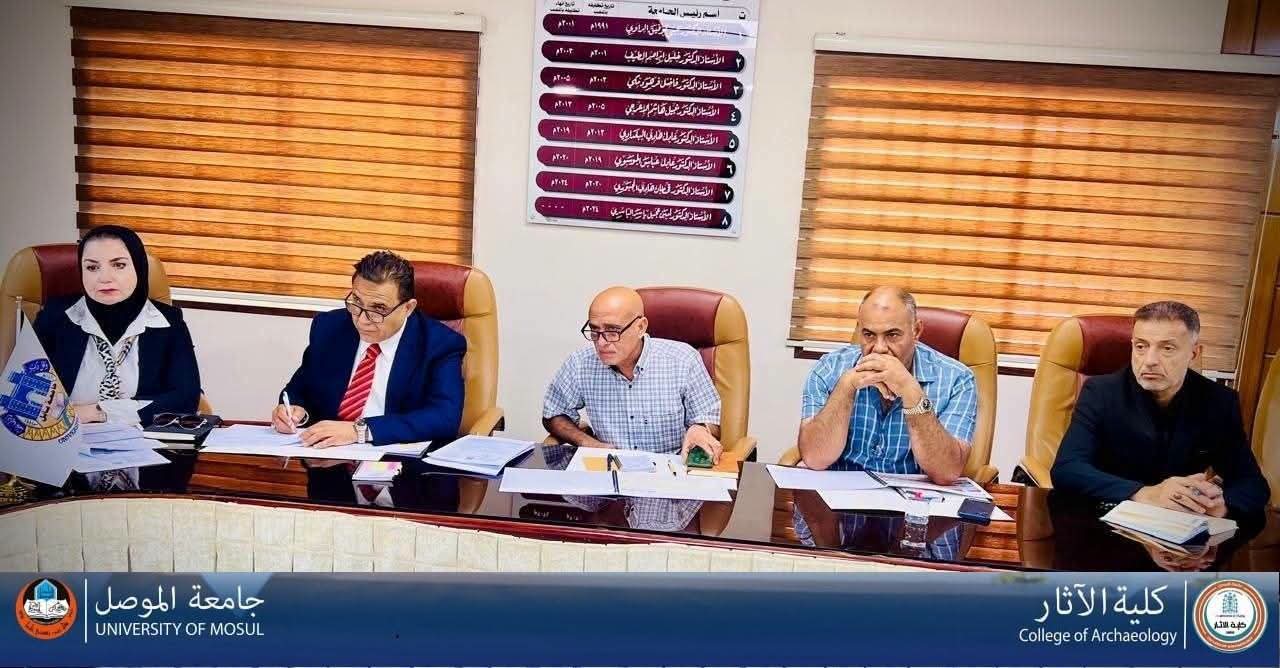
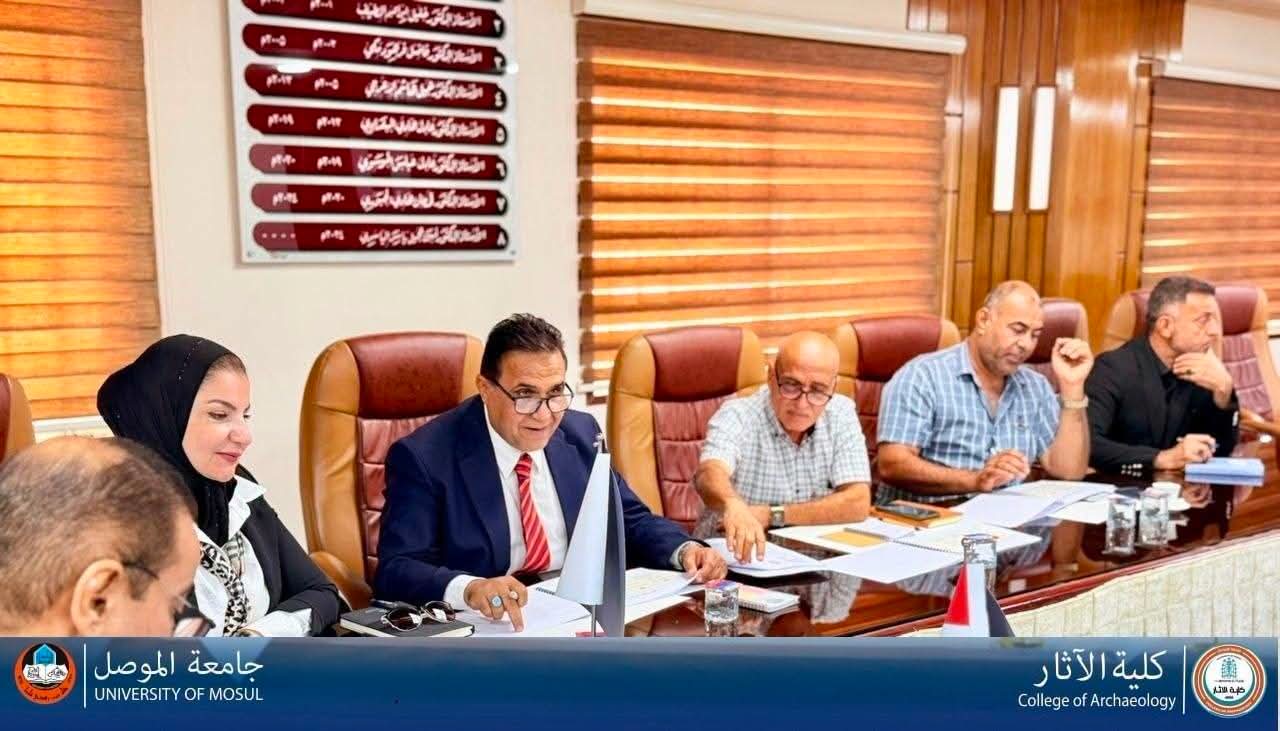
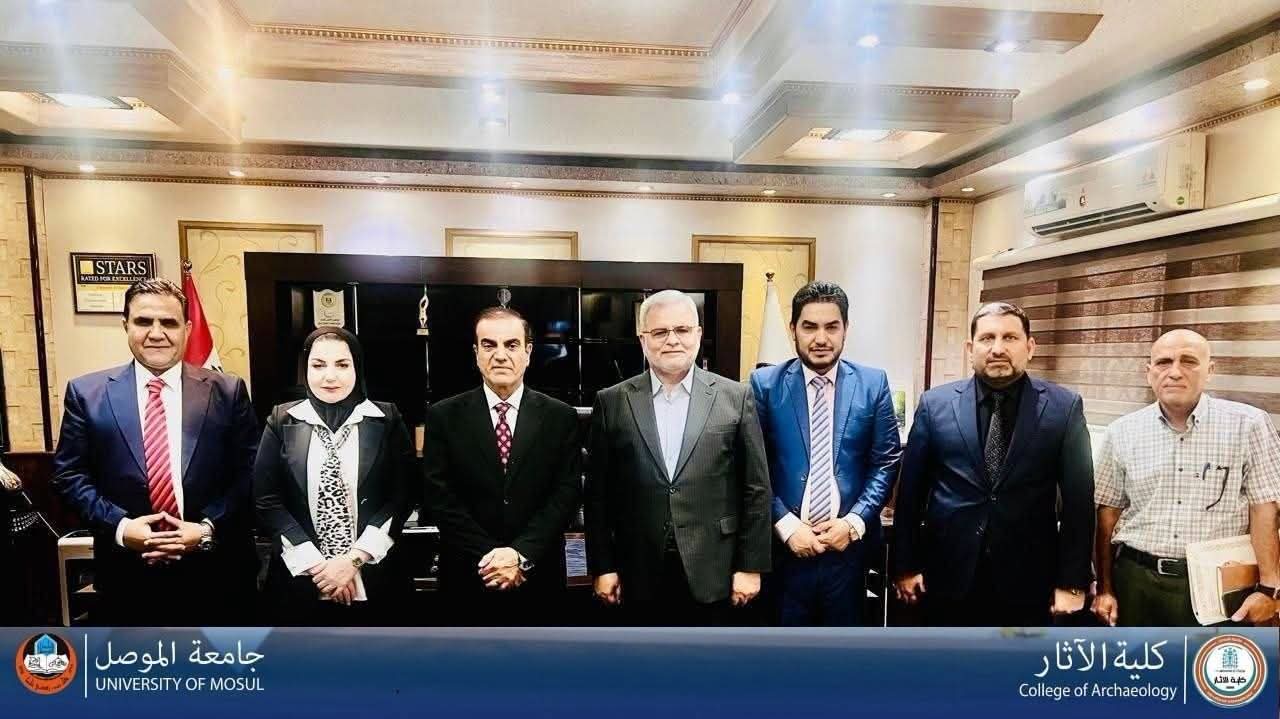
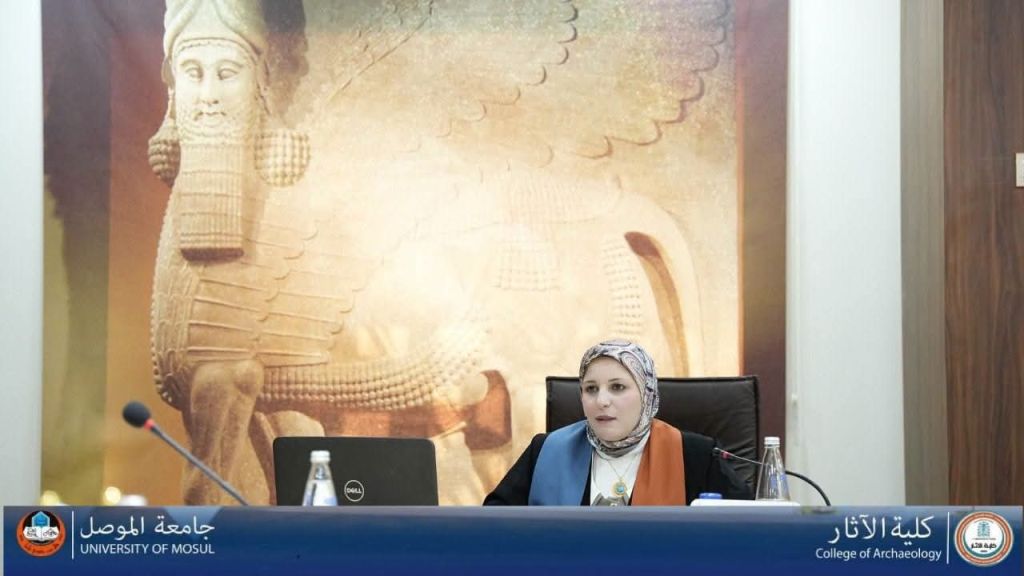
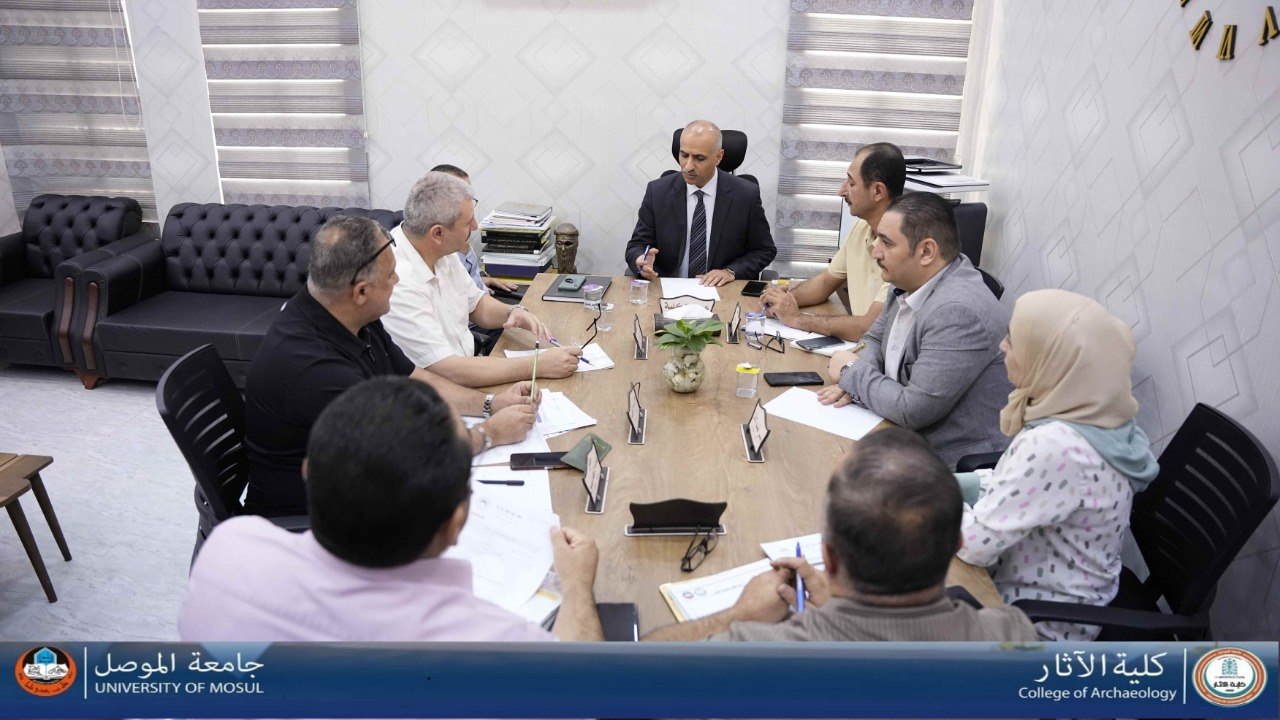
Professor Dr. Yasmin Abdulkarim Mohammed Ali, Dean of the College of Archaeology at the University of Mosul, attended a meeting in Babylon Governorate to discuss the National Program for Developing Archaeological Tourism in Iraq. The meeting was chaired by Professor Dr. Amin Al-Yasiri, President of the University of Babylon, and attended by Dr. Haider Al-Saadi, Head of the National Standing Committee for Community Awareness and Guidance and representative of the Prime Minister’s Office, as well as several deans of colleges of archaeology and tourism. The meeting addressed the program’s themes and strategic objectives, emphasizing the importance of transforming archaeological sites into an integrated tourism system that combines heritage protection with the development of services and infrastructure. This aims to enhance Iraq’s presence on the international tourism map and achieve sustainable cultural, economic, and developmental returns.
The meeting also reviewed the program’s strategic vision, which focuses on linking archaeological sites and tourist destinations within integrated routes and strengthening cooperation between government institutions, universities, and entities concerned with heritage and tourism. The participants discussed several key areas, including governance and legislation, smart infrastructure, digital protection and documentation, digital marketing and empowerment, as well as developing tourist routes and linking geographically and culturally close sites within integrated tourism programs.
They also emphasized the importance of leveraging digital transformation and artificial intelligence in documenting, managing, and promoting archaeological sites, along with utilizing academic expertise in archaeology, tourism, history, engineering, and information technology to develop feasible plans and projects.
The meeting concluded with an emphasis on continued coordination and cooperation among participating entities, and on translating visions and proposals into practical programs that contribute to building a modern national model for archaeological tourism. This model will preserve Iraqi heritage and present it as a sustainable cultural, civilizational, and economic asset.