8 September، 2025
Master’s thesis in the College of Basic Education entitled “Servants of the Messenger, may God bless him and grant him peace: A study of their biographies and roles in the Prophetic era”
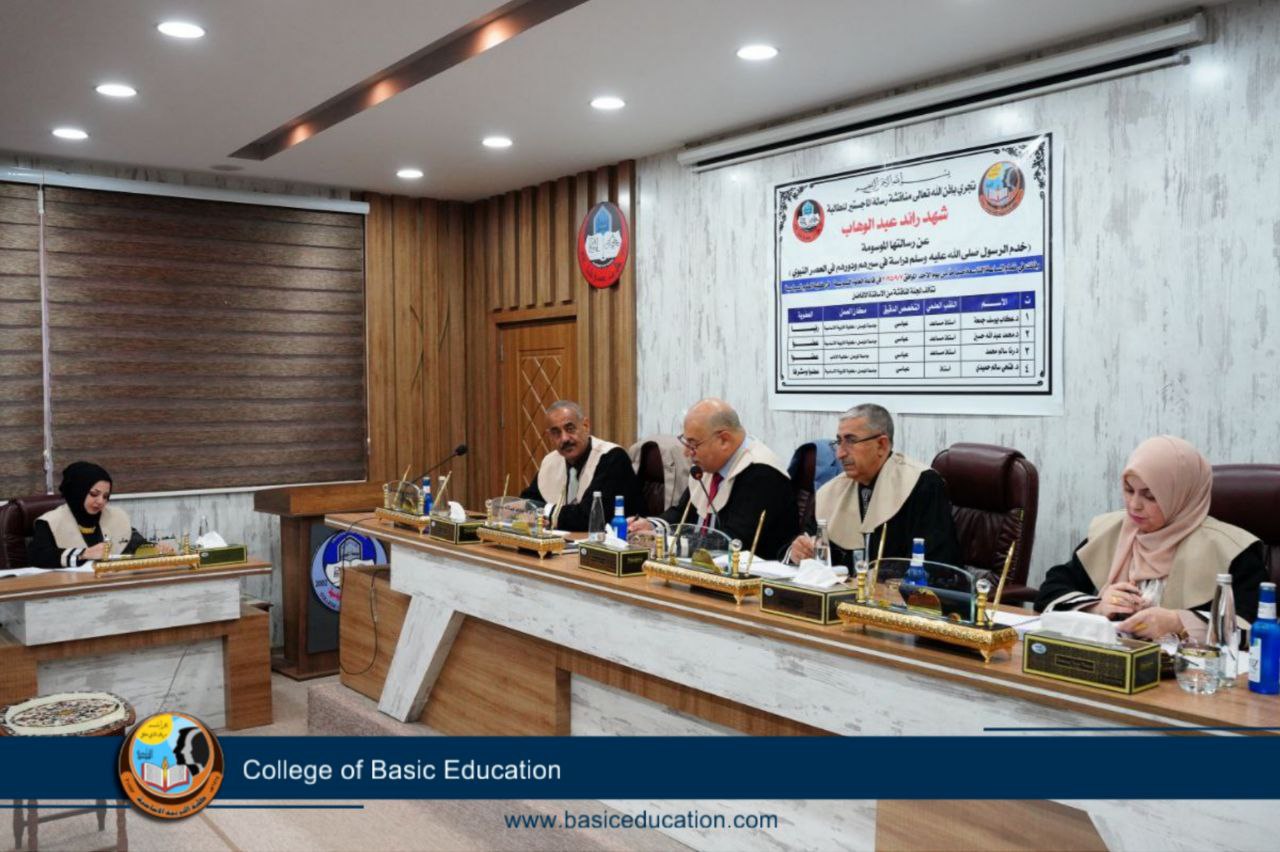
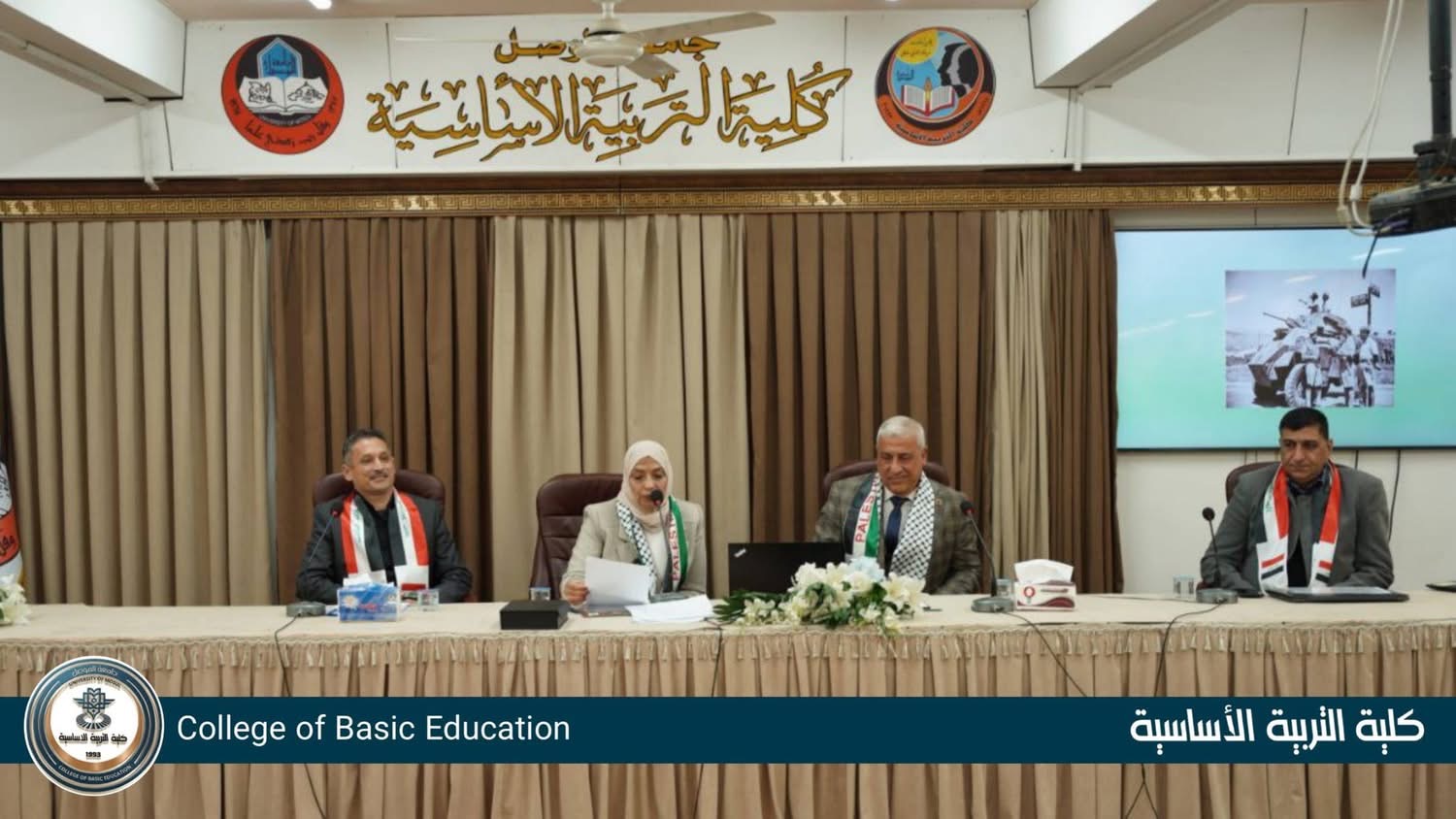
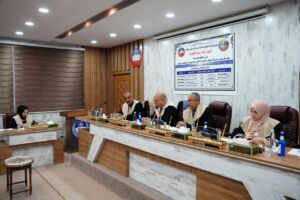
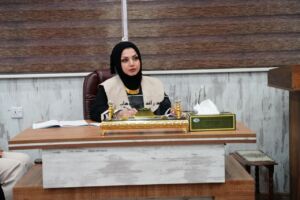
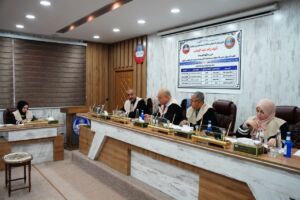
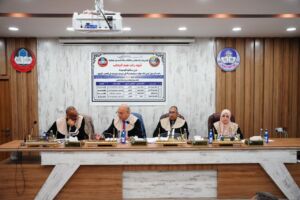
The College of Basic Education at the University of Mosul discussed a master’s thesis entitled “Servants of the Messenger, may God bless him and grant him peace, a study of their biographies and roles in the Prophetic era” on Sunday, September 7, 2025, in the hall of the College of Political Science.
The thesis submitted by the student (Shahd Raed Abdul Wahab) from the History Department / Islamic History major, dealt with the personality of our noble Messenger (peace be upon him) and what he represents as a central axis in the historical transformation on the political, social, religious, economic and cultural levels in the Arabian Peninsula, as our Prophet (peace be upon him) was blessed with the support of a group of men and women who served him in his private and public life and were witnesses to the details of his era and the situations that surrounded him every day and lived the smallest details in Mecca and Medina, where they conveyed to us everything he issued of sayings and actions, as their daily presence was a form of documentation and transmission of those situations and events in the Meccan and Medinan eras, whether inside his noble house, his pure family, his good companions and the general public, so this was a path that we are guided by and follow in his footsteps.
The study was divided into an introduction, three chapters, and a conclusion. In the introduction, we discussed the linguistic and technical meaning of the word servant, service, and the term “slave,” and how our Messenger (may God bless him and grant him peace) dealt with those who served him.
In the first chapter, we talked about the servants of the Messenger (peace and blessings of God be upon him) and their biographies. It is divided into two sections. The first section was about the servants of our noble Messenger (peace and blessings of God be upon him). In the second section, we talked about the female servants of the
Messenger (peace and blessings of God be upon him). The second chapter was entitled “The Attitudes of Serving Our Noble Messenger (peace and blessings of God be upon him)” and it is divided into two sections. In the first section, we talked about the attitudes of men serving our noble Messenger (peace and blessings of God be upon him), while the second section dealt with the female servants of the Messenger (peace and blessings of God be upon him).
The third chapter was entitled “The Role of the Servants of Our Noble Messenger (peace and blessings of God be upon him) in the Call” and it is divided into three main sections.
The first section was about the role of the servants of the Messenger (peace and blessings of God be upon him) in the Meccan era. The second section was entitled “The Role of the Servants of the Messenger Muhammad (peace and blessings of God be upon him) in the Medinan era.” The third section was devoted to studying the role of the female servants of the Messenger (peace and blessings of God be upon him) in the Call during the Meccan and Medinan eras
. The conclusion included a group of conclusions that were produced and produced by the study.
The discussion committee consisted of the following members:
Assistant Professor Dr. Akab Yousef Jumaa / Chairman,
Assistant Professor Dr. Muhammad Hussein Abdullah / Member,
Assistant Professor Dr. Rana Salem Muhammad / Member,
Prof. Dr. Fathi Salem Hamidi / Member and Supervisor
Government Media and Communication Division
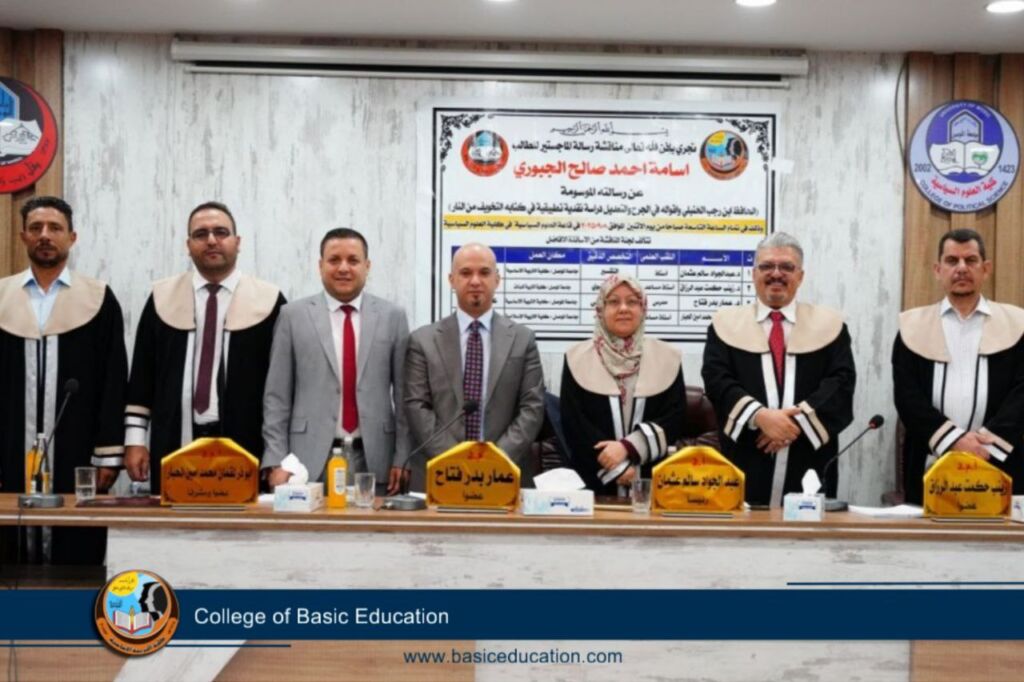 Master's thesis in the College of Basic Education on (Al-Hafiz Ibn Rajab Al-Hanbali and his sayings on criticism and authentication, a critical applied study of his book Al-Takhwīf min Al-Nār)
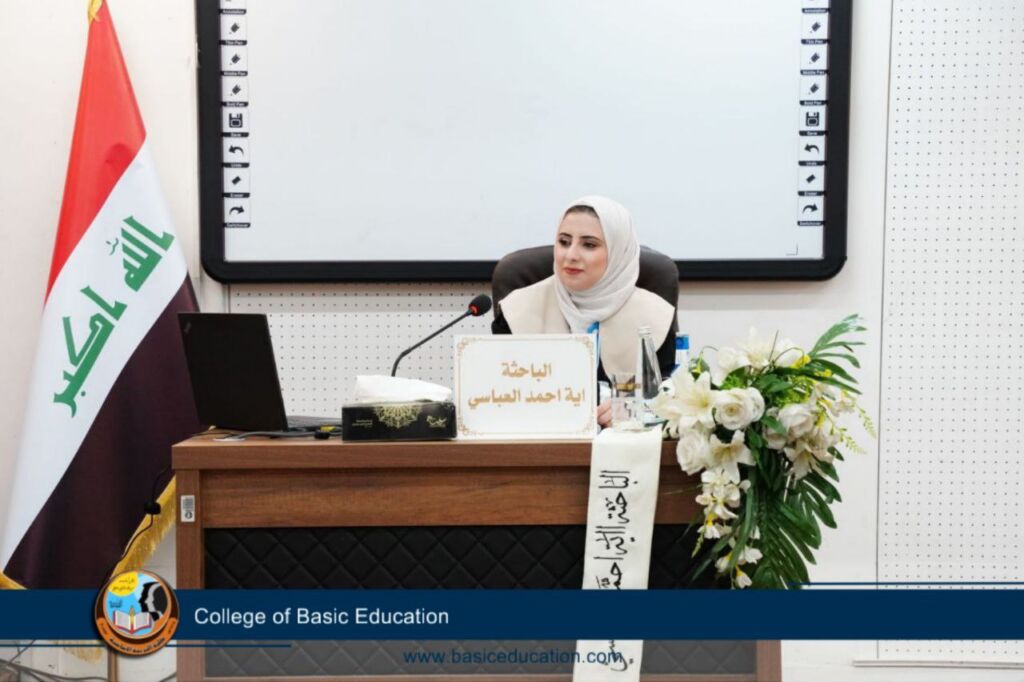 Master's thesis in the College of Basic Education entitled: Women's Trade Union and Party Activity in Iraq (1932-1963).