31 August، 2025
Master thesis in Department of Electrical Engineering on Evaluation of the Impact of Power Factor Correction (PFC) System on the Performance Efficiency of Devices and Equipment in Industrial Applications

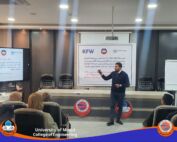
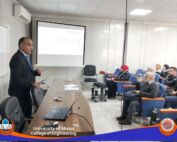
A Master thesis was discussed in Department of Electrical Engineering / College of Engineering at University of Mosul entitled “Evaluation of the Impact of Power Factor Correction (PFC) System on the Performance Efficiency of Devices and Equipment in Industrial Applications”, Supervised By Dr. Riyadh Zaki Sabry On Sunday, August, 31, 2025.
The thesis presented by “Mohammed Qasim Ahmed” aimed to Comparative analysis of power factor compensation systems (individual, group, and central) based on technical efficiency and economic feasibility criteria, with an evaluation of the impact of each system on the performance efficiency of devices and equipment in industrial applications”.
The thesis discusses “Study the causes of low power factor in industrial applications and its impact on equipment and power systems, as well as determining the optimal size and location of power factor correction (PFC) systems based on an analytical study of the influencing environmental and operational factors and the nature of electrical loads”.
The results showed “The impact of the PFC system and the type of compensation it has, both positive and negative effects, is determined after a careful study of the operating conditions, purchase and installation costs, the type of loads and the nature of their work, the operational conditions of the loads, the costs of maintenance periods, and the undesirable transient phenomena when disconnecting and connecting the capacitors”.
The current study is considered one of the sustainable studies to achieve the sustainable development goals, especially the ninth goal “Industry, Innovation and Infrastructure” and the eleventh goal “Sustainable Cities and Communities” by improving the efficiency of electrical equipment (power transmission cables, transformers and electric motors) and improving the quality of energy by correcting the power factor in the electrical stations feeding the crude oil refinery.