25 April، 2026
A legal Article
Psychological Abuse of Children within the Family and Its Impact on the Establishment of Legal Responsibility
A Legal Article
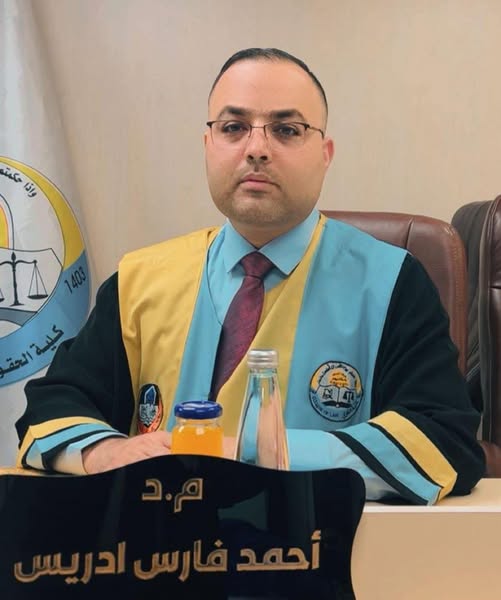
Dr. Ahmed Fares Idris
University of Mosul – College of Law
Introduction:
The family is the primary nucleus in building a child’s personality, and it is the framework that is supposed to provide them with psychological security and stability. However, some practices that may issue from parents or one of them—whether with the intention of discipline or jest—may deviate into forms of psychological abuse, negatively affecting the child’s development and psychological well-being, and at the same time raising legal issues related to the establishment of responsibility.
First: The Concept of Psychological Abuse of Children:
Psychological abuse of children is any behavior or act that inflicts moral or emotional harm on a child, such as intimidation, threats, humiliation, emotional neglect, or exposing them to situations that cause terror and anxiety. This abuse does not necessarily have to leave an apparent physical trace; it is sufficient that it disturbs the child’s psychological balance or makes them feel insecure.
Second: The Legal Basis for Child Protection:
Modern legal rules affirm the protection of children from all forms of violence, whether physical or psychological. The Convention on the Rights of the Child has emphasized the need for states to take adequate measures to protect children from all forms of abuse, including psychological violence within the family. Furthermore, national legislations—including Iraqi law—criminalize acts that constitute an assault on the integrity of the individual, interpreting this integrity broadly to include psychological aspects alongside physical ones.
Third: Limits of Parental Authority:
In principle, parents have authority in raising and guiding their children, but this authority is not absolute; rather, it is restricted by the best interest of the child. Any behavior that deviates from proper upbringing to psychological harm is considered an abuse of right and removes the legality of the act. Accordingly, the use of intimidation or terror—even for the sake of jest—if it exceeds acceptable limits and causes harm to the child, is considered a legally wrongful act.
Fourth: The Establishment of Legal Responsibility:
Psychological abuse of children gives rise to two types of responsibility:
1. Civil Liability:
It is established when fault, harm, and a causal relationship are present, where the injured party (through their guardian or legal representative) has the right to claim compensation for the psychological harm they have suffered.
2. Criminal Liability:
It may be invoked if the act reaches a degree of seriousness that constitutes a crime under legal provisions, such as domestic violence or abuse of a minor, especially if psychological abuse is accompanied by repeated or highly impactful behavior.
Fifth: The Problem of Proof:
Proving psychological abuse is considered one of the most prominent challenges, due to the absence of direct physical evidence. It often relies on psychological reports, expert testimony, the child’s apparent behavior, in addition to surrounding circumstantial evidence.
Sixth: The Social and Educational Dimension:
The impact of psychological abuse is not limited to the legal aspect but extends to society as a whole, as it may lead to the emergence of individuals suffering from psychological disorders or aggressive behaviors. Hence, the importance of family awareness and promoting a culture of positive parenting based on respect and psychological support emerges.
Conclusion:
Psychological abuse of children within the family is a violation of their fundamental rights and constitutes a basis for establishing legal responsibility whenever harm results from it. Therefore, child protection requires setting clear boundaries for educational practices to ensure the realization of their best interests and to safeguard their dignity and psychological well-being. The family, as the primary custodian of the child, is required to be a source of safety, not a source of fear.
Sources:
-
Convention on the Rights of the Child, adopted in 1989, particularly Articles (3, 19, 37).
-
United Nations, General Comments of the Committee on the Rights of the Child (especially regarding the prohibition of all forms of violence against children).
-
Iraqi Constitution of 2005, provisions related to the protection of the family and child.
-
Iraqi Penal Code No. 111 of 1969, provisions related to abuse and assault.
-
Juvenile Welfare Law No. 76 of 1983.
-
Draft Law on Protection from Domestic Violence.