13 February، 2026

All Rights Reserved for University of Mosul © 2026
13 February، 2026
Registration of Four Bacterial Isolates in the National Center for Biotechnology Information (NCBI)
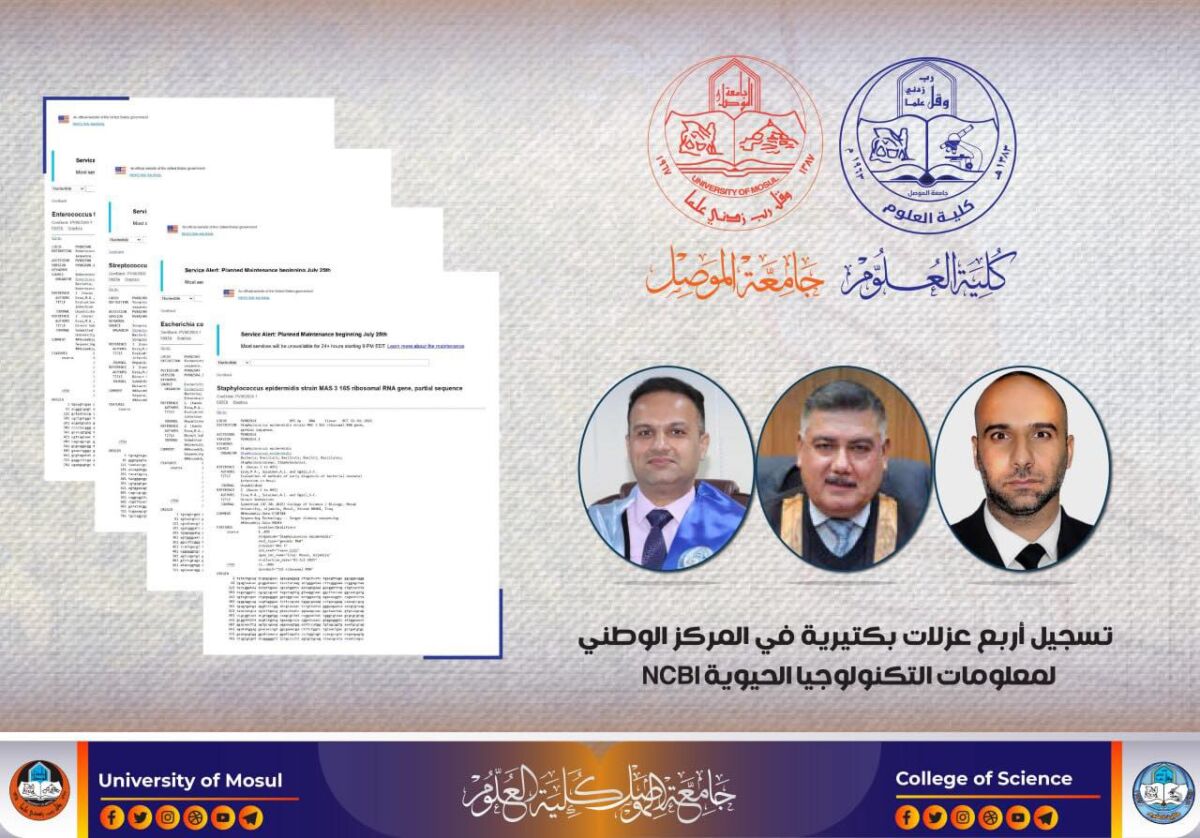
As part of the scientific achievements of the Department of Biology, College of Science, a distinguished research team has accomplished a remarkable scientific milestone by registering four new bacterial isolates in the National Center for Biotechnology Information (NCBI) database. This achievement reflects the continuous advancement of scientific research within the college and strengthens its academic presence at both the national and international levels.
The research team included Professor Mohsen Ayoub Issa and Assistant Professor Aws Ibrahim Suleiman, with the participation of PhD student Saadallah Fathi Aqeel.
The bacterial strains were isolated from blood samples collected from newborn infants suffering from bacterial sepsis. The isolates were identified using both bacteriological and molecular approaches through the documentation and analysis of the 16S rRNA gene sequence, before being officially deposited in the GenBank database of the NCBI.
The registered bacterial species include:
The isolates were assigned the following GenBank accession numbers:
The Deanship of the College of Science and the Presidency of the Department of Biology commended the outstanding scientific efforts of the research team, expressing pride in this distinguished achievement, which reflects the competence of the department’s academic and research staff and contributes valuable molecular data to the scientific community. The registered information is expected to support medical and microbiological studies, particularly those related to neonatal infections and bacterial sepsis.
This achievement aligns with the United Nations Sustainable Development Goals (SDGs), particularly SDG 3: Good Health and Well-Being, through supporting research related to infectious diseases and improving healthcare outcomes; SDG 4: Quality Education, by promoting scientific research and developing research skills; SDG 9: Industry, Innovation and Infrastructure, through the application of advanced molecular technologies; and SDG 17: Partnerships for the Goals, by contributing valuable data to global scientific databases and strengthening international scientific collaboration.
The College extends its sincere congratulations and best wishes to the research team and its students for continued success, excellence, and further scientific achievements.
Media and Government Communication Division
Friday, February 13, 2026
All Rights Reserved for University of Mosul © 2026