2 October، 2025
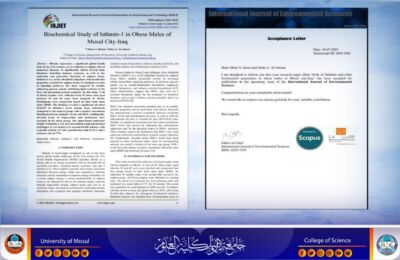
Master thesis examines the relationship of adipokines to insulin resistance in obese patients in Mosul
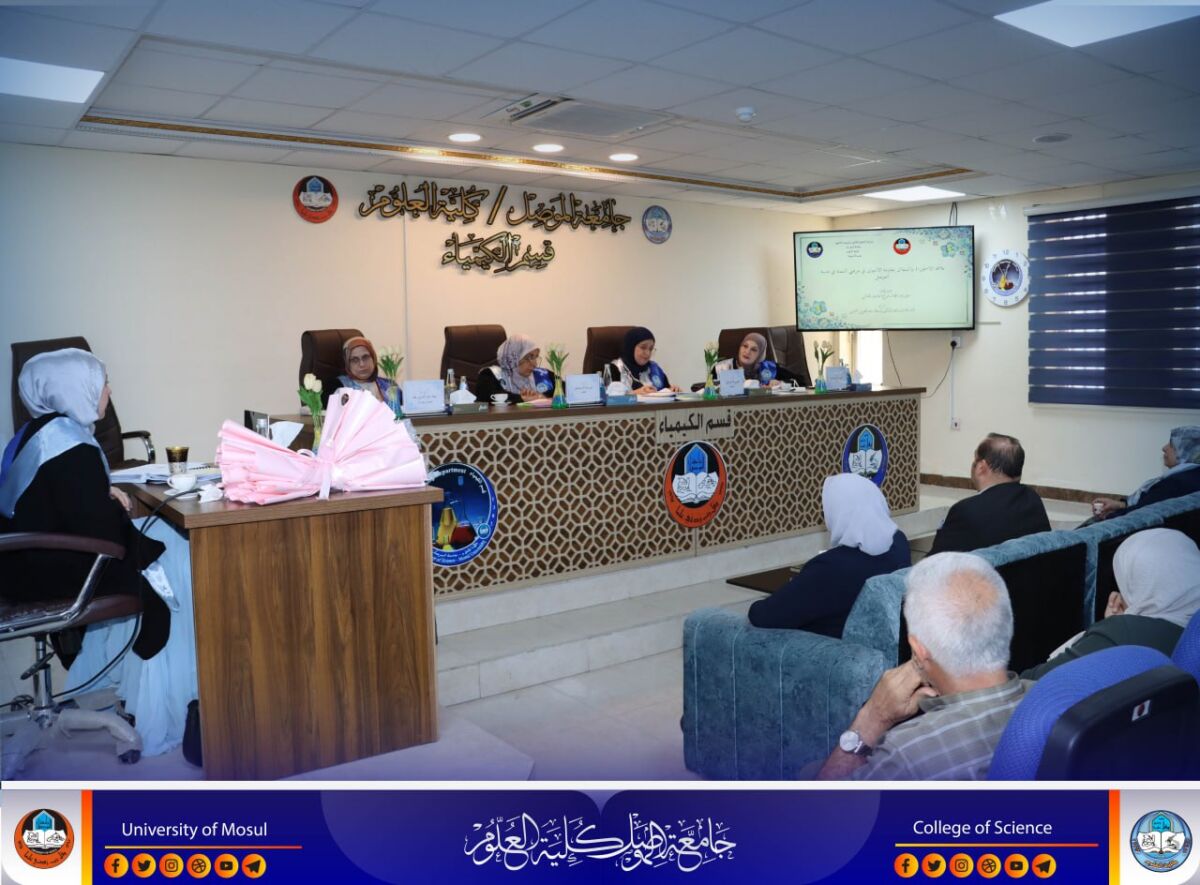
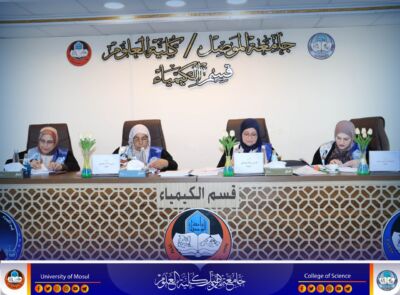
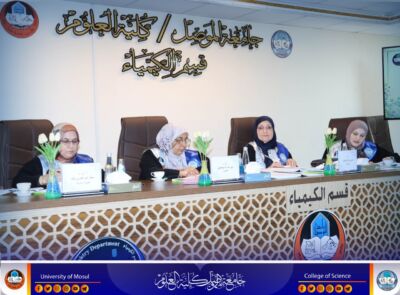
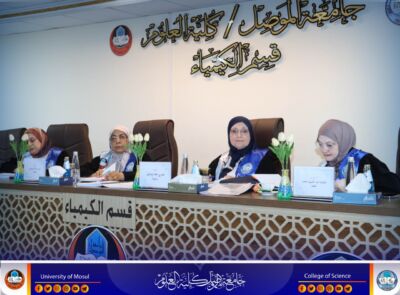
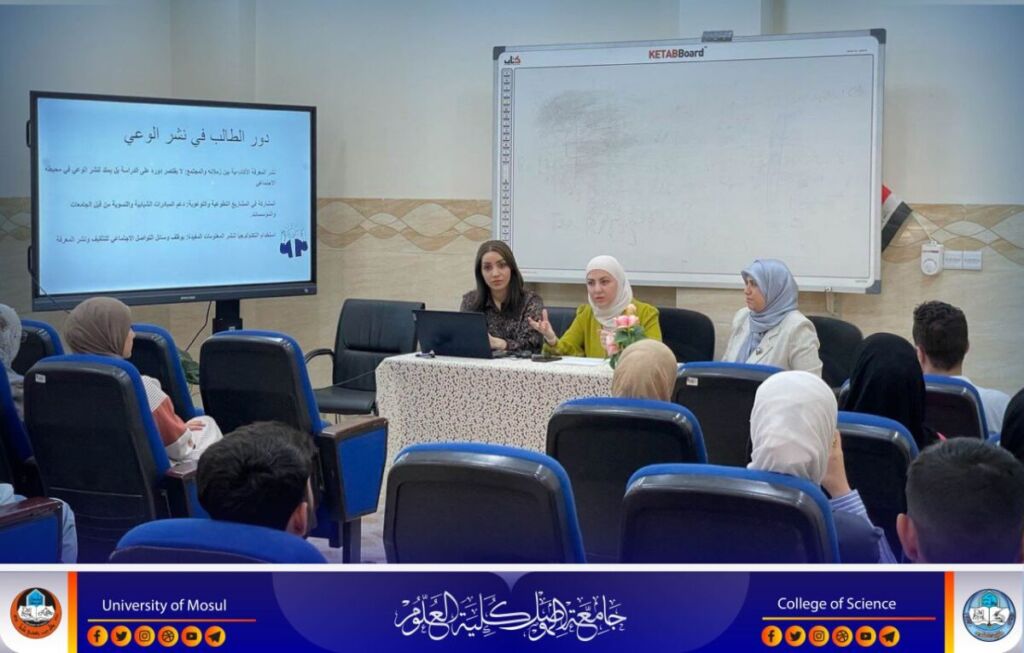
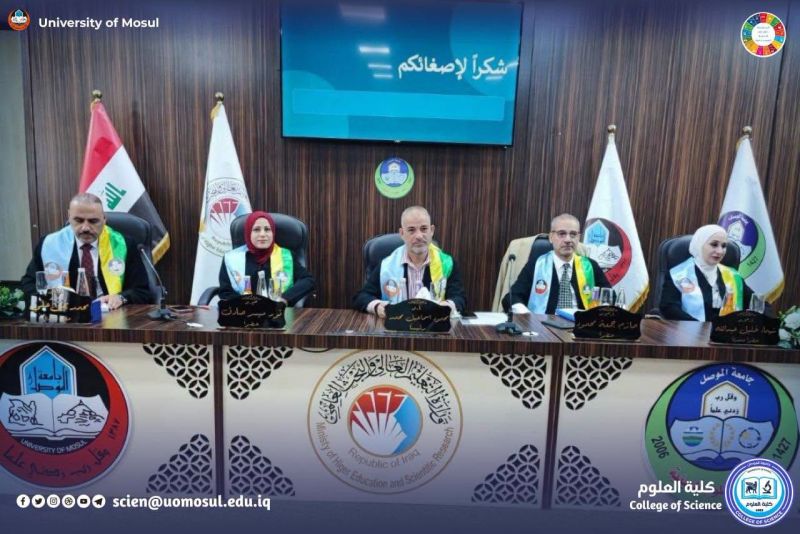
On Thursday , October 2, 2025, the master’s thesis of the student Abeer Abdul-Jabbar Hazza Ismail, entitled ” The relationship of acetamine-1 and spfatin with insulin resistance in obese patients in Mosul“, was discussed in the Department of Chemistry at the College of Sciences, in the presence of a number of department teachers and graduate students.
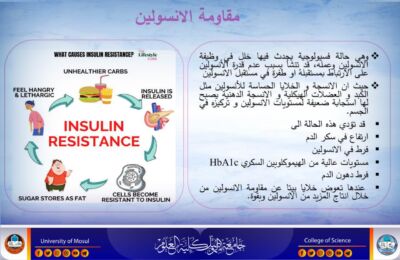
The study focused on the study of the relationship between some adipokines (acetaminophen-1 and spfatin) and insulin resistance in 105 male samples aged (18-60) years, including (65) obese patients and(40) healthy people with normal body mass index (control group). The samples were divided according to the BMI world classification into five categories: normal, overweight, obesity of the first degree, obesity of the second degree, and obesity of the third degree.
The study included measuring the levels of acetamin – 1 and sphatin in the blood serum, as well as a set of biochemical and clinical indicators such as: blood glucose, insulin resistance, peptide C, total cholesterol, triglycerides, liver enzymes (ALT, AST, GGT), kidney function (urea and creatinine), oxidative stress indicators (malondialdehyde, ceruloplasmin, clotathione), markers of inflammation (CRP).
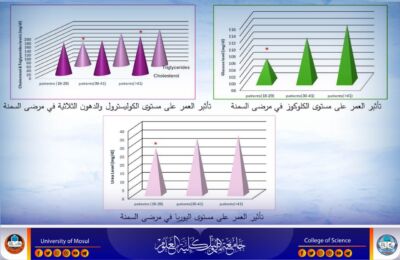
The results showed a significant increase in the levels of acetaminophen-1, glucose, lipids, hepatic enzymes, indicators of inflammation and oxidative stress in obese patients, in contrast to a significant decrease in the levels of aspatin and clotathione, and the study also showed a positive relationship between acetaminophen-1 and insulin resistance, and a negative relationship between aspatin and insulin resistance.
In the applied aspect, the student was able to isolate and partially purify ethmine-1 using precipitation with ammonium sulfate (70% saturation), dialysis and gel filtration (Sephadex G-100), where the results showed obtaining two protein packages, package (A) was the most effective with a recovery rate (77%) and the number of purification times (23), with a molecular weight of ethmine-1 of (64 KDA).
This study also aligns with the Sustainable Development Goals by:
- The third goal (good health and well-being): by focusing on understanding the factors of obesity and insulin resistance to reduce the risk of chronic diseases.
- The fourth goal (quality education): to support scientific research and encourage graduate students to address topics that affect society.
- The ninth goal (industry, innovation and infrastructure): using modern technologies in the isolation and biochemical purification of adipokines.
- The seventeenth goal (holding partnerships to achieve the goals): by strengthening research cooperation between teaching staff and graduate students.
Our wishes to our dear students continued success and success
Government information and Communication Division
Thursday, October 2, 2025