3 June، 2026
PhD Dissertation Discusses Biostratigraphy and Depositional Environment of the Geli Khana Formation in Northeastern Iraq
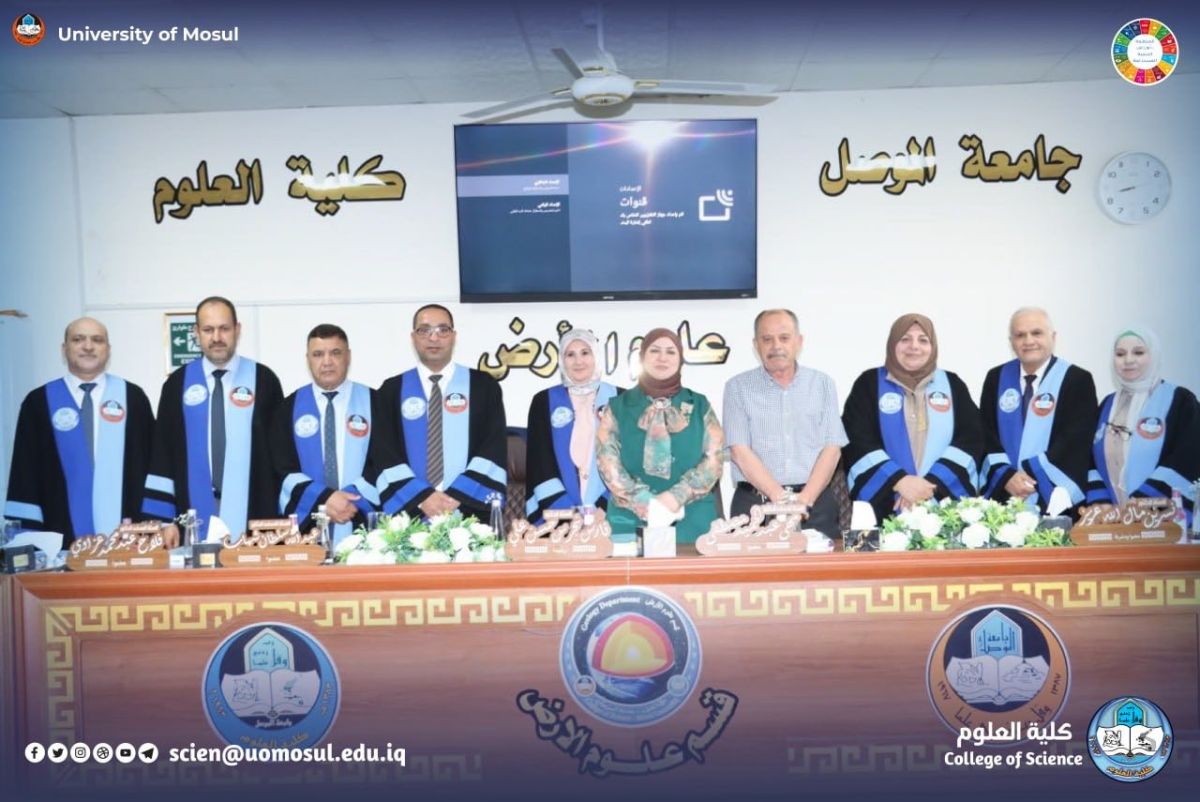
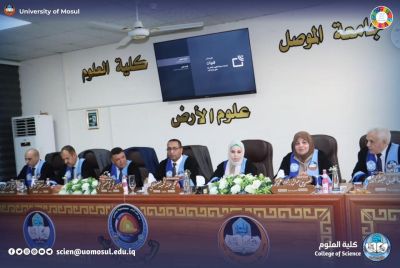
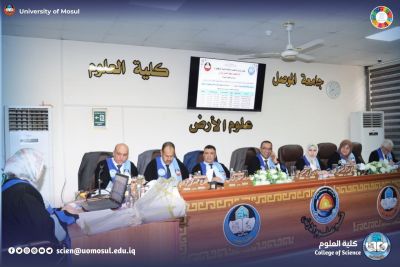
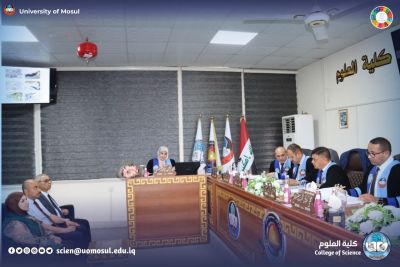
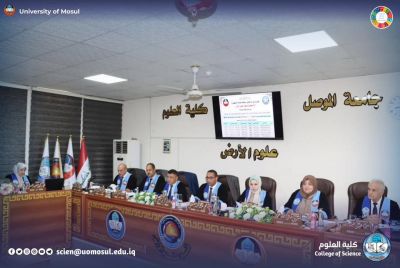
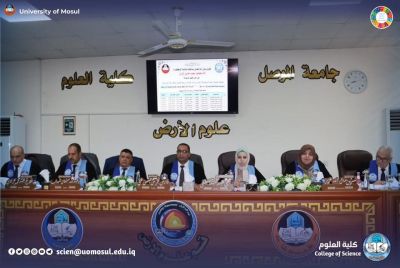
The Department of Geology and Petroleum at the College of Science, University of Mosul, held the PhD dissertation defense on Wednesday, 3 June 2026, entitled:
“Biostratigraphy and Depositional Environment of the Late Jurassic–Early Cretaceous Interval of the Geli Khana Formation in Northeastern Iraq”
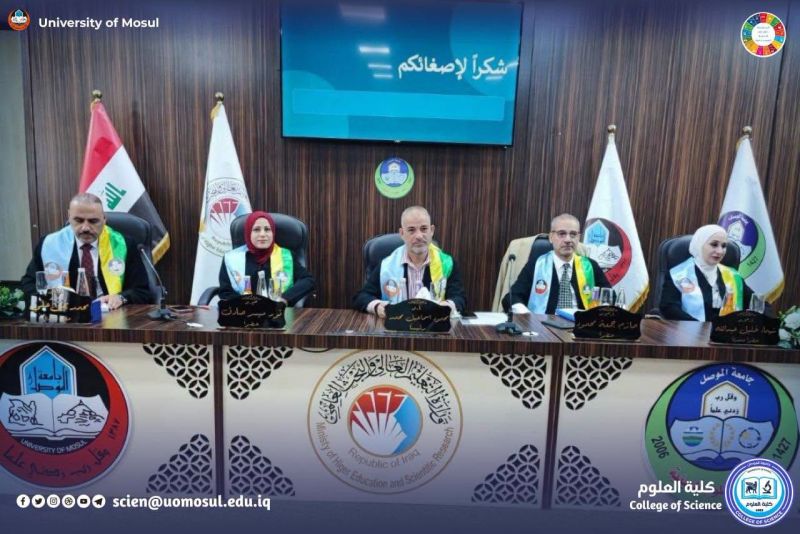
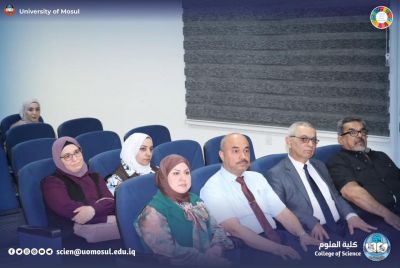
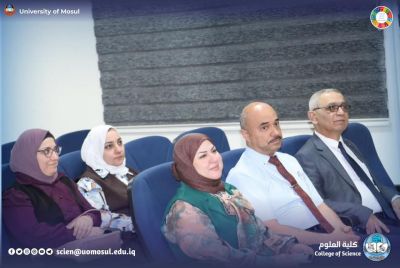
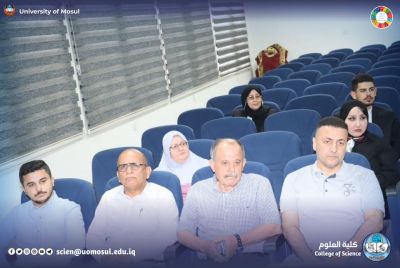
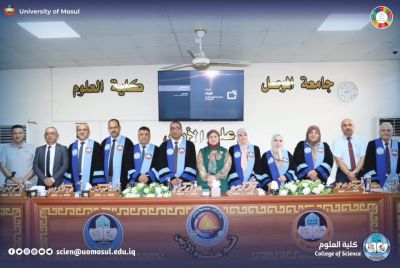
The session was attended by the Dean of the College of Science, Prof. Dr. Hiam Adel Ibrahim, the two Assistant Deans for Scientific and Administrative Affairs, the Head of the Department of Geology and Petroleum, Asst. Prof. Dr. Omar Khulook Mohammed Sajad, a number of faculty members, and postgraduate students.
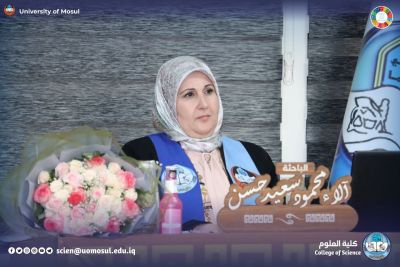
The dissertation was presented by the candidate Alaa Mahmoud Saeed Al-Wazzan from the Department of Geology and Petroleum. The study focused on the detailed identification of various biotic components, including calcareous nannofossils, dinocysts, calpionellids, planktonic and benthic foraminifera, and radiolarians within the Geli Khana Formation, particularly across the Jurassic–Cretaceous boundary, based on two stratigraphic sections: Sordash (Sulaymaniyah Governorate) and Zini Warti (Erbil Governorate).
The research employed an integrated methodological approach, including field investigation, microscopic analysis, facies analysis, and geochemical and mineralogical studies. A comprehensive taxonomic analysis of biotic assemblages was conducted, with a particular emphasis on calcareous nannofossil biostratigraphy for age determination, supported by dinocysts, calpionellids, and radiolarians.
The results indicated that the Geli Khana Formation spans the Tithonian–Berriasian interval, as determined by calcareous nannofossil assemblages and confirmed by additional fossil groups. The depositional environment was interpreted as a deep, quiet marine setting ranging from bathyal to outer shelf conditions.
Geochemical and mineralogical data suggested warm climatic conditions with high salinity and elevated biological productivity. Reducing conditions dominated the lower and middle parts of the formation, while relatively improved oxygenation was recorded in the upper parts of both studied sections.
The study recommends further comprehensive investigations of equivalent Jurassic–Cretaceous formations, as well as detailed sedimentological and tectonic studies of the basin due to its potential hydrocarbon source and reservoir characteristics.
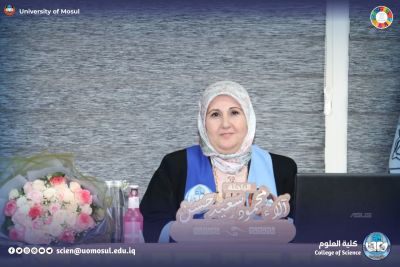
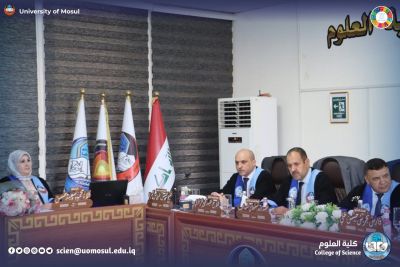
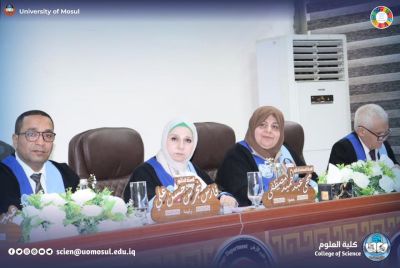
The examination committee was chaired by Prof. Dr. Firas Najras Hassan Ali, with membership of Asst. Prof. Dr. Maha Abdul Hamid Mustafa, Asst. Prof. Dr. Abdullah Sultan Shihab, Asst. Prof. Dr. Falah Abdul Mohammed Al-Azzawi, and Asst. Prof. Dr. Faleh Hassan Abbas. The supervision was conducted by Prof. Dr. Nareen Malallah Aziz and Emeritus Prof. Dr. Ali Ismail Abdullah.
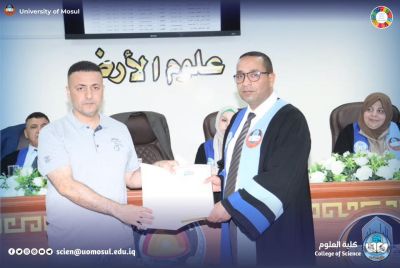
At the conclusion of the defense, the Head of the Department, on behalf of the Dean of the College, presented a Certificate of Appreciation to Prof. Dr. Faris Najras Hassan Ali from the University of Tikrit in recognition of his efforts and chairing the examination committee.
Media and Government Communication Division
Wednesday, 3 June 2026
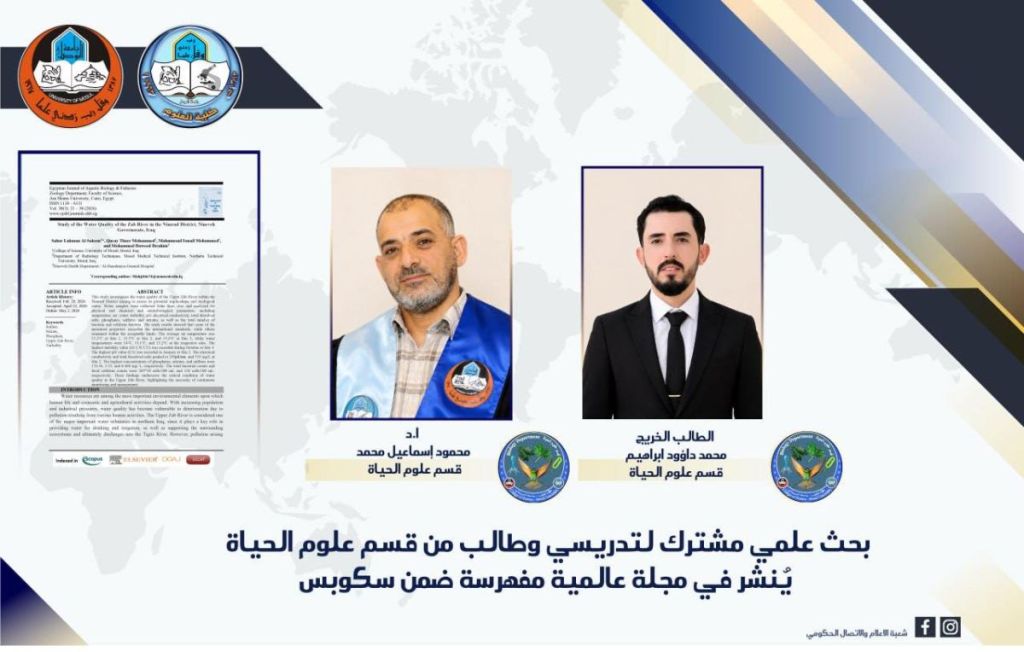 Joint Scientific Research by Faculty Member and Student from the Department of Biology Published in an International Scopus-Indexed Journal
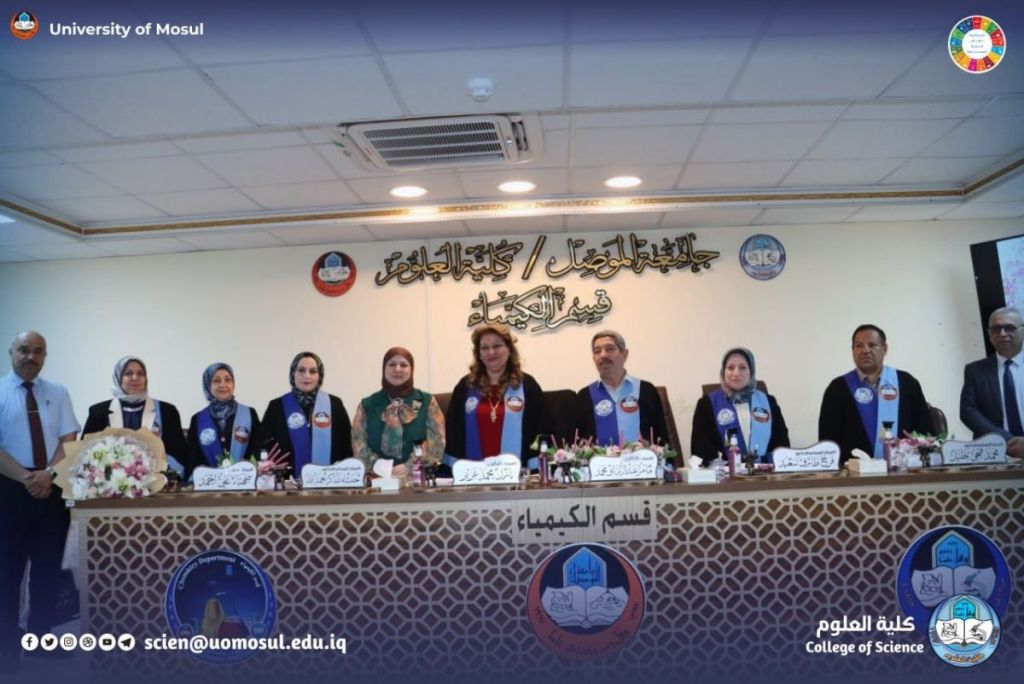 Doctoral Dissertation at the College of Science Discusses the Synthesis, Characterization, and Biological Evaluation of Complexes Derived from Non-Steroidal Anti-Inflammatory Drugs