16 November، 2026
College of Excellence for Archaeology and Tourism Organizes a Scientific Seminar on Detention Institutions in Ancient Iraq in Light of Cuneiform Sources
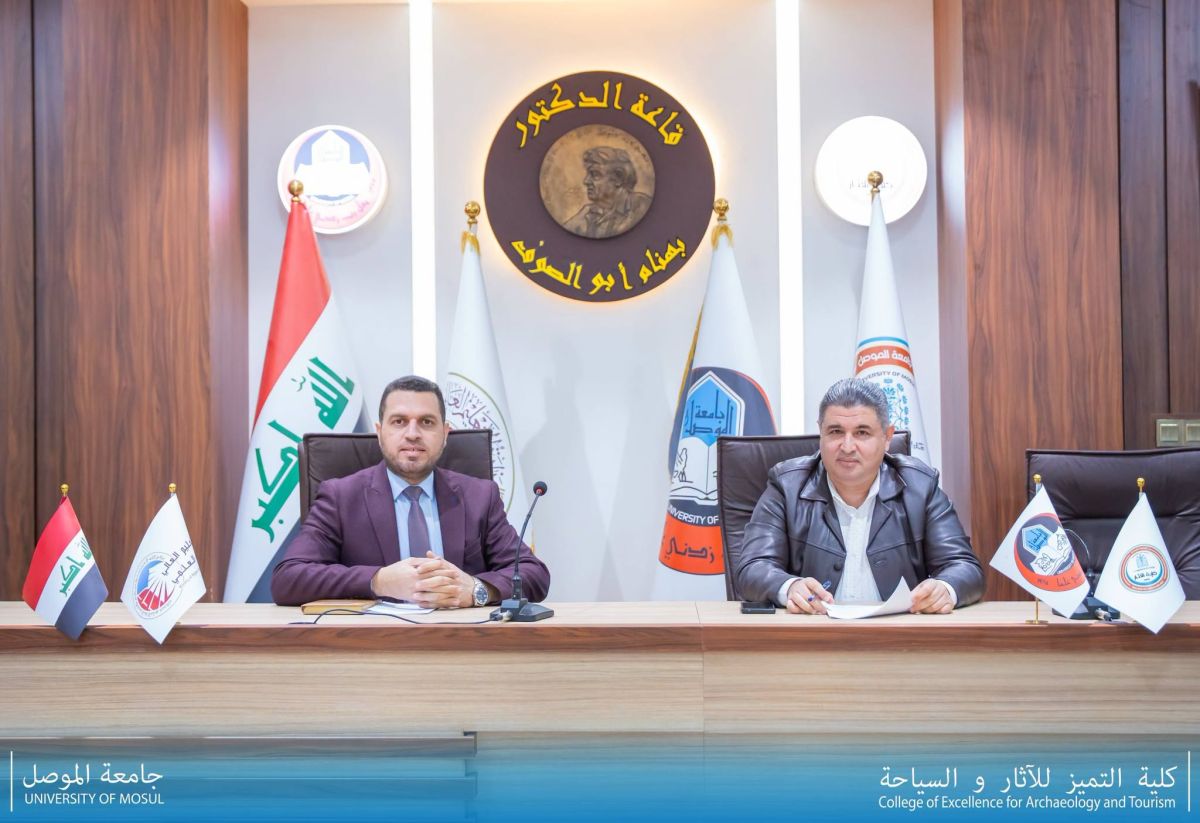
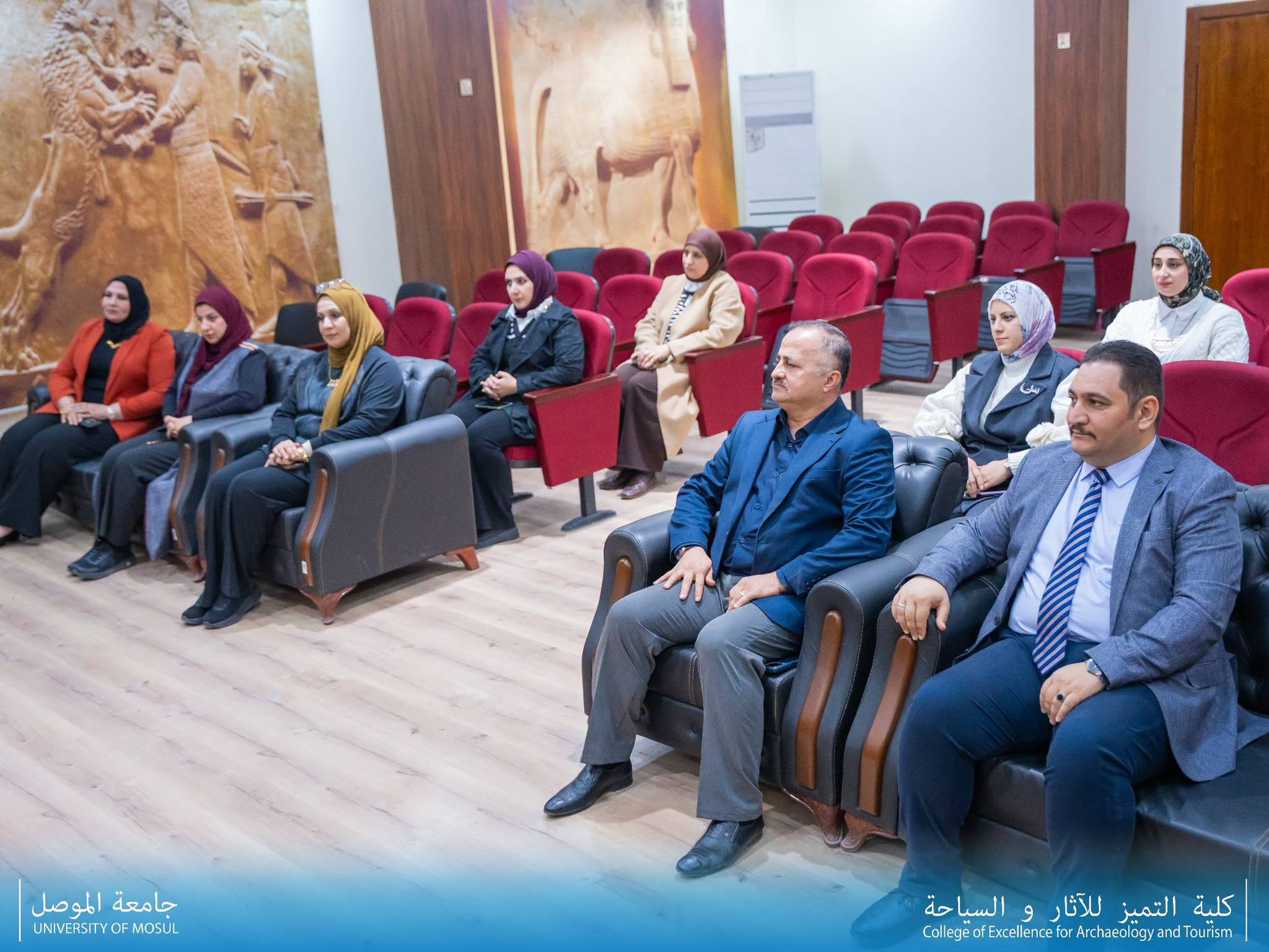
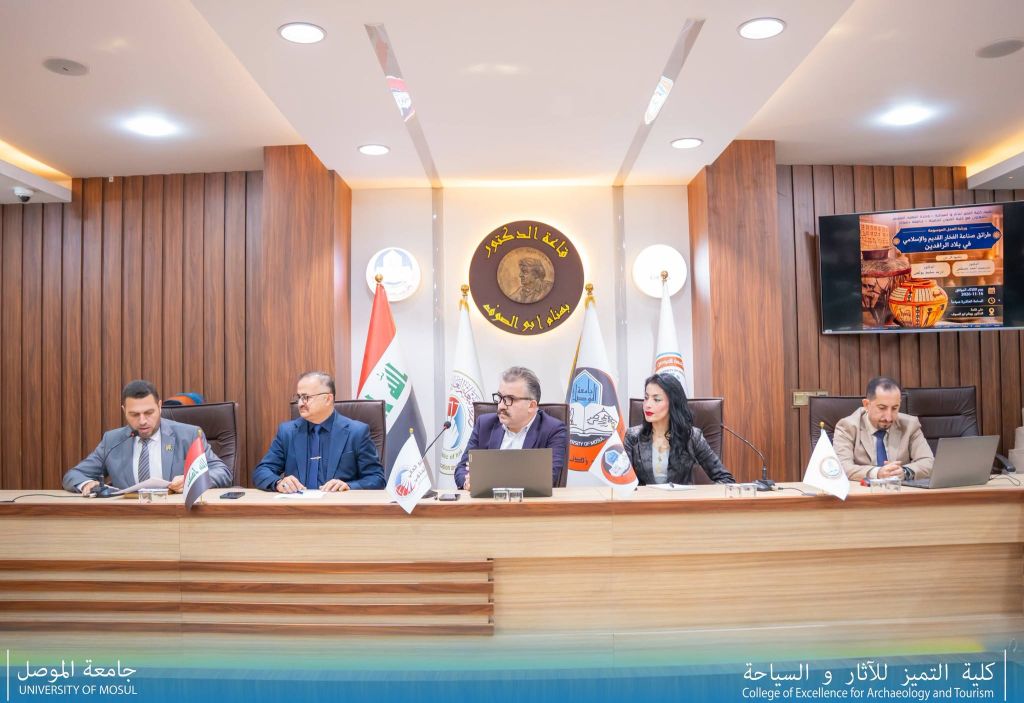
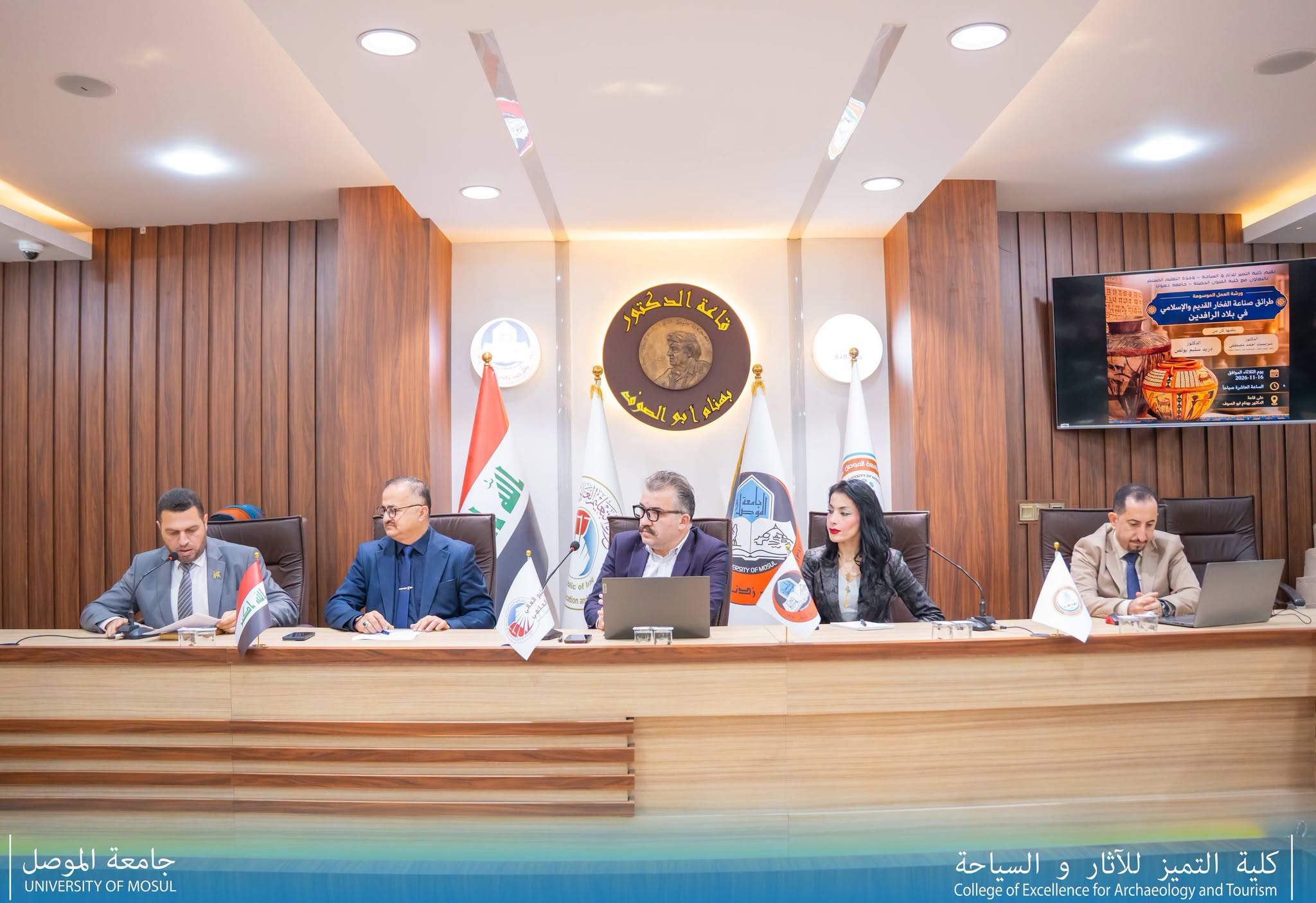
As part of its scholarly activities aimed at fostering academic research and supporting specialized studies on the history and civilization of Mesopotamia, the Department of Archaeological Tourism at the College of Excellence for Archaeology and Tourism held a scientific seminar titled “Detention Institutions in Ancient Iraq in Light of Cuneiform Sources.” The seminar was presented by Dr. Haitham Ahmed Hussein on Monday, November 16, 2026, and was attended by faculty members, researchers, and students with an interest in historical and archaeological studies.
The seminar explored the subject of detention institutions in the civilization of ancient Iraq—a significant aspect that reflects the evolution of legal and administrative systems in Mesopotamian societies. The speaker examined key references found in cuneiform texts regarding places of detention, their various types, and the functions they served within the administrative and judicial frameworks of the time. Furthermore, the discussion shed light on the nature of these institutions, their operational mechanisms, their relationship with the ruling authorities, and their role in regulating social life, maintaining security, and enforcing laws.
Dr. Haitham Ahmed Hussein explained that cuneiform sources serve as a primary reference for understanding the institutional structure of the state in ancient Iraq, as they reveal various facets concerning administration, the judiciary, penal systems, and the legal procedures employed across different historical periods. The seminar also addressed the implications of these texts and their importance in reconstructing a more accurate picture of social and legal life within the civilizations of Mesopotamia. The session featured scholarly interventions and academic discussions that enriched the seminar’s subject. Participants exchanged views on the significance of cuneiform studies in uncovering the cultural and legal aspects that shaped the development of ancient societies, as well as their role in deepening the understanding of Iraq’s cultural heritage and highlighting its contributions to human history.
This academic activity aligns with the efforts of the College of Excellence for Archaeology and Tourism to foster a culture of scientific research and encourage specialized studies. It also aims to provide an academic environment that facilitates the exchange of knowledge and expertise among researchers and students, while promoting interest in Iraq’s cultural heritage—a cornerstone of the nation’s cultural identity.