21 November، 2026
Master’s Thesis Defense
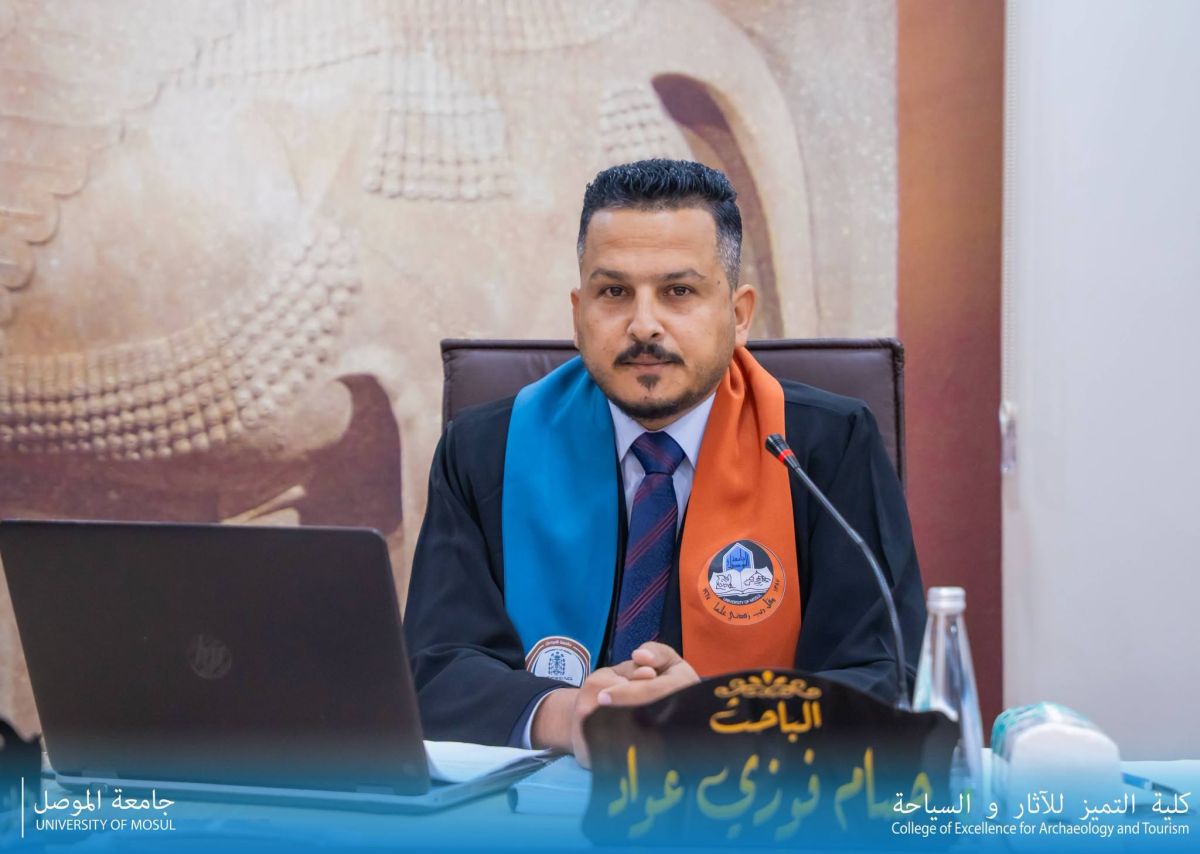
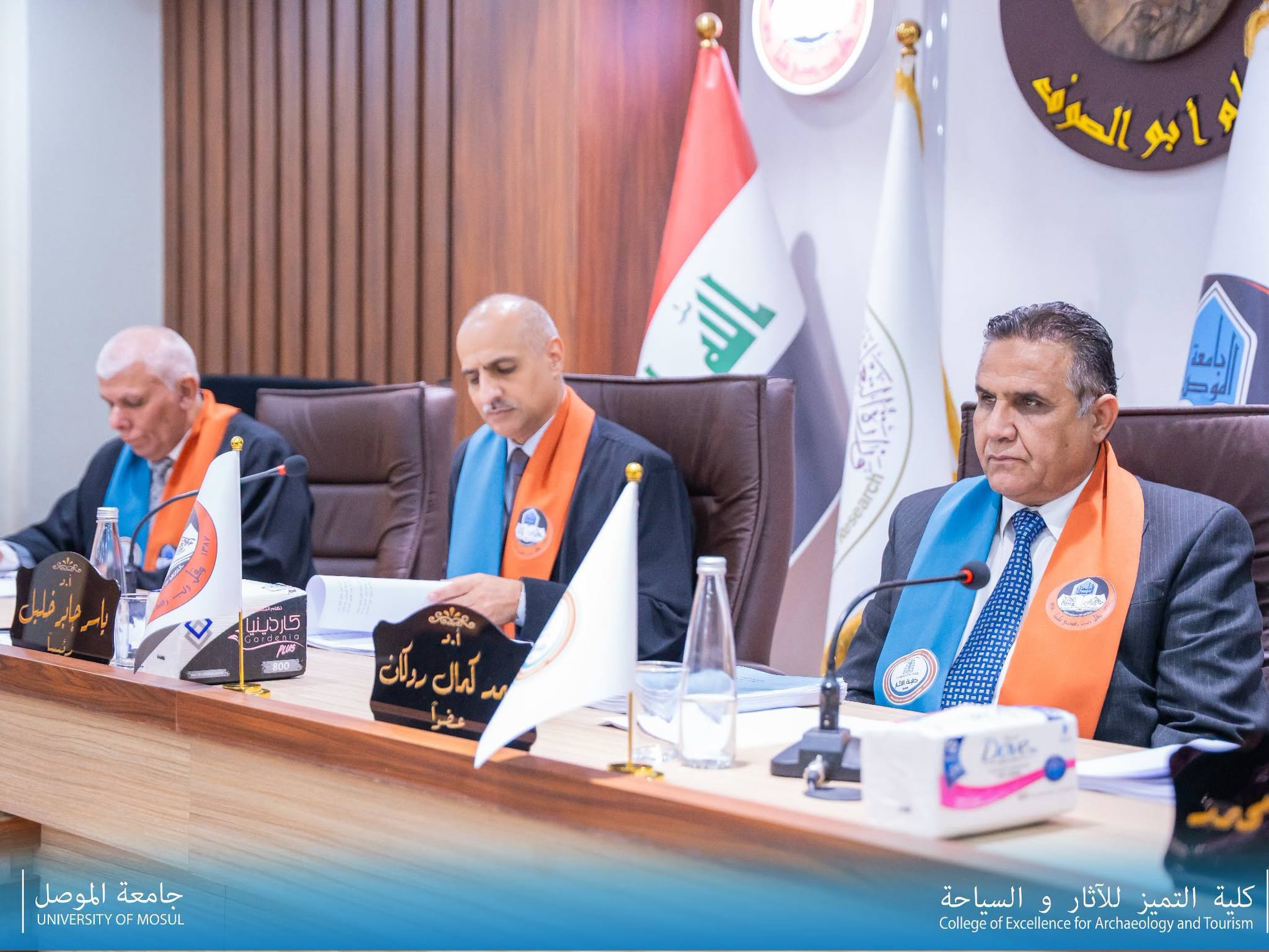
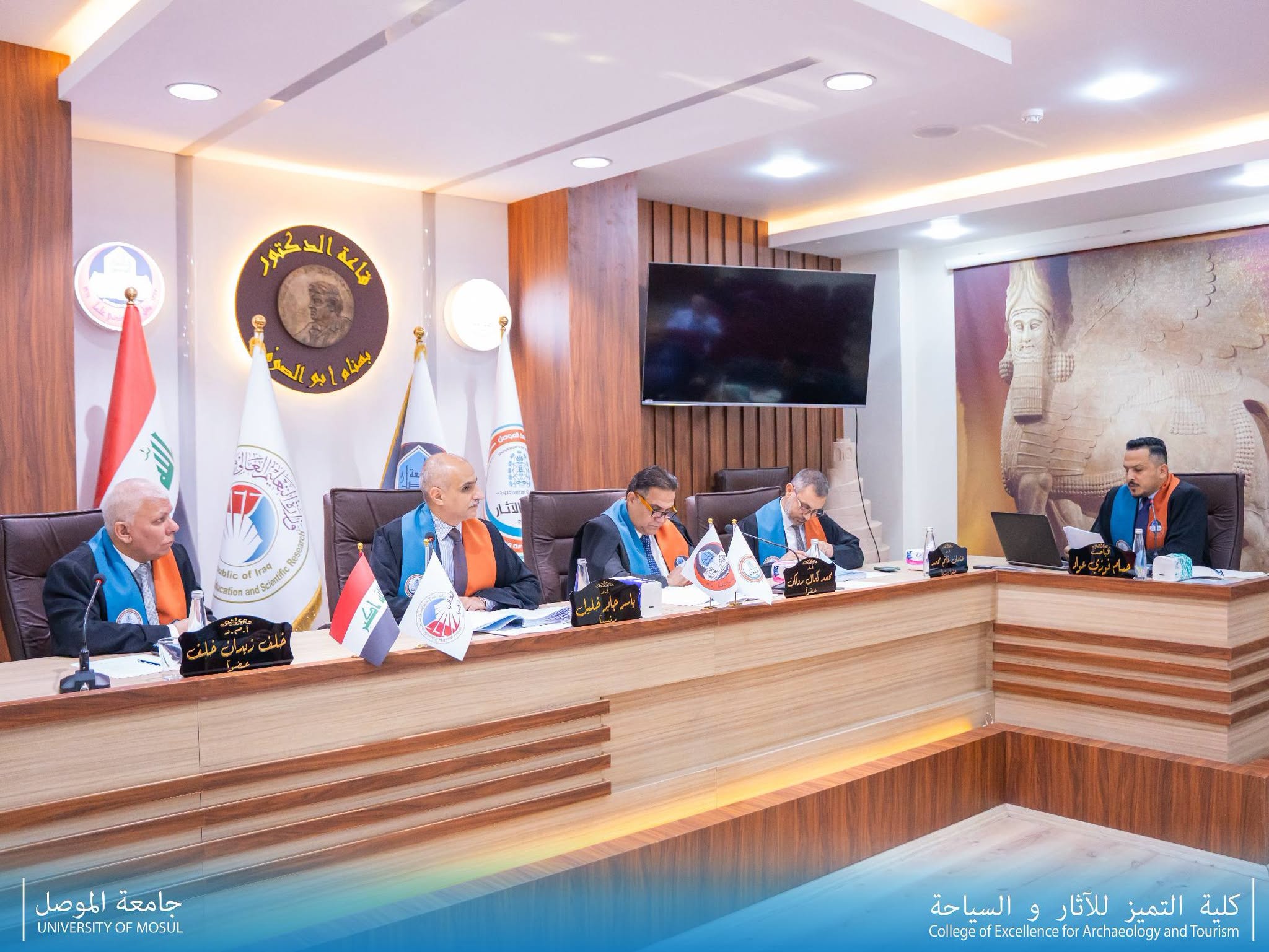
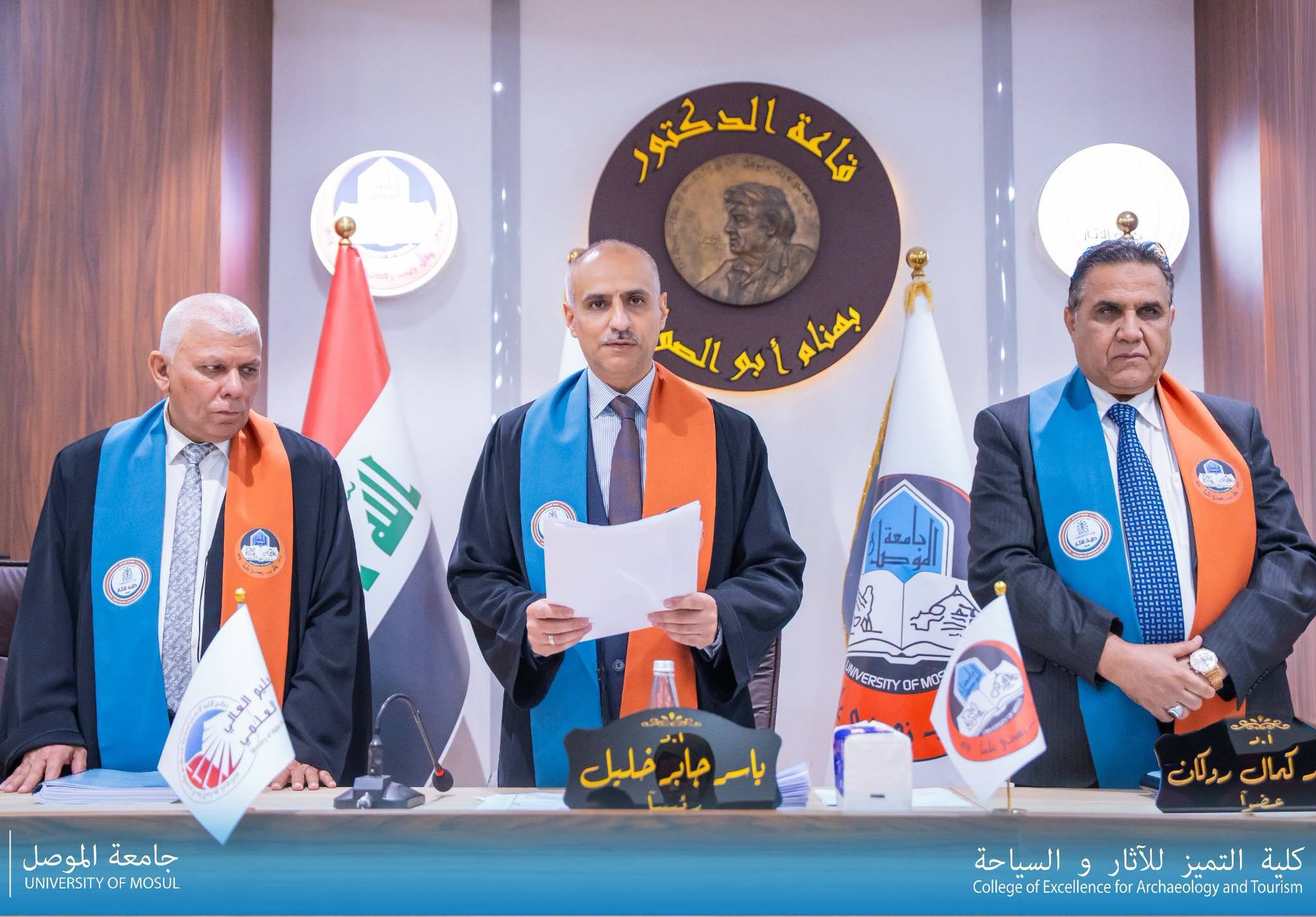
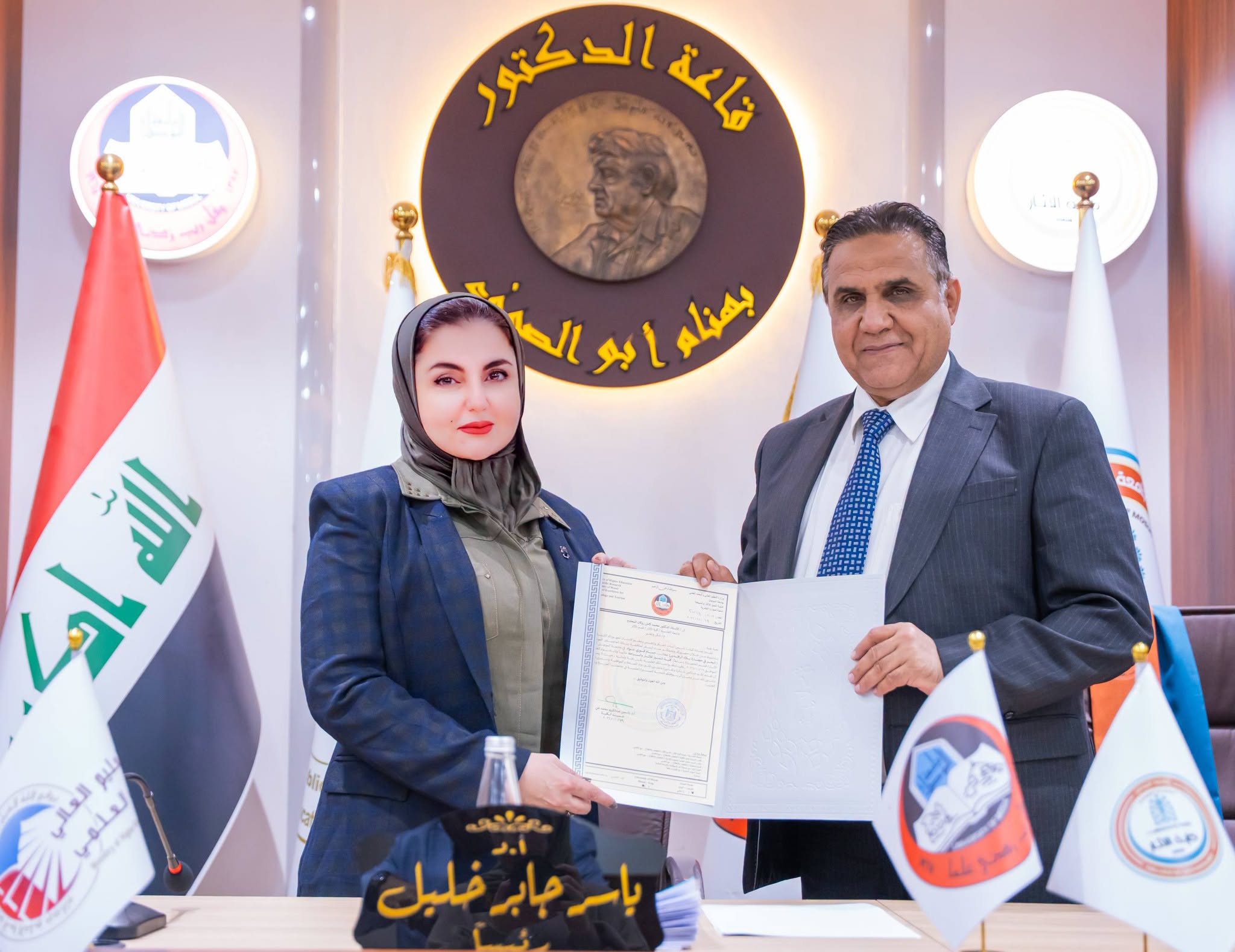
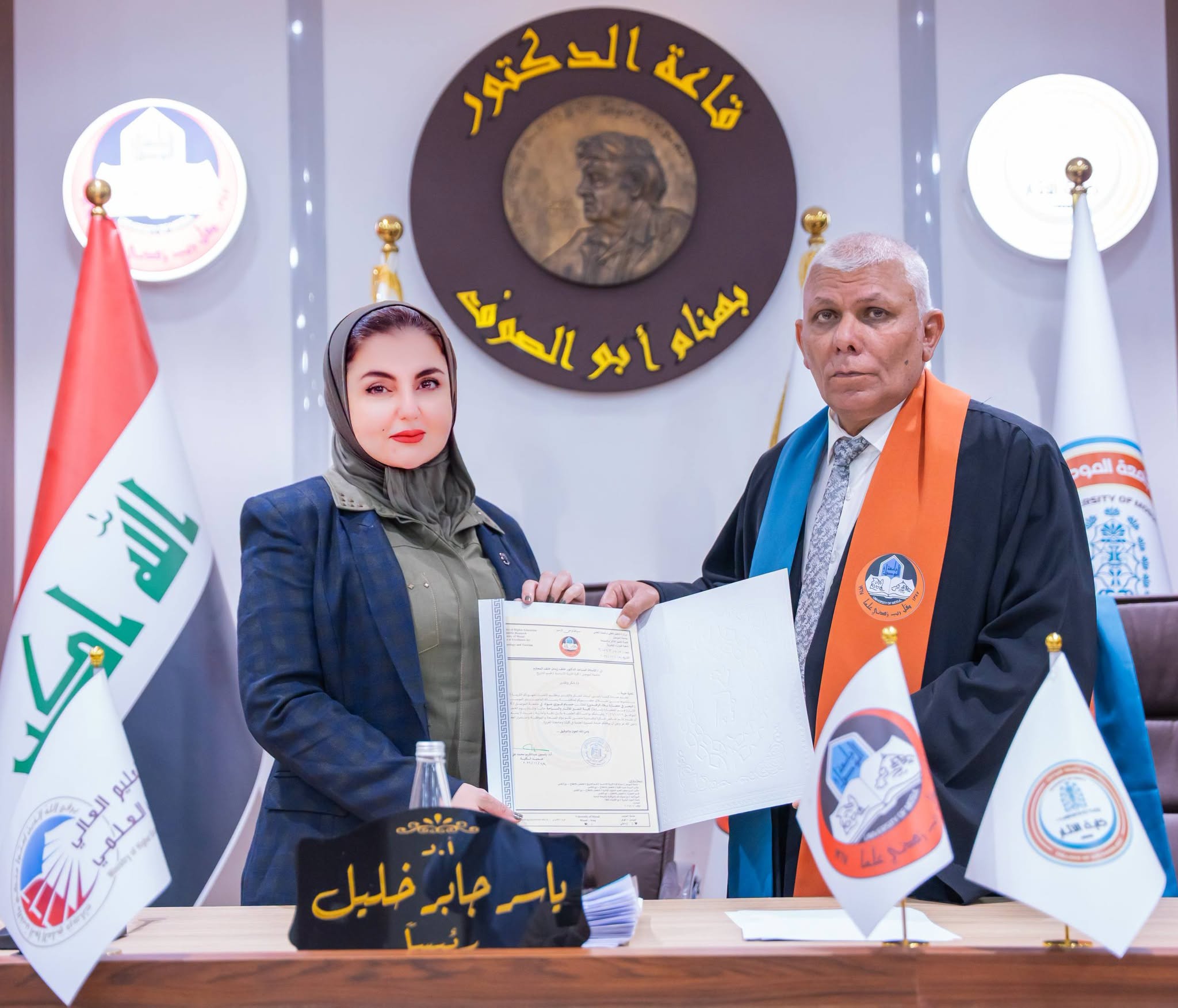
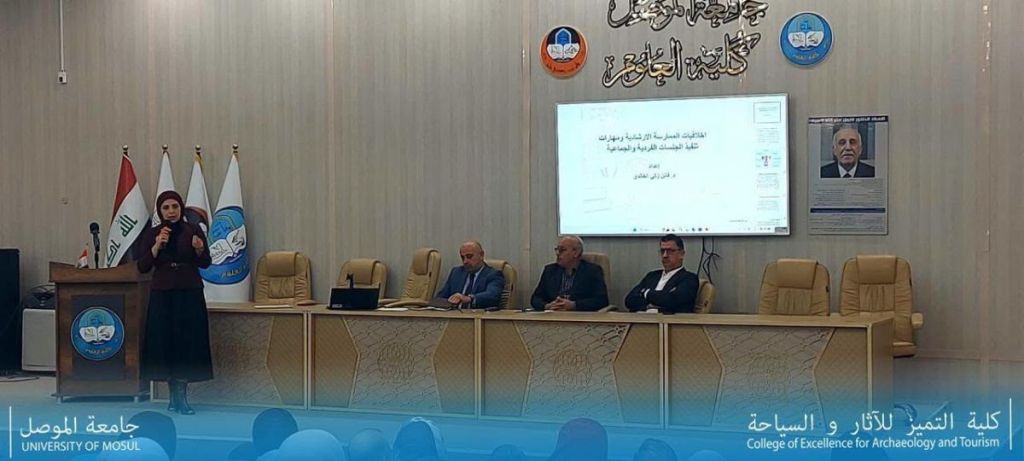
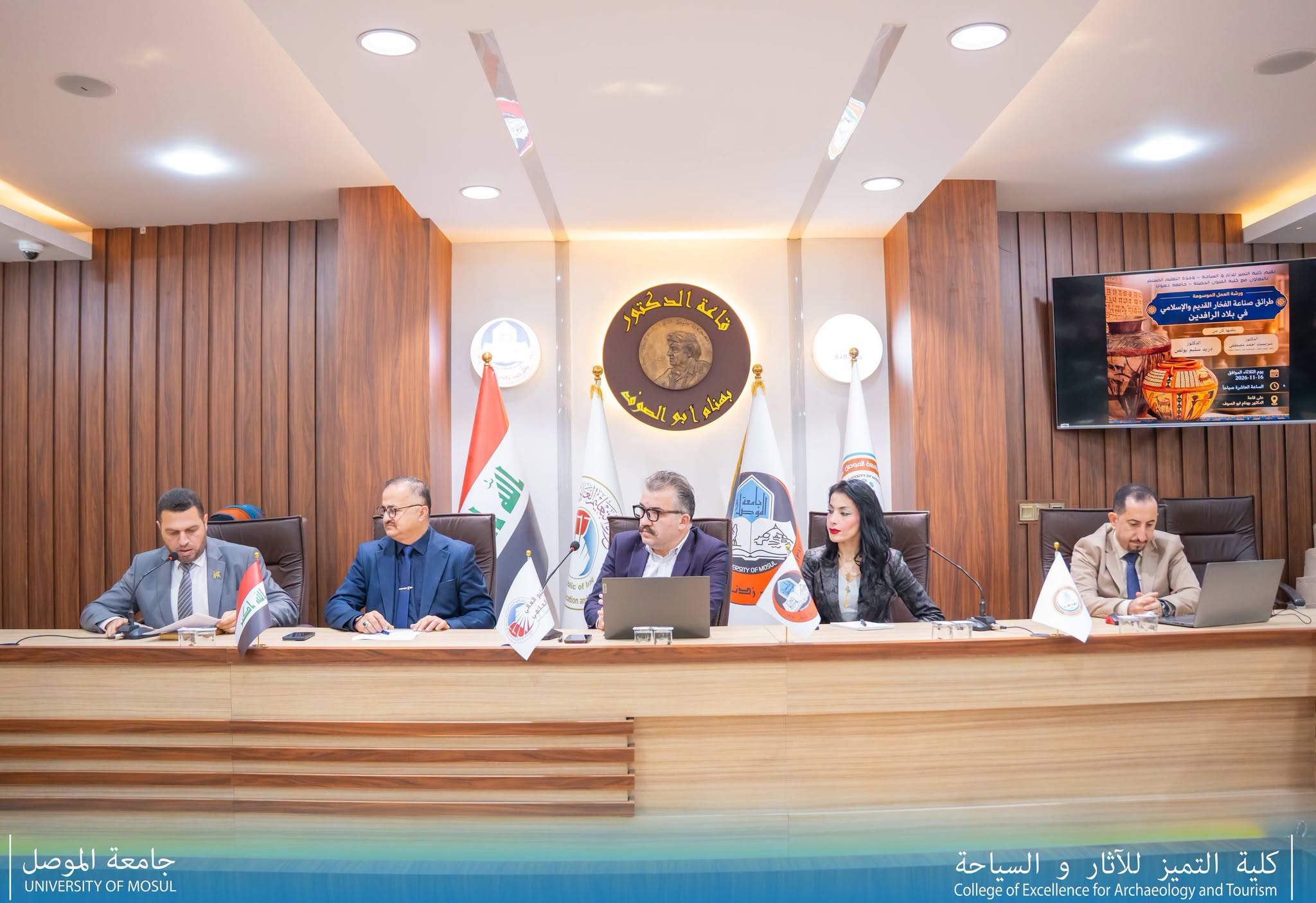
As part of its ongoing commitment to supporting scientific research and postgraduate studies, the College of Archaeology and Tourism at the University of Mosul hosted a defense for a master’s thesis titled “The Sea in Mesopotamian Civilization.” The thesis was presented by Hussam Fawzi Awad, from the Department of Civilization, on Thursday, November 19, 2026, at the Dr. Behnam Abu Al-Soof Hall, in the presence of faculty members, researchers, and postgraduate students.
The thesis explores the role of the sea in Mesopotamian civilization—a significant element in the history of ancient civilizations—highlighting its cultural, economic, and intellectual importance, as well as its influence on the lives of Mesopotamian societies throughout various historical periods. The study examines the relationship that the inhabitants of Mesopotamia established with marine and aquatic environments, and how this shaped commercial activity, cross-civilizational communication, and cultural exchange with neighboring peoples and regions.
The research reviews historical evidence, cuneiform texts, and archaeological data concerning the concept of the sea and its status within ancient Mesopotamian thought. It further addresses the sea’s significance in economic life—through trade, maritime transport, and the provision of resources—as well as its presence in the religious and mythological beliefs that formed a vital part of Mesopotamia’s cultural heritage. The defense took place in a serious scholarly atmosphere, characterized by constructive academic dialogue. Members of the examination committee offered a range of academic observations and inquiries that enriched the thesis and enhanced its research value—a testament to the advanced level of scholarship that the College strives to uphold within its postgraduate programs.
The College emphasized that such scholarly defenses serve as a cornerstone for advancing scientific research and knowledge production. They encourage researchers to explore specialized historical and civilizational topics, opening new avenues for understanding the history of Mesopotamia and highlighting its contributions to the human story. Furthermore, these efforts reflect the College’s commitment to its academic mission: to cultivate researchers capable of employing modern scientific methodologies to study, preserve, and document cultural heritage.
This defense aligns with the College’s vision to elevate academic and research standards, foster a culture of rigorous inquiry, and support studies that enrich historical and civilizational knowledge—ultimately contributing specialized, high-value research to the academic canon.