29 October، 2026
Scientific Field Visit for Postgraduate Students
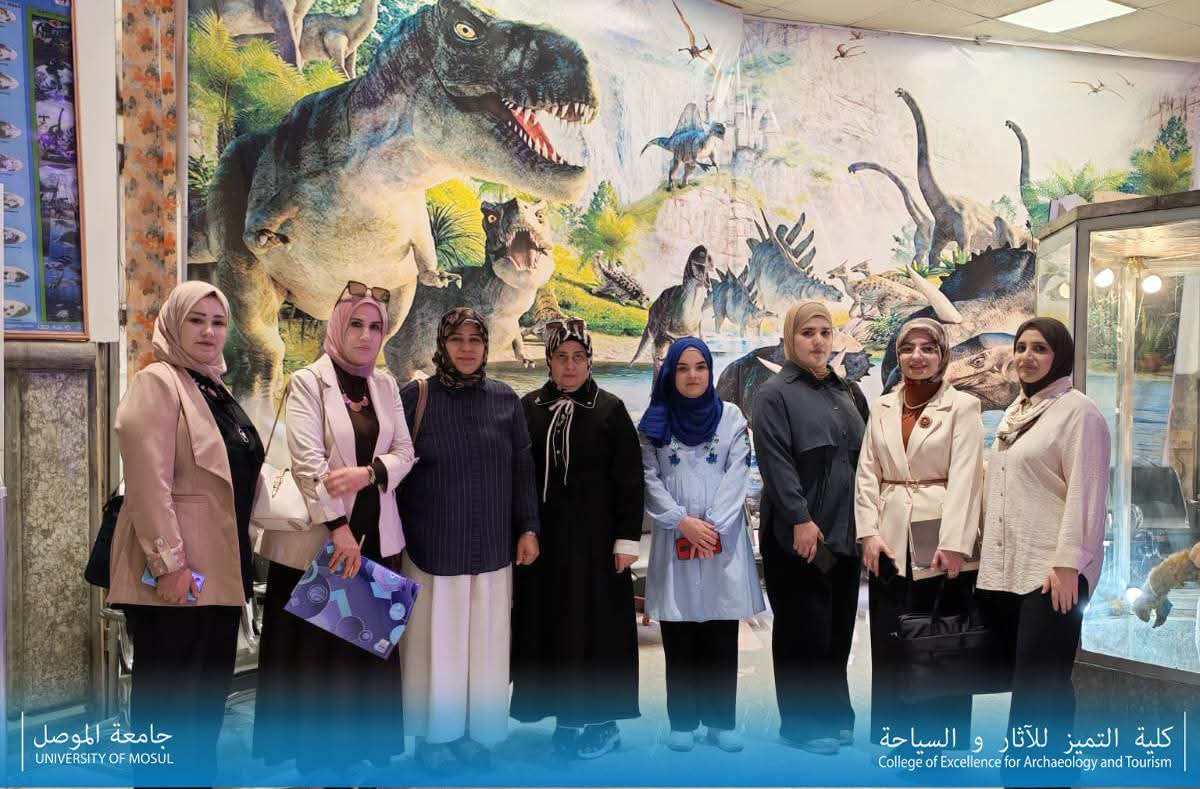
College of Excellence for Archaeology and Tourism Organizes a Scientific Field Visit for Postgraduate Students to the Natural History Museum at the University of Mosul
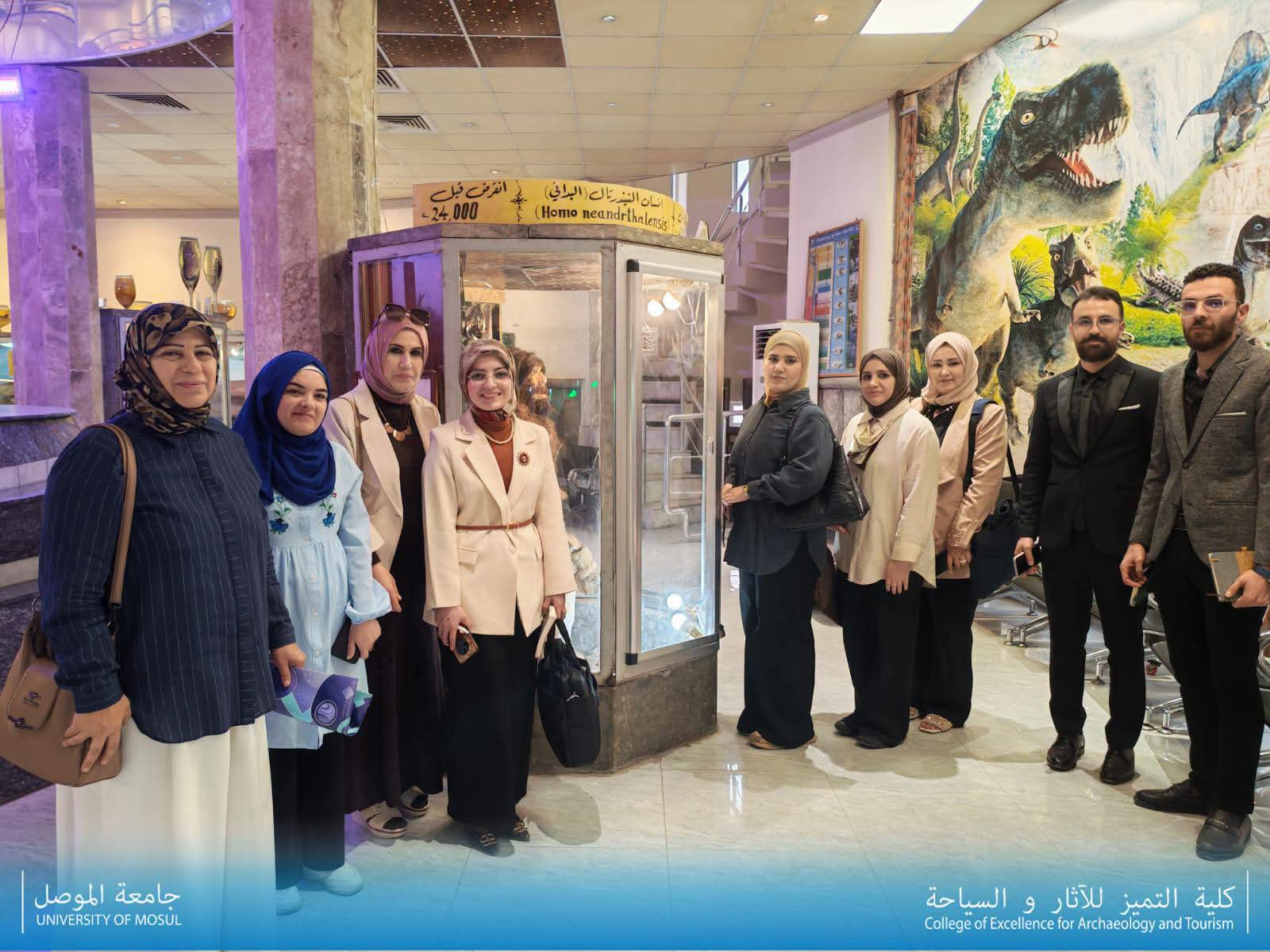
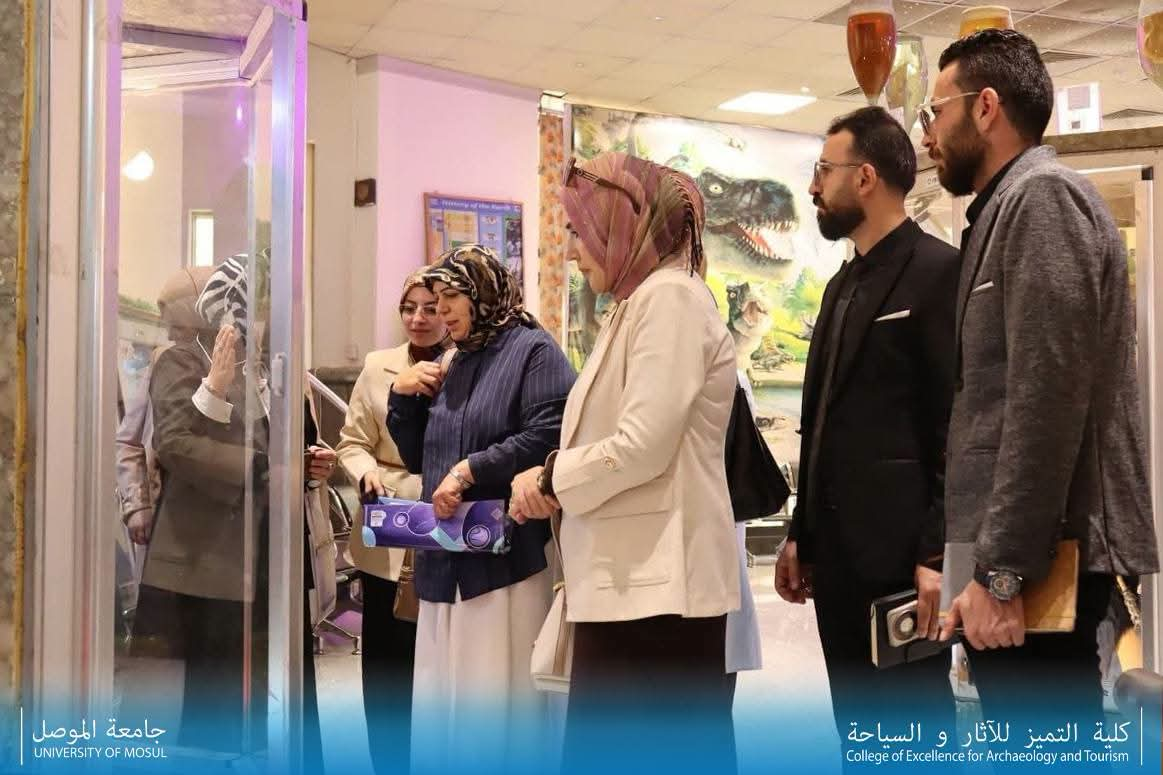
Under the patronage and supervision of the Dean of the College of Excellence for Archaeology and Tourism, Prof. Dr. Yasmin Abdul Karim Mohammed Ali, and as part of the College’s plans to strengthen the practical and field-based aspects of postgraduate education, the Department of Conservation and Restoration organized a scientific field visit for Master’s students specializing in Ancient Civilization to the Natural History Museum at the University of Mosul. The visit was supervised and accompanied by a distinguished group of the College’s female academic staff members.
The visit aimed to enrich students’ academic and research knowledge by connecting theoretical concepts with practical applications, providing them with the opportunity to directly examine rare museum collections and exhibits, and understand their scientific, historical, and environmental significance. This is particularly important given the close relationship between natural history and the study of ancient environments and their influence on the emergence and development of civilizations. The visit also sought to develop students’ specialized skills in studying cultural and natural heritage and understanding the methods used for its conservation and preservation.
The visit included a scientific tour covering several key academic and practical topics, most notably:
1. Exploring Museum Collections and Specimens
Students had the opportunity to closely examine the biological, geological, and environmental specimens preserved in the museum, understand their historical and scientific contexts, and explore how they can be utilized in research related to ancient civilizations and the historical environment of Mesopotamia.
2. Conservation, Preservation, and Restoration Techniques
Students learned about the scientific methods and materials used in the preservation and treatment of organic specimens, including taxidermy techniques, as well as the procedures employed to protect them from environmental and biological deterioration factors. These topics are directly related to the core specialization of the Department of Conservation and Restoration.
3. Museum Display and Documentation Methods
The visit provided an opportunity to examine academic classification methods, standard lighting and ventilation systems within display cabinets, and the museum documentation procedures adopted to preserve collections of historical and scientific significance.
4. Interdisciplinary Integration of Knowledge
The visit also provided a platform for academic discussion among faculty members, students, and museum staff regarding the importance of interdisciplinary studies that bring together archaeology and civilization studies, on the one hand, and natural history and environmental sciences, on the other.
This visit is part of the series of regular scientific and field activities organized by the Deanship of the College of Excellence for Archaeology and Tourism in support of its educational and research mission. It also reflects the College’s commitment to preparing researchers equipped with the field experience and practical skills necessary for the conservation and preservation of cultural and civilizational heritage.