3 September، 2025
Master’s thesis by Student Salih Awad Khudhur Ahmed
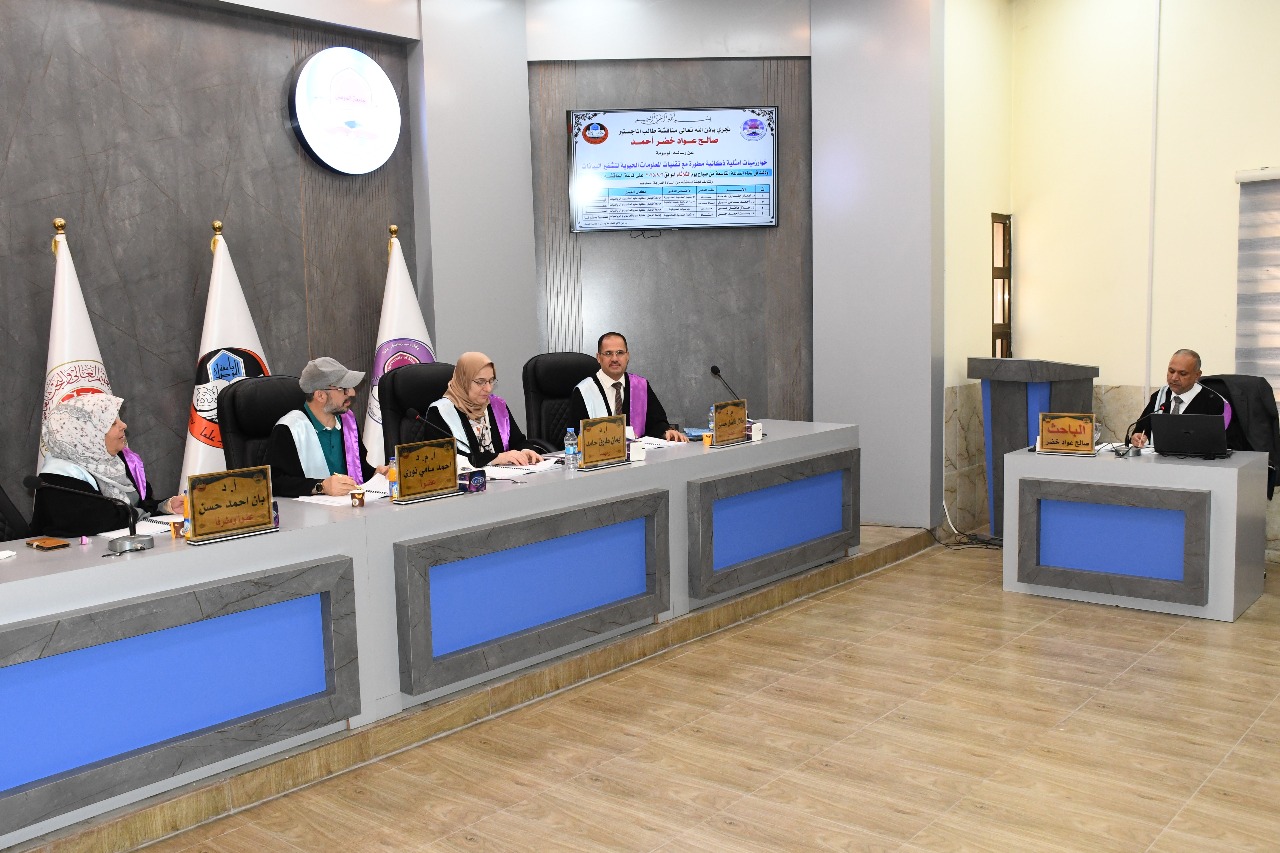
Discussion of the master’s thesis in the College of Computer Science and Mathematics – Department of Mathematics Sciences entitled:
“Modified Intelligent Optimization Algorithm with Bioinformatics for Data Encryption”
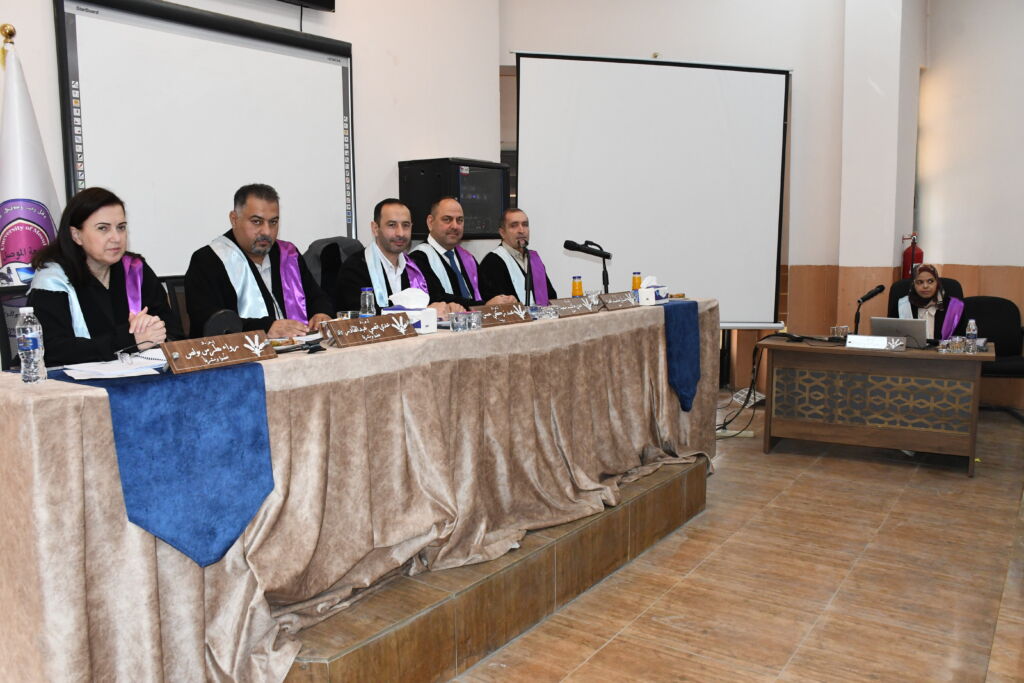
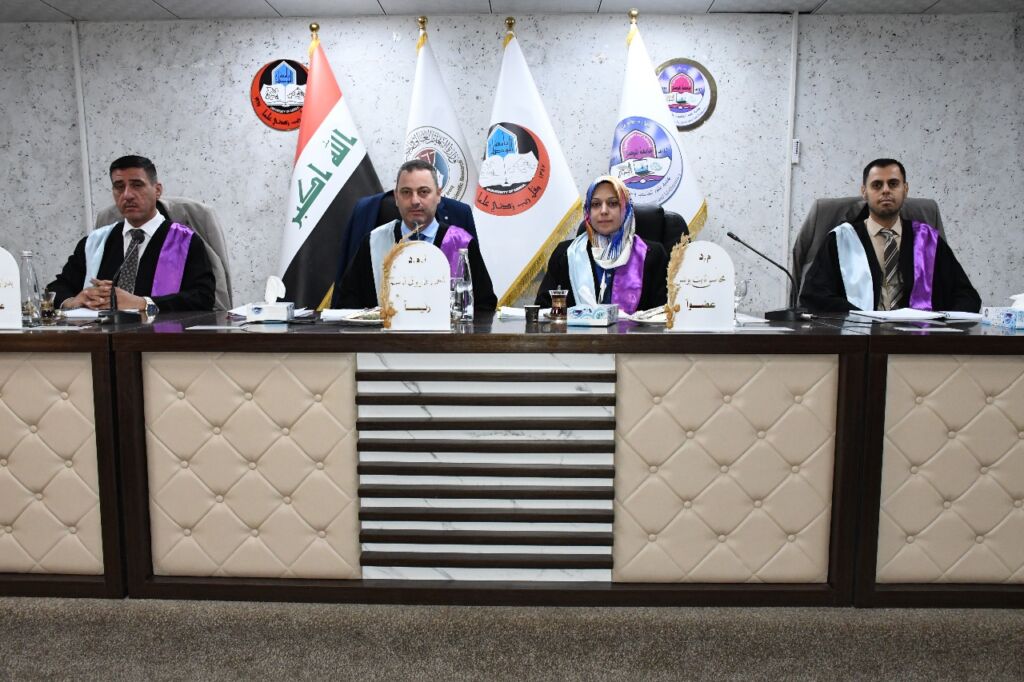
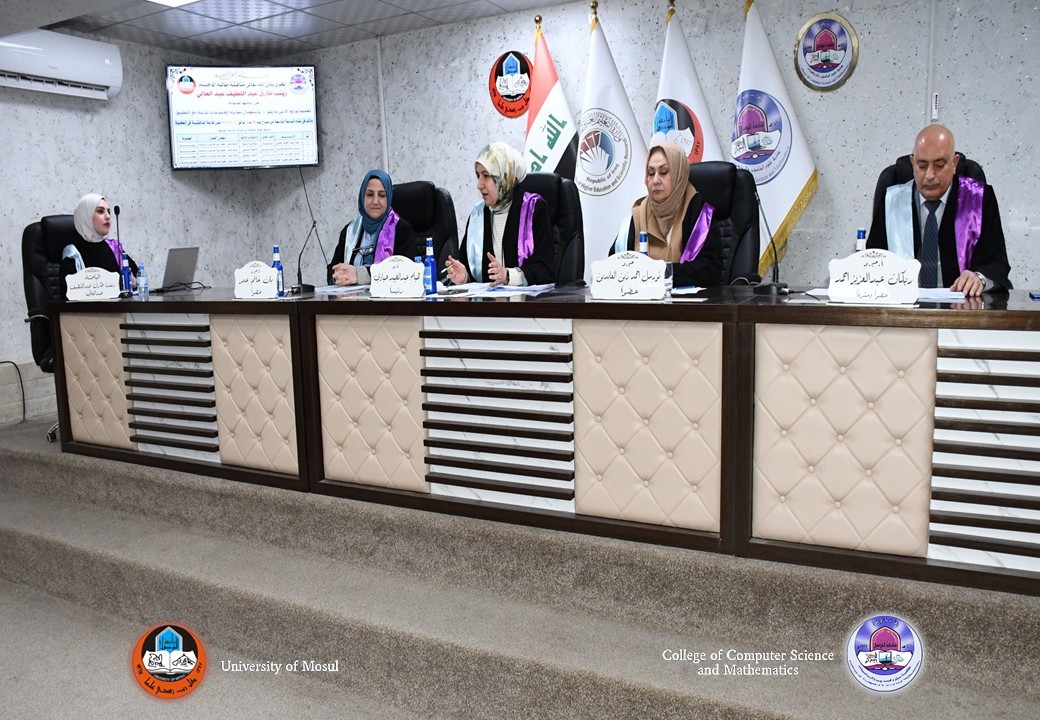
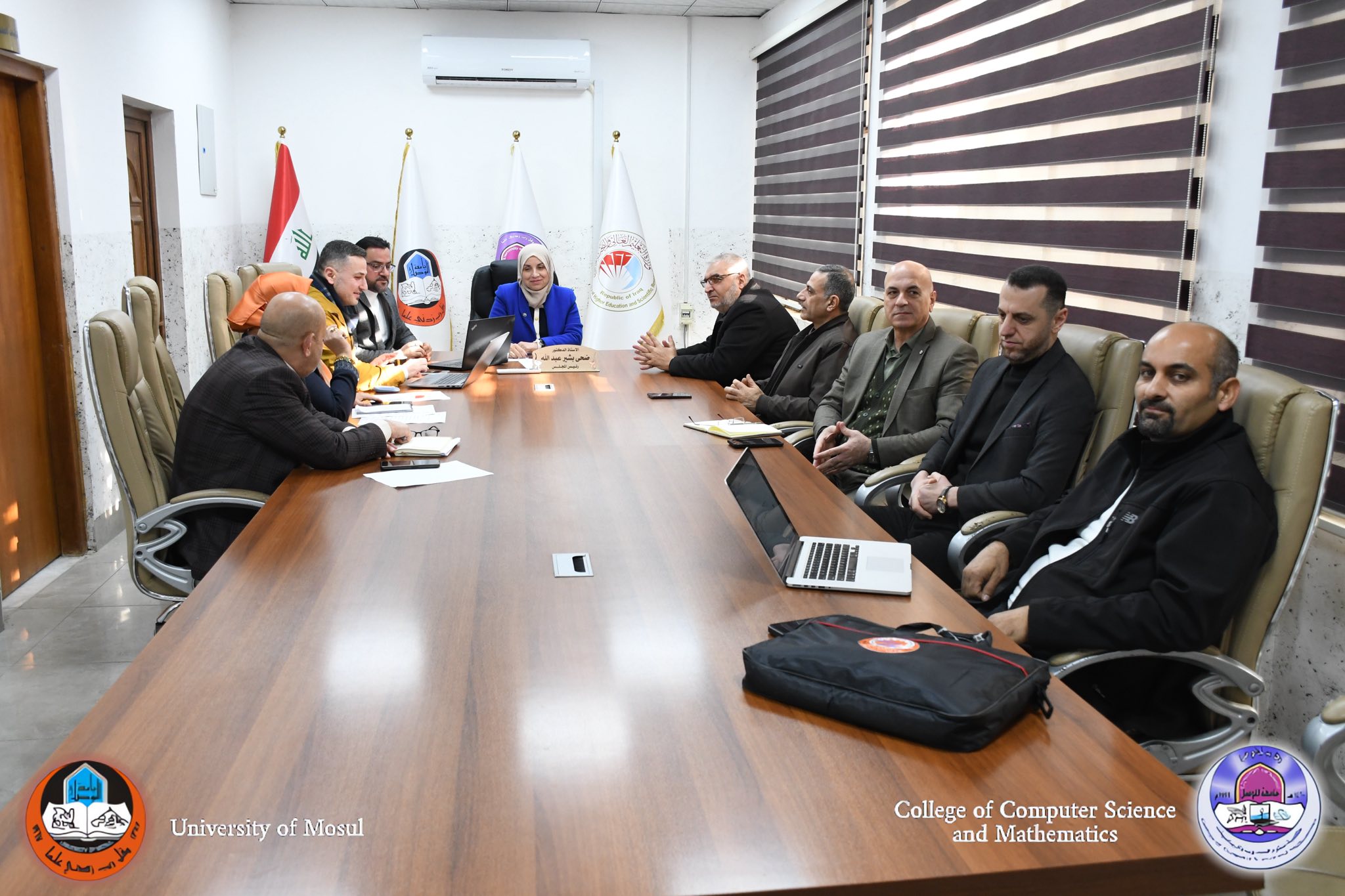
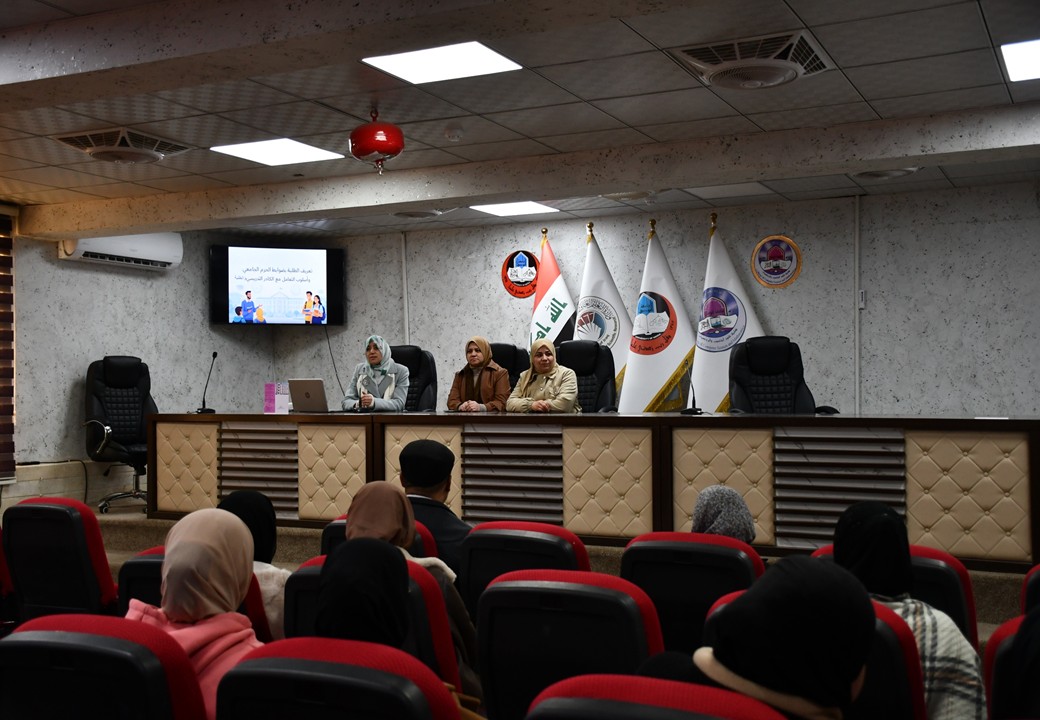
It was discussed in the discussion room at the Faculty of Computer Science and Mathematics at the University of Mosul on Tuesday, 2 -9-2025.
Master’s thesis by Student Salih Awad Khudhur Ahmed
under the supervision of Prof. Dr. Ban Ahmad Hassan Mitras
This study aims to design efficient hybrid algorithms based on artificial intelligence to solve complex optimization problems and employ them in the field of cryptography. The focus was on integrating nature-inspired swarm algorithms with mathematical algorithms to improve search quality and strengthen cryptographic systems.
In the first phase, a hybrid model was developed that combines the Artificial Hummingbird Algorithm (AHA) and the Tunicate Swarm Algorithm (TSA). The model is based on dividing the population into two parts at each iteration based on the quality of the solutions. The best-performing individuals are treated using AHA, while the weakest performers are treated using TSA, with periodic reshuffling and repartitioning to ensure a balance between exploration and exploitation within the solution space.
In the second phase, two new components based on the conjugate gradient principle were developed, which are used to improve the orientation of individuals within the search space.
- The first model, CG-S1, relies on three different mathematical relationships to calculate the beta coefficient. Each relationship includes the t parameter as a control factor, giving the algorithm the flexibility to test and adapt a new trend for each iteration.
- The second model, CG-S2, relies on a single fixed relationship to calculate beta. It uses a traditional standard formula that achieves higher stability but with less flexibility compared to CG-S1.
Both models (CG-S1 and CG-S2) were hybridized with AHA and TSA algorithms, resulting in four new hybrid algorithms.
AHA-CG-S1, AHA-CG-S2، TSA-CG-S1، TSA-CG-S2
These algorithms have been adapted to handle non-repeating integers (permutations) in order to generate effective encryption keys for use in an integrated encryption system based on combining traditional and smart methods. In this context, a hybrid encryption structure was adopted that first encrypts texts using the traditional RSA algorithm, then hides the encrypted text inside a previously known DNA string using keys generated by the proposed smart algorithms. The results showed that the use of keys generated based on non-repeating permutations contributed to enhancing encryption security and increasing the complexity of cracking the code.
All experiments were conducted using the MATLAB 2022 environment, and the algorithms’ performance was tested on five standard functions. In addition to evaluating their robustness in the context of encryption using multiple indicators, the results demonstrated the effectiveness of the hybrid algorithms in terms of solution quality, convergence speed, and the ability to generate keys with high security properties. This demonstrates the effectiveness of combining artificial intelligence with traditional algorithms in building advanced and secure encryption systems.
On the theoretical side, the sufficient gradient and global convergence properties of the conjugate gradient-based algorithms were proven, which supports the reliability of the mathematical performance of the proposed algorithms when applied in non-linear and complex spaces.
The scientific committee included the following members:
- Dr. Eman Tarek Hamed – Chairman
- Prof. Dr. Ahmed Sami Nori- Member.
- Talal Fadil Hussein- Member.
- Dr. Ban Ahmad Hassan Mitras – Member and supervisor.