
15 December، 2025
Holding the educational and guidance course “Insulin Resistance and Obesity: The Hidden Relationship and Effective Nutritional Solutions.”
Under the patronage and supervision of the Dean of the College of Computer Science and Mathematics, Professor Dr. Duha Bashir Abdullah Al-Bazzaz,
The College of Computer Science and Mathematics – University Psychological Counseling Unit held an educational and guidance course entitled “Insulin Resistance and Obesity: The Hidden Relationship and Effective Nutritional Solutions.” The course took place on Sunday, December 14, 2025, at 11:00 AM.
The lecturer was Hawraa Mishal Eidan Al-Lahibi.
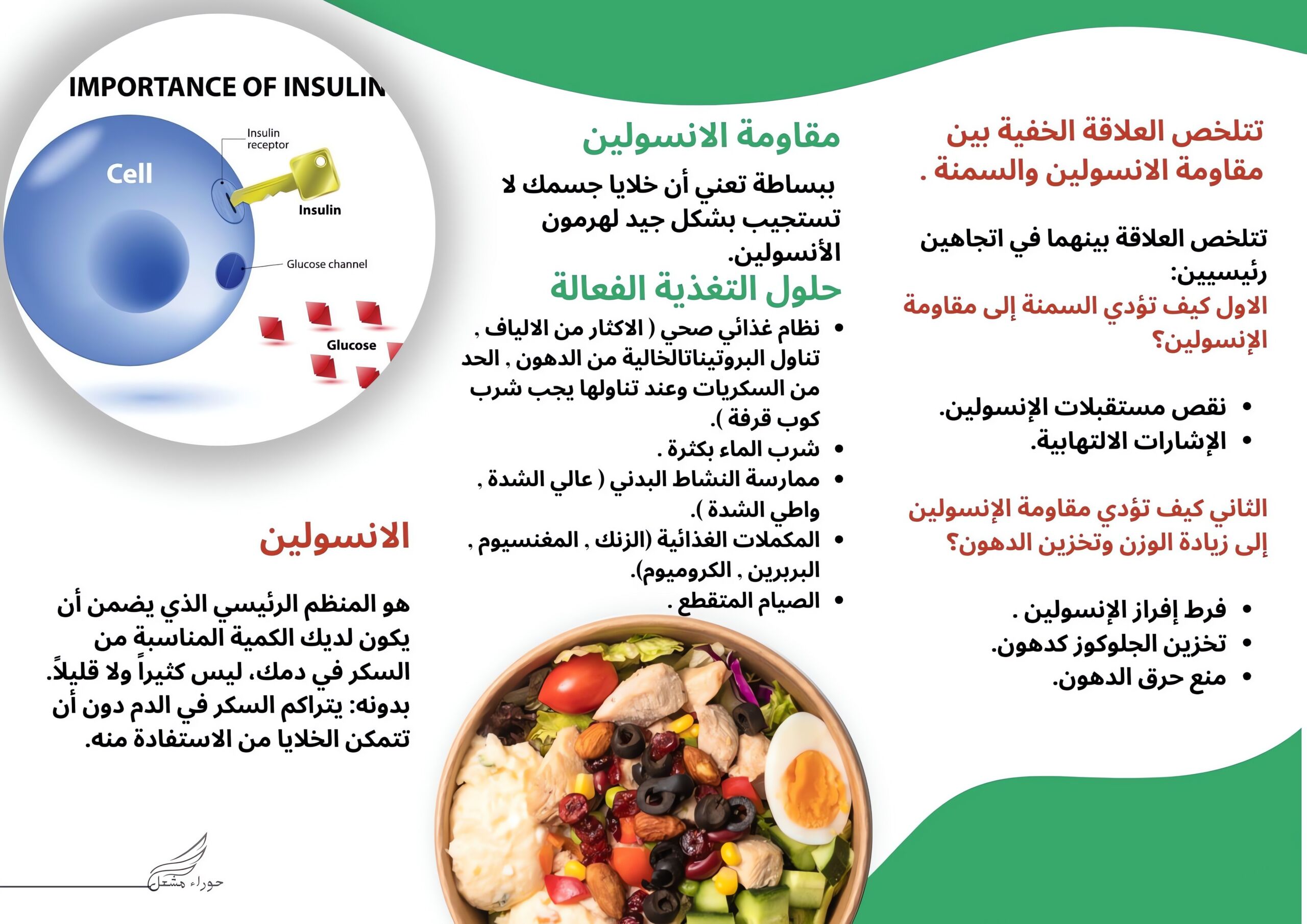
The course began by defining insulin and explaining its function before addressing insulin resistance, its causes, and treatment. Insulin is the primary regulator that ensures you have the appropriate amount of sugar in your blood.
Insulin acts like a key that unlocks the gates of cells (such as muscle, fat, and liver cells) to allow sugar to enter and be used as energy, thus lowering blood sugar levels.
The course also defined insulin resistance simply as the fact that your body’s cells do not respond effectively to the hormone insulin. Causes of insulin resistance include:
1- Unhealthy habits that make us susceptible.
2- Excessive sugar consumption.
3- A genetic predisposition (first or second degree).
This course aims to encourage exercise: move more and perform exercises, alternating between high-intensity and low-intensity workouts. This will stimulate the cells to require insulin, prompting the pancreas to release it.
Following a healthy diet is also recommended. We also work on increasing insulin sensitivity through the aforementioned exercise and nutritional supplements, especially zinc and magnesium, as deficiencies in these can cause insulin resistance. Chromium supplements also help lower blood sugar levels, and berberine supplements suppress appetite and increase the cells’ response to insulin, thus reducing blood sugar.
Incorporate intermittent fasting into your routine, tailored to your individual needs.
Consult your doctor immediately if you suspect you have insulin resistance.