7 September، 2021
Master’s thesis in the public law _ College of law
Master’s thesis in the public law branch on the authorization of competence in the public office / comparative study
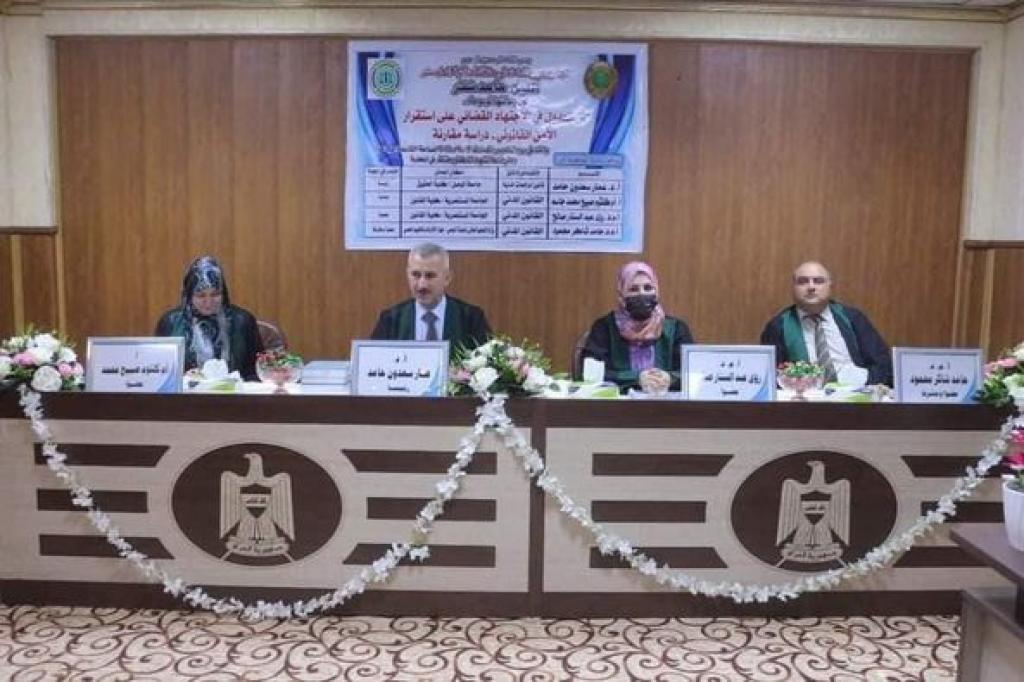
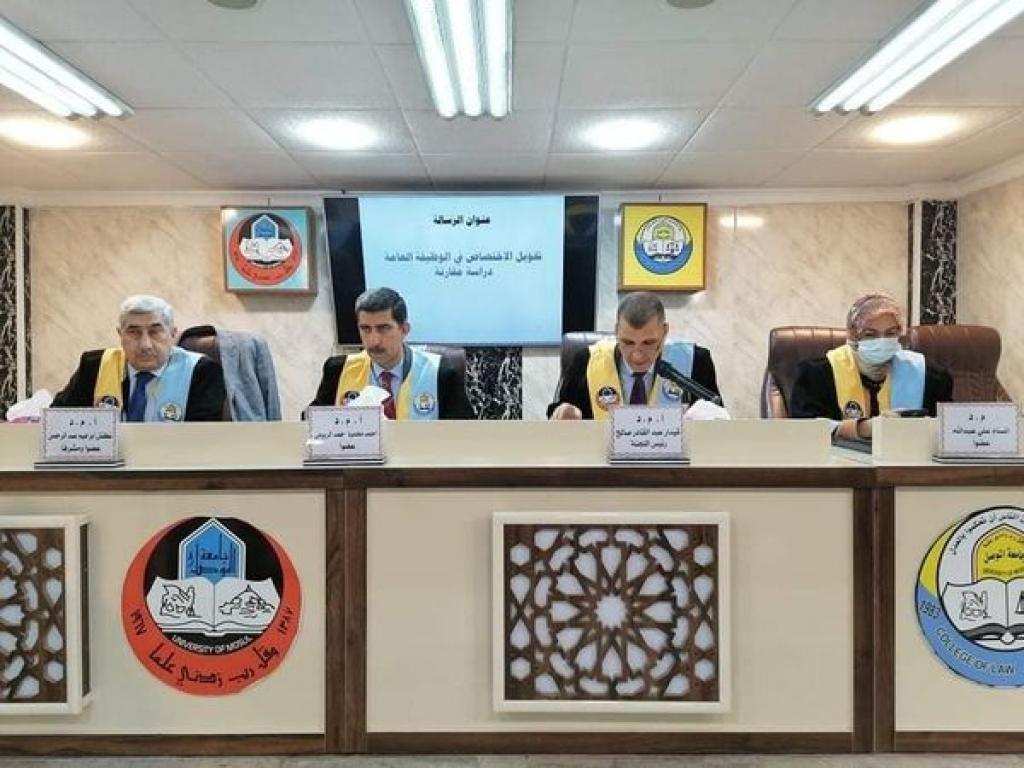
On Thursday, September 2, 2021, the Public Law Branch at the College of Law at the University of Mosul discussed a master’s thesis on the authorization of specialization in the public office / a comparative study
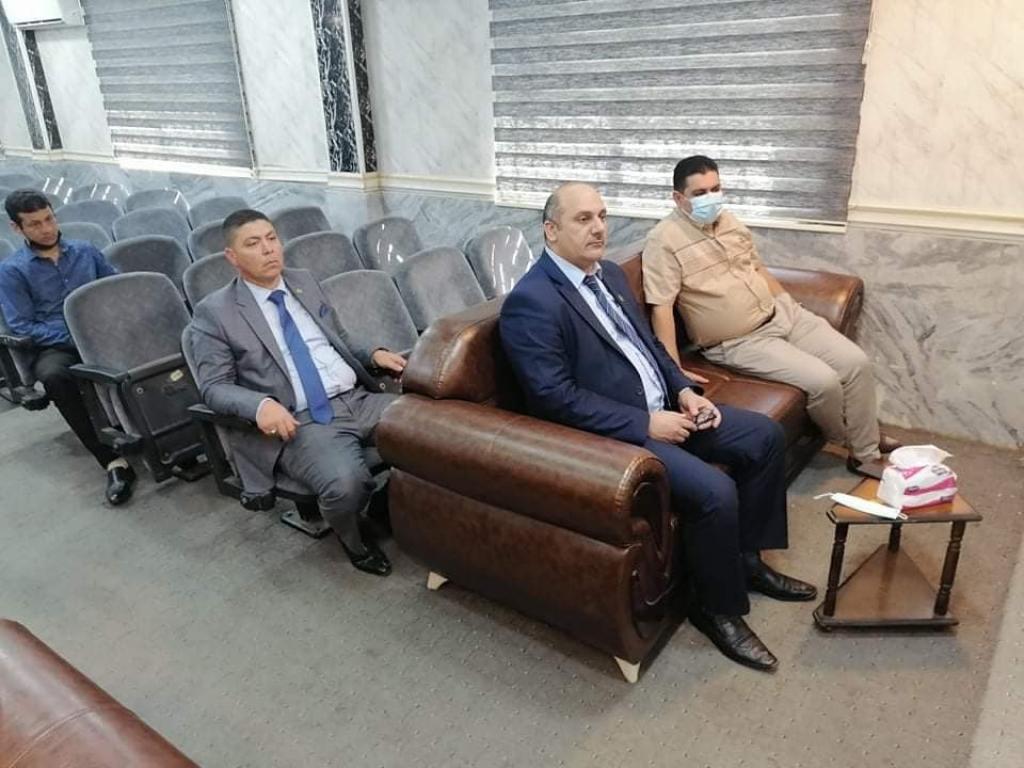
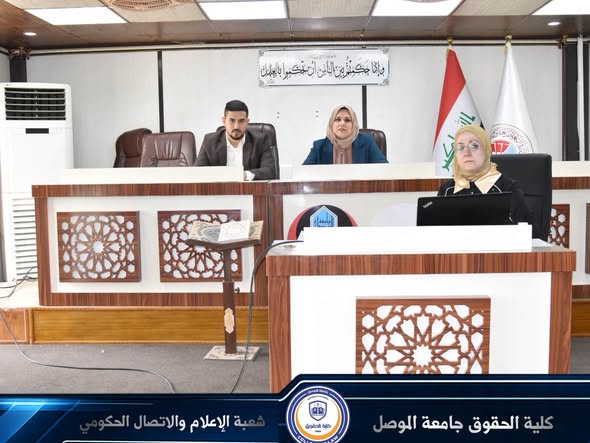
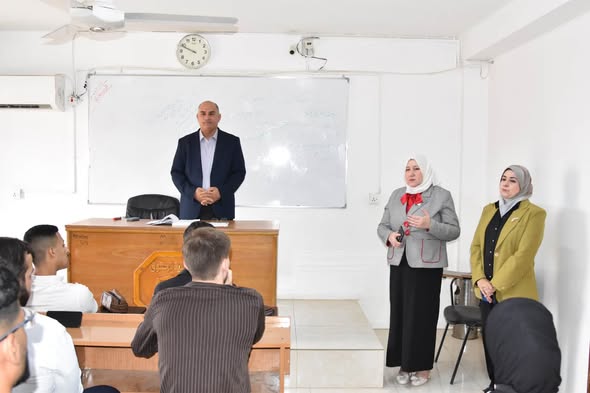
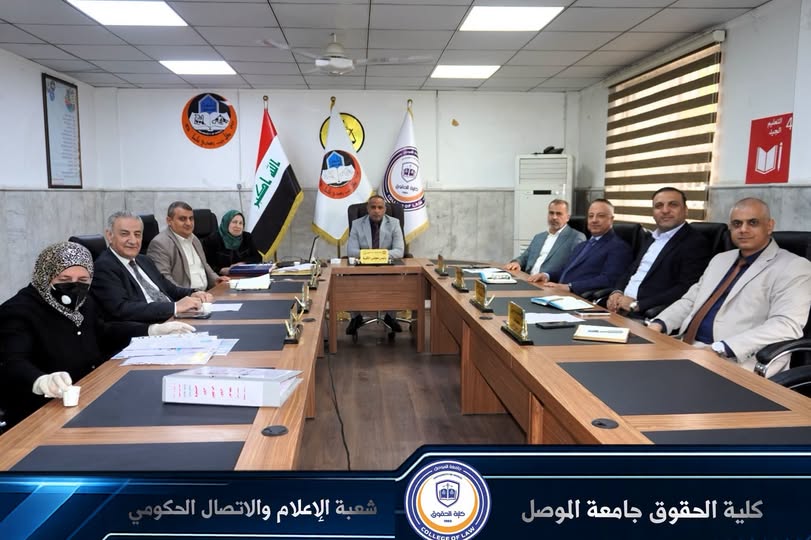
Part of it was attended by Assistant Professor Dr. Wissam Nemat Ibrahim Al-Saadi, Dean of the College and a number of members of the College Council and its lecturers
The thesis presented by the student Khairallah Muhammad Ismail in the public law branch dealt with the functions carried out by the state at the present time, which are characterized by their wide scope and diversity as a result of the change in the role of the state from a guard to an intervention in the public life of society. This was reflected in an important aspect of the activities that perform The state, which is the administrative function
The study aims to show that the modern public law is based on the idea of jurisdiction, which is considered one of the results of the principle of separation of powers. Jurisdiction is the legal authority that the administration enjoys to practice business and conduct in a manner that is legally reliable and the distribution of jurisdiction among the departments of the administration has a public interest and benefit to the administration and individuals. Therefore, any act issued by the administrative body in violation of its rules is tainted by the defect of lack of jurisdiction and therefore is illegal
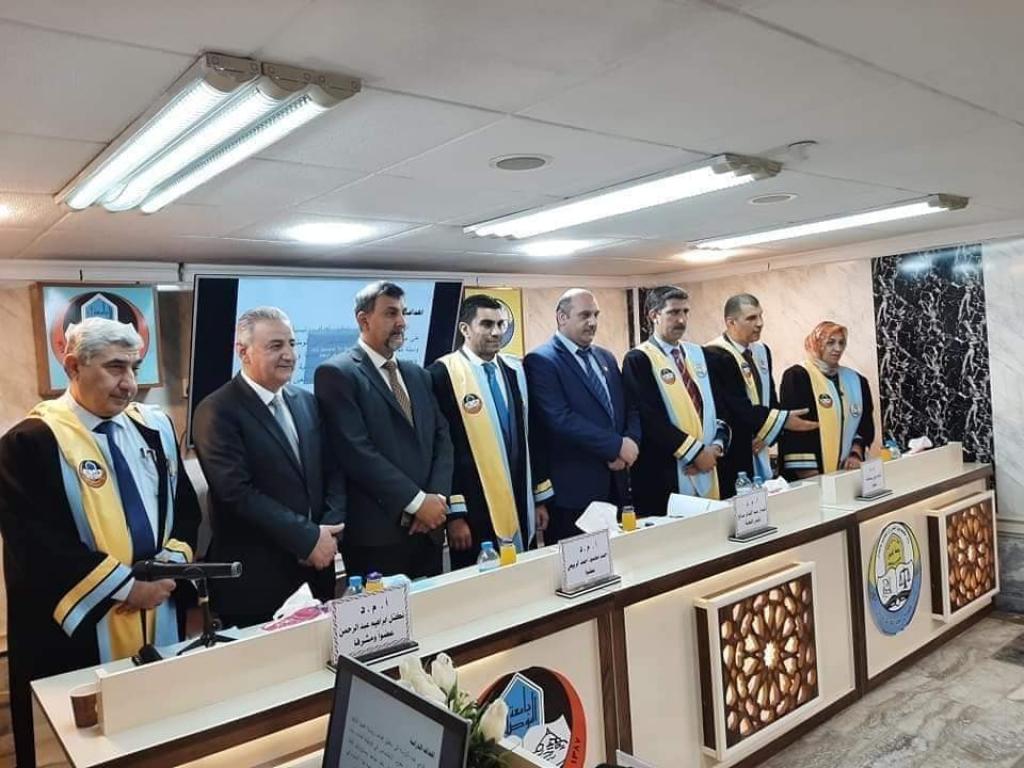
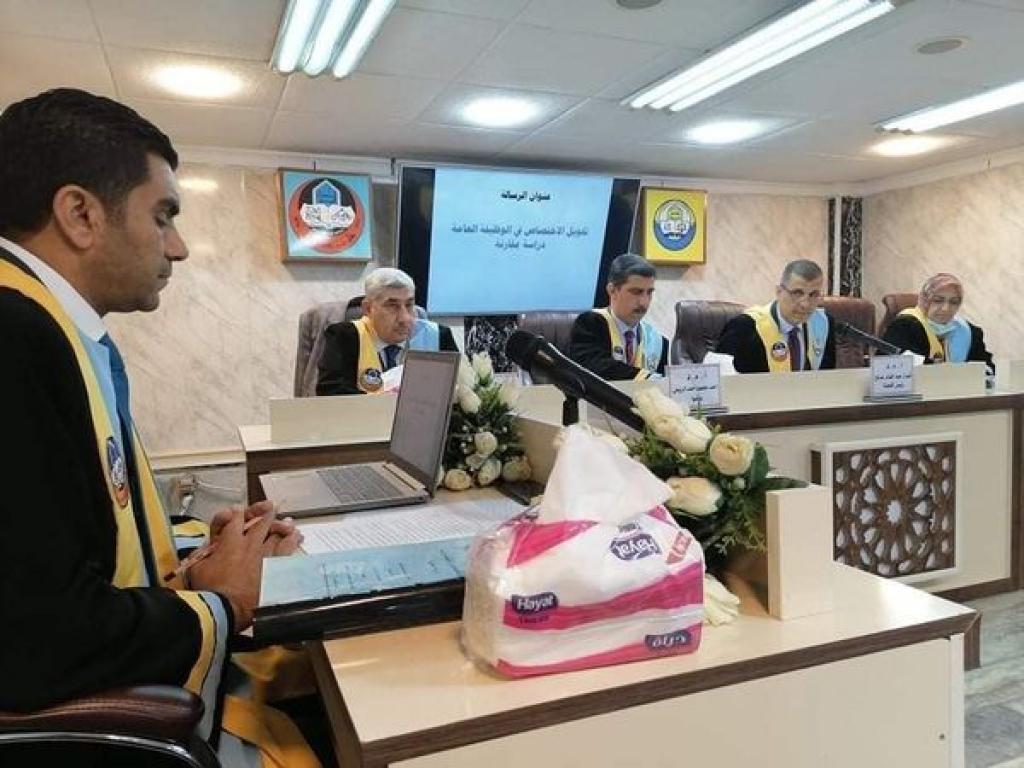
The discussion committee was chaired by Assistant Professor Dr. Qidar Abdel Qader Saleh, with the membership of Dr. Ahmed Mahmoud Al-Rubaie and Dr. Ansam Ali Abdullah, and the membership and supervision of Dr. Nektel Ibrahim Abdul Rahman

Part of it was attended by Assistant Professor Dr. Wissam Nemat Ibrahim Al-Saadi, Dean of the College and a number of members of the College Council and its lecturers
The thesis presented by the student Khairallah Muhammad Ismail in the public law branch dealt with the functions carried out by the state at the present time, which are characterized by their wide scope and diversity as a result of the change in the role of the state from a guard to an intervention in the public life of society. This was reflected in an important aspect of the activities that perform The state, which is the administrative function
The study aims to show that the modern public law is based on the idea of jurisdiction, which is considered one of the results of the principle of separation of powers. Jurisdiction is the legal authority that the administration enjoys to practice business and conduct in a manner that is legally reliable and the distribution of jurisdiction among the departments of the administration has a public interest and benefit to the administration and individuals. Therefore, any act issued by the administrative body in violation of its rules is tainted by the defect of lack of jurisdiction and therefore is illegal
The discussion committee was chaired by Assistant Professor Dr. Qidar Abdel Qader Saleh, with the membership of Dr. Ahmed Mahmoud Al-Rubaie and Dr. Ansam Ali Abdullah, and the membership and supervision of Dr. Nektel Ibrahim Abdul Rahman
The study aims to show that the modern public law is based on the idea of jurisdiction, which is considered one of the results of the principle of separation of powers. Jurisdiction is the legal authority that the administration enjoys to practice business and conduct in a manner that is legally reliable and the distribution of jurisdiction among the departments of the administration has a public interest and benefit to the administration and individuals. Therefore, any act issued by the administrative body in violation of its rules is tainted by the defect of lack of jurisdiction and therefore is illegal
The discussion committee was chaired by Assistant Professor Dr. Qidar Abdel Qader Saleh, with the membership of Dr. Ahmed Mahmoud Al-Rubaie and Dr. Ansam Ali Abdullah, and the membership and supervision of Dr. Nektel Ibrahim Abdul Rahman