26 February، 2026
Master’s Thesis Discusses the Electrochemical Behavior of Catecholamines and the Design of an Adrenaline Biosensor
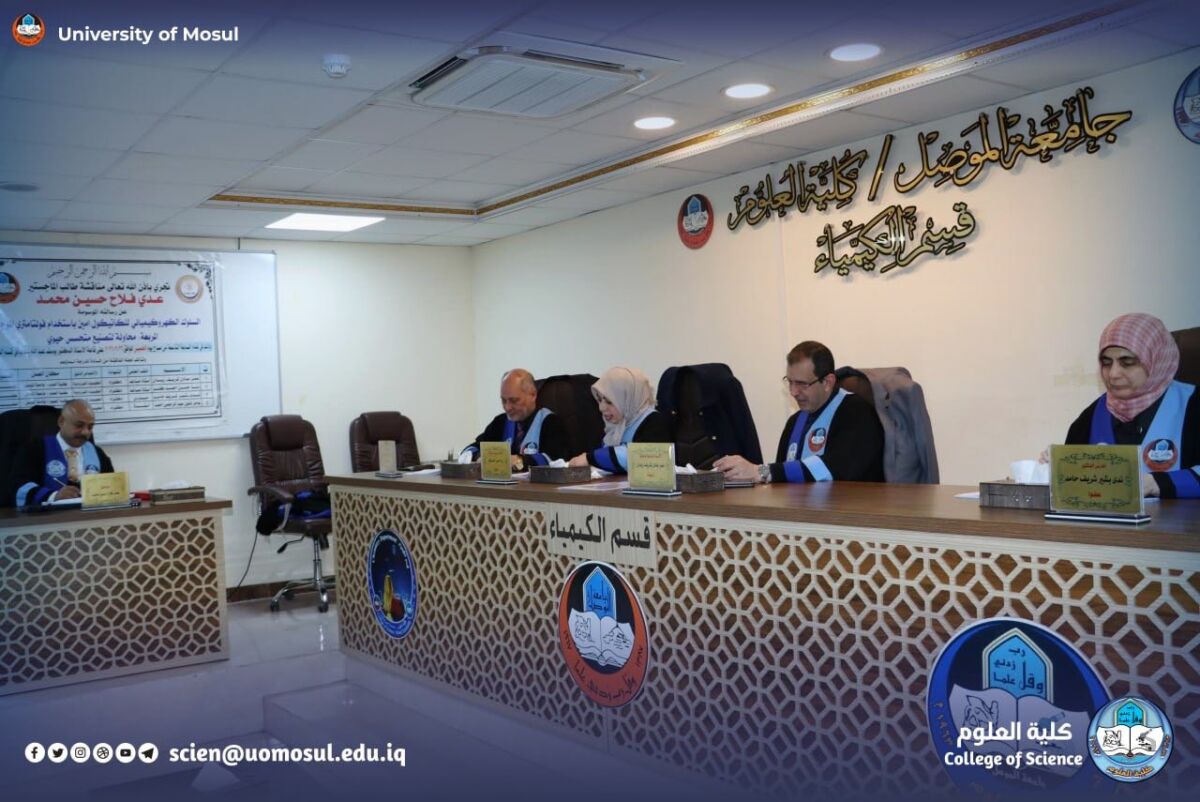
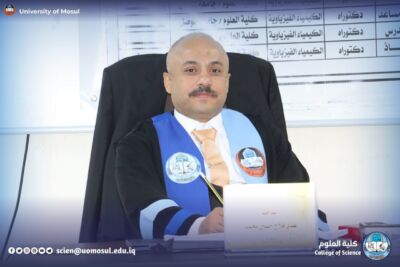
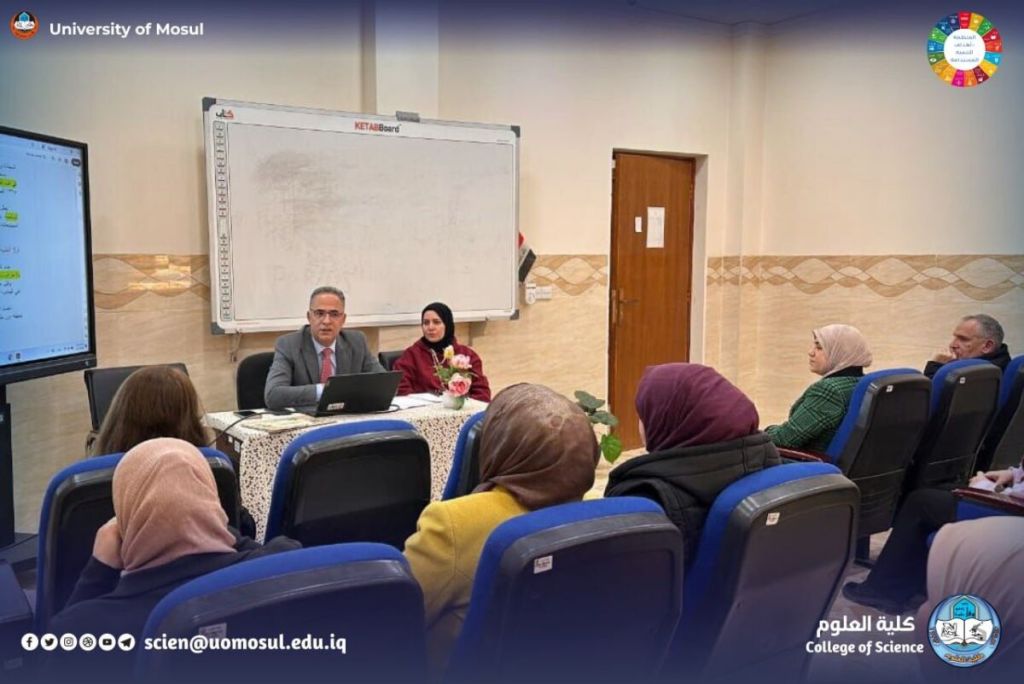
The Department of Chemistry at the College of Science, University of Mosul, discussed on Thursday, 26 February 2026, a master’s thesis entitled:
“Electrochemical Behavior of Catecholamines Using Square Wave Voltammetry: An Attempt to Fabricate a Biosensor”
submitted by the student Uday Falah Hussein Mohammed.
The thesis investigated the electrochemical behavior of adrenaline using the square wave voltammetry technique and focused on developing an analytical system based on modified electrochemical electrodes for the design of a biosensor characterized by high sensitivity and selectivity. The practical aspect included the use of five different working electrodes for the direct and indirect determination of adrenaline, together with a detailed study of oxidation–reduction mechanisms and charge transfer behavior.
The research also involved electrode modification through electropolymerization in the presence of multi-walled carbon nanotubes, followed by the application of the developed electrodes for the determination of adrenaline in pharmaceutical preparations (ampoules). In addition, thermodynamic parameters governing the interaction between adrenaline and cadmium ions were calculated, providing deeper insight into the nature of the interaction and its associated effects.
The results demonstrated that the electrode modified with polytyrosine and multi-walled carbon nanotubes exhibited the best analytical performance due to its higher effective surface area and enhanced charge-transfer capability, which accelerated the oxidation process of adrenaline. These characteristics enabled the researcher to design an efficient biosensor suitable for diagnostic and pharmaceutical applications.
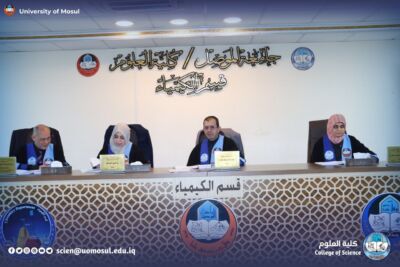
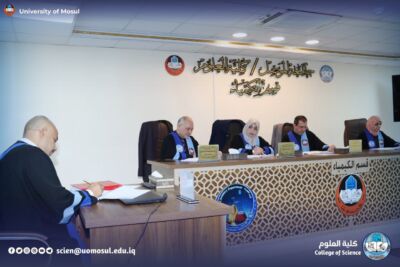
The examination committee was chaired by Assistant Professor Dr. Omar Adel Shareef, with the membership of:
- Assistant Professor Dr. Rana Hassan Al-Hayali
- Lecturer Dr. Nada Basheer Shareef
Under the supervision and committee membership of:
- Professor Dr. Amer Dhnoon Al-Taie
At the conclusion of the defense, the committee commended the high scientific quality of the thesis and its significant findings, emphasizing the importance of the study in supporting analytical chemistry and biochemical applications, particularly in the field of medical biosensor design.
The thesis contributes to several Sustainable Development Goals (SDGs), particularly:
- SDG 3: Good Health and Well-being, through the development of accurate analytical and diagnostic tools that support healthcare improvement.
- SDG 9: Industry, Innovation and Infrastructure, by employing nanomaterials and electrochemical technologies in the development of advanced analytical devices.
- SDG 12: Responsible Consumption and Production, through the adoption of electrochemical analytical techniques that reduce chemical reagent consumption and minimize waste generation.
We wish our dear student continued success and excellence, and further scientific achievements in his academic and professional career.
Government Media and Communication Division
Thursday, 26 February 2026