7 June، 2026
Master’s Thesis Discusses the Role of Phosphate-Solubilizing Bacteria in Enhancing Plant Growth and Investigates the Genes Responsible for Phosphate Solubilization
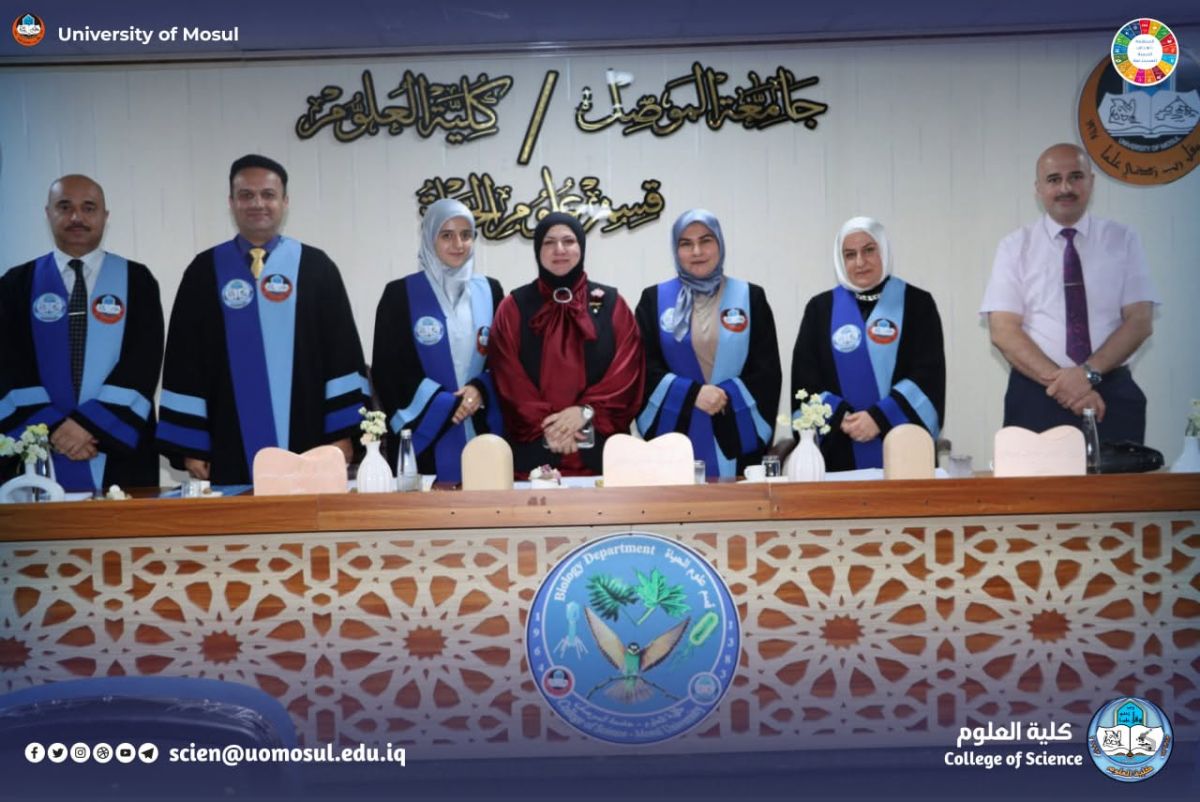
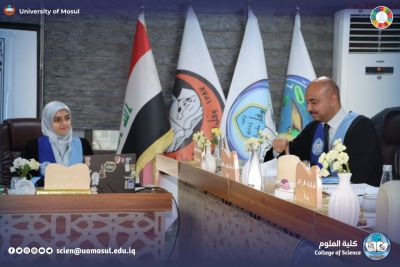
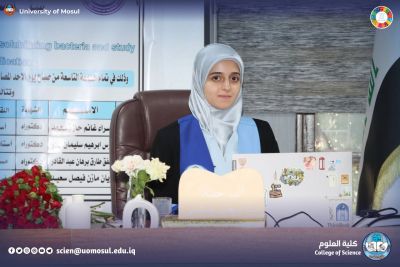
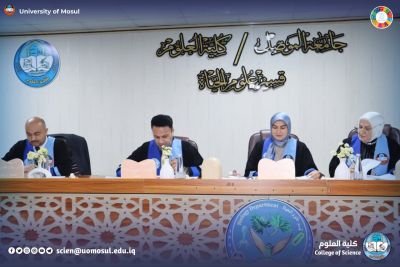
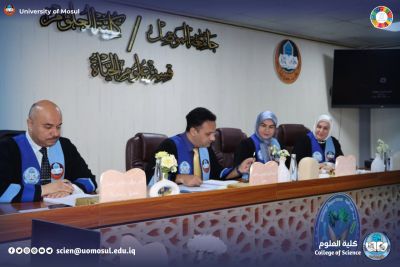
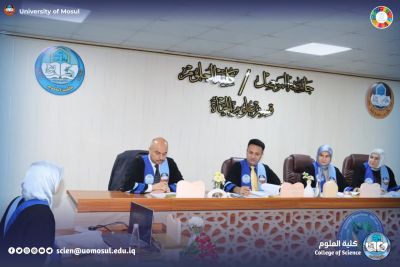
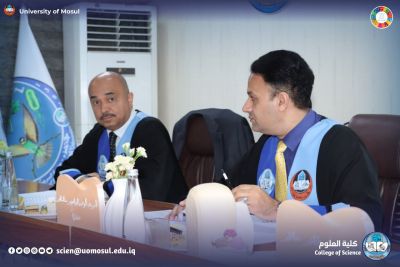
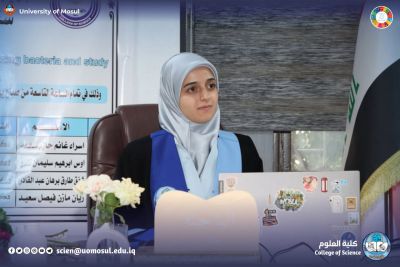
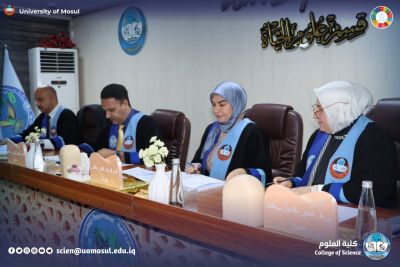
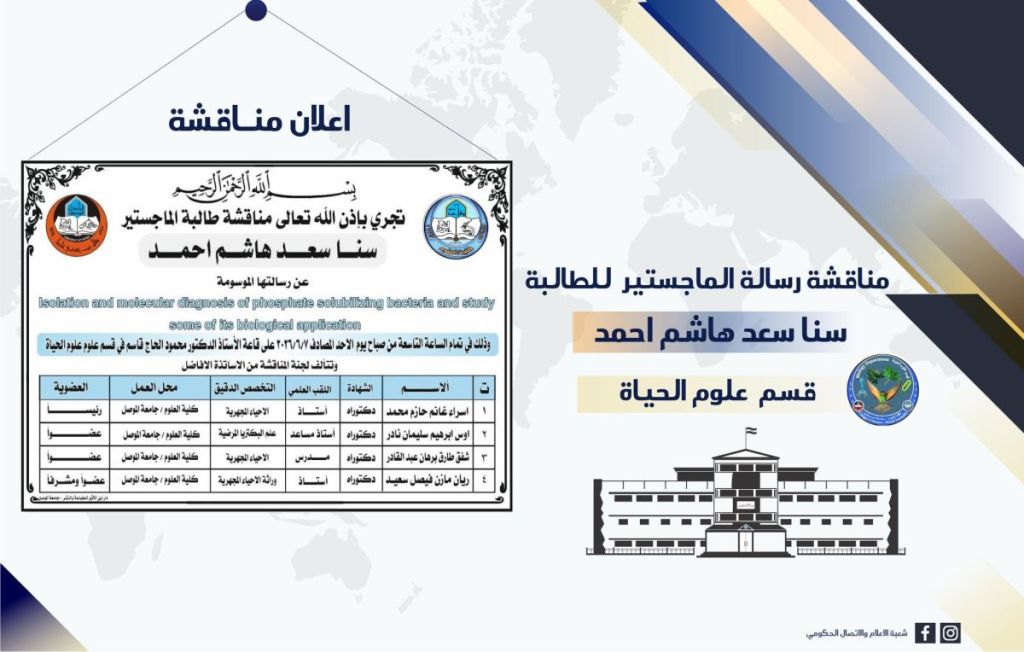
The Department of Biology at the College of Science, University of Mosul, discussed on Sunday, 7 June 2026, a Master’s thesis entitled:
“Isolation and Molecular Identification of Phosphate-Solubilizing Bacteria and the Study of Some of Their Biological Applications”
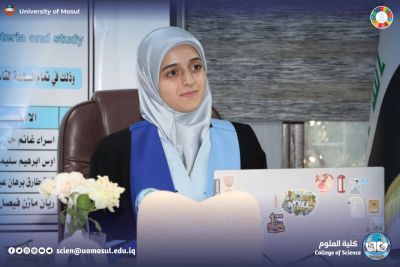
submitted by Ms. Sana Saad Hashim, a postgraduate student in the Microbiology Branch.
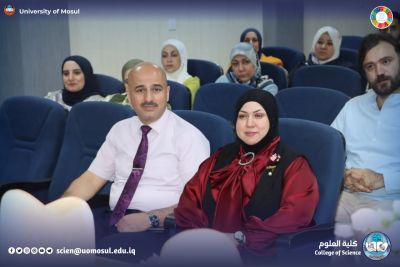
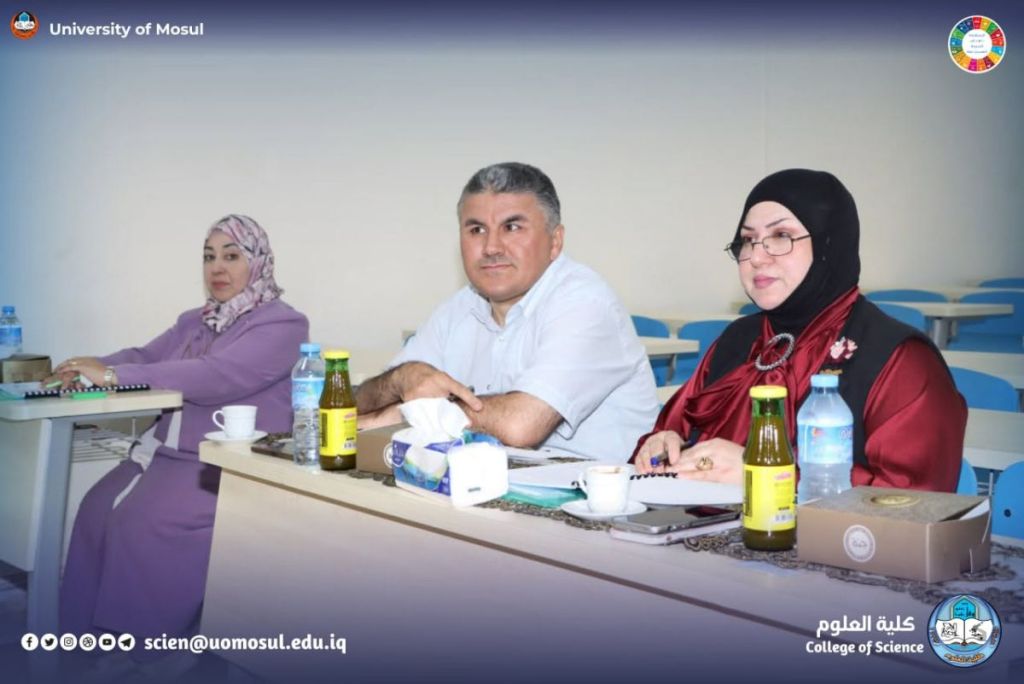
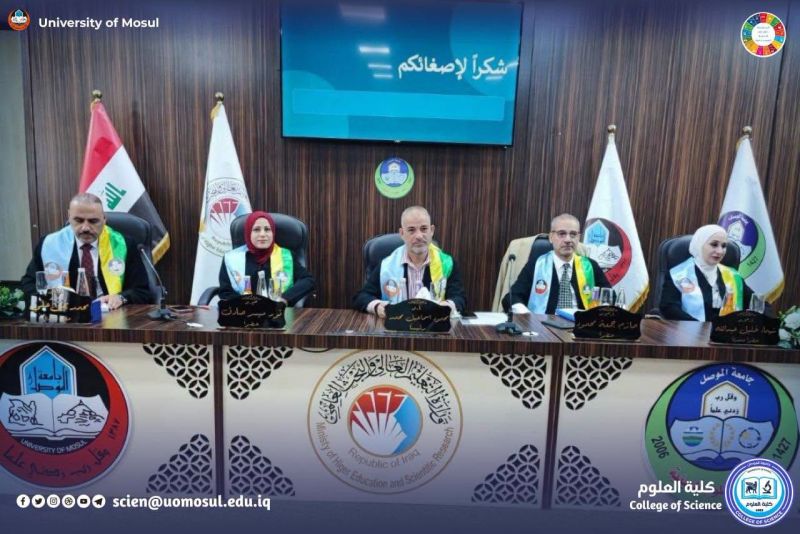
Part of the defense session was attended by the Dean of the College of Science, Prof. Dr. Hiyam Adel Ibrahim, the Head of the Department of Biology, Prof. Dr. Amjad Abdulhadi Mohammed, in addition to faculty members and postgraduate students.
The study aimed to isolate and identify phosphate-solubilizing bacteria from plant roots, evaluate their efficiency in solubilizing different sources of insoluble phosphate, investigate the genes responsible for this process, and assess their potential use as bioinoculants to promote plant growth and increase phosphorus availability in soil.
The research involved the isolation and identification of phosphate-solubilizing bacteria using NBRIP medium, followed by an evaluation of their ability to solubilize calcium phosphate and aluminum phosphate. The study also compared the efficiency of different bacterial isolates in phosphate solubilization. Furthermore, molecular identification was performed, and the most efficient isolates were screened for genes associated with phosphate solubilization. The effects of these isolates on the growth of common bean plants (Phaseolus vulgaris) were also examined and compared with control treatments.
The results led to the isolation and identification of several phosphate-solubilizing bacterial species, including relatively rare isolates that have received limited attention in previous studies, namely Lelliottia amnigena SR6, Lelliottia adecarboxylata SR7, and Buchnera tritici. Molecular analyses revealed that most isolates possessed genes associated with phosphate solubilization, particularly the pqq operon genes and the gcd gene, which are involved in the production of organic acids that enhance phosphorus availability to plants.
The findings also demonstrated that none of the isolates were capable of solubilizing aluminum phosphate, whereas all exhibited varying levels of efficiency in solubilizing calcium phosphate. Among them, Erwinia sp. showed the highest phosphate-solubilization efficiency. In greenhouse experiments, the SR5 strain produced the most significant improvement in root development, resulting in substantial increases in root length and root number compared with the control treatments.
Overall, Erwinia sp. SR5 and Lelliottia amnigena SR6 emerged as promising candidates for biofertilizer applications due to their ability to enhance bean plant growth and improve phosphorus availability in soil.
The significance of the study lies in its contribution to identifying promising bacterial species capable of efficiently solubilizing insoluble phosphate and uncovering the genetic mechanisms underlying this process. These findings provide valuable insights for the future development of environmentally friendly biofertilizers and the promotion of sustainable agricultural production.
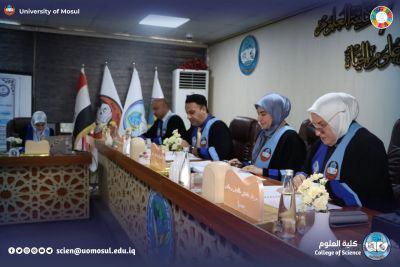
The examination committee consisted of:
- Prof. Dr. Israa Ghanim Hazim Mohammed – Chairperson
- Lecturer Dr. Shafaq Tariq Burhan – Member
- Assist. Prof. Dr. Aws Ibrahim Salman – Member
- Prof. Dr. Rayan Mazin Faisal Al-Obaidi – Member and Supervisor
The College of Science extends its best wishes to its students for continued success and academic excellence.
Media and Government Communication Division
Sunday, 7 June 2026