16 August، 2026
Master’s Thesis at the College of Basic Education on “Cognitive Wisdom and Its Relationship to Sustainable Professional Development among University of Mosul Faculty Members”
Master’s Thesis at the College of Basic Education on “Cognitive Wisdom and Its Relationship to Sustainable Professional Development among University of Mosul Faculty Members”
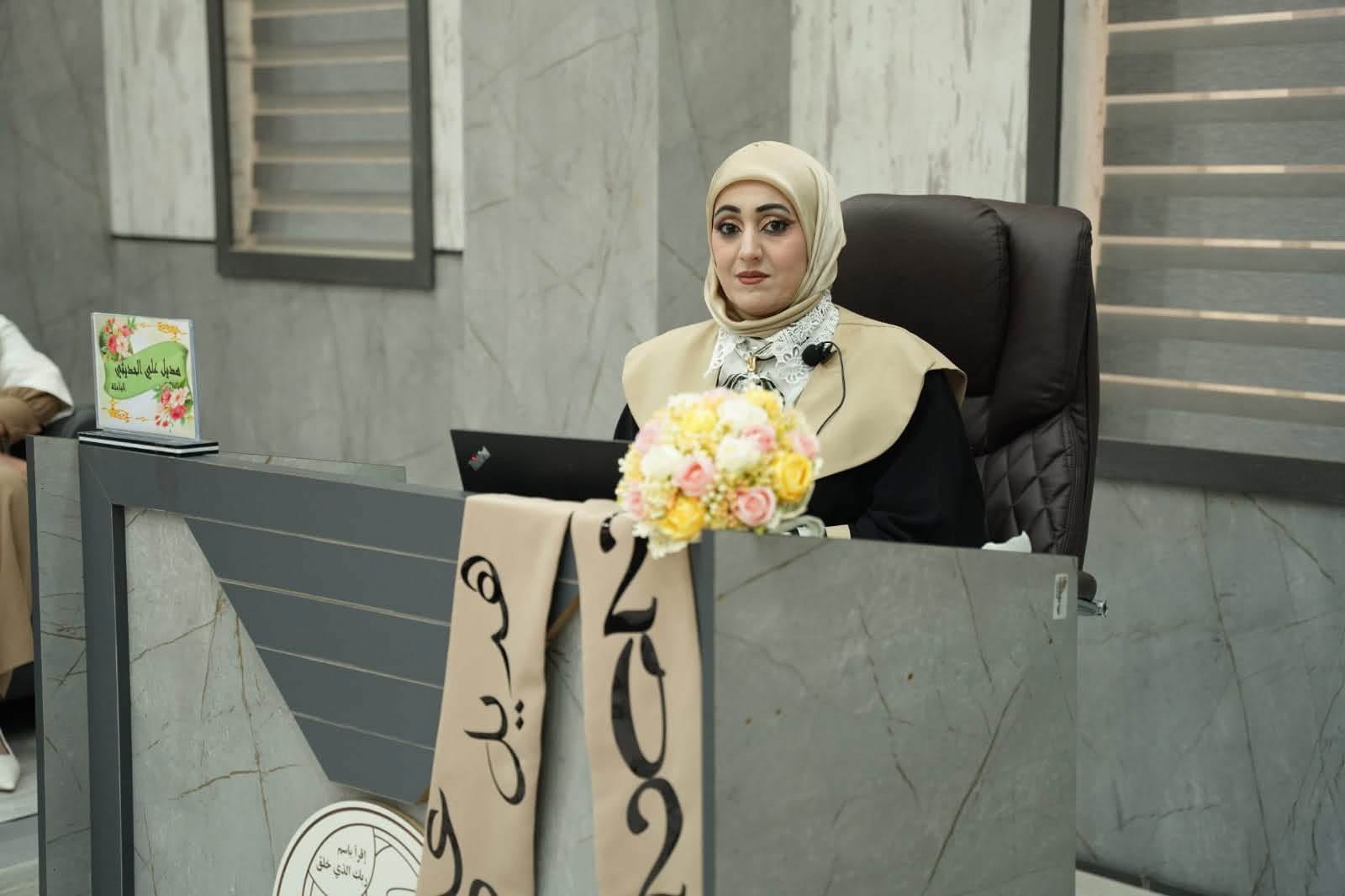
The College of Basic Education at the University of Mosul discussed a master’s thesis entitled “Cognitive Wisdom and Its Relationship to Sustainable Professional Development among University of Mosul Faculty Members.” The discussion was held on Monday, July 13, 2026, at Umm Al-Rabi‘ain Hall at the College.
The study, submitted by Hadeel Ali Abbas, sought to explore the nature of the relationship between cognitive wisdom and sustainable professional development among faculty members at the University of Mosul. Specifically, it aimed to:
- Measure the levels of both variables among a sample of faculty members.
- Identify differences in these levels according to their characteristics, including gender, specialization, academic rank, and years of service.
- Determine the direction and strength of the correlation between cognitive wisdom and sustainable professional development, and whether this relationship varies according to their characteristics.
The findings showed that the faculty members possessed a high level of cognitive wisdom and an above-average level of sustainable professional development, with the two characteristics demonstrating a strong positive relationship shaped by specific professional trajectories.
- Overall level: Faculty members demonstrated a high level of cognitive wisdom and an above-average level of sustainable professional development, indicating a positive academic environment.
- Effect of experience and promotion: Experience of more than 10 years and the academic rank of Professor were found to be the most influential factors. As years of service and academic rank increased, levels of wisdom and professional development also increased significantly.
- Strength of the relationship: A strong positive correlation was found between cognitive wisdom and sustainable professional development, indicating that strengthening one contributes to strengthening the other.
- Key determinants of the relationship: The relationship between wisdom and professional development was stronger and more evident among faculty members in scientific specializations. Gender, academic rank, and years of service did not produce significant differences in the strength of this relationship, indicating that it is a general phenomenon that transcends these classifications.
- Absence of an independent effect of gender and specialization: Neither gender nor specialization, considered independently, produced significant differences in the levels of cognitive wisdom or sustainable professional development. This confirms that growth in these areas is primarily associated with the faculty member’s professional career rather than their classification.
The discussion committee consisted of:
- Prof. Dr. Dhikra Yousif Jameel – Chair
- Assistant Prof. Dr. Anwar Qasim Yahya – Member
- Assistant Prof. Iyad Mohammed Yahya – Member
- Prof. Dr. Iman Mohammed Sharif – Member and Supervisor
Media and Government Communication Division
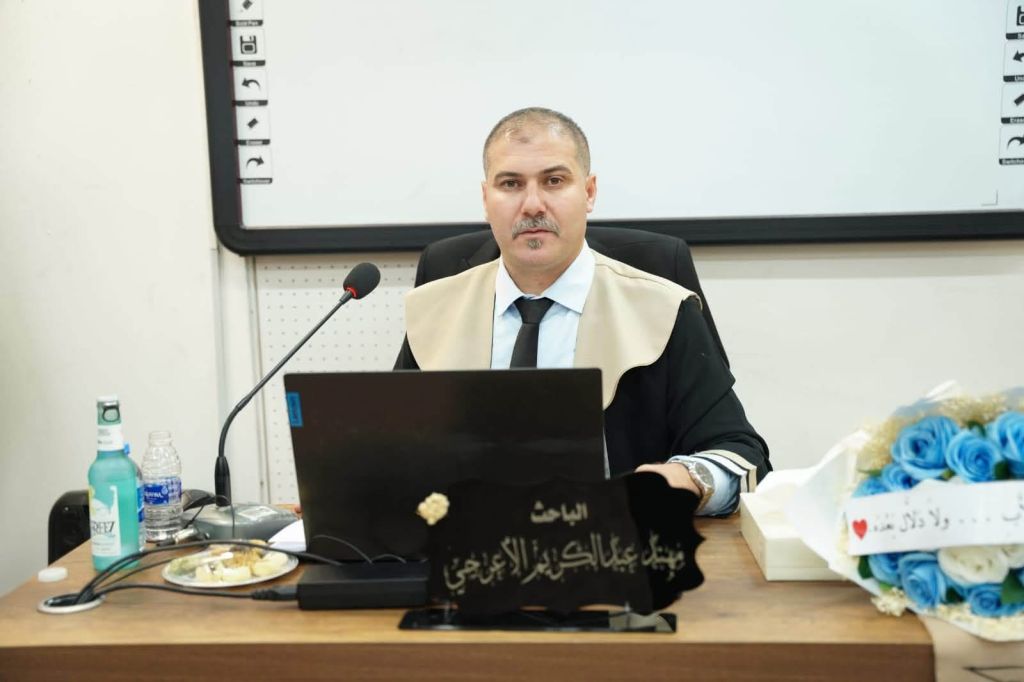 Master’s Thesis at the College of Basic Education on “The Effect of an Innovative Device on Developing Certain Biokinematic Variables and Performance Level in Jump Shots in Basketball”
 A New Scientific Achievement for the College of Basic Education at the University of Mosul: Registration of 12 Genetic Sequences of an Intestinal Parasite in the Global Gene Bank