17 December، 2025
Master’s Thesis at the College of Political Science, University of Mosul Discusses a Comparison of the Role of Parliamentary Opposition in the Governance of Public Policies in the United Kingdom and the Hashemite Kingdom of Jordan
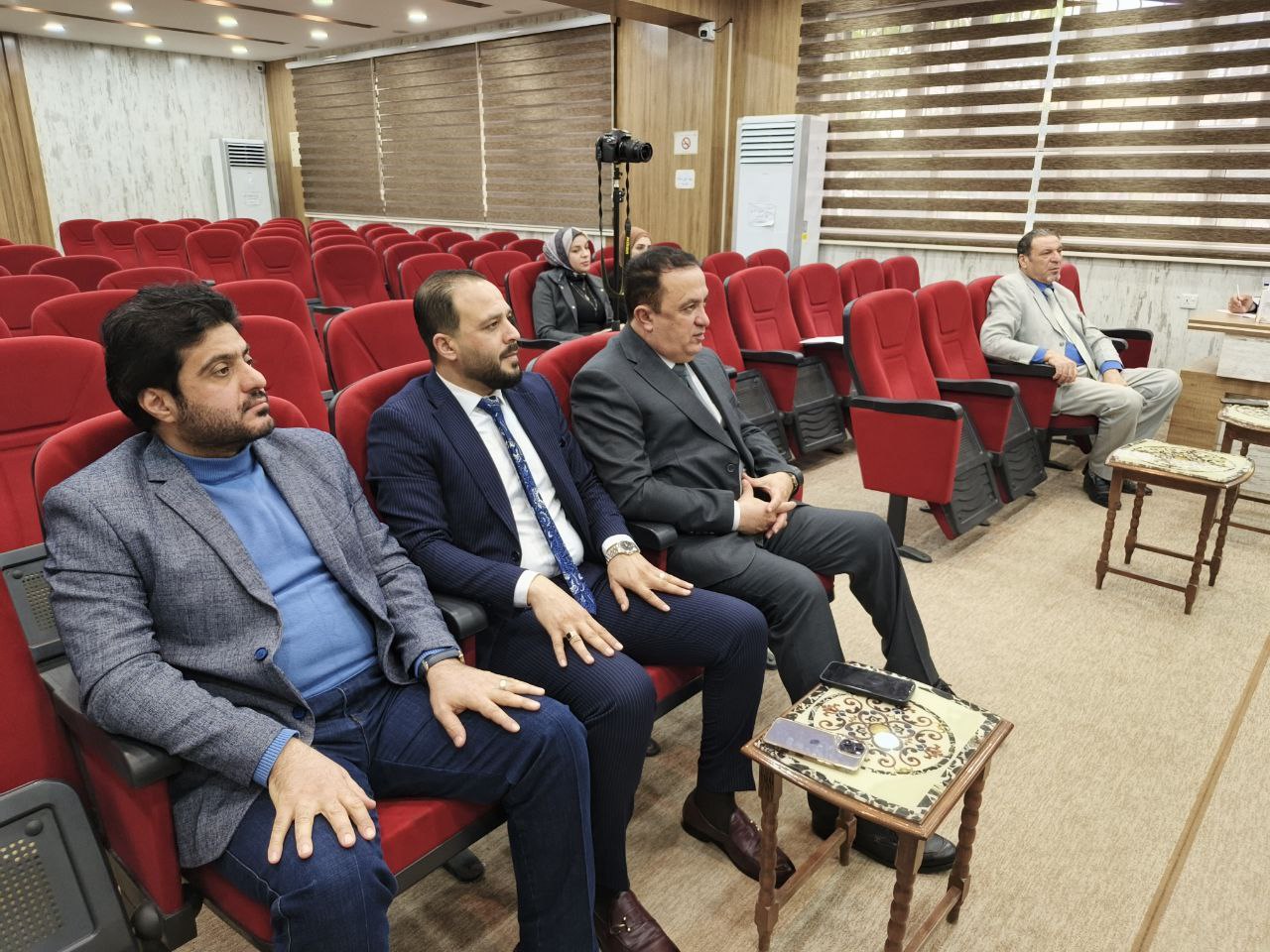
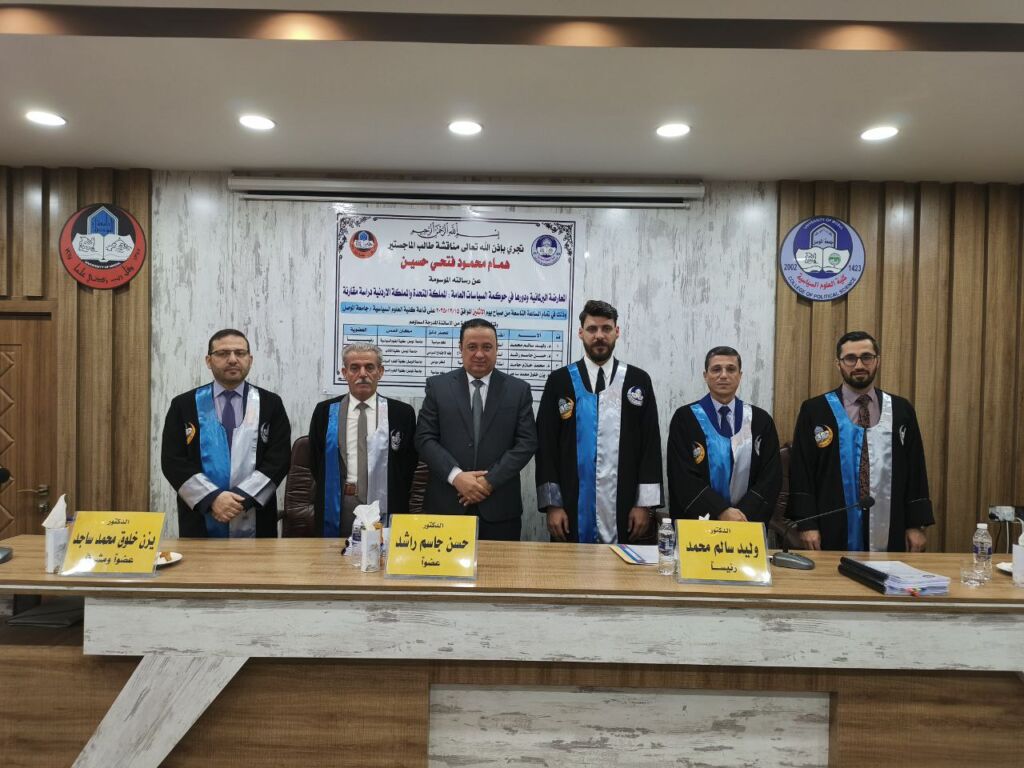
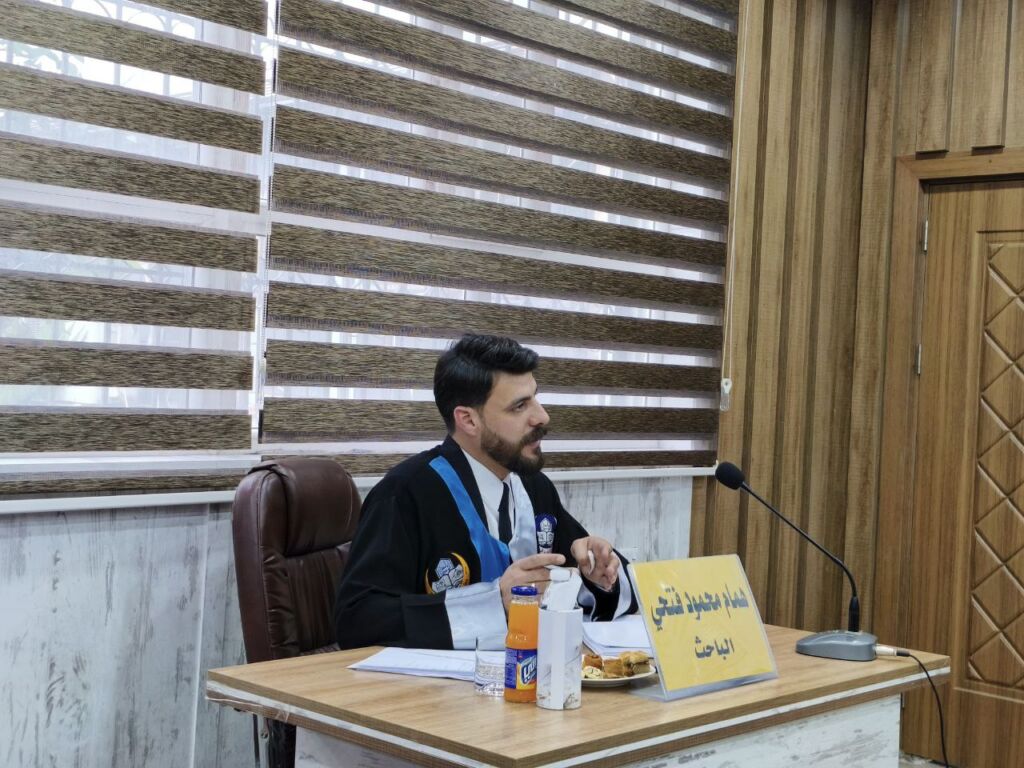
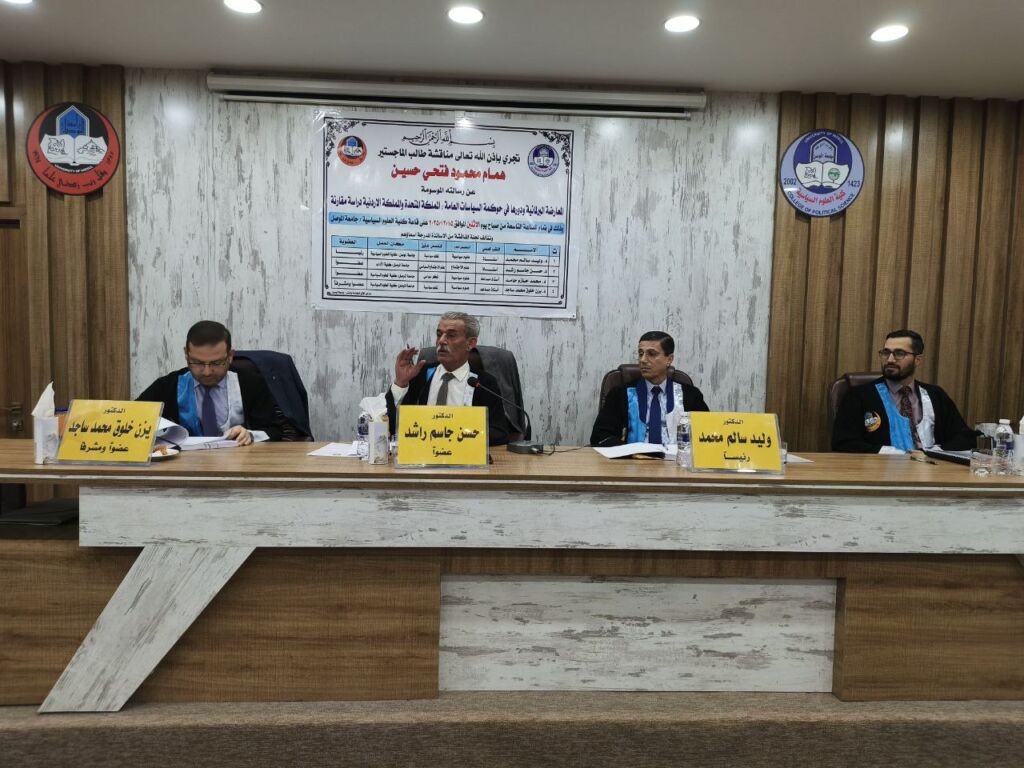
In pursuit of the Sustainable Development Goals—Goal Sixteen: Peace, Justice and Strong Institutions, and Goal Seventeen: Partnerships for the Goals—and in cooperation with the Department of Studies and Planning / Sustainable Development Unit at the Presidency of the University of Mosul; the College of Political Science held the defense of a master’s thesis entitled: “Parliamentary Opposition and Its Role in the Governance of Public Policies: A Comparative Study of the United Kingdom and the Hashemite Kingdom of Jordan”, submitted by the student Hammam Mahmoud Fathi, on Monday, 15 December 2025.
The thesis examined a comparison of the role of parliamentary opposition in the governance of public policies in the United Kingdom and the Hashemite Kingdom of Jordan. In the United Kingdom, the opposition is considered a fundamental pillar of the political system, enjoying an official constitutional status that enables it to perform its role through effective institutional tools. This institutional framework allows the opposition to contribute directly to improving the quality of policies and ensuring their transparency and legitimacy, transforming it from a mere watchdog into an active partner in the policymaking process. In contrast, in the Hashemite Kingdom of Jordan, the parliamentary opposition faces deeper challenges stemming from the nature of the political and legal context, which hinder the opposition’s capacity to perform its role.
The thesis aimed to analyze and evaluate the role played by the parliamentary opposition in the governance of public policies through conducting a comparative study between two different models: the United Kingdom (as a model of entrenched democratic traditions) and the Hashemite Kingdom of Jordan (as a model of emerging democracies). It also sought to analyze the constitutional and legal framework by comparing the regulatory framework governing the work of the parliamentary opposition in both countries, in terms of recognition of its existence, its powers, guarantees of its independence, and the restrictions imposed upon it. In addition, the study identified and analyzed the formal mechanisms and tools available to the opposition in both countries to exercise its role in the governance of public policies (such as questioning ministers, requests for debate, the formation of investigative committees, motions of no confidence, and the right to propose legislation), identified the fundamental similarities and differences in the role and effectiveness of the parliamentary opposition between the British and Jordanian systems, and analyzed the underlying reasons for these differences.
The study concluded that the strength of the parliamentary opposition is the product of a supportive institutional political environment. The British model demonstrates how constitutional traditions and a party-based electoral system create an effective opposition that enhances the quality of governance, while the Jordanian model shows how the absence of such an environment leads to a marginal and weak opposition, negatively affecting the effectiveness and transparency of public policies.
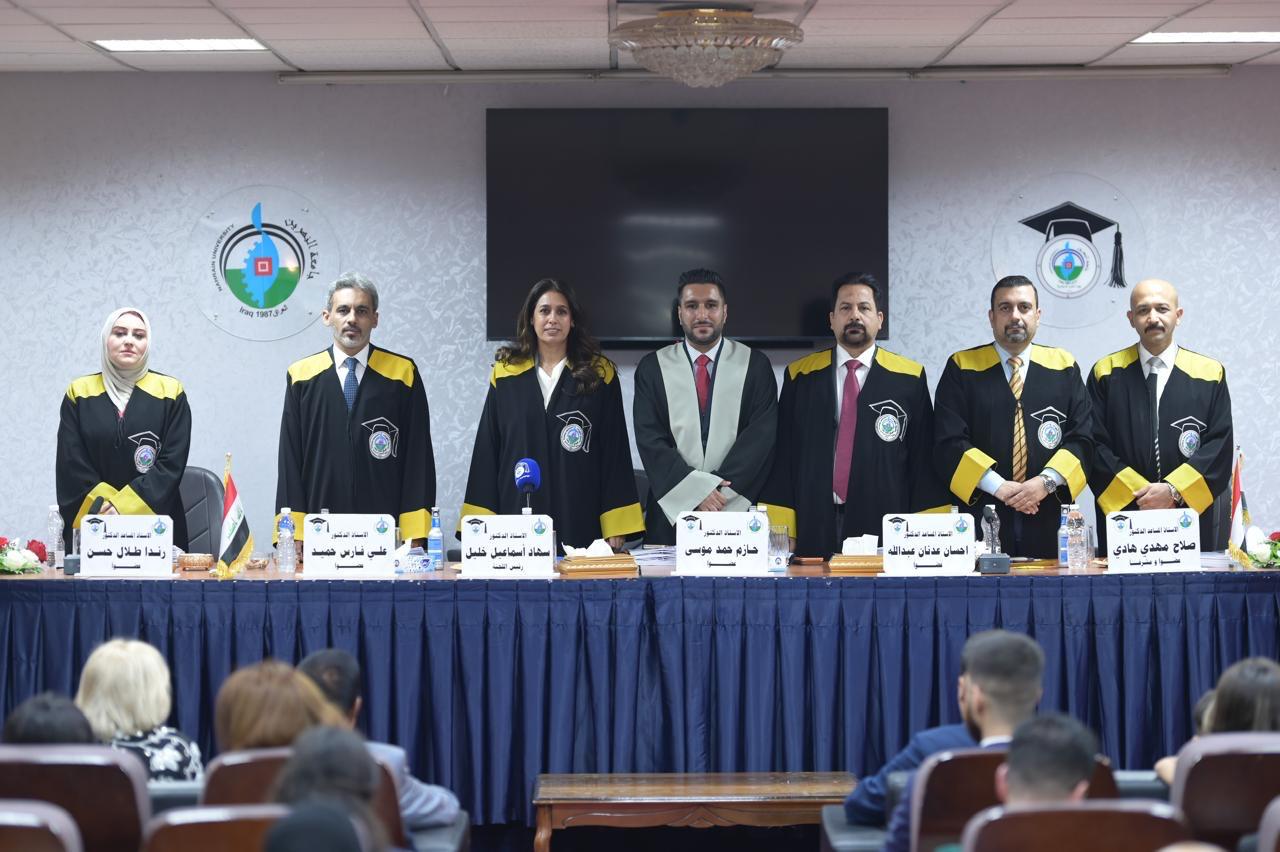
The examination committee consisted of Professor Dr. Walid Salem Mohammed (Chair), Professor Dr. Hassan Jasim Rashid (Member), Assistant Professor Dr. Mohammed Hazem Hamed (Member), and Assistant Professor Dr. Yazan Khallouq Mohammed Sajid (Member and Supervisor).
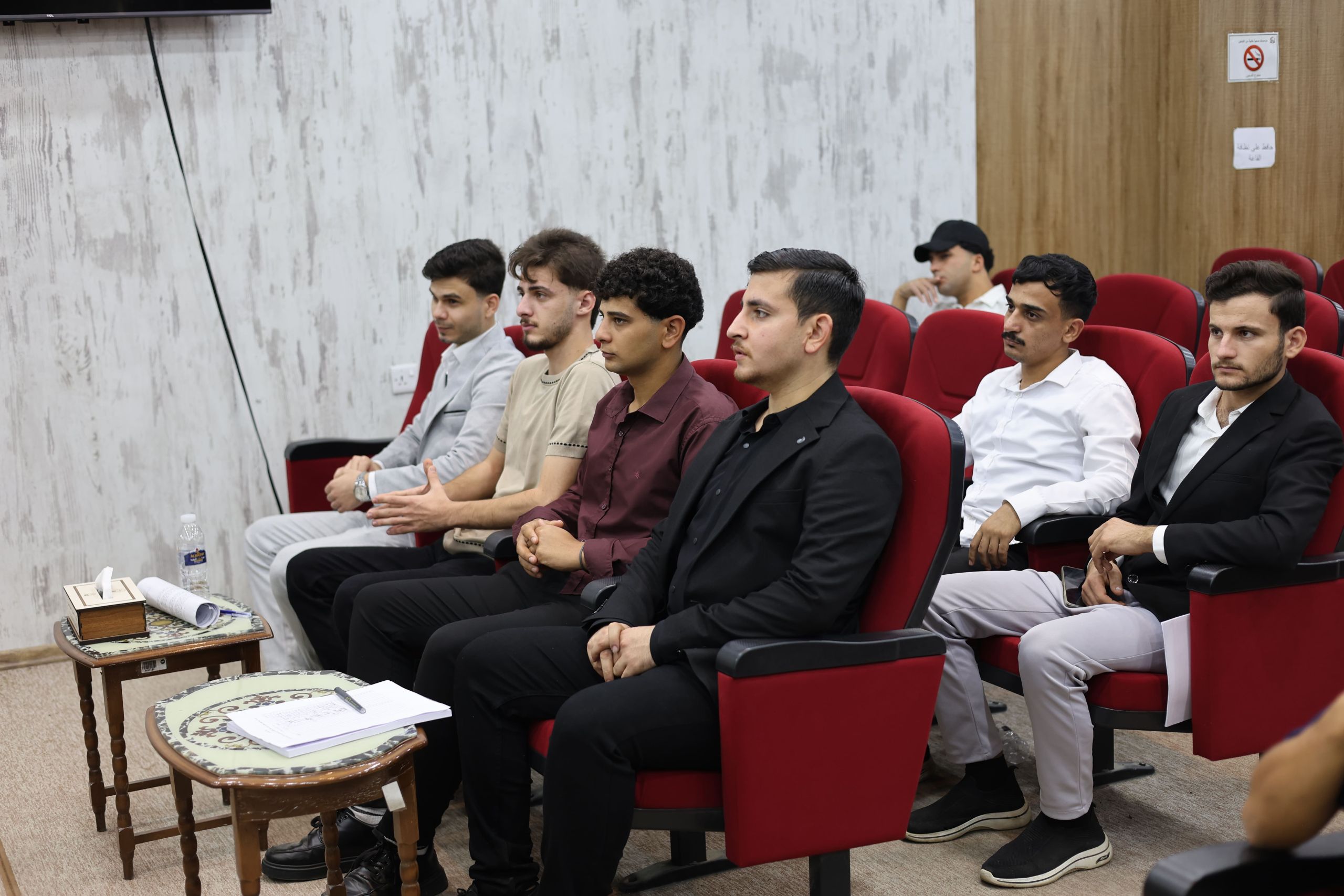
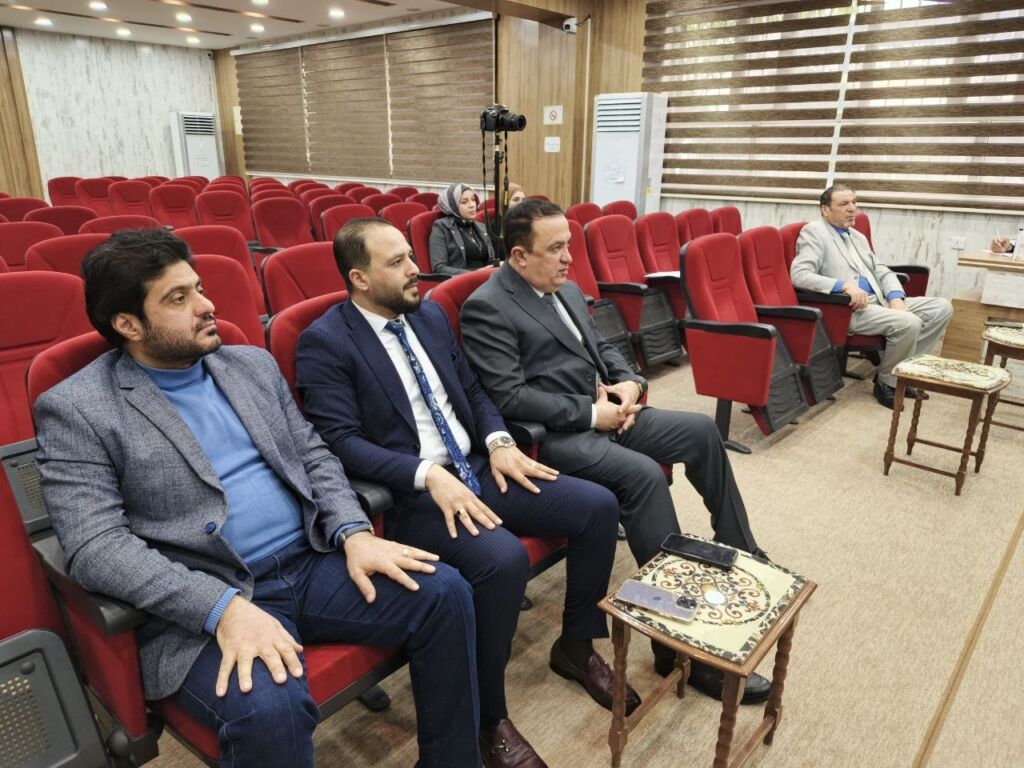
Part of the defense was attended by the Dean of the College, Assistant Professor Dr. Suhaib Khaled Jasim Al-Ta’i, the Scientific Assistant Dean, Assistant Professor Dr. Khairallah Subhan Al-Jubouri, a number of members of the College Council, several faculty members, as well as a group of postgraduate students.
Following the discussion, the committee’s decision was read, which included the acceptance of the thesis, subject to the required revisions.

Previous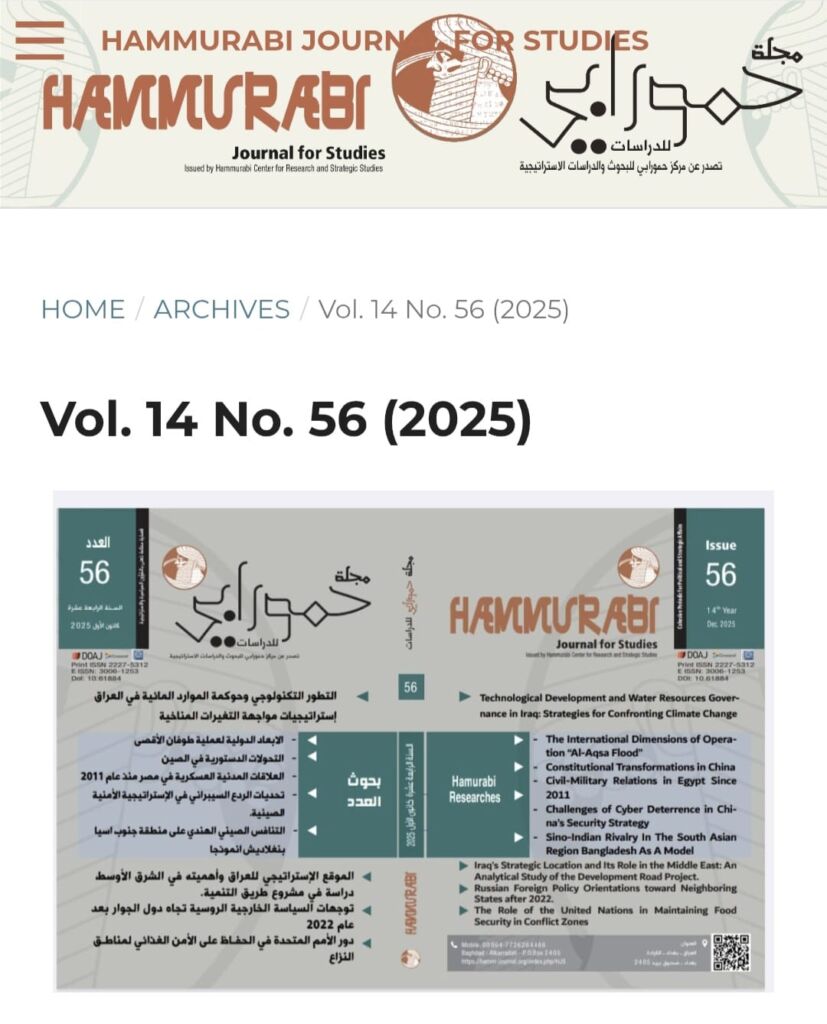 A scientific research paper by Assistant Professor Dr. Younis Moayad Al-Dabbagh, a faculty member of the College of Political Science at the University of Mosul, on Threat Management and Peacebuilding, was published in Hammurabi Journal of Studies
A scientific research paper by Assistant Professor Dr. Younis Moayad Al-Dabbagh, a faculty member of the College of Political Science at the University of Mosul, on Threat Management and Peacebuilding, was published in Hammurabi Journal of StudiesNext The lecturer Dr. Rasha Suhail Mohammed from the College of Political Science at the University of Mosul has been appointed as a member of the editorial board of the Modern American Journal of Social Sciences and Humanities
The lecturer Dr. Rasha Suhail Mohammed from the College of Political Science at the University of Mosul has been appointed as a member of the editorial board of the Modern American Journal of Social Sciences and Humanities