12 August، 2026
The Right to Work and Its Impact on Developing Youth Skills
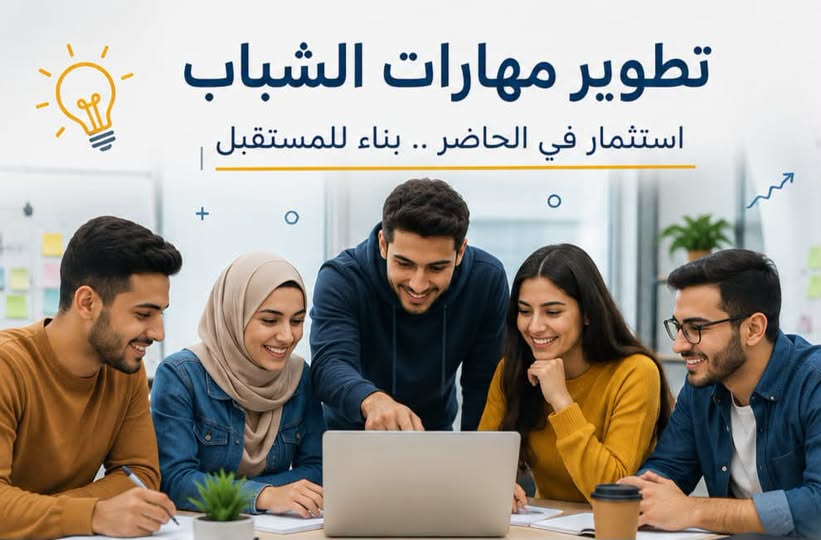
The Right to Work and Its Impact on Developing Youth Skills
Dr. Ziyad Abdulwahhab Al-Nu’aimi
College of Law – University of Mosul
In 2014, the United Nations General Assembly, by virtue of one of its resolutions, declared July 15 as World Youth Skills Day, affirming the substantive importance of empowering youth to acquire the skills necessary for employment and work in a world witnessing rapid transformations driven by technological development, artificial intelligence, economic changes, and increasing social and demographic challenges. These transformations have imposed a new reality that necessitates a reconsideration of methods of education, work, and community participation, in a manner that ensures the enhancement of the right to work as one of the fundamental human rights.
In this context, young people today need more than traditional technical skills; success in the modern work environment has become contingent upon combining professional competence, mastery of artificial intelligence skills and digital transformation, and adherence to human skills, such as critical thinking, creativity, communication, and empathy—capabilities that technology cannot replace.
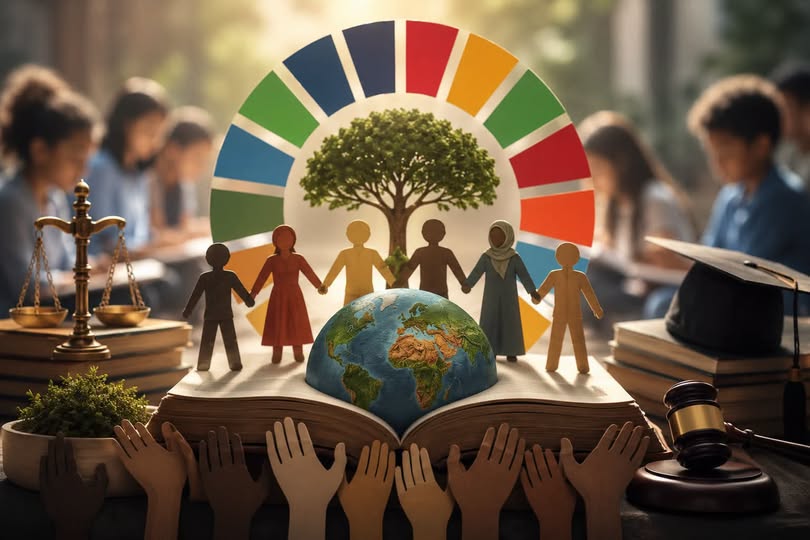
The celebration of World Youth Skills Day for 2026 comes under the slogan “Skills for a Shared Future,” a slogan that focuses on the importance of developing innovative programs for youth skills development, enabling them to adapt to rapid transformations, assume a leadership role based on cooperation and understanding, build bridges of communication between cultures, enhance employment opportunities, and contribute effectively to achieving the Sustainable Development Goals.
On the other hand, international indicators reveal a clear gap between educational outputs and the needs of the labor market, as confirmed by United Nations statistics, the most prominent of which are:
-
There are approximately 273 million children and young people outside the education system.
-
Nearly 20% of young people (one in five) are not within the work, education, or training system.
-
The gender gap persists, with the percentage of girls outside work, education, and training standing at 28.2%, compared to 13.1% for males.
-
Approximately 40% of current skills and knowledge are misaligned with the requirements of modern jobs due to the significant acceleration in technological and economic developments.
In light of these data, a fundamental question arises: How can the international community fulfill its responsibility to narrow this gap and enhance young people’s opportunities to acquire the skills that qualify them to integrate into the labor market, whether in the public or private sector?
To answer this, it requires the adoption of integrated policies based on combining digital solutions with human values, through enhancing artificial intelligence skills and digital transformation, developing economic skills that support environmental sustainability, as well as developing educational systems whose outputs align with labor market needs. This is achieved through proper planning for higher education, linking theoretical knowledge with practical application, and preparing graduates who possess the ability to employ their knowledge in the work environment and contribute to the development of their communities.
Developing youth skills today represents a strategic challenge for states, and at the same time, it is a fundamental pillar for building productive and sustainable societies. True investment in the potentials of young people is not limited to providing job opportunities; rather, it requires providing quality opportunities based on scientific planning, competence, and the actual needs of the labor market, away from haphazard policies or temporary solutions that lead to the spread of disguised unemployment, which does not contribute to development but rather makes the workforce part of the problem instead of being part of the solution.