12 August، 2026
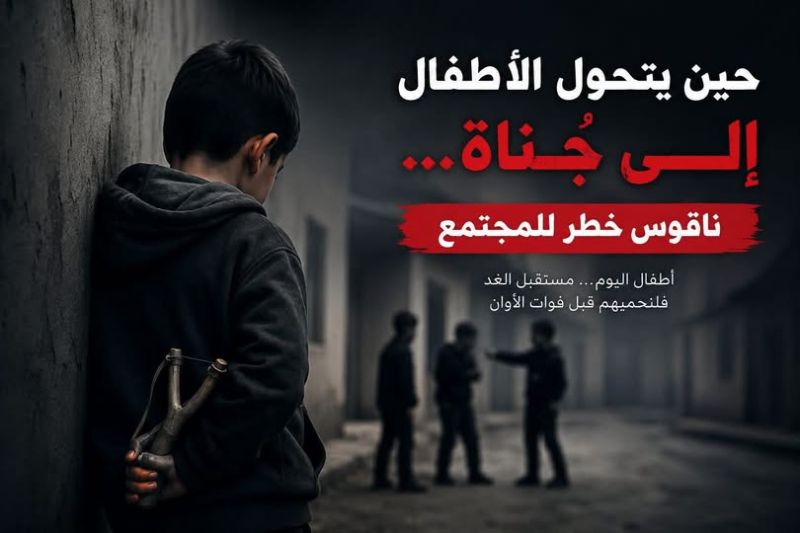
Awareness-Oriented Legal Article: The Legal Responsibility of the Family for Crimes Committed by Children in Iraqi Legislation
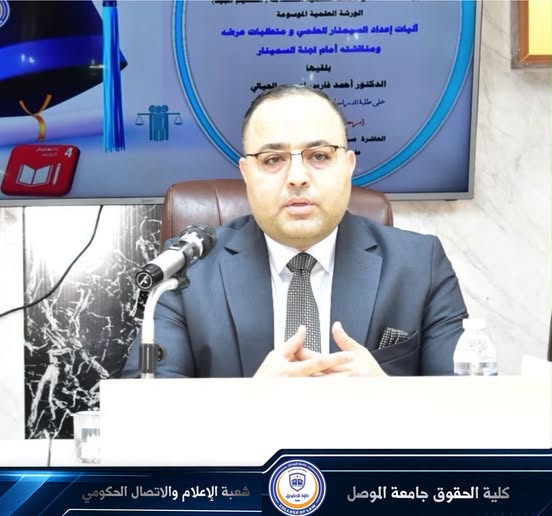
The Legal Responsibility of the Family for Crimes Committed by Children in Iraqi Legislation
Dr. Ahmed Fares Idris
University of Mosul – College of Law
Introduction:
The family is the fundamental nucleus of society and the primary environment in which a child receives his values, principles, and behaviors. Through the family, his personality and intellectual and social orientations are shaped. Given that juvenile delinquency and the commission of crimes by children and minors are phenomena that threaten the security and stability of society, it has become necessary to study the role of the family and its responsibility in preventing this phenomenon and mitigating its effects.
Crimes committed by children and minors raise many questions regarding the limits of family responsibility—whether this responsibility is limited to the moral and social aspects or extends to include legal responsibility—as well as the role of society and its various institutions in protecting juveniles from deviance and crime.
First: The Moral and Ethical Responsibility of the Family:
The family bears a great moral and ethical responsibility in raising children and nurturing them to respect the law and adhere to religious, social, and human values. A child is born as a blank slate, and the family is the primary factor in shaping his personality and determining his behavioral tendencies.
Family neglect, weak supervision, family disintegration, domestic violence, and the absence of dialogue between parents and children increase the likelihood of deviance and criminal behavior, making the family’s responsibility a direct one in the field of crime prevention before it occurs.
Second: The Social Responsibility of the Family and the Role of Parents:
The father bears the responsibility of providing a stable family environment, monitoring the children, and guiding them toward proper behavior, while the mother plays a pivotal role in daily upbringing and reinforcing moral values and social belonging in children.
Moreover, cooperation and integration between the roles of the father and mother represent the fundamental guarantee for building a balanced personality capable of facing challenges and behavioral deviations, especially in light of the growing influence of social media and cyberspace, which have become one of the most significant sources of influence on the behavior of children and youth.
Third: The Legal Responsibility of the Family under the Iraqi Penal Code:
Iraqi criminal law is based on the principle of personal criminal liability, meaning that a person is only criminally accountable for his own actions. Thus, the father or mother does not bear criminal liability for a crime committed by their son or daughter merely by virtue of the familial relationship.
However, this rule does not prevent family members from being legally held accountable if it is proven that they participated in the crime through incitement, agreement, assistance, or concealment of the offender, in accordance with the general provisions on criminal participation contained in the Iraqi Penal Code No. (111) of 1969, as amended.
Furthermore, civil liability may arise for the person entrusted with supervision or the legal guardian for damages caused by a minor to others, if it is proven that they were negligent in their duty of supervision and oversight, in accordance with the provisions of the Iraqi Civil Code No. (40) of 1951, as amended.
Fourth: The Position of the Iraqi Juvenile Welfare Law:
The Iraqi legislator has been keen to deal with juvenile delinquents according to a philosophy of reform and rehabilitation rather than traditional punishment, through the Juvenile Welfare Law No. (76) of 1983, as amended, which aims to protect the juvenile, reintegrate him into society, and address the causes that led to his delinquency.
The law grants competent judicial authorities the powers to take reformative and educational measures proportionate to the juvenile’s age and social and psychological circumstances, with an emphasis on the family’s role in the reform and rehabilitation process.
Fifth: The Role of the Local Community and Educational Institutions:
The family does not bear alone the responsibility for confronting juvenile delinquency; rather, it shares this with the school, religious institutions, media, civil society organizations, and relevant government agencies in building a safe social environment that contributes to protecting children from deviance.
Furthermore, spreading legal culture among families, activating awareness programs, encouraging cultural and sports activities, and promoting intergenerational dialogue represent important tools for reducing crimes committed by children and minors.
Conclusion:
The responsibility of the family for crimes committed by children and minors is not, in most cases, a legal responsibility in the penal sense; rather, it is primarily a moral, educational, and social responsibility aimed at building the child’s character and immunizing him against deviance and crime. Nevertheless, Iraqi law may impose legal liability on parents or those entrusted with supervision in specific cases related to participation in the crime or breach of the duty of supervision and oversight.
Therefore, the prevention of juvenile delinquency requires integration between the family, the school, society, and state institutions, because building a safe and stable society begins with building a conscious family capable of fulfilling its educational, legal, and social role.
Sources:
-
Iraqi Penal Code No. (111) of 1969, as amended.
-
Iraqi Civil Code No. (40) of 1951, as amended.
-
Juvenile Welfare Law No. (76) of 1983, as amended.
-
Dr. Abboud Al-Sarraj, Explanation of the Iraqi Penal Code – General Section, Baghdad.
-
Dr. Mahmoud Najib Husni, Criminology and Penology, Dar Al-Nahda Al-Arabiya, Cairo.
-
Dr. Sabah Abdul Karim Al-Bahadli, Juvenile Delinquency, Its Causes and Methods of Treatment, Baghdad.