28 August، 2025
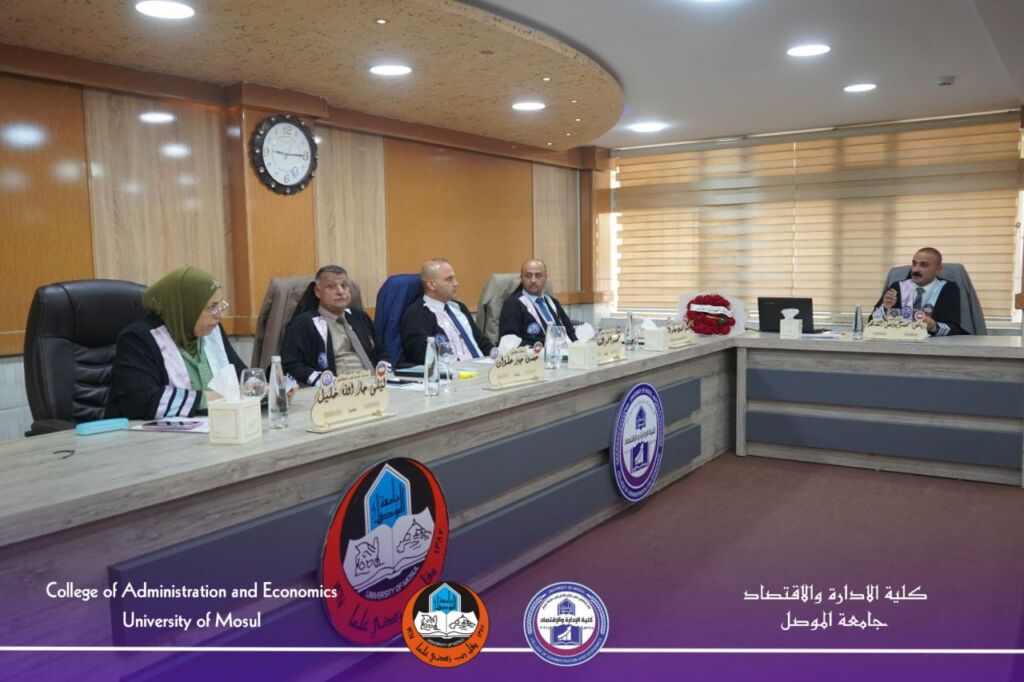
Master’s Thesis Discussion on Organizational Intelligence and Its Role in Reducing Organizational Rigidity – College of Administration and Economics / University of Mosul on Thursday, August 28, 2025
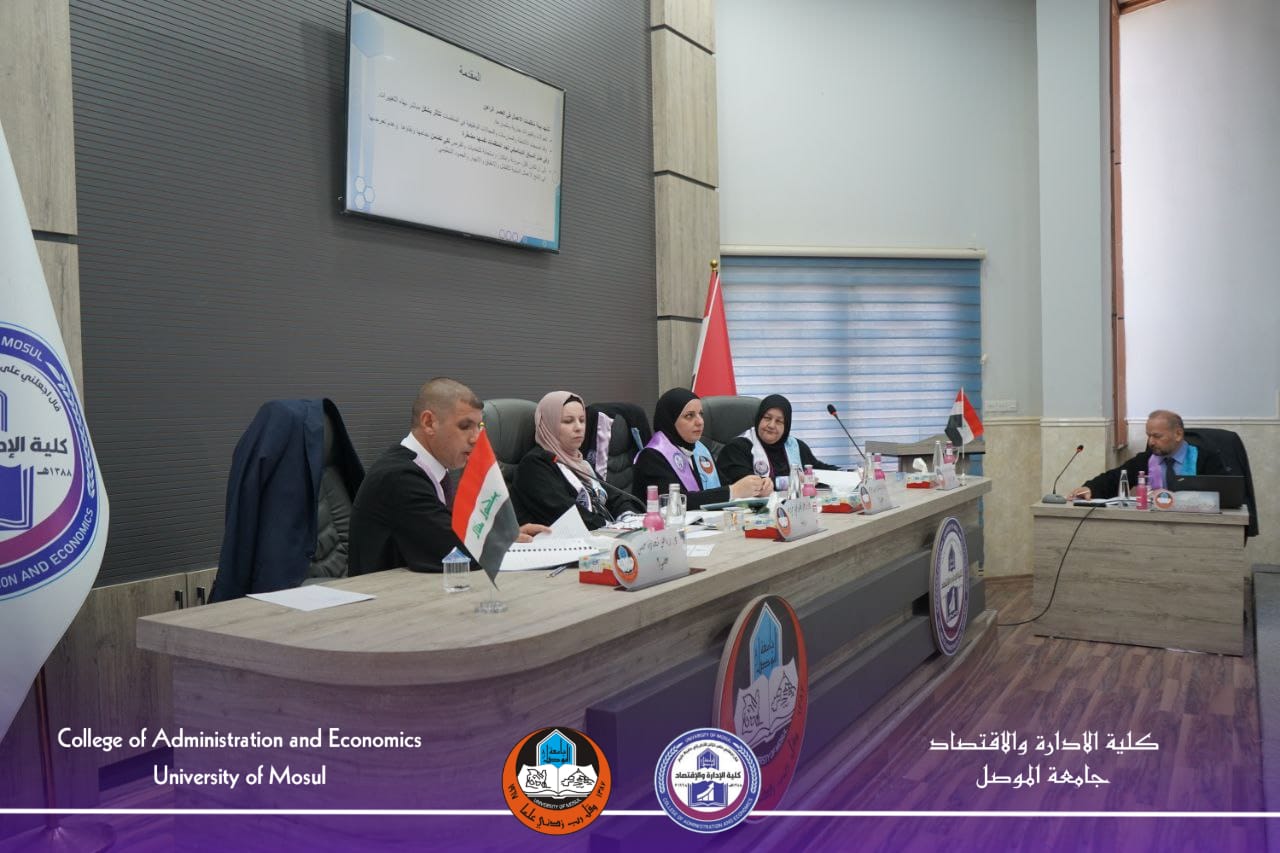
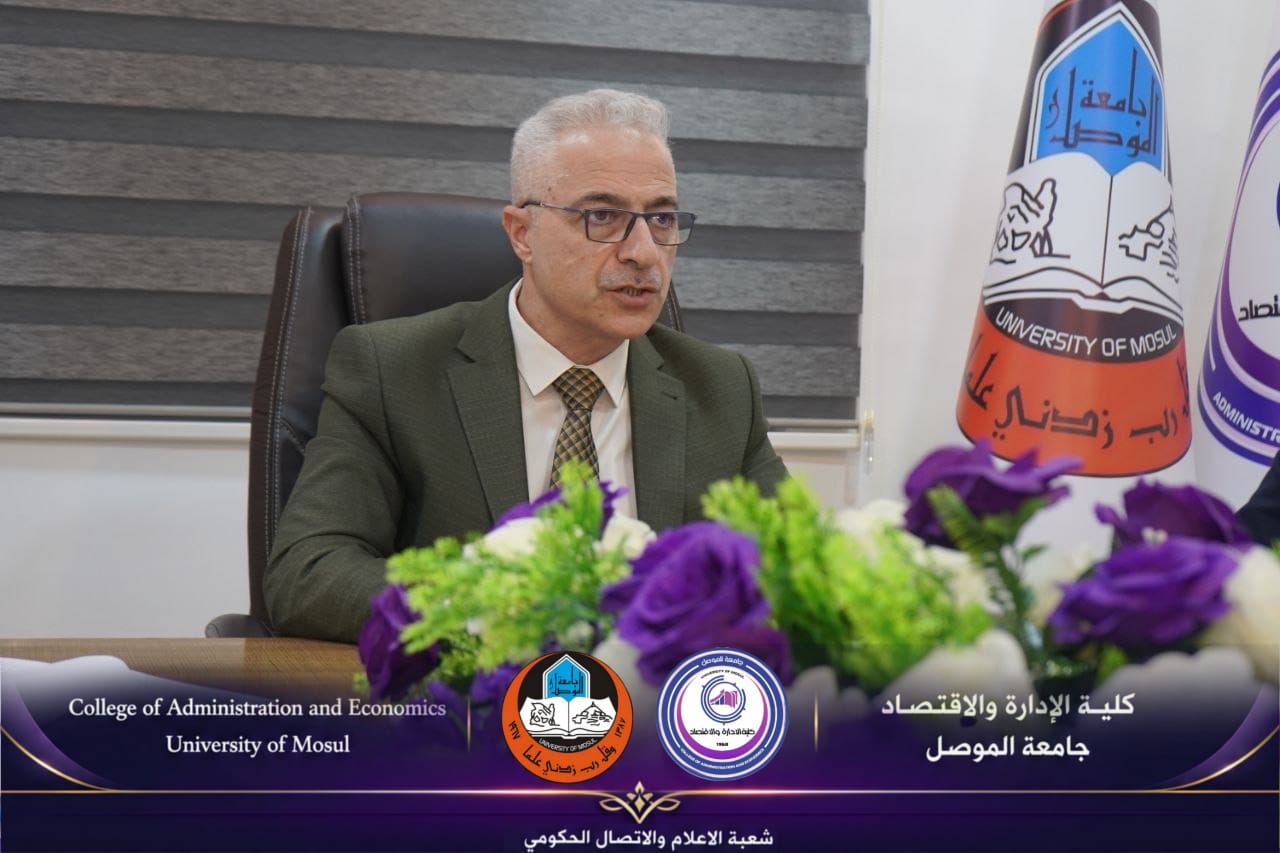
The College of Administration and Economics – Department of Business Administration / University of Mosul witnessed the discussion of the master’s thesis submitted by student Omar Abdulwahid Noori Yassin Arbo, titled:
“Organizational Intelligence as an Approach to Reducing Organizational Rigidity: An Exploratory Study of the Opinions of a Sample of Employees in the Nineveh Health Directorate.”
The study aimed to measure the correlation and impact relationship between the variable of organizational intelligence, with its dimensions represented by (willingness to change, strategic vision, alignment and congruence, shared destiny, knowledge dissemination, giving, and work pressure), and organizational rigidity, which was represented by three dimensions: (insight rigidity, psychological rigidity, and work rigidity).
The study reached a number of conclusions, the most notable of which was:
Organizational intelligence is inversely related to organizational rigidity, meaning that enhancing the dimensions of organizational intelligence within institutions contributes to reducing organizational rigidity and provides greater ability to adapt to change and face challenges.
The discussion committee consisted of: Asst. Prof. Dr. Raghad Mohammed Yahya Kharoofa – College of Administration and Economics / University of Mosul – Chair. Asst. Prof. Dr. Adwaa Kamal Hussein Al-Jarrah – College of Administration and Economics / University of Mosul – Member. Asst. Prof. Dr. Riyadh Shahatha Hussein – College of Administration and Economics / University of Tikrit – Member. Asst. Prof. Dr. Alaa Haseeb Abdul Adi Al-Jalili – College of Administration and Economics / University of Mosul – Member and Supervisor.
This thesis is significant in that it sheds light on the role of organizational intelligence as a modern tool that enhances flexibility and limits manifestations of rigidity in institutions, thereby contributing to the development of administrative performance and enabling more effective responses to environmental changes.


 Master’s Thesis on "Marketing Control and Proactive Marketing" as an Approach to Enhancing Sustainable Competitive Advantage – Department of Marketing Management, College of Administration and Economics, University of Mosul
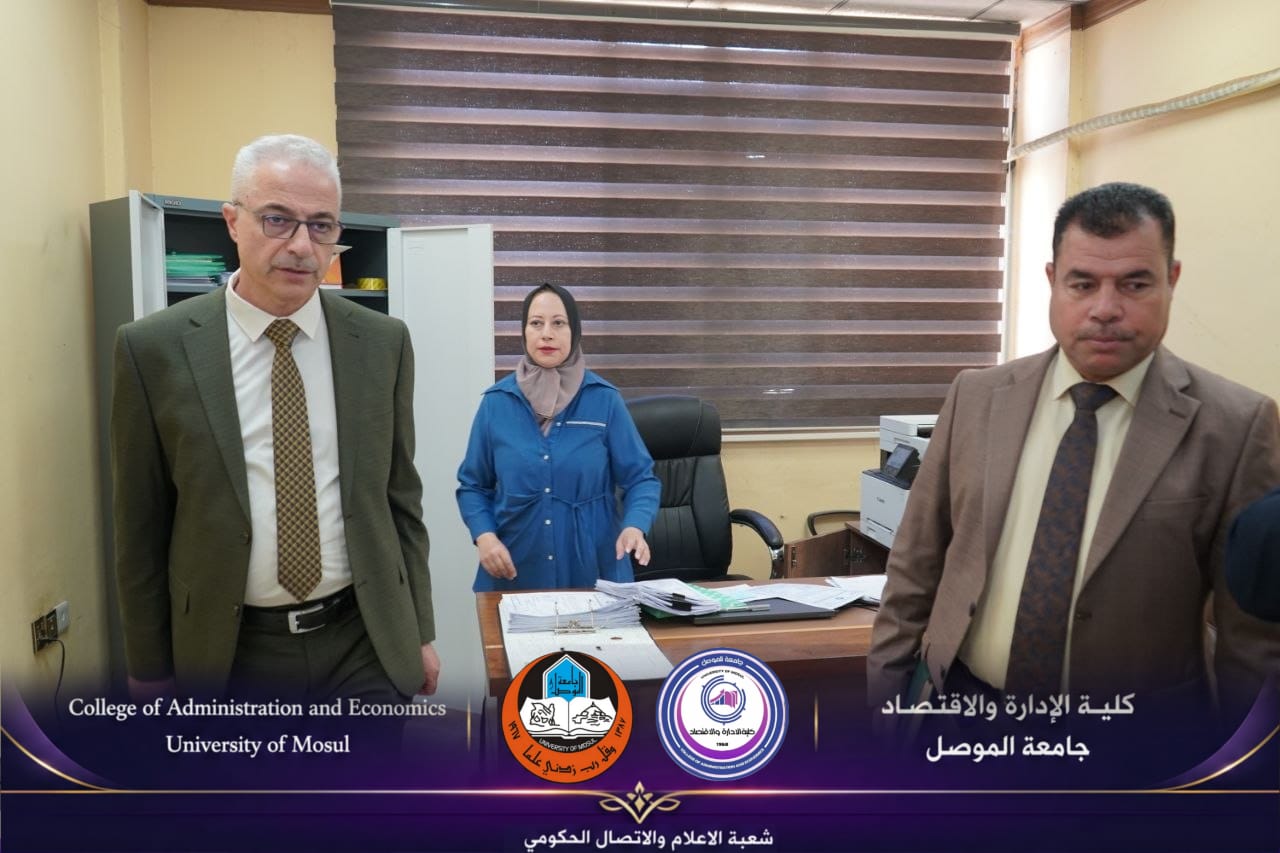
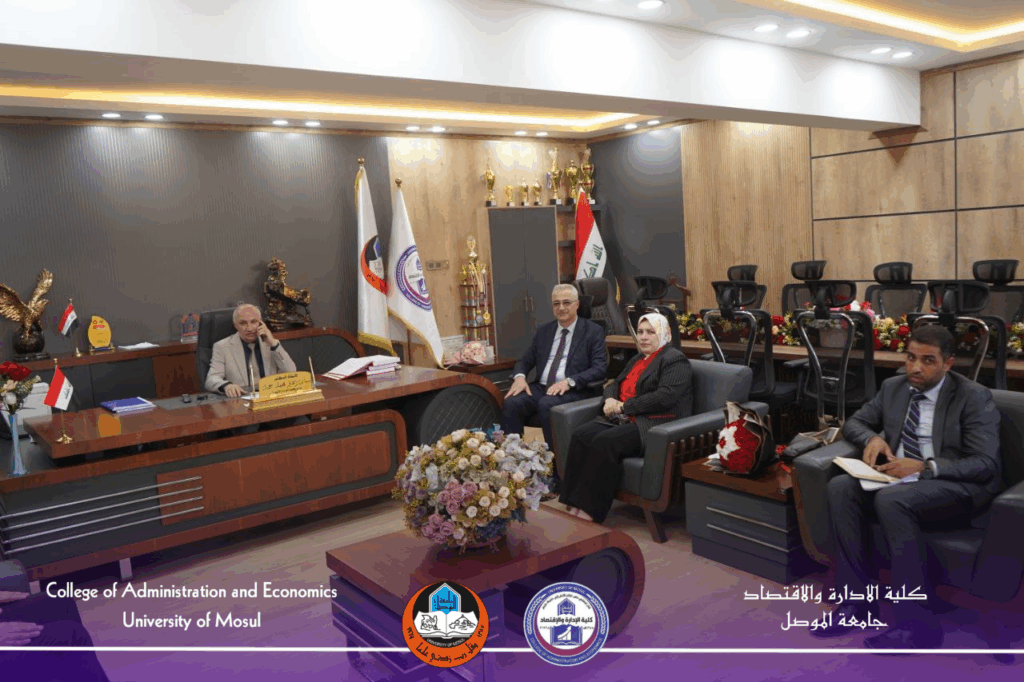 University of Mosul President Conducts Field Visit to Oversee Rehabilitation of the College of Administration and Economics Buildings, Directs Acceleration of Works to Ensure a Modern Learning Environment