11 October، 2025
A Master’s thesis at the College of Political Science, University of Mosul, discussed the role of political elites in achieving social integration in post-conflict states
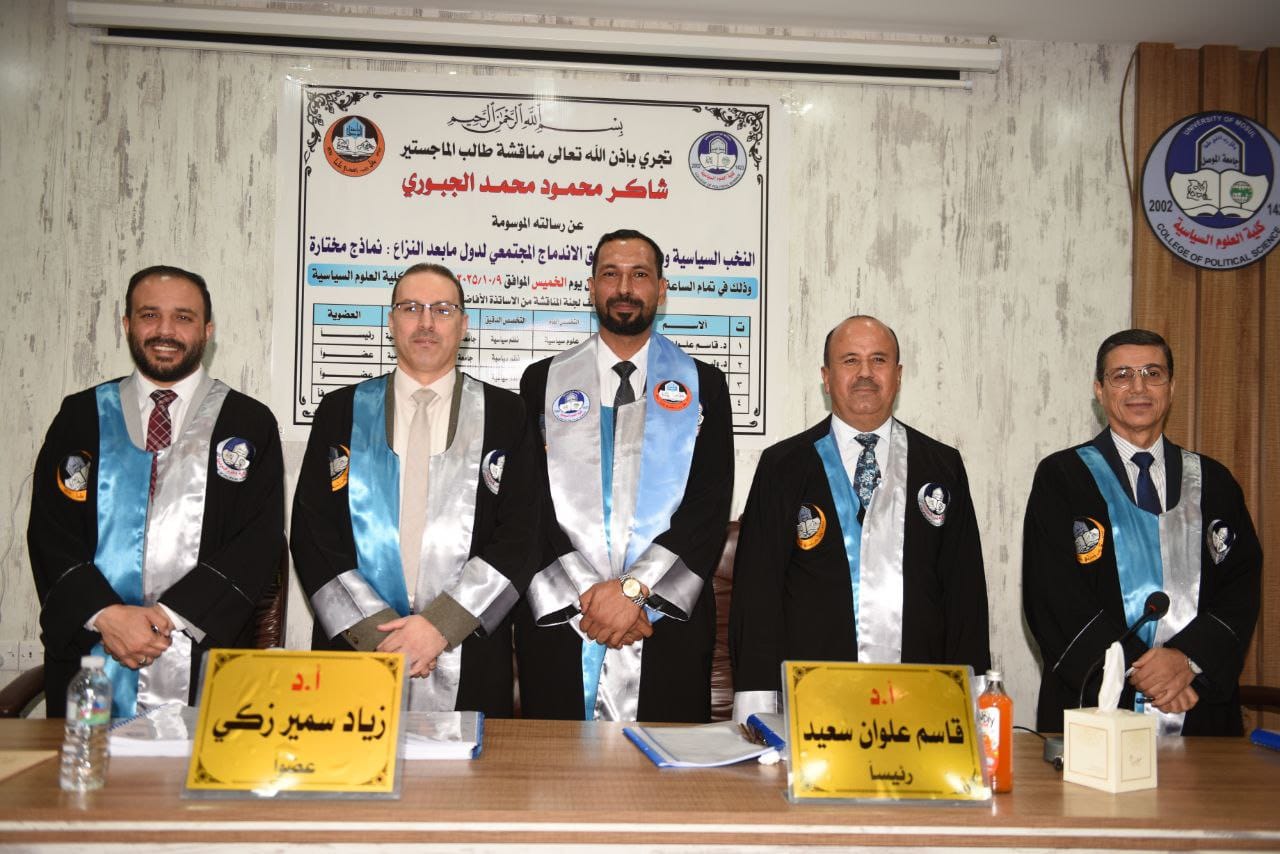
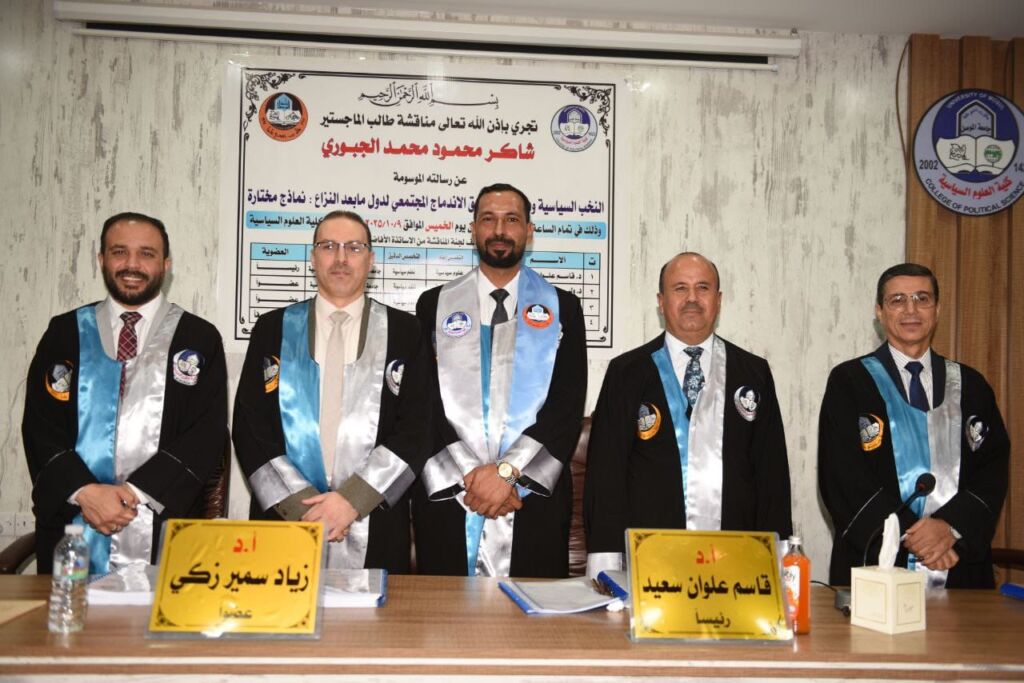
In line with the Sustainable Development Goals, Goal 4: Quality Education, a master’s thesis by the student Shakir Mahmoud Mohammed Al-Jubouri, titled “Political Elites and Their Role in Achieving Social Integration in Post-Conflict States: Selected Models,” was discussed at the College of Political Science, University of Mosul, on Thursday, 9 October 2025.
The thesis examined the pivotal role played by political elites in shaping and promoting the process of social integration in the post-conflict phase, focusing on three selected case studies: Colombia, Rwanda, and South Africa, across different historical periods.
It aimed to explore the extent to which political elites influence or hinder social integration through the policies and strategies they adopt, as well as to analyze the tools and mechanisms through which these elites contribute to either consolidating or weakening integration in these countries.
The study concluded that political elites, due to their status and sources of power, control decision-making processes and the direction of public policies, which makes them either an active factor in enhancing social integration or a cause of deepening divisions—depending on the strategies they adopt and the interests they seek to achieve.
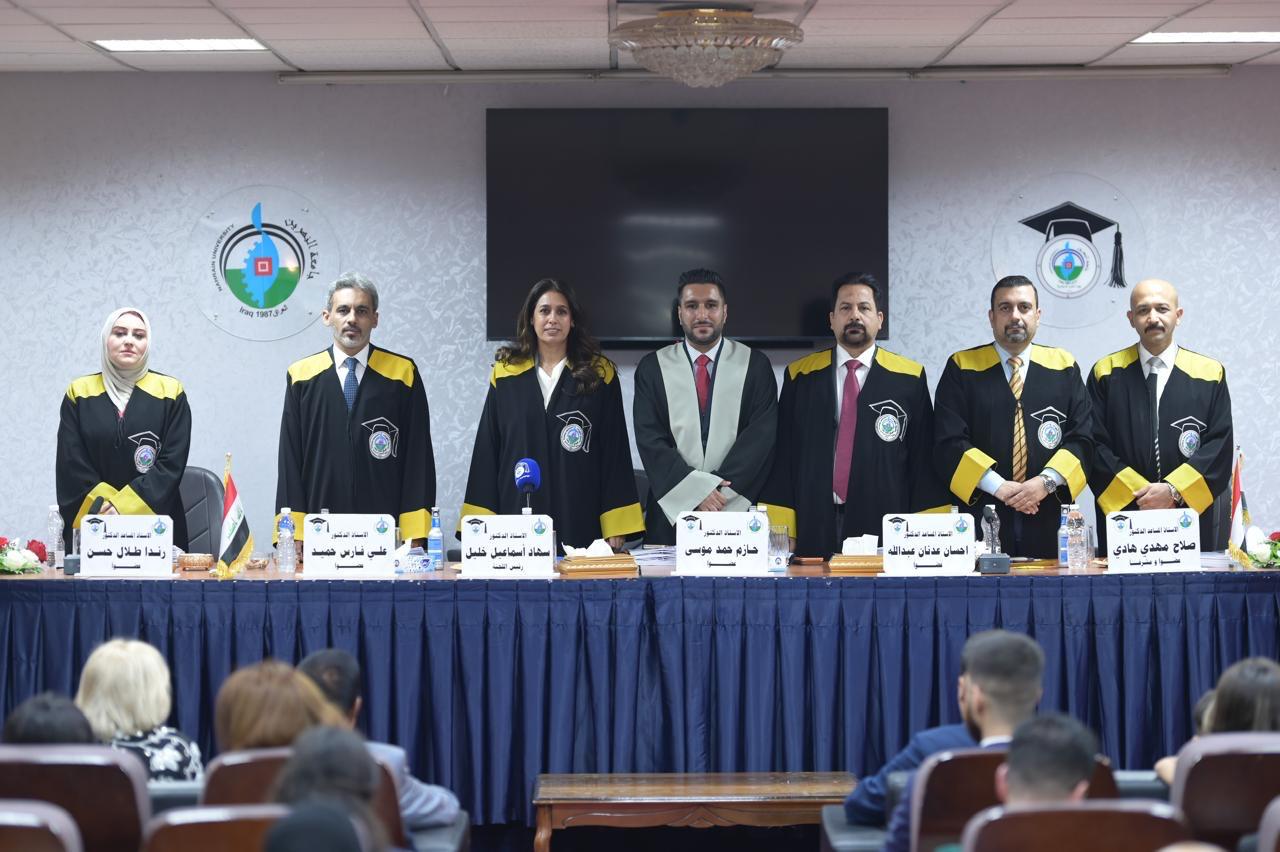
The examining committee consisted of Prof. Dr. Qasim Alwan Saeed (Chair), Asst. Prof. Dr. Waleed Salem Mohammed, Prof. Dr. Ziad Sameer Zaki, and Asst. Prof. Dr. Khairallah Subehan Al-Jubouri (Member and Supervisor).
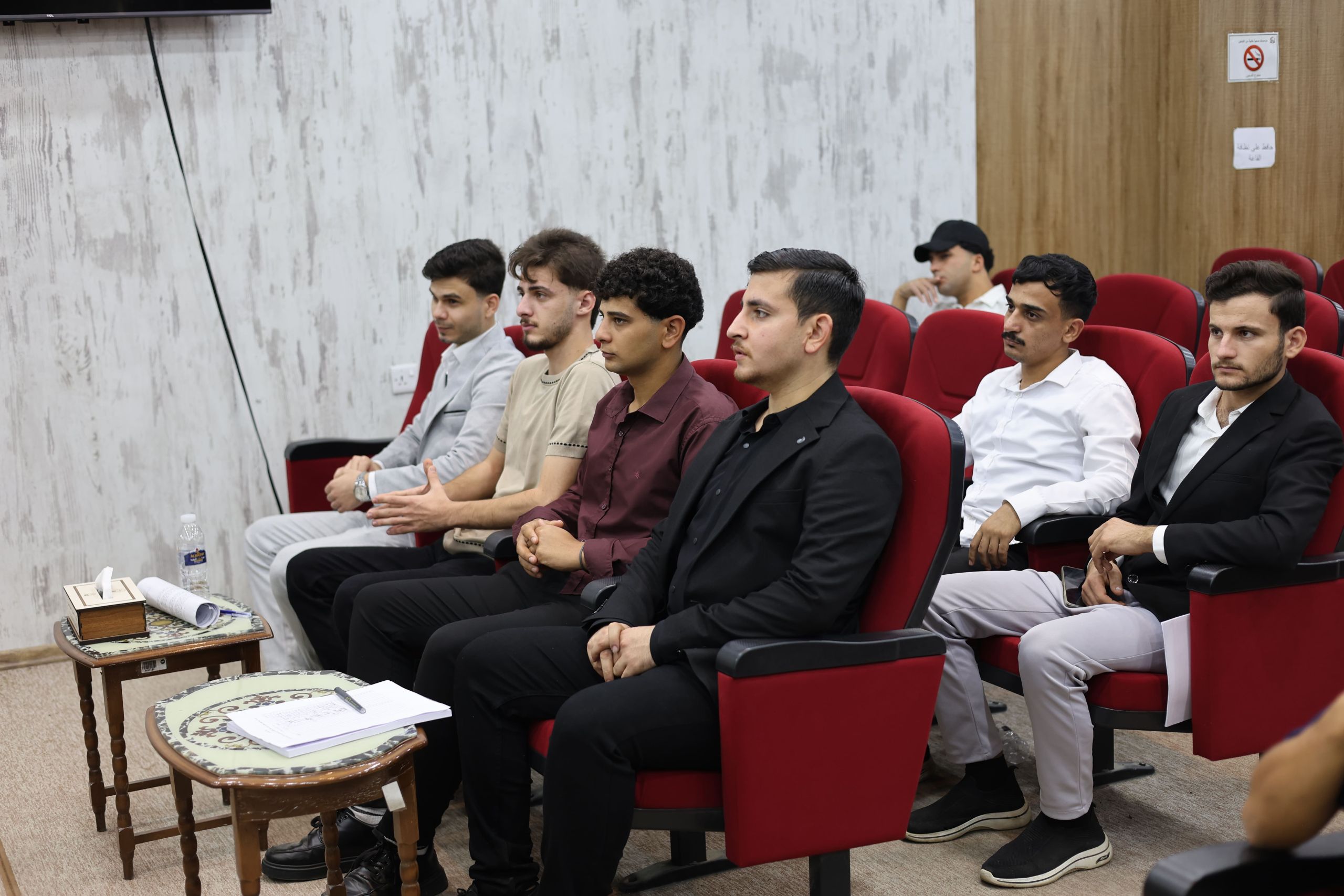
The session was attended by Asst. Prof. Dr. Ali Hussein Yassin, Administrative Assistant Dean, along with a number of faculty members and graduate students.
After the discussion, the committee announced its decision to accept the thesis, subject to the required revisions, and to grant the student the Master’s degree.
Previous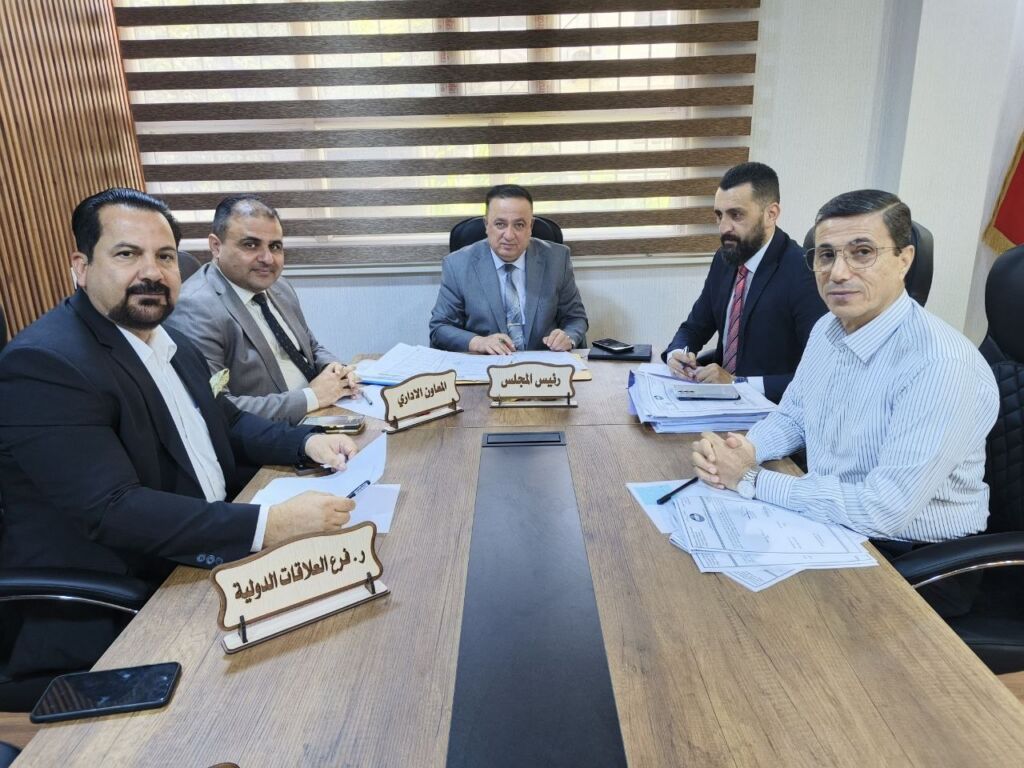 The Council of the College of Political Science at the University of Mosul Holds Its Third Session for the Academic Year 2025–2026
The Council of the College of Political Science at the University of Mosul Holds Its Third Session for the Academic Year 2025–2026Next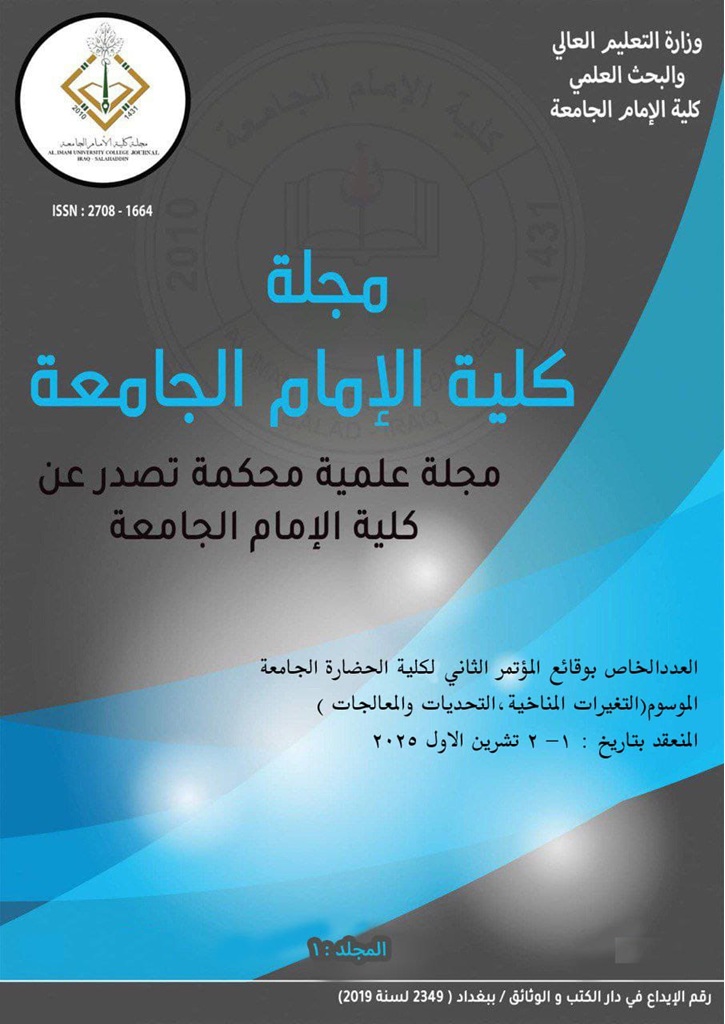 The Faculty of Political Science at the University of Mosul published scientific research by its academics—Professor Dr. Salem Mater Abdullah, Assistant Professor Dr. Younis Moeed Younis, and Assistant Lecturers Dalia Adel Sheet and Fanar Emad Khalil—in the special issue of the proceedings of the Second Annual Conference of Al-Hadara University. The Dean’s Office congratulates them
The Faculty of Political Science at the University of Mosul published scientific research by its academics—Professor Dr. Salem Mater Abdullah, Assistant Professor Dr. Younis Moeed Younis, and Assistant Lecturers Dalia Adel Sheet and Fanar Emad Khalil—in the special issue of the proceedings of the Second Annual Conference of Al-Hadara University. The Dean’s Office congratulates them