23 August، 2026
Discussion of a Master’s Thesis on Forensic Linguistics and Its Role in Criminal Evidence at the College of Law
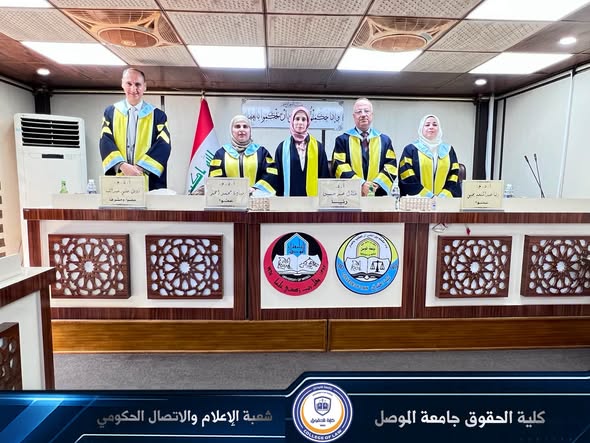
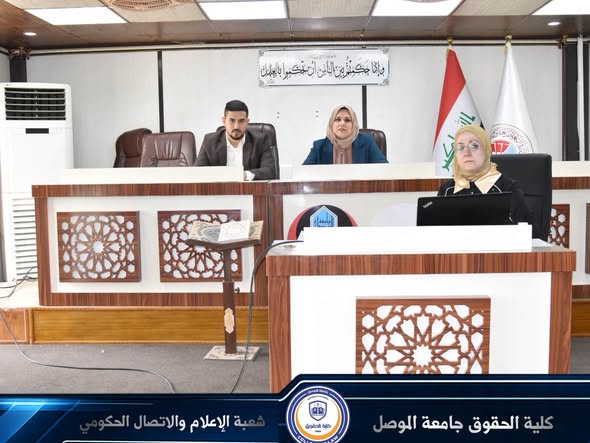
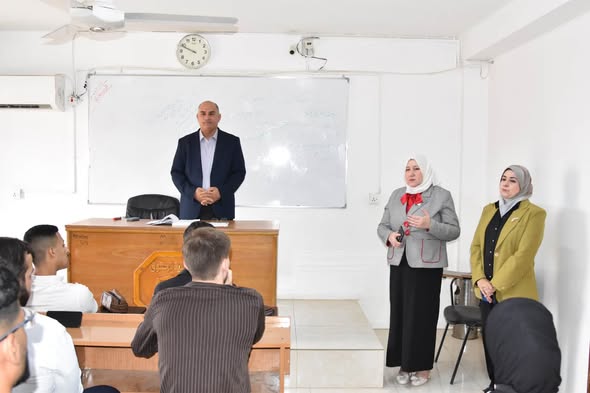
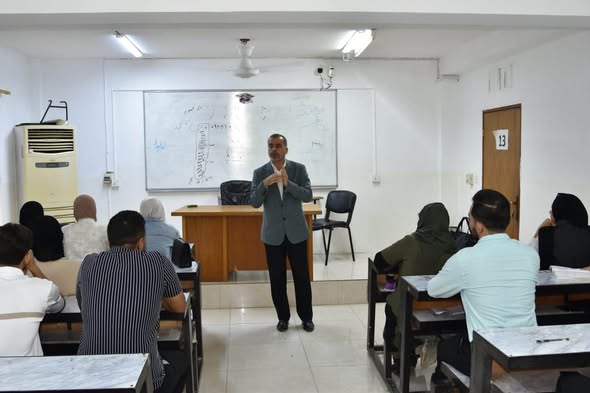
On Sunday, 23 August 2026, the College of Law at the University of Mosul witnessed the defense of the Master’s thesis entitled “Forensic Linguistics and Its Role in Criminal Evidence – A Comparative Study,” submitted by the student Umaima Abdul Rafi Jassim Al-Nu’aimi.
The thesis addressed the conceptual framework of forensic linguistics and the role of linguistic evidence in criminal proof, aiming to elucidate the legal value of linguistic analysis in crime detection. It adopted a comparative analytical methodology to examine the legal framework of linguistic evidence and its function throughout the stages of criminal proceedings, as well as the stance of Iraqi legislation and comparative legal systems regarding its evidentiary weight as a form of scientific evidence, in addition to clarifying the role of the linguistic expert in activating linguistic evidence.
The study further encompassed an applied dimension through the analysis of a selection of cases from the Nineveh Criminal Court, comprising both linguistic and non-linguistic crimes, and entailed the analysis of criminal discourses contained in arrest records, defendant statements, complainant affidavits, and witness testimonies, employing pragmatic and discourse-analytical approaches.
The study concluded that forensic linguistics constitutes a discipline that is ancient in practice yet contemporary in its theoretical framing, and that linguistic evidence possesses an increasingly significant probative value, particularly when corroborated by circumstantial, physical, or technical evidence. Moreover, the applied component of the study demonstrated the particular importance of forensic linguistics in cases wherein perpetrators resort to concealment and evasion tactics, and wherein circumstantial evidence and narratives are contradictory, and the probabilities of conviction and acquittal are closely balanced.
The thesis recommended the expedited adoption of legislative and judicial regulations to activate linguistic expertise, in keeping with the evolving means of committing crimes and the methods of denial, obfuscation, and linguistic concealment of truth, as well as the establishment of a specialized unit for linguistic analysis of criminal case files within criminal courts.
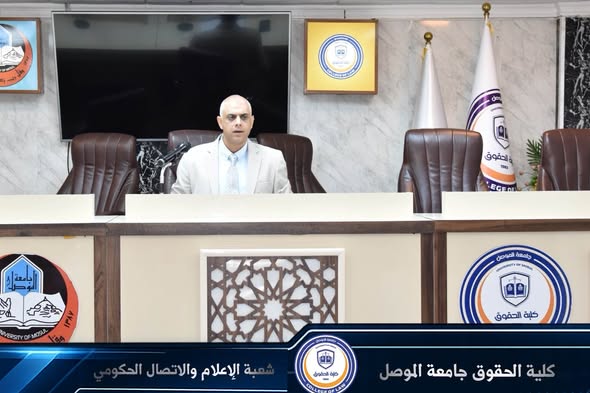
The examination committee was composed of Professor Dr. Talal Abdul Hussein as Chair, Assistant Professor Dr. Mayada Mohammed Ahmed as Member, Assistant Professor Dr. Rana Abdul Mun’im Yahya as Member, and Assistant Professor Dr. Nawfal Ali Abdullah Al-Safw as Member and Supervisor.



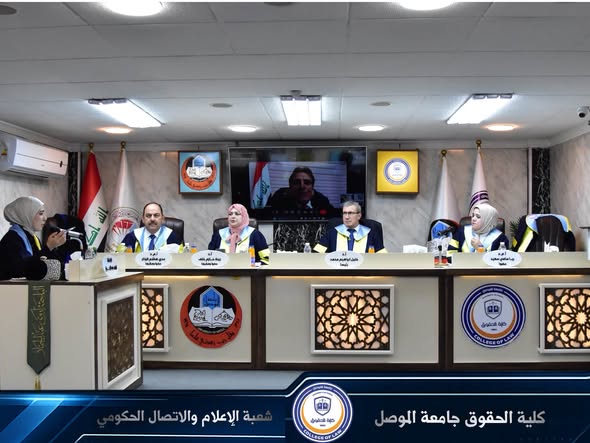 Master's Thesis Discussion on "Digital Residency for Foreign Entrepreneurs – A Comparative Study" Held at the College of Law, University of Mosul
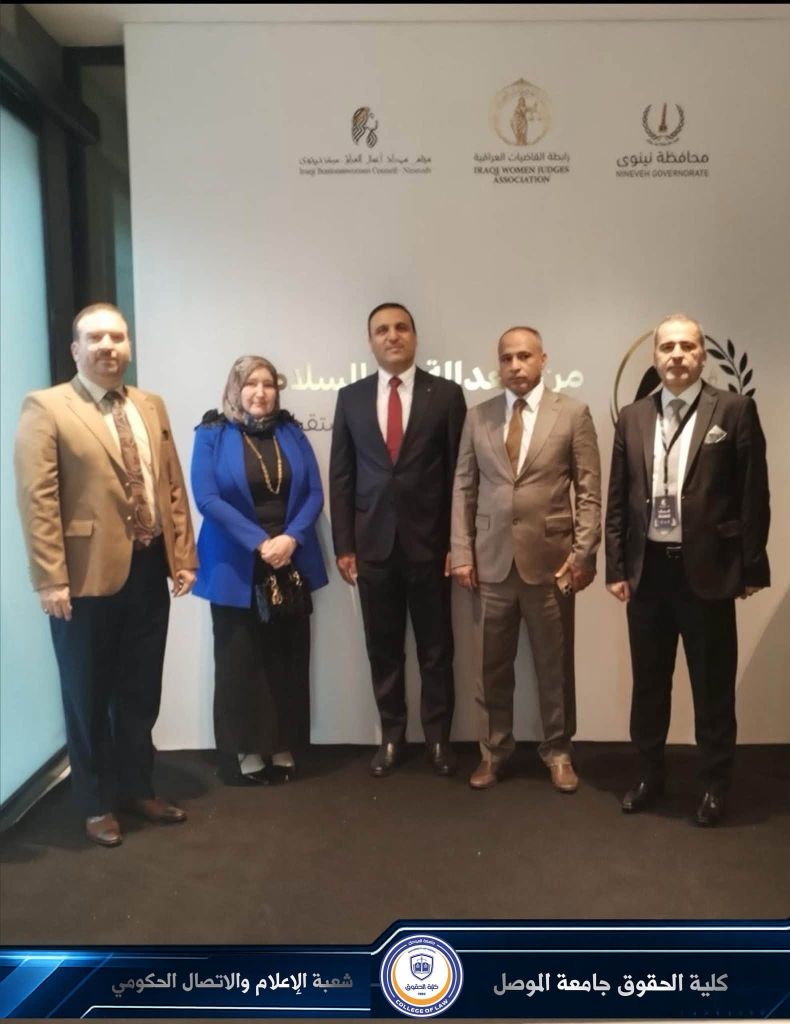 Active Academic Participation of the College of Law at the University of Mosul in the Conference "Justice Toward Peace" Addressing the Protection of Nineveh's Children