18 November، 2025
Workshop entitled ” plant biotechnology and its role in sustainable food security
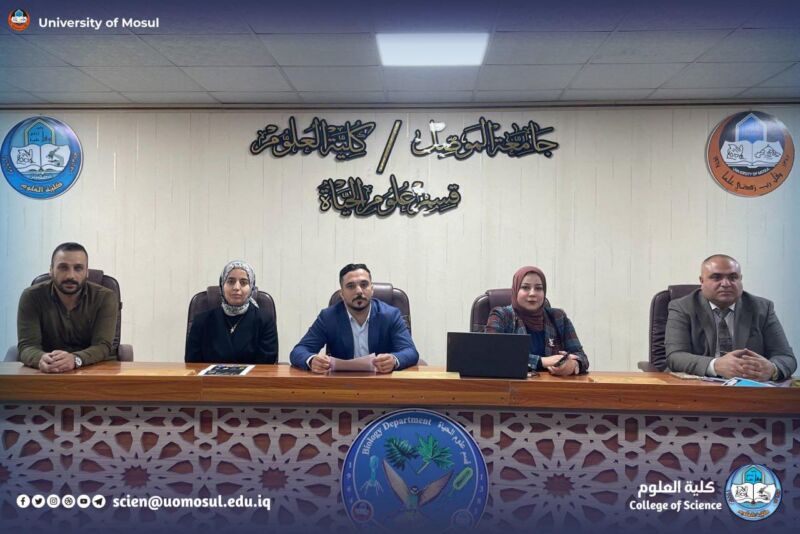
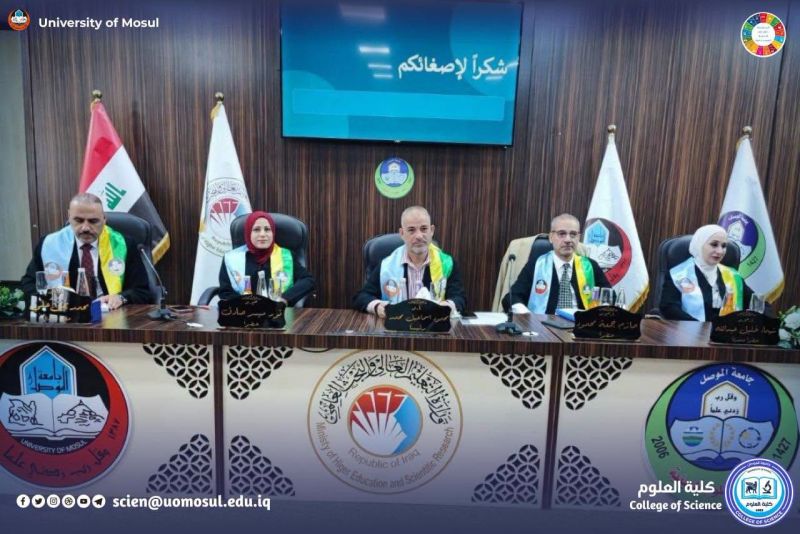
Under the patronage of the president of Mosul University, Prof. Dr. Wahid Mohammed Brahimi, and under the supervision of the dean of the College of Science, Prof. Dr. Hiyam Adel Ibrahim, and the follow-up of the head of the Department of Biology Sciences, Prof. Dr. Amjad Abdul Hadi Mohammed, the esteemed،
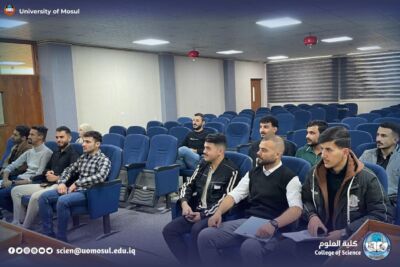
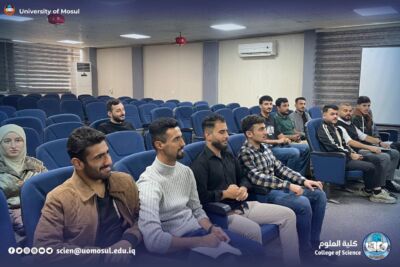
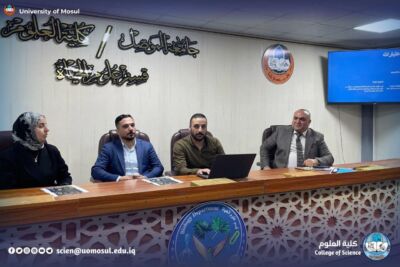
The Department of Biology Sciences / College of science, within the activities of the Continuing Education Unit, organized a workshop entitled “plant biotechnology and its role in sustainable food security” on Monday, November ٢٠٢٥.
The workshop was presented by:
Prof. Dr. Amjad Abdul Hadi Mohammed
Assistant Prof. Dr. Dr. Alaa Hussein Ali
Assistant L. Fadia Noureddine said
Assistant L. Ashraf Mohammad Hamid
Assistant L. Sarah Nizar Ghanem
Assistant L. Safwan Jassim Sultan
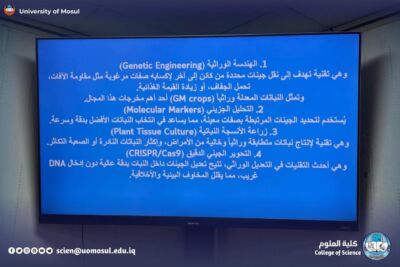
The workshop dealt with four main themes, which are as follows:
- Modern technologies in Plant Biotechnology
-Review of the principles of genetic engineering and its applications in improving the genetic qualities of plants.
-The use of plant tissue culture techniques and careful propagation to produce high-quality, disease-free plants.
-The use of molecular markers in the analysis of genes and the identification of desirable traits. - Improving crops to meet environmental challenges
-Development of plants resistant to drought, salinity and high temperatures.
-Production of varieties possessing natural resistance to pests and diseases with the aim of reducing the use of pesticides.
-The role of Biotechnology in supporting sustainable agriculture under changing climatic conditions. - Enhancing the nutritional value of crops (Biofortification)
-Introduction of genetic modifications to increase the content of vitamins and minerals in plants.
-Improve the quality of crops in terms of taste, health value and shelf life.
-The use of biotechnologies to raise the efficiency of absorption and nutritional utilization. - Biotechnology as a pillar of sustainable food security
-Increase agricultural productivity through the development of high-yielding varieties.
-Reduce losses in the food chain and improve agricultural efficiency.
-Ensuring the availability of food in the face of climate change and increasing demand.
We wish our best teachers and all those who are responsible for this event to be successful and give in the service of Science and the advancement of society.
Information and Government Communication Division
Tuesday, November 18, 2025