19 July، 2026
Master thesis at the Faculty of Science discusses the efficiency of Microbiology in the biodegradation of plastic waste
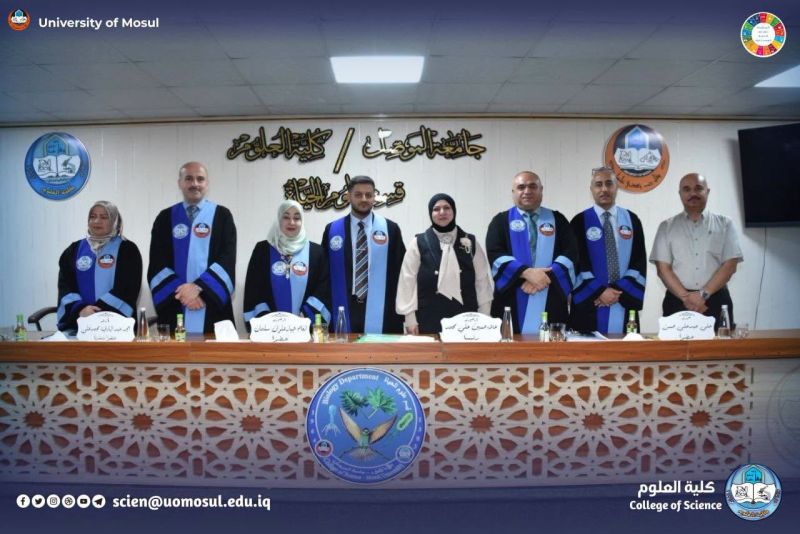
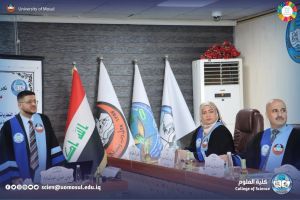
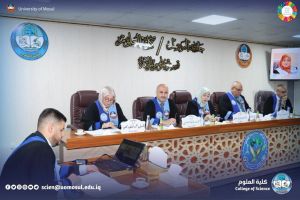
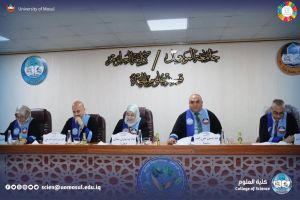
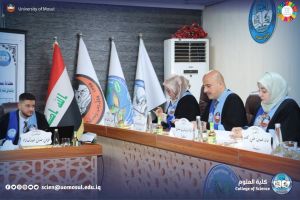
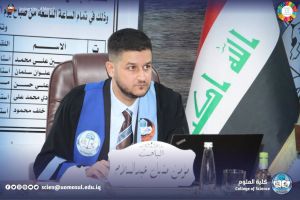
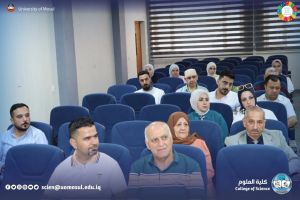
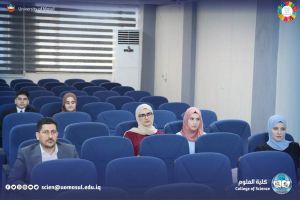
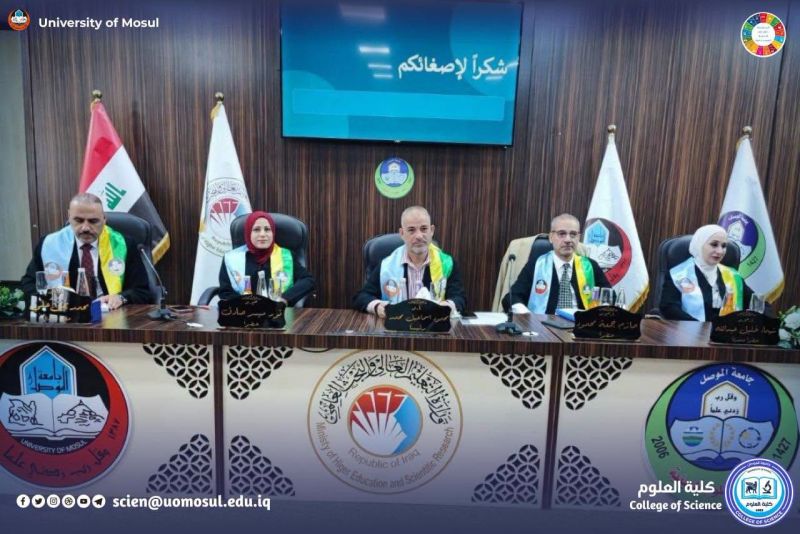
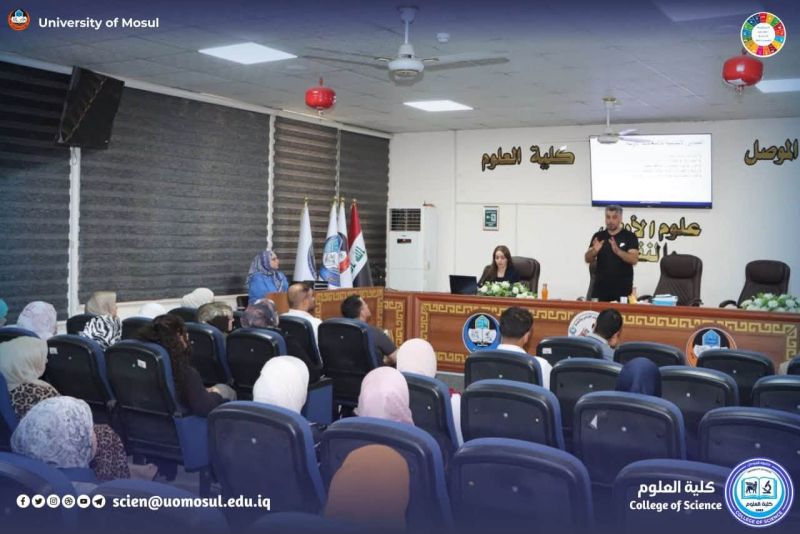
The Department of life sciences at the Faculty of Science discussed, on Sunday, July 19, 2026, the master’s thesis tagged ” the efficiency of some fungi isolated from various sources in the biodegradation of some industrial waste”, presented by master’s student Mo’men Manhal Abdel Salam, majoring in Botany. The aim of the letter was to isolate fungi and bacteria from the soil of plastic-contaminated areas within the city of Mosul and diagnose them visually, microscopically and molecularly, as well as to estimate the concentrations of some ions, evaluate the efficiency of some fungal and bacterial isolates in the biodegradation of polyethylene in the laboratory, and verify the changes resulting from the decomposition process using infrared spectroscopy (FTIR) and scanning electron microscope (SEM). The study was able to register six fungal strains and three bacterial strains for the first time in the database of the National Center for Biotechnology Information (NCBI), representing a scientific addition in the field of documentation and diagnosis of locally isolated microbiota. The results showed the superiority of g mushrooms. silvicola in the analysis of polyethylene within the soil experiment, while the fungus Aspergillus niger showed higher efficiency in liquid cultures. At the bacterial level, Bacillus halotolerans has surpassed Bacillus subtilis in its ability to decompose polyethylene. The results of the analysis using FTIR technology confirmed the efficiency of fungi in the process of biodegradation of low-density polyethylene, Aspergillus niger mushrooms stood out in liquid cultures and g mushrooms. silvicola in the soil is determined by the recorded changes in peaks and functional aggregates. Bacteria Bacillus halotolerans have also shown the ability to decompose polyethylene and use it as a carbon source for growth. The scanning electron microscope (SEM) images revealed obvious structural changes on the surfaces of the treated polyethylene tapes, represented by clicking, roughness, the appearance of pits, grooves and microbial colonization compared to the control sample, and the fungus Aspergillus niger was the most effective in colonizing polyethylene tapes and causing changes in their surfaces. The importance of the study highlights the possibility of benefiting from some local fungi and bacteria in the development of biological methods to treat plastic waste and reduce its environmental impact, thus supporting the trend towards sustainable and environmentally friendly solutions. The discussion Committee was chaired by Assistant Professor Dr. Alaa Hussein Ali, with the membership of assistant professor Dr. Angham Jabbar Alwan and teacher Dr. Ali Abdul Ali, and under the supervision and membership of Prof. Dr. Amjad Abdul Hadi Mohammed and Prof. Dr. Hadeel Ahmed Khalaf Mahmoud. We wish our dear students continued success and success. Government information and Communication Division Sunday, July 19, 2026