20 July، 2026
A master’s thesis at the Faculty of Science discusses the levels of radioactivity at oil field sites in Nineveh Governorate
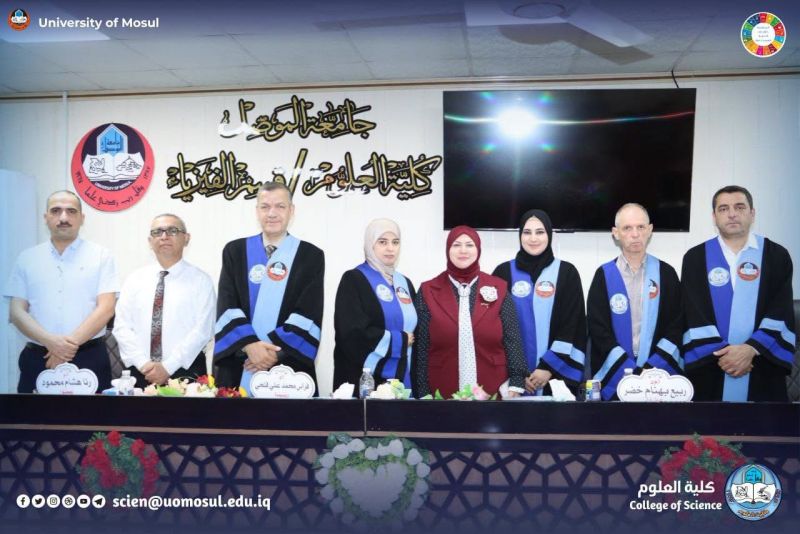
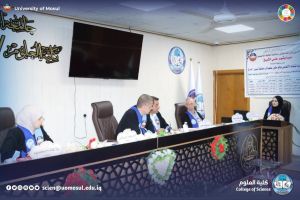
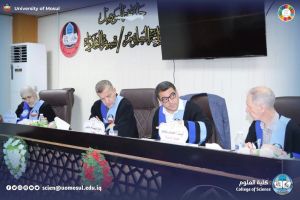
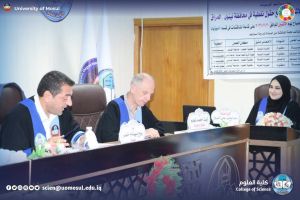
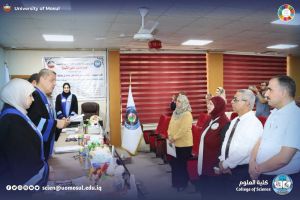
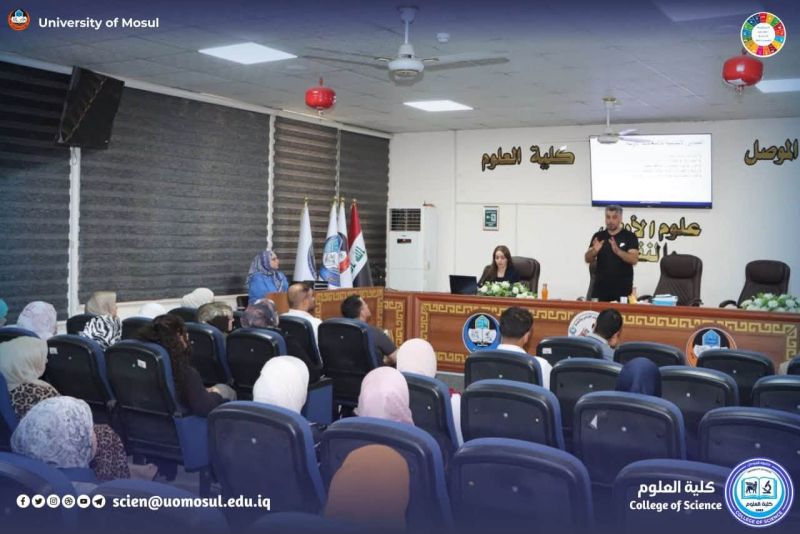
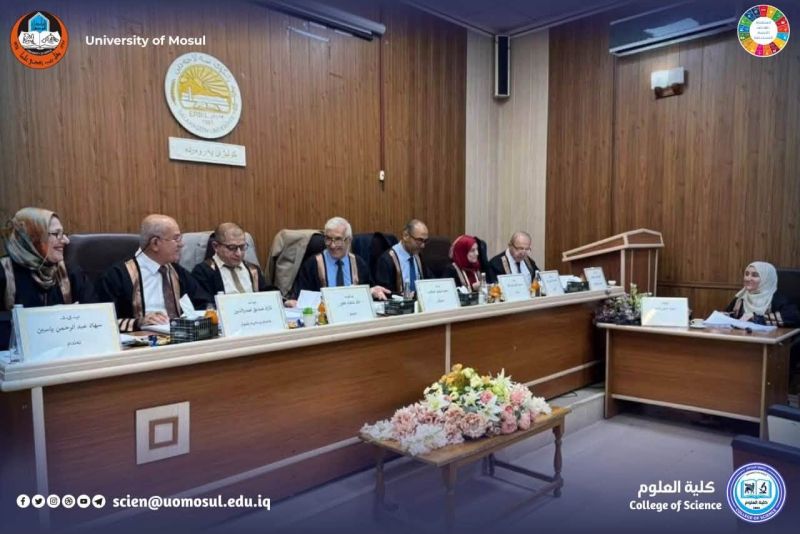
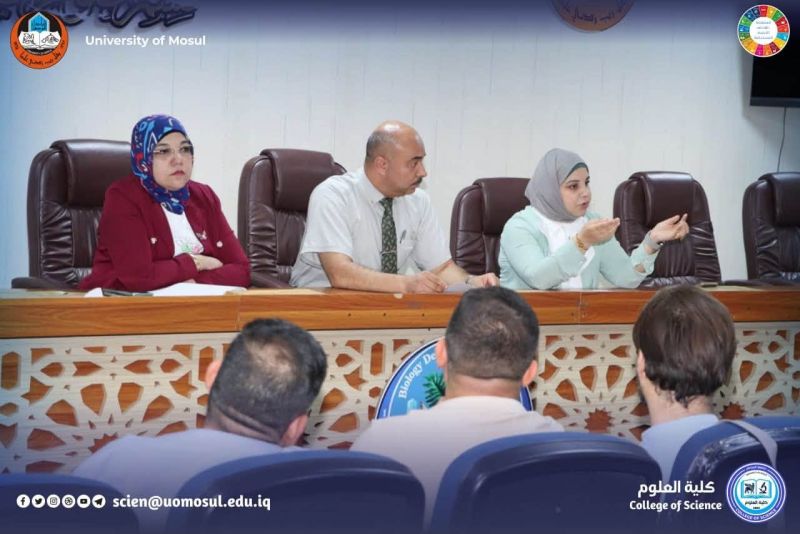
On Monday, July 20, 2026, the Department of physics at the Faculty of science at the University of Mosul discussed the master’s thesis tagged ” determining the levels of radioactivity of oil field sites in Nineveh Province, Iraq ” presented by master’s student Saba Bashir Ali. The aim of the letter was to measure and analyze a number of radioactive variables in soil samples collected from a number of oil fields in Nineveh governorate, including Ain Zala, Qayyarah and kaskak fields, in order to assess the levels of radioactivity of natural radioactive elements associated with oil field soils. The study included measuring the concentrations of uranium and active radium, determining the activity of radon gas and its concentrations in samples and air, as well as calculating its surface and mass emission rates. The study adopted the closed Cylinder Technique using CR-39 solid nuclear trace reagents, where the reagents were displayed for 61 days after achieving radiation equilibrium inside the closed containers, and then the necessary analyzes and calculations were carried out to determine the studied radiation variables. The results showed that the uranium concentrations ranged from (0.941-4.184 ppm), while the effective radium concentrations ranged from (1.169–5.197 Bq·kg−1). The concentration of radon in the samples also ranged between (1.356×10⁴-6.032×10⁴ Bq·m−3), and in the air between (0.7107×10³-3.1567×10³ Bq·m−3), while the activity of radon ranged between (0.292–1.297 Bq). The results showed that the mass radon emission rates ranged from (0.350−1.557 Bq·kg−1·day–1), while the surface emission rates ranged from (21.056−93.610 Bq·m−2·day-1). Statistical analyzes also revealed the presence of positive and strong correlation relationships between the studied variables, which indicates a clear correlation between the radioactive content of the soil and various radon variables. The results of the cluster analysis and the correlation matrix showed the presence of homogeneity and correlation between the radiation variables, with higher levels recorded in some samples compared to others. The study explained, by comparing the results with previous studies, that the recorded values fall within the reported global ranges of oil soils and environments with natural radioactivity, which supports the possibility of using the results of the study in assessing the radioactive properties of oil fields soils in Nineveh Governorate. The discussion Committee was chaired by Dr. Firas Muhammad Ali, with the membership of assistant professor Dr. Rabie bahnam Khader, assistant professor Dr. Rana Hisham Mahmoud, and under the supervision and membership of Professor Dr. Laith Ahmed Najm. We wish our dear students continued success and success. Government information and Communication Division Monday, July 20, 2026