27 July، 2026
Master thesis on modeling the cluster decay pattern of heavy nuclei
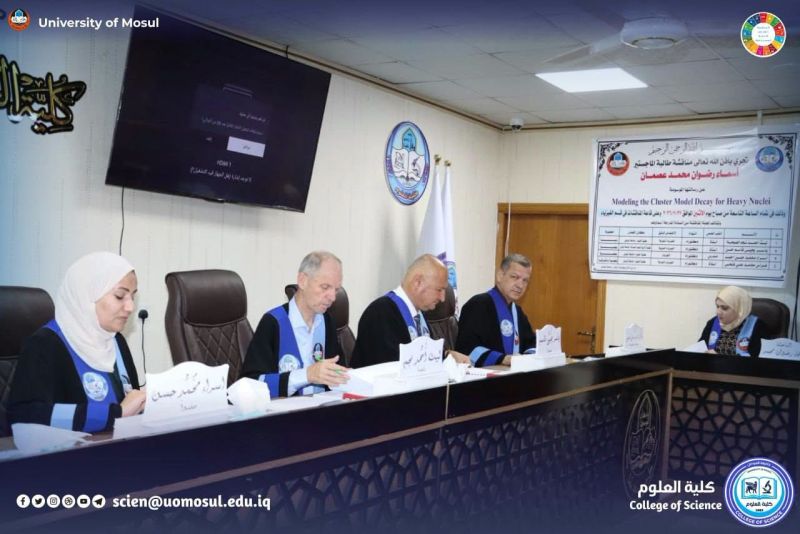
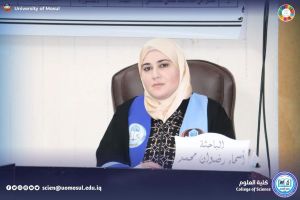
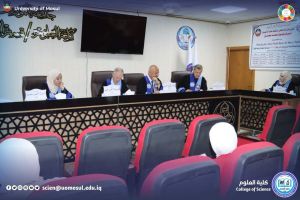
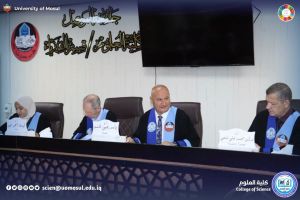
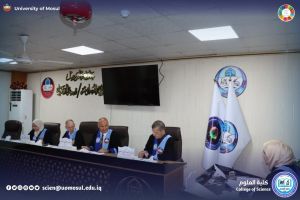
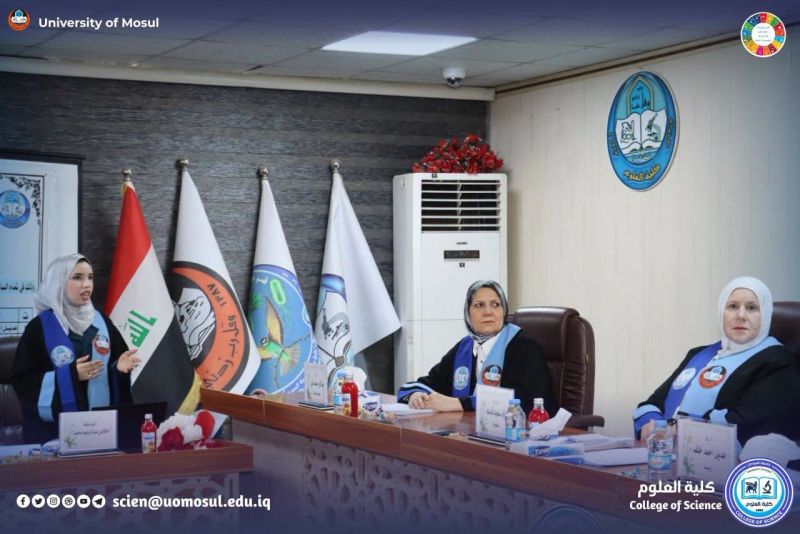
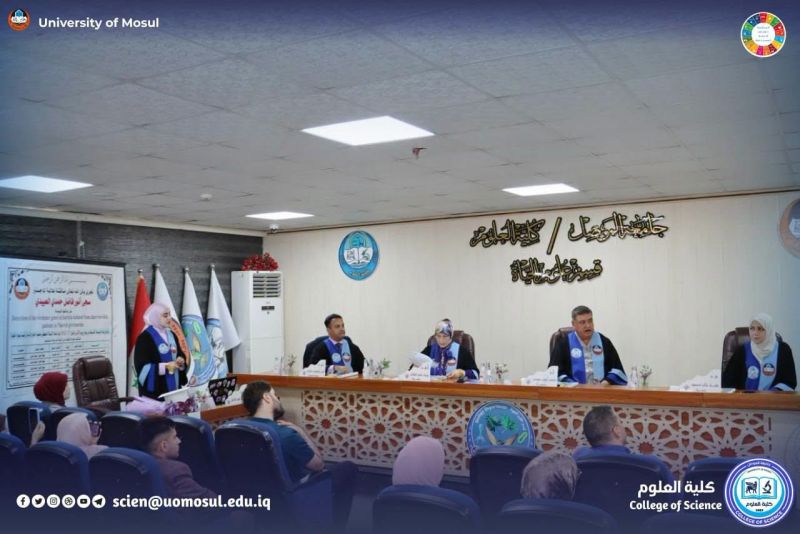
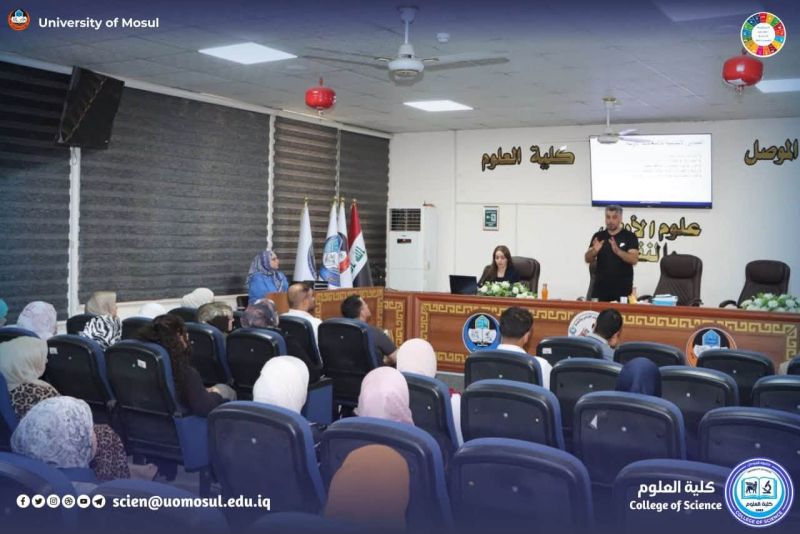
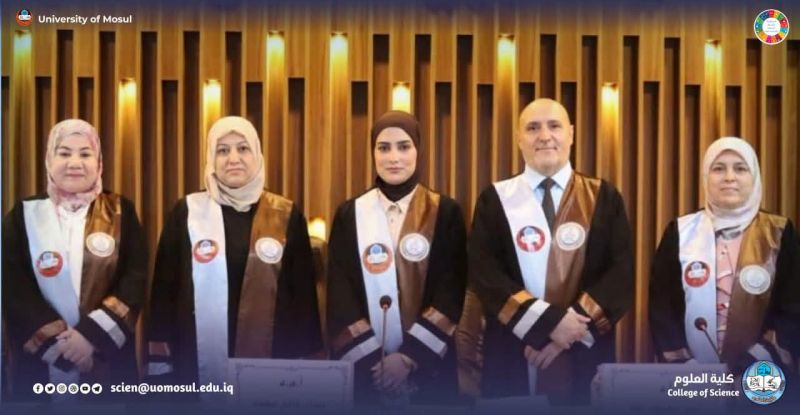
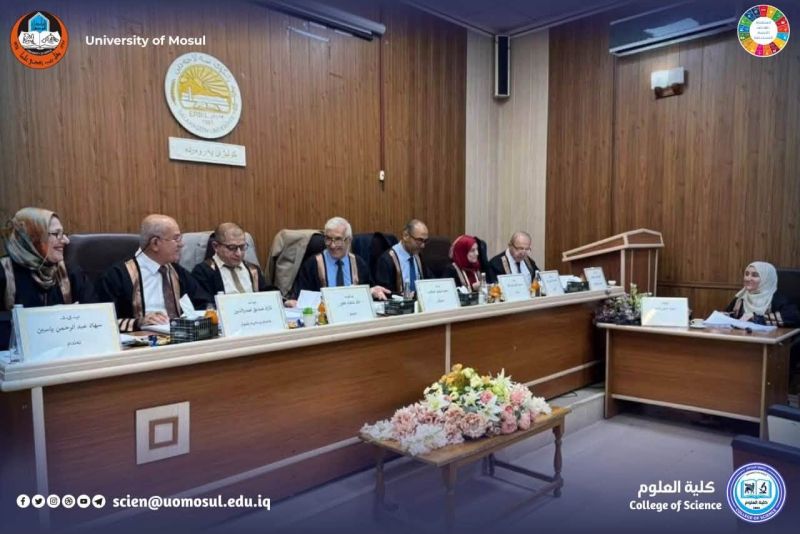
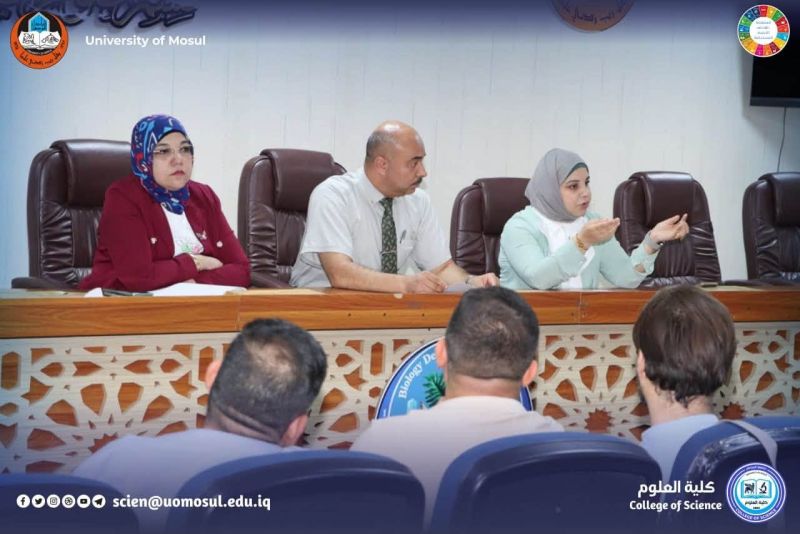
On Monday, July 27, 2026, the Department of physics at the Faculty of science at the University of Mosul discussed the master’s thesis entitled ” modeling the pattern of cluster decay of heavy nuclei ” presented by master’s student Asma Radwan Mohammed. The discussion was attended by a number of physics department teachers and graduate students. The thesis aimed to study cluster decay as one of the rare modes of radioactive decay, because of its importance in understanding the nuclear structure and stability mechanisms in heavy nuclei, by calculating the log of half-lives and analyzing the effect of cluster decay energy (Qc) in the probability of decay, as well as evaluating the efficiency of a number of theoretical and semi-experimental models used to predict the characteristics of this type of Decay. The study was based on nine different models, including semi-experimental models and others with a physical basis, in order to compare their results with experimental data and improve the accuracy of predicting half-lives. The results showed a significant improvement in the performance of semi-experimental models after re-fitting their coefficients, while physical models, in particular DFM, CPPM and GTM, achieved higher compatibility with experimental results, confirming their efficiency in characterizing cluster decay of heavy nuclei. The study also showed that there is a clear inverse relationship between cluster decay energy (Qc) and half-life, as a high decay energy leads to an increase in the probability of tunnel penetration of the Colombian barrier and a decrease in Half-Life. The results also showed that the DFM model is one of the most accurate models in linking theoretical calculations with the structural properties of the nucleus, as well as the success of the study in recording the emission trajectories of the carbon-14C cluster from the radioactive source 226Ra using the CR-39 detector, which opens up new horizons for the development of future studies in the field of cluster decay and nuclear physics. The discussion Committee was chaired by Prof. Dr. Laith Ahmed Najm, and the membership of Prof. Dr. Yasser Yahya Qasem, and the teacher Dr. Israa Mohammed Hassan, while Prof. Dr. Firas Mohammed Ali supervised the thesis and participated as a member of the discussion Committee. At the end of the discussion, the committee praised the scientific level of the thesis, stressing the importance of its results in the field of Nuclear Physics, for its contribution to the development of theoretical models of cluster decay and enhancing understanding of the properties of heavy nuclei, wishing the researcher continued success in her scientific career. Government information and Communication Division
Monday, July 27, 2026