8 September، 2026
Master thesis discusses the comparison of smears, puncture and tissue biopsies for microbiological diagnosis of soft tissue injuries
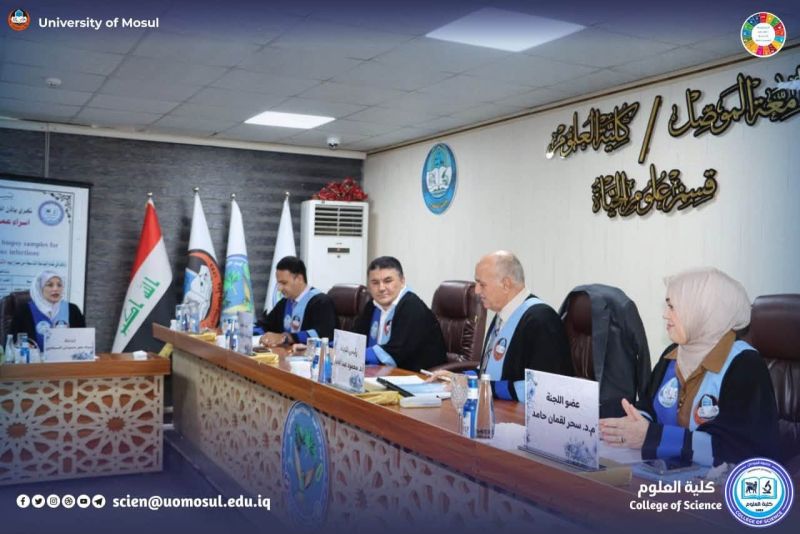
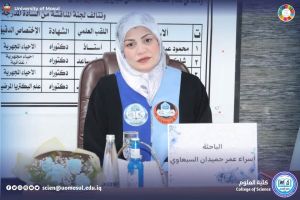
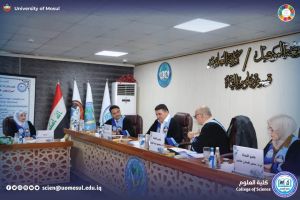
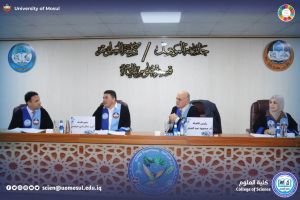
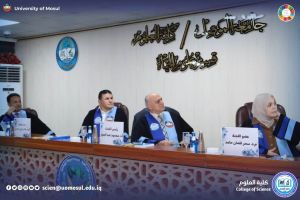
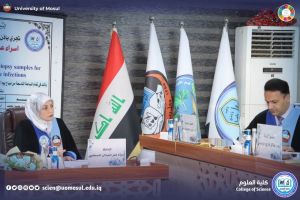
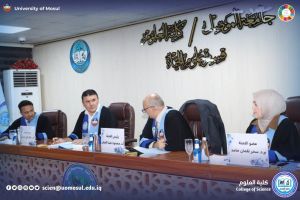
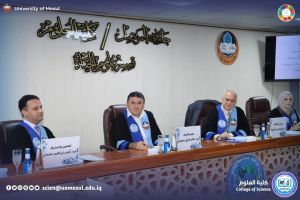
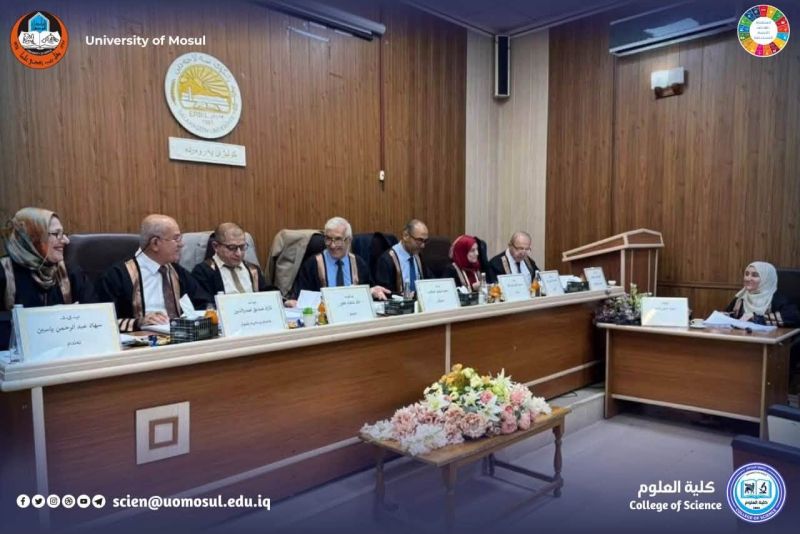
The Department of life sciences at the Faculty of Science – University of Mosul, on Monday, September 7, 2026, discussed the tagged master‘s thesis: “Comparison of swabs, aspirate and biopsy samples for diagnosing bacterial soft tissue infections” Which was presented by researcher Esraa Omar Humaidan. The study aimed at isolating and diagnosing a number of pathogenic bacterial species associated with soft tissue injuries, in particular isolates with high antibiotic resistance, as well as studying their ability to produce protease enzyme and biofilm formation, molecular investigation of some virulence genes, besides recording bacterial isolates in the NCBI database, analyzing the evolutionary relationships of Aeromonas caviae bacteria and studying their components using GC-MS technology. The study was conducted on 210 clinical samples, 70 samples for each of swabs, puncture and tissue biopsies, collected from Al-Salam educational and Republican educational hospitals in Mosul for the period from October 1, 2025 to February 1, 2026. The results showed that 98 positive samples were obtained against 112 negative samples, and the highest percentage of positive samples was in smears with 50 samples, followed by puncture samples with 25 samples, then tissue biopsies with 23 samples. The most prominent bacterial isolates studied included Aeromonas caviae, Proteus mirabilis, enterococcus faecalis and enterococcus lactis, as they showed different patterns of antibiotic resistance, while Aeromonas caviae was sensitive to the antibiotic Imipenem only, with an inhibition diameter of 28 mm. The study also recorded four isolates for the first time in the NCBI database, namely: Proteus mirabilis (PX828471), Enterococcus lactis (PX828491), Aeromonas caviae (PX828494), and enterococcus faecalis (PX828493). The results of molecular analysis showed the presence of a number of virulence and resistance genes, Aeromonas caviae carried the AST, Walt, Teta and qnra genes, while Proteus mirabilis showed the presence of the mrpA gene, while isolates of Enterococcus faecalis and enterococcus lactis showed the presence of the agg and Wesp genes. With regard to the formation of biofilms, the results showed a difference between bacterial species, Aeromonas caviae and Proteus mirabilis were unable to form biofilms, while Enterococcus lactis showed a weak ability, while Enterococcus faecalis showed an average ability to form them. The results also demonstrated the ability of Aeromonas caviae to produce the protease enzyme. An evolutionary analysis using the MEGA 11 program showed a strong genetic affinity between Aeromonas caviae bacteria and the AC strain (PV225293.1), while the GC-MS analysis revealed the presence of 40 compounds in the studied isolation,most notably diethyl phthalate, pentadecanoic acid, 9, 12-octadecadienoic acid (Z, Z) and 9-octadecenoic acid and carbonic acid, reflecting their metabolic diversity. The discussion Committee was chaired by Dr. Mahmoud Abdul Jabbar Hussein Mohammed, the membership of assistant professor Dr. Shaker Ghazi jerjis Hussein and teacher Dr. Sahar Luqman Hamid Ali, and the membership and supervision of assistant professor Dr. OS Ibrahim Suleiman Nader. This study comes within the framework of the efforts of the Department of Life Sciences in promoting applied research in the field of microbiology, microbiological diagnostics, bacterial resistance, and the study of factors associated with the virulence of pathogenic bacteria. Our wishes to the researcher and to all graduate students and teachers of our college for success and scientific excellence
. Government information and Communication Division
Tuesday, September 8, 2026