27 January، 2026
A workshop entitled “Bacteria in the Environment and Their Role in Recycling Materials”
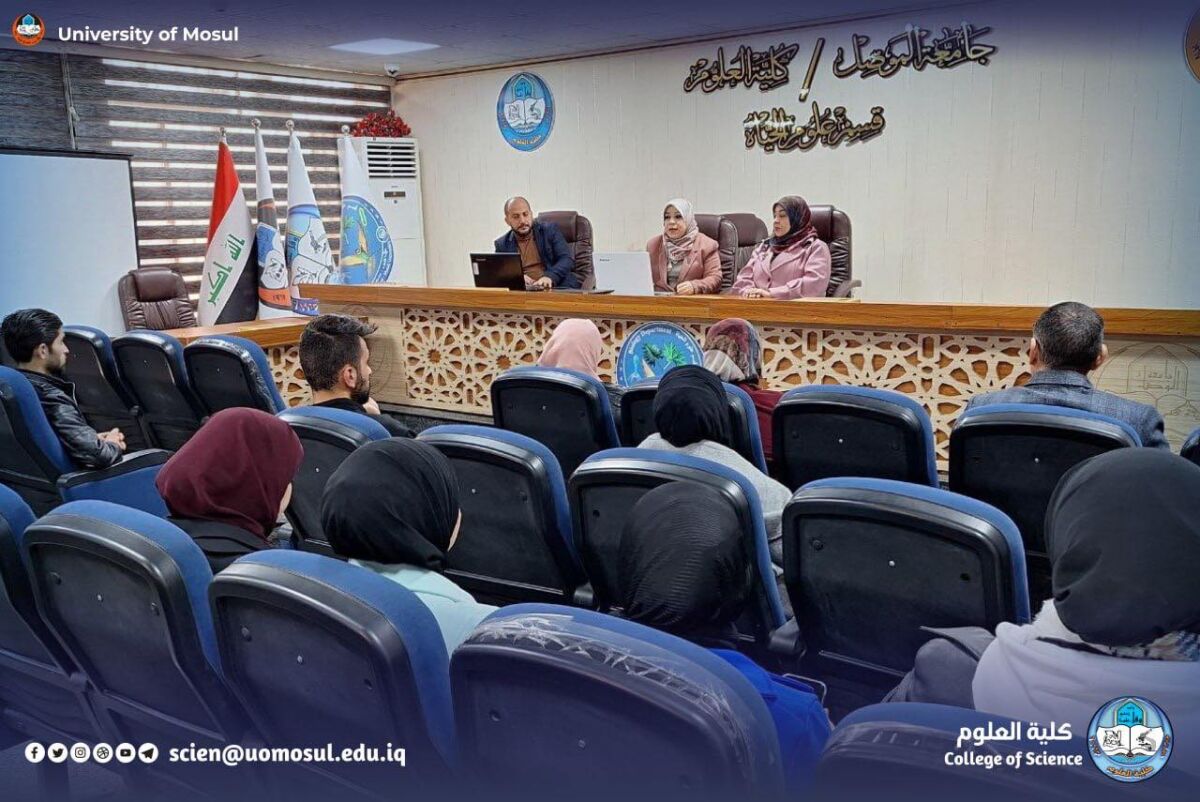
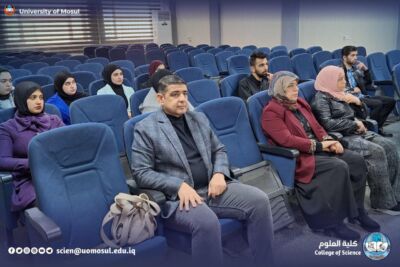
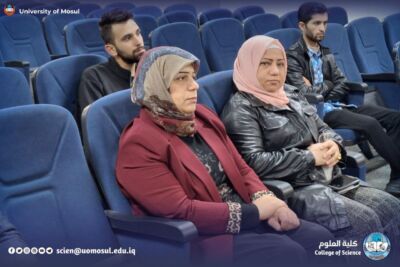
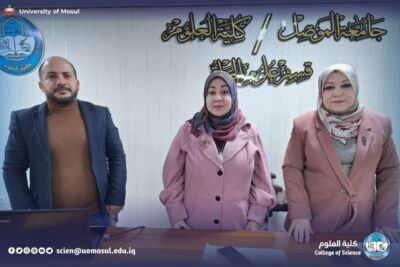
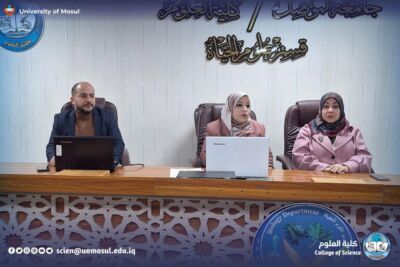
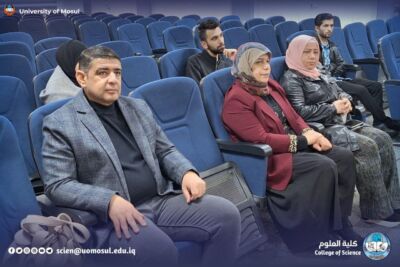
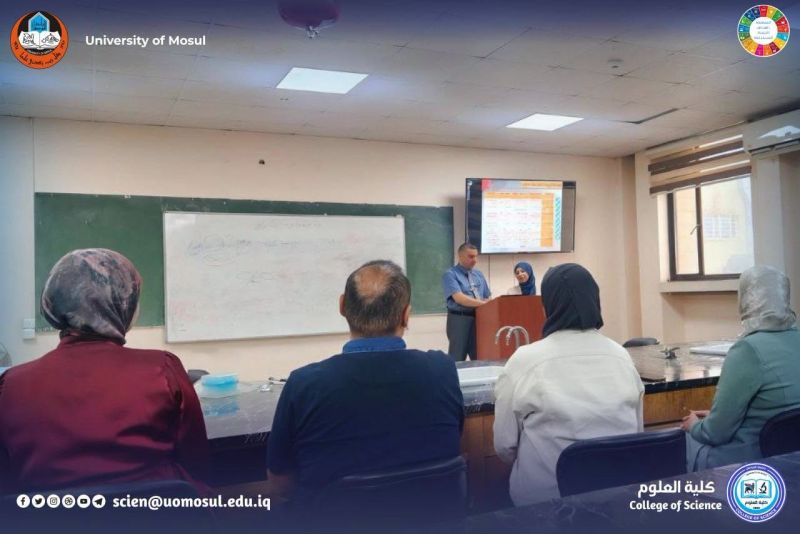
Under the patronage of the President of the University of Mosul, Professor Dr. Waheed Mahmoud Al-Ibrahimi, and under the supervision of the Dean of the College of Science, Professor Dr. Hiyam Adel Ibrahim, the Department of Biology Sciences at the College of Science held a workshop entitled “Bacteria in the Environment and Their Role in Recycling Materials.” The workshop took place on Tuesday morning, January 27, 2026, in the Dr. Mahmoud Al-Hajj Qasim Hall, and was attended by the Head of the Department of Biology Sciences, Professor Dr. Amjad Abdul-Hadi, the Department Coordinator, Assistant Professor Dr. Alaa Hussein Al-Jubouri, and a number of college members and students.
The workshop included four scientific sessions. The first session, presented by Assistant Professor Hanan Sami Nouri, provided a scientific introduction to the importance of bacteria and their vital role in biogeochemical cycles, particularly their role in recycling carbon, nitrogen, and phosphorus, thus ensuring the sustainability of ecosystems.
The second session, presented by Assistant Professor Dr. Ingham Jabbar Alwan, reviewed the types of materials that bacteria recycle in the environment and their role in the bioremediation of organic and inorganic pollutants, such as petroleum hydrocarbons and heavy metals.
The third session, presented by Assistant Professor Najla Abdullah Fathi, addressed the impact of various environmental factors on bacterial activity efficiency and the role of bacterial diversity and biotic interactions in the stability of ecosystems.
The fourth session, presented by Lecturer Dr. Mohammed Abdul Ghani Mohammed, discussed the role of bacteria in nutrient cycling, emphasizing their importance in reusing natural resources and promoting environmental sustainability and climate balance.
At the conclusion of the workshop, participants issued several recommendations, most notably the promotion of scientific research in microecology, the application of bacterial technologies in the remediation of polluted environments, and the dissemination of academic and public awareness regarding the important environmental role of bacteria, moving beyond their limited focus on pathogenicity.
Media and Government Communication Division
Tuesday, January 27, 2026