23 February، 2026
Workshop at the College of Science Discusses “Violence Against Women: A Societal Issue, Not an Individual One”
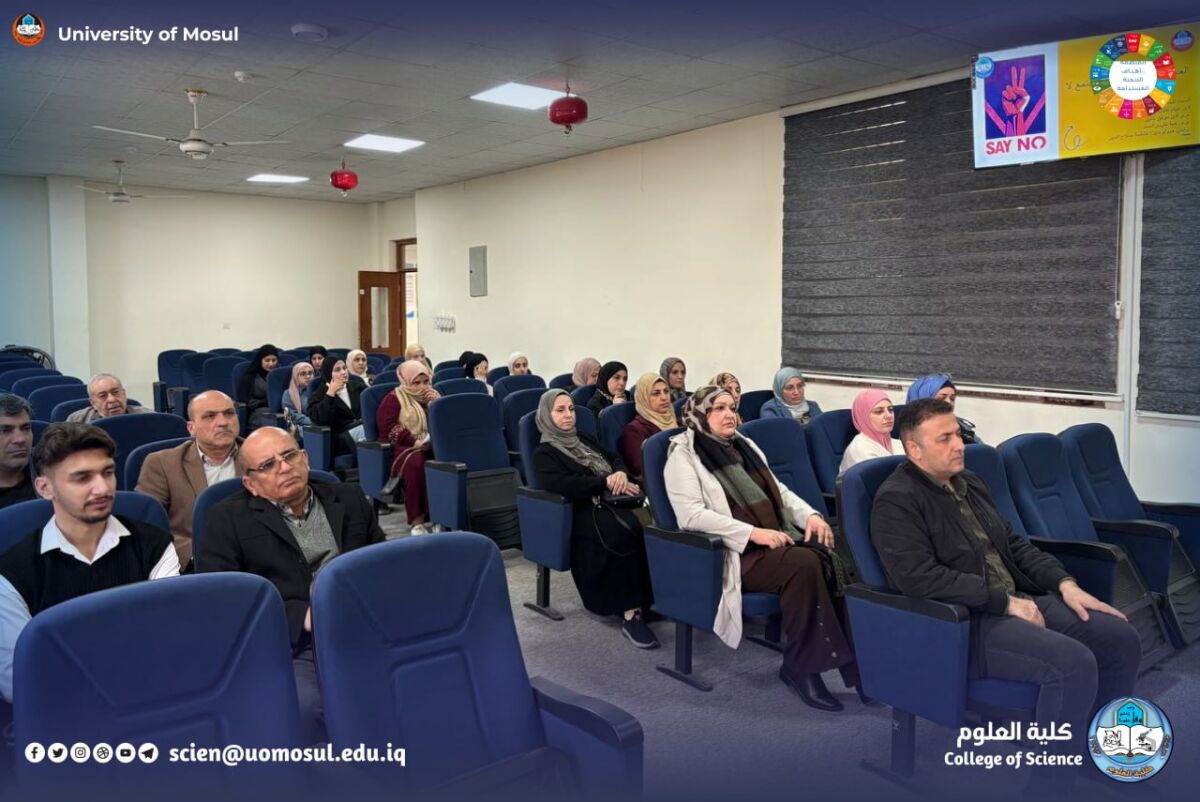
Under the patronage of the President of the University of Mosul, Professor Dr. Wahid Mahmoud Al-Ibrahimi, and under the supervision of the Dean of the College of Science, Professor Dr. Hiyam Adel Ibrahim, the Women’s Affairs Committee at the College of Science, in cooperation with the Department of Studies and Planning / Sustainable Development Unit and the Women’s Affairs Unit at the University Presidency, organized a workshop entitled:
“Violence Against Women: A Societal Issue, Not an Individual One”
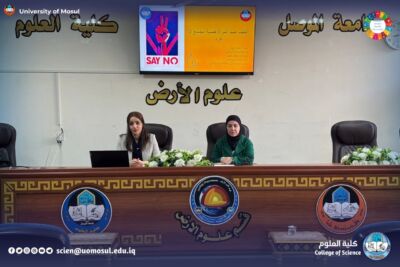
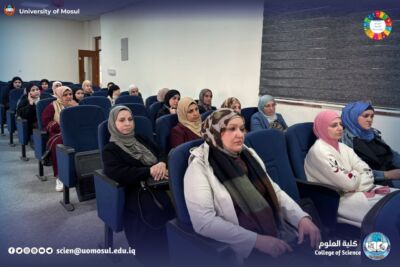
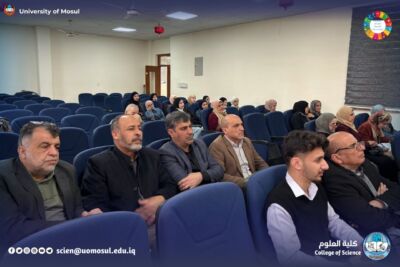
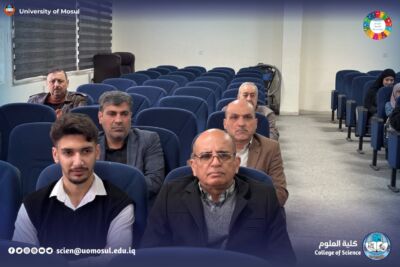
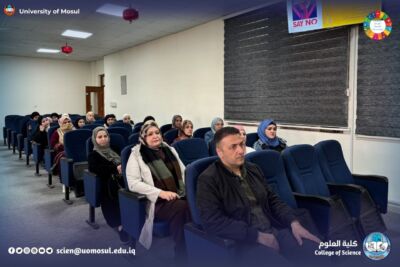
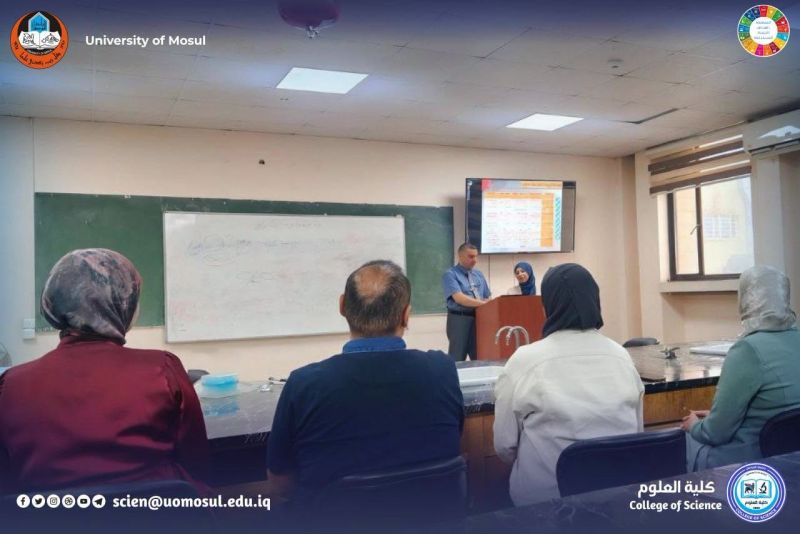
The workshop was held on Wednesday, 18 February 2026, in Dr. Abdulaziz Al-Hamdani Hall at the Department of Earth and Petroleum Sciences, in the presence of the Head of the Department, Assistant Professor Dr. Omar Khallouq, along with a number of faculty members and students of the College.
The workshop was organized as part of the implementation of the Third National Action Plan for Women, Peace, and Security – Protection and Prevention Pillar, reflecting the academic institution’s commitment to supporting societal issues, promoting the concepts of justice and protection, and raising public awareness of matters related to women’s rights.
The workshop was delivered by:
- Assistant Lecturer Elin Muwaffaq Khalil – Head of the Women’s Affairs Committee
- Assistant Lecturer Hiba Fares Ahmed – Women’s Affairs Committee Liaison Member
- Fatima Issam Al-Din Salah – Women’s Affairs Committee Liaison Member
The workshop addressed the concept of violence against women, its various forms, and its psychological and social impacts. It also highlighted the importance of promoting a culture of respect and community support, while empowering individuals to play an active role in reducing this phenomenon and contributing to the creation of a safe, equitable, and supportive university and community environment.
This activity is closely aligned with several United Nations Sustainable Development Goals (SDGs), particularly:
- SDG 5: Gender Equality, through supporting women’s rights and strengthening their protection.
- SDG 16: Peace, Justice and Strong Institutions, by promoting a culture of justice and combating violence.
- SDG 4: Quality Education, through awareness-raising and community education on important humanitarian issues.
The College extends its best wishes to the organizers for continued success and meaningful contributions.
Media and Government Communication Division
Monday, 23 February 2026