14 February، 2026
All Rights Reserved for University of Mosul © 2026
14 February، 2026
Scientific Workshop at the University of Mosul Reviews Iraq’s Position in Regional Seismic Hazard Activity
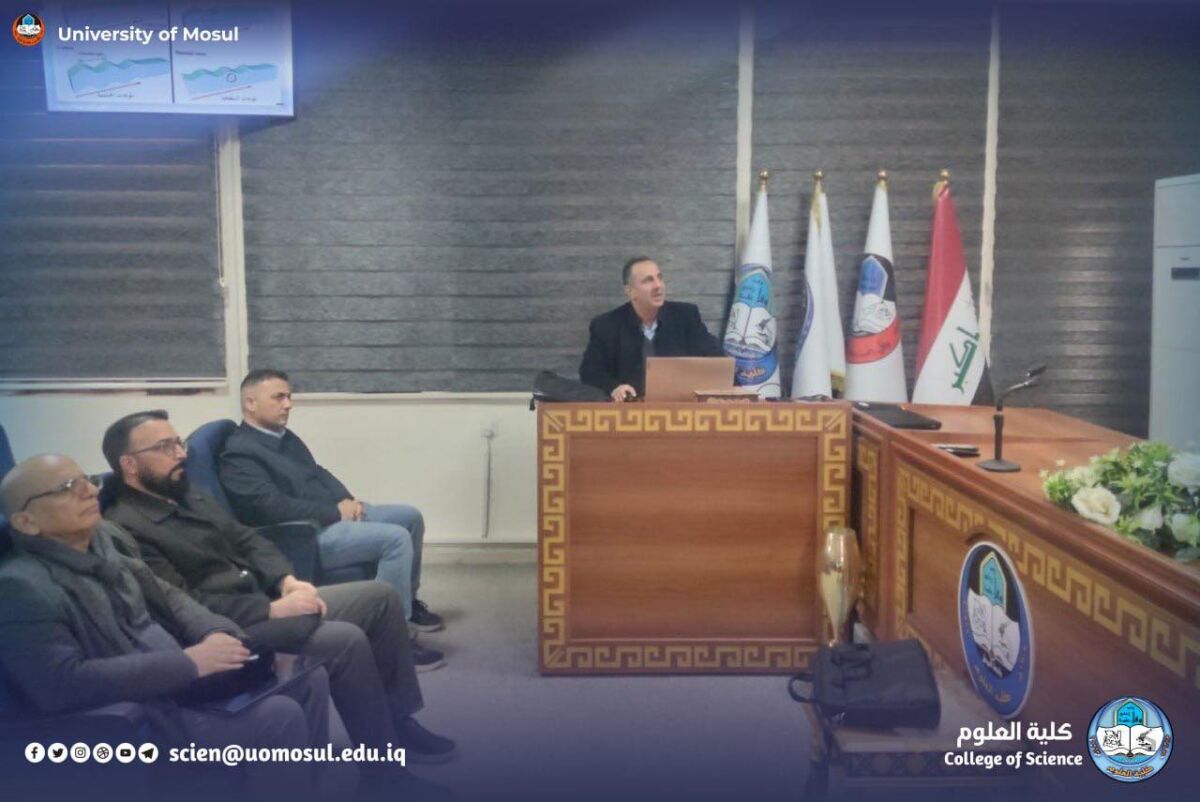
Under the patronage of the President of the University of Mosul, Professor Dr. Waheed Mahmoud Al-Ibrahimi, and under the supervision of the Dean of the College of Science, Professor Dr. Hiyam Adel Ibrahim, with the follow-up of the Head of the Department of Geology and Petroleum Science, Assistant Professor Dr. Omar Khallouk Mohammed Sajid, the Department of Geology and Petroleum Science organized a scientific workshop entitled:
“Iraq’s Position in Regional Seismic Hazard Activity”
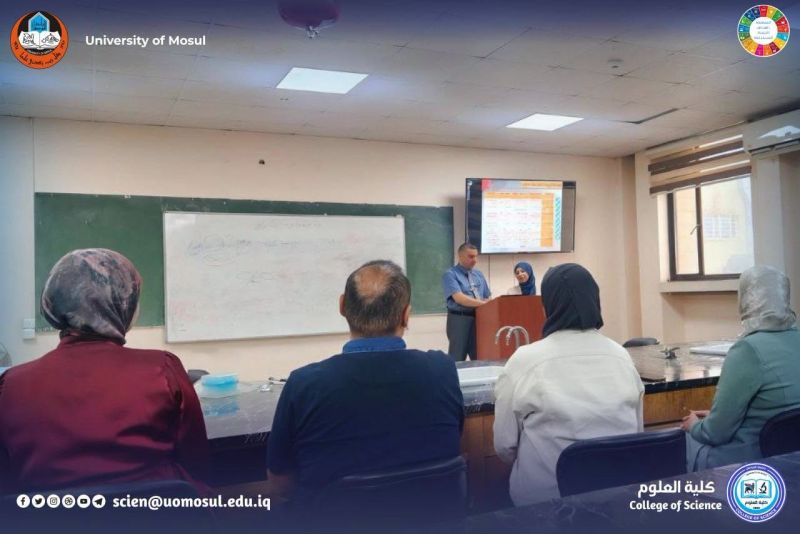
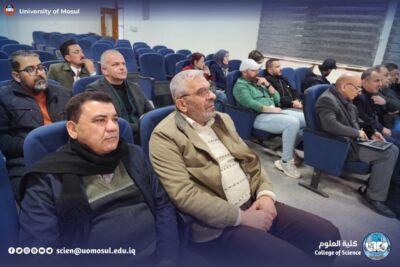
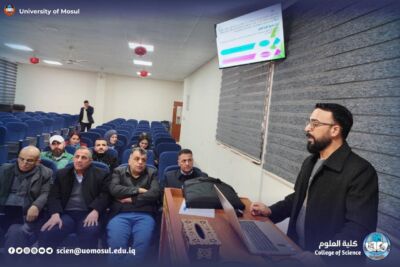
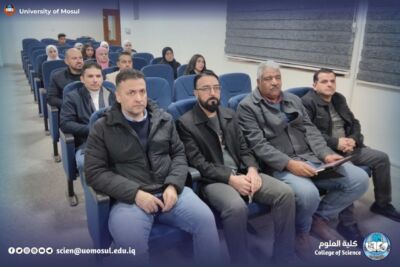
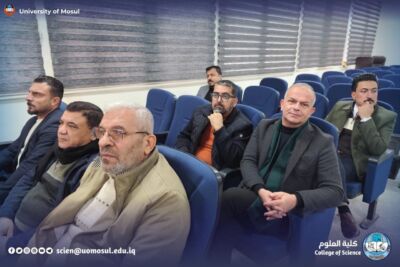
The workshop was held from 9–11 February 2026 as part of the activities of the Global Entrepreneurship Week 2026, with the attendance of a number of university academics and individuals interested in geosciences and seismic studies.
The workshop addressed the tectonic plates that form the Earth’s crust and the geological movements resulting from their dynamics, with particular emphasis on the Arabian Plate, its tectonic boundaries, and its interaction with the Eurasian Plate. Discussions highlighted earthquakes generated by continental collision processes between these plates and their regional implications.
In addition, the workshop explored the different types of seismic waves, their magnitude and intensity, and their potential impact on infrastructure and living communities. Special attention was given to Iraq’s vulnerability to seismic events occurring in neighboring countries, particularly Turkey and Iran, as well as strategies for mitigating the effects of seismic wave propagation and associated hazards.
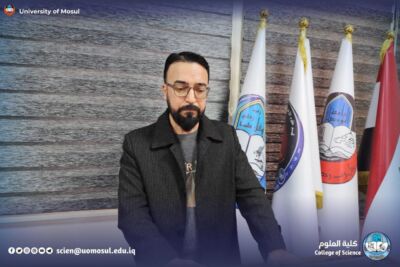
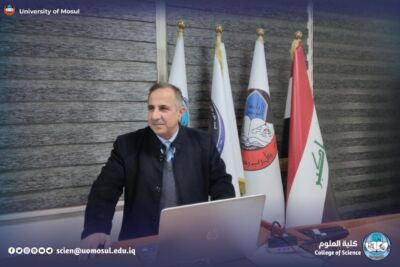
The workshop was delivered by:
This scientific activity reflects the department’s commitment to enhancing awareness of geological hazards, promoting scientific understanding of seismic risks, and supporting sustainable approaches to disaster preparedness and risk reduction.
The workshop aligns with several United Nations Sustainable Development Goals (SDGs), particularly SDG 4 (Quality Education) through the dissemination of scientific knowledge, SDG 11 (Sustainable Cities and Communities) by promoting disaster resilience and risk awareness, and SDG 13 (Climate Action) through strengthening scientific capacity in environmental and geohazard assessment.
We wish our distinguished faculty members continued success, excellence, and scientific achievement.
Media and Government Communication Division
Saturday, 14 February 2026
All Rights Reserved for University of Mosul © 2026