21 July، 2026
PhD thesis discusses the development of a proposed vaccine against Escherichia coli
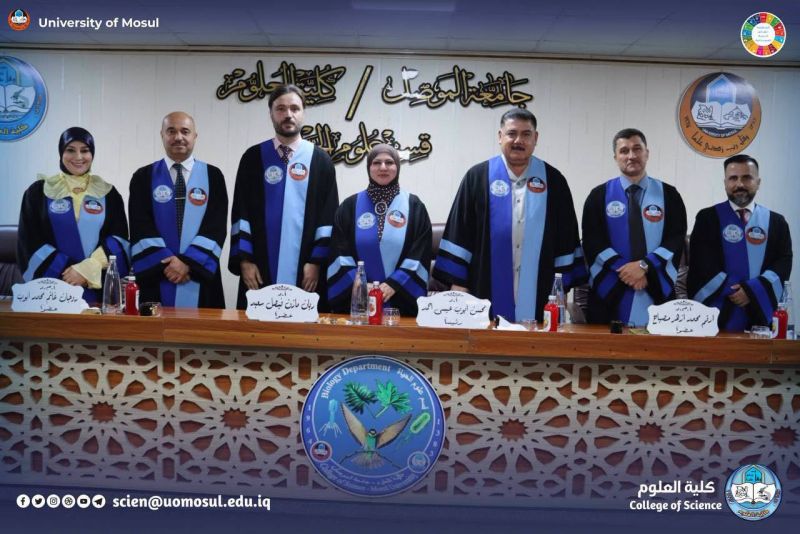
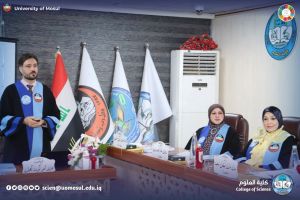
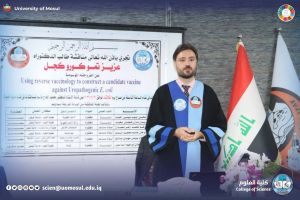
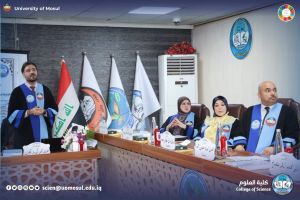
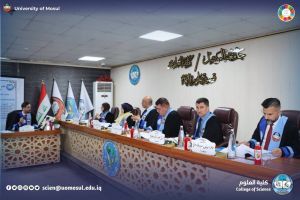
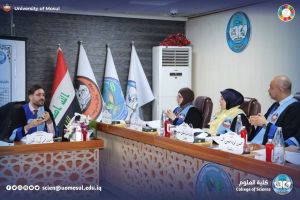
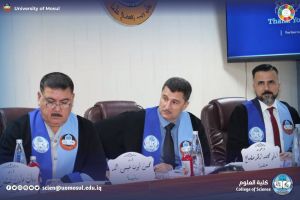
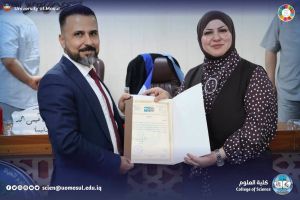
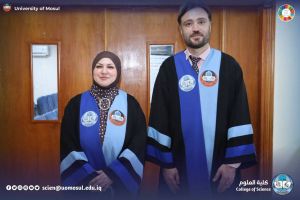
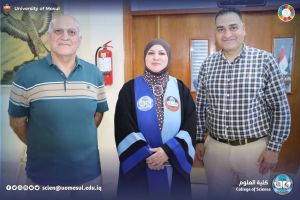
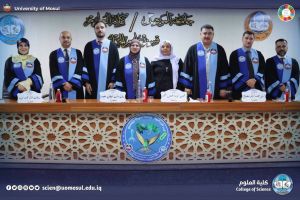
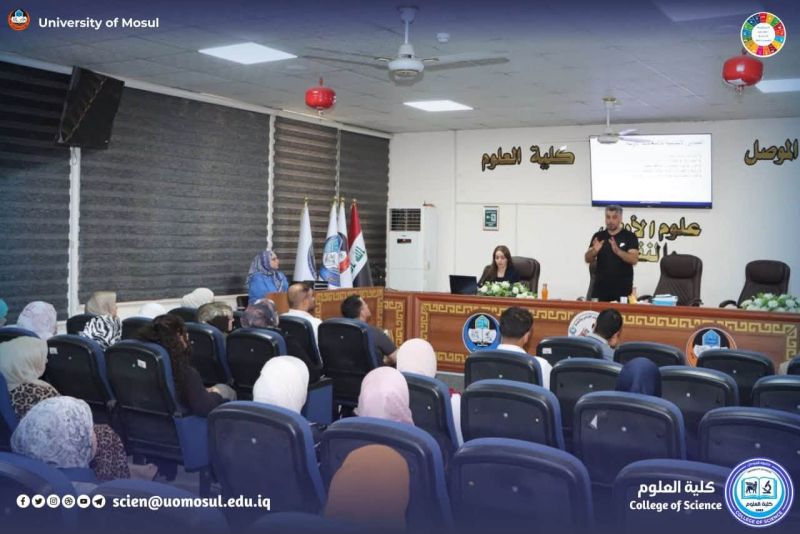
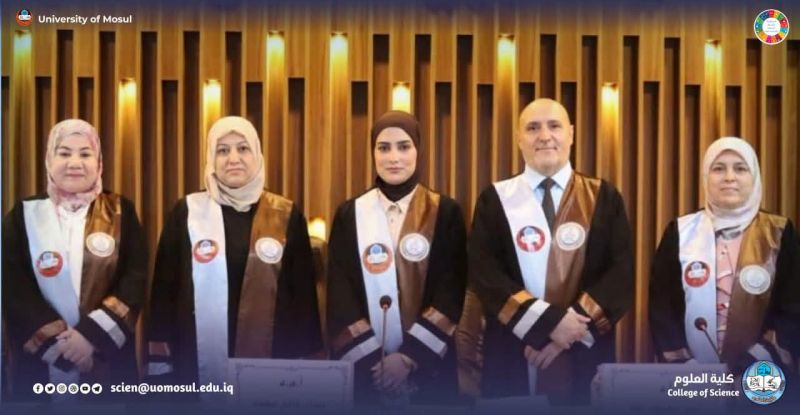
The Department of life sciences at the Faculty of Science/University of Mosul discussed the doctoral dissertation tagged “the use of reverse immunization to produce a proposed vaccine against the Bacteriums pathogenic Escherichia coli” on Tuesday, July 21, 2026, presented by researcher Aziz Tamo Koro Kjell, under the supervision of the dean of the Faculty of science, professor Dr. Hiam Adel Ibrahim. The aim of the study was to design and produce a multi-Epitope Vaccine (Multi-Epitope Vaccine) against the Bacteriums pathogenic Escherichia coli using the reverse immunology technique, based on three of the most important surface virulence proteins of bacteria, namely FimH, lptd and Bama, with the selection of the most conserved immunotypes (Conserved episodes) among the various pathological patterns of bacteria Escherichia coli, with the aim of developing a candidate vaccine possessing a wide protective coverage against various pathological patterns. The study also relied on the selection of T cell cells based on the most common HLA patterns in the Iraqi community, which contributes to achieving an immune response adapted to the genetic characteristics of the local population. The study included the investigation of genetic aggregates (Phylogroups) of local isolates of Uropathic Escherichia coli, where the results showed that the B2 genetic group was the most widespread, and one of its isolates was adopted in laboratory and Biological Studies. The study also included the laboratory production, cloning, expression and purification of the proposed vaccine, then assessing its immunogenicity using a mouse model by measuring the indicators of humoral and cellular immunity, and studying its ability to provide protection against experimental infection with urinary tract infections. The study also assessed the role of FMT as an immune adjuvant after modification of the intestinal microbiome using a combination of antibiotics, with the study of the expression level of NLRP3 inflammasome as one of the immunological indicators that may contribute to the explanation of the positive immunological effect of this treatment. The results of the study showed that the proposed vaccine stimulated an effective immune response, while the group that received FMT after modifying the intestinal microbiome and before vaccination achieved the best results compared to all experimental groups, as it recorded the highest levels of immune response, the best protection against experimental infection with urinary tract infections, with a clear decrease in hepatotoxicity compared to the vaccine group alone, the vaccine group with PLGA particles, and the vaccine group preceded by FMT without modifying the microbiome. The results of the expression of NLRP3 inflammasome also supported the hypothesis of the immunological role of the transfer of fecal microbial content in enhancing the efficiency of the vaccine. This study is the first to use FMT as an immune adjuvant in Bacterial Vaccines, which opens up new horizons for the development of innovative strategies to enhance the efficiency of vaccines and improve their effectiveness against bacterial infections. The discussion Committee was chaired by Prof. Dr. Mohsen Ayoub Issa, with the membership of Prof. Dr. Ryan Mazen Faisal, assistant professor Dr. Arqam Mohammed Azhar, assistant professor Dr. Rojan Ghanem Mohammed, Assistant Professor Dr. Alaa Younis Mahdi, and under the supervision of Prof. Dr. Hiam Adel Ibrahim. At the end of the discussion, the dean of the Faculty of Science, Dr. Hiam Adel Ibrahim, presented a letter of thanks and appreciation to assistant professor Dr. Alaa Younis Mahdi from the northern Technical University, in appreciation of his participation in the membership of the dissertation discussion Committee. Our wishes to my teaching and students of our college always good luck and success Government information and Communication Division Tuesday, July 21, 2026