11 June، 2026
PhD Dissertation Discusses Theoretical Calculation of pKa Values Using Computational Chemistry
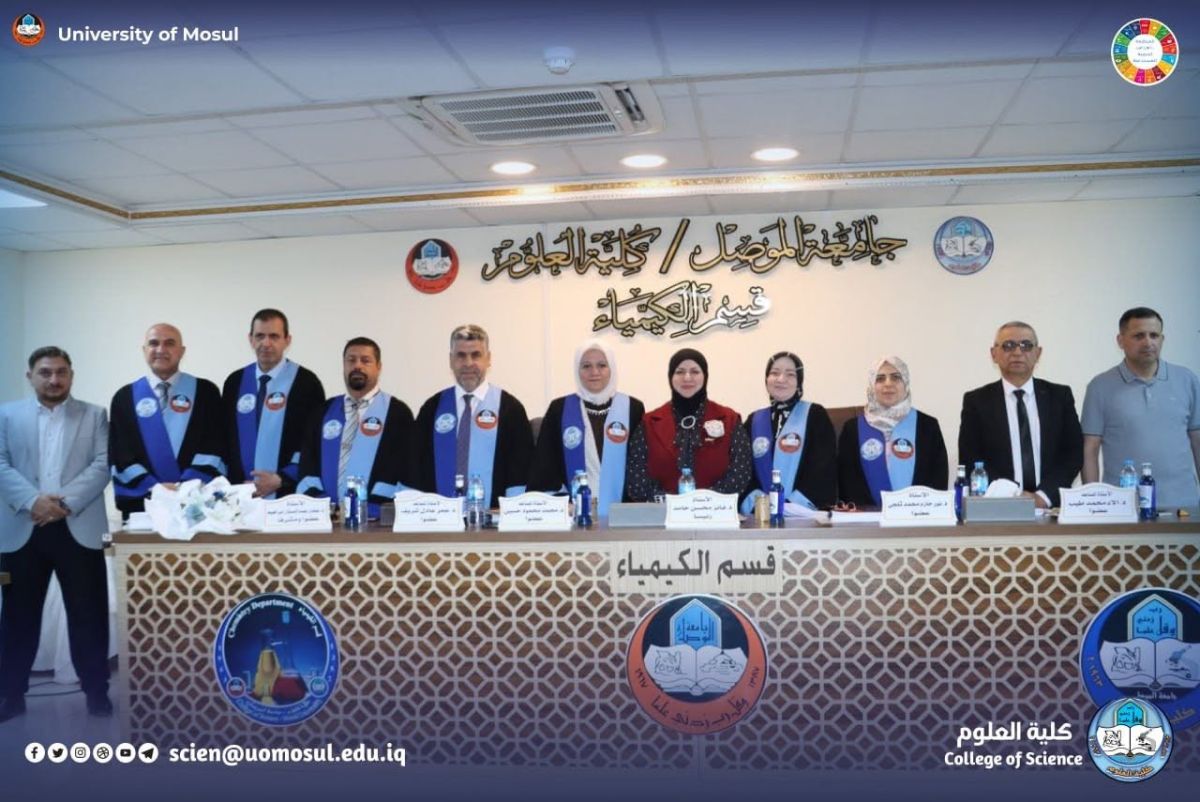
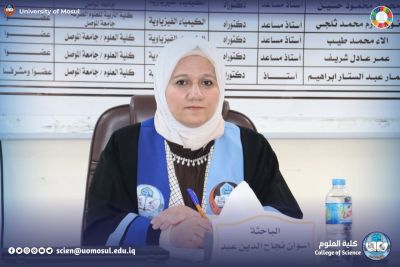
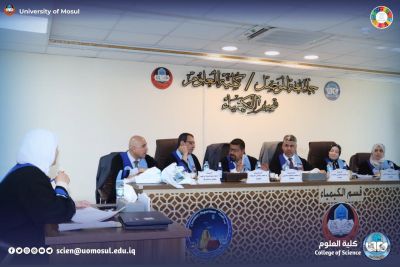
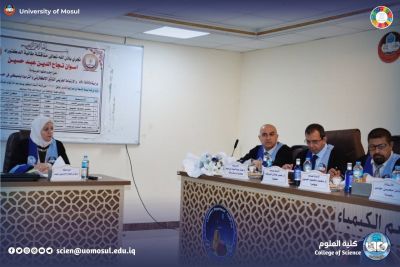
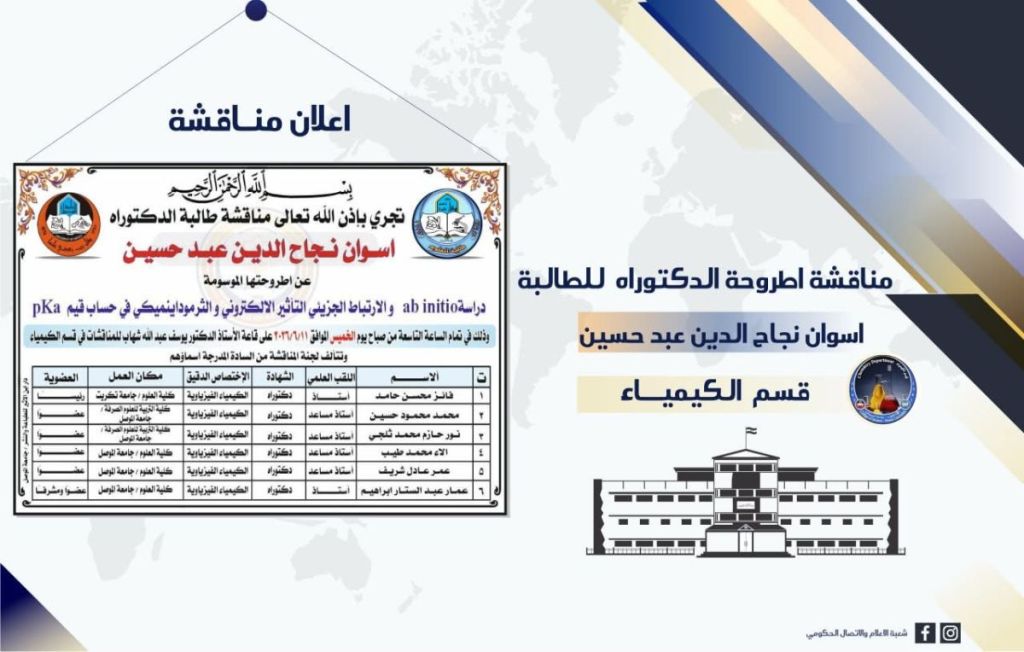
The Department of Chemistry at the College of Science, University of Mosul, discussed on Thursday, 11 June 2026, a PhD dissertation entitled:
“Ab Initio and Molecular Correlation Study of Electronic and Thermodynamic Effects in the Calculation of pKa Values”
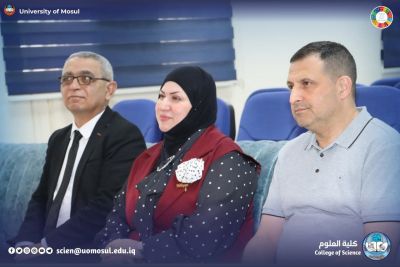
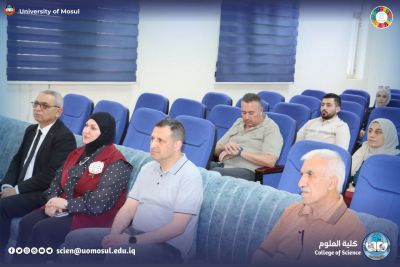
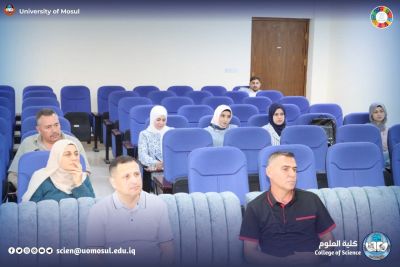
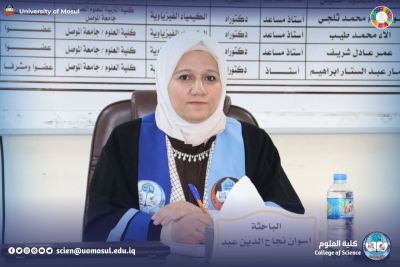
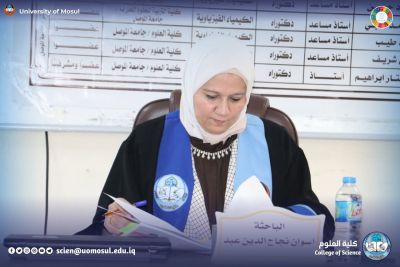
submitted by PhD candidate Aswan Najah Al-Din Abdul Hussein Ali. Part of the dissertation defense was attended by the Dean of the College of Science, Prof. Dr. Hiyam Adel Ibrahim.
The dissertation aimed to investigate a number of azole-based pharmaceutical compounds and to calculate their pKa values theoretically, followed by a comparison with experimentally determined values. The study consisted of five major sections.
The first three sections focused on calculating the pKa values of triazole, diazole, and thiazole compounds using seven different statistical approaches. These calculations were based on theoretical data obtained through the Hartree–Fock (HF) method employing several basis sets, including STO, 3-21G, and 6-31G.
In the fourth section, a molecular docking study was conducted to investigate the interaction between the compounds under study and the protein associated with Helicobacter pylori (H. pylori) infection. The analysis identified the pharmaceutical compounds exhibiting the strongest binding affinity toward the 5Y2D protein, which is associated with the bacterium’s pathogenic activity.
The final section involved the synthesis of two thiazole derivatives, followed by the determination of their pKa values both experimentally and theoretically. The study compared the seven applied computational methods to identify the most reliable theoretical approach and determine the method that showed the closest agreement with the experimentally measured values.
The results led to the development and introduction of novel statistical methods for pKa calculation that have not been previously reported. These findings represent a significant contribution to computational chemistry and fulfilled one of the primary objectives of the study. The research also identified the strongest molecular interactions between the investigated drug compounds and the H. pylori protein target.
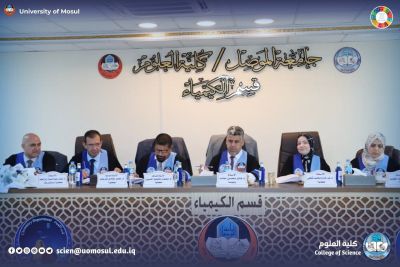
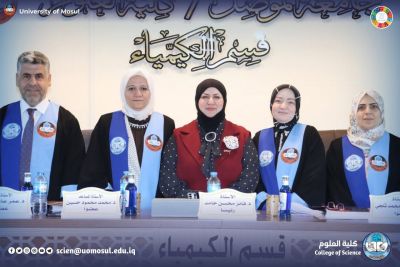
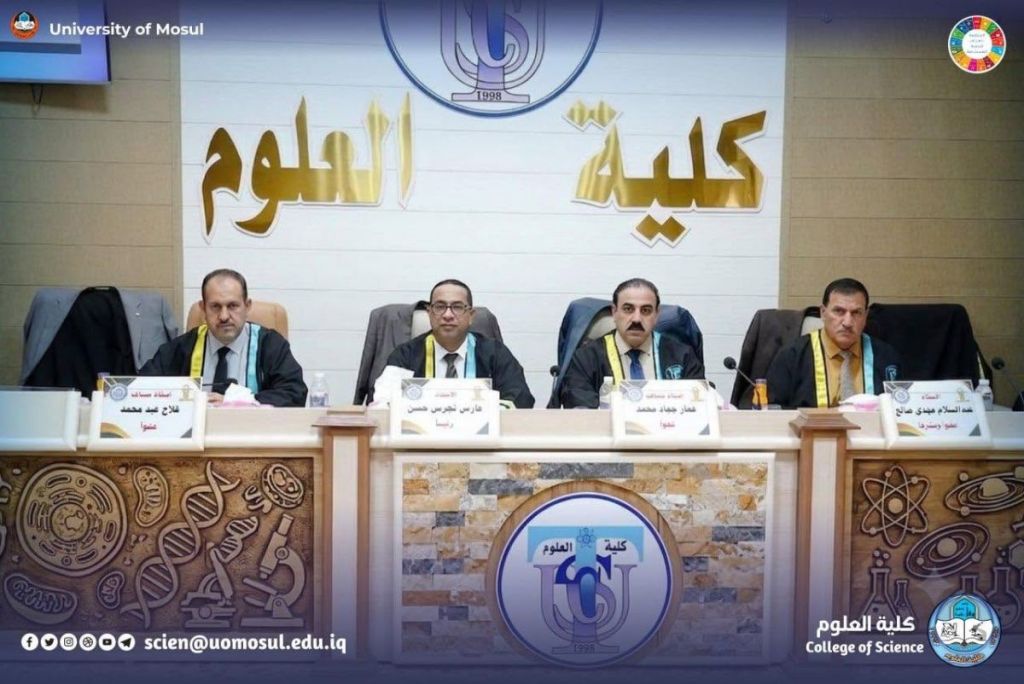
The examination committee was chaired by:
- Prof. Dr. Faez Mohsen Hamed – Chairperson
and included the membership of:
- Assist. Prof. Dr. Mohammed Mahmoud Hussein
- Assist. Prof. Dr. Noor Hazim Mohammed
- Assist. Prof. Dr. Alaa Mohammed Tayyib
- Assist. Prof. Dr. Omar Adel Sharif
- Dr. Rana Hassan Ahmed
The dissertation was supervised by and examined with the participation of:
- Prof. Dr. Ammar Abdul Sattar Ibrahim – Supervisor and Committee Member
At the conclusion of the defense, the committee commended the high scientific quality of the dissertation and emphasized its practical significance in the theoretical prediction of pKa values for pharmaceutical compounds. The committee highlighted the study’s success in developing innovative methodologies capable of producing theoretical values closely matching experimental results.
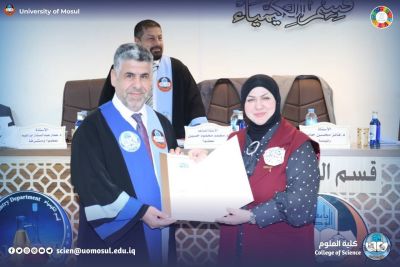
On this occasion, the Dean of the College of Science, Prof. Dr. Hiyam Adel Ibrahim, presented a Letter of Appreciation to Prof. Dr. Faez Mohsen Hamed from the University of Tikrit in recognition of his valuable contribution and service as Chair of the examination committee.
This research aligns with the United Nations Sustainable Development Goals (SDGs), particularly Goal 4: Quality Education, through advancing high-level scientific research, Goal 9: Industry, Innovation and Infrastructure, by developing innovative computational methodologies, and Goal 3: Good Health and Well-Being, through supporting pharmaceutical research and drug development studies.
The College extends its best wishes to its students and faculty members for continued success and excellence in their academic and scientific endeavors.
Media and Government Communication Division
Thursday, 11 June 2026